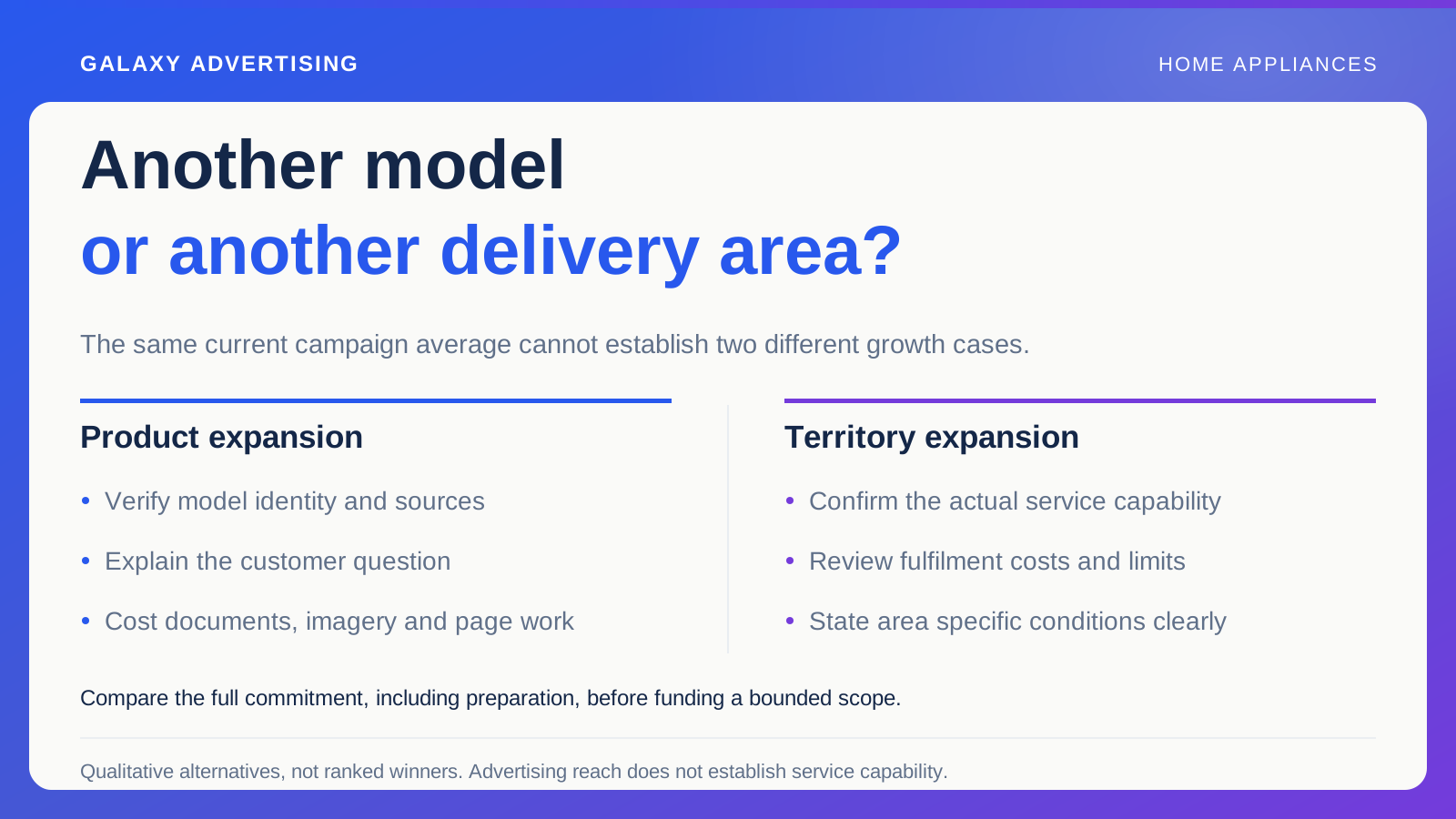
What if you have enough washing machines for another campaign round, but the delivery and optional service arrangements cannot absorb the increase? Your stock view still looks healthy. Customers discover a different practical offer when they investigate the complete purchase.
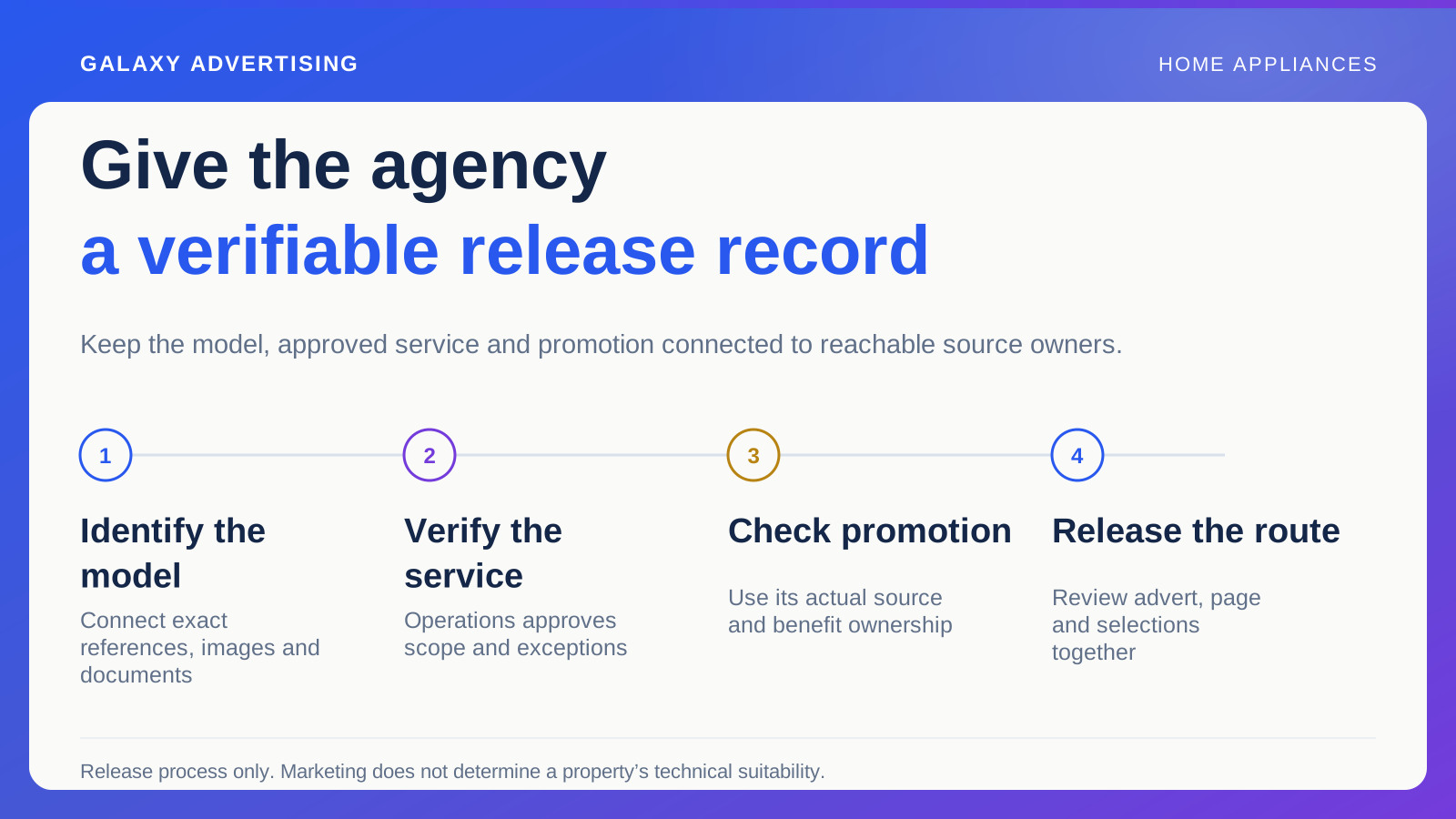
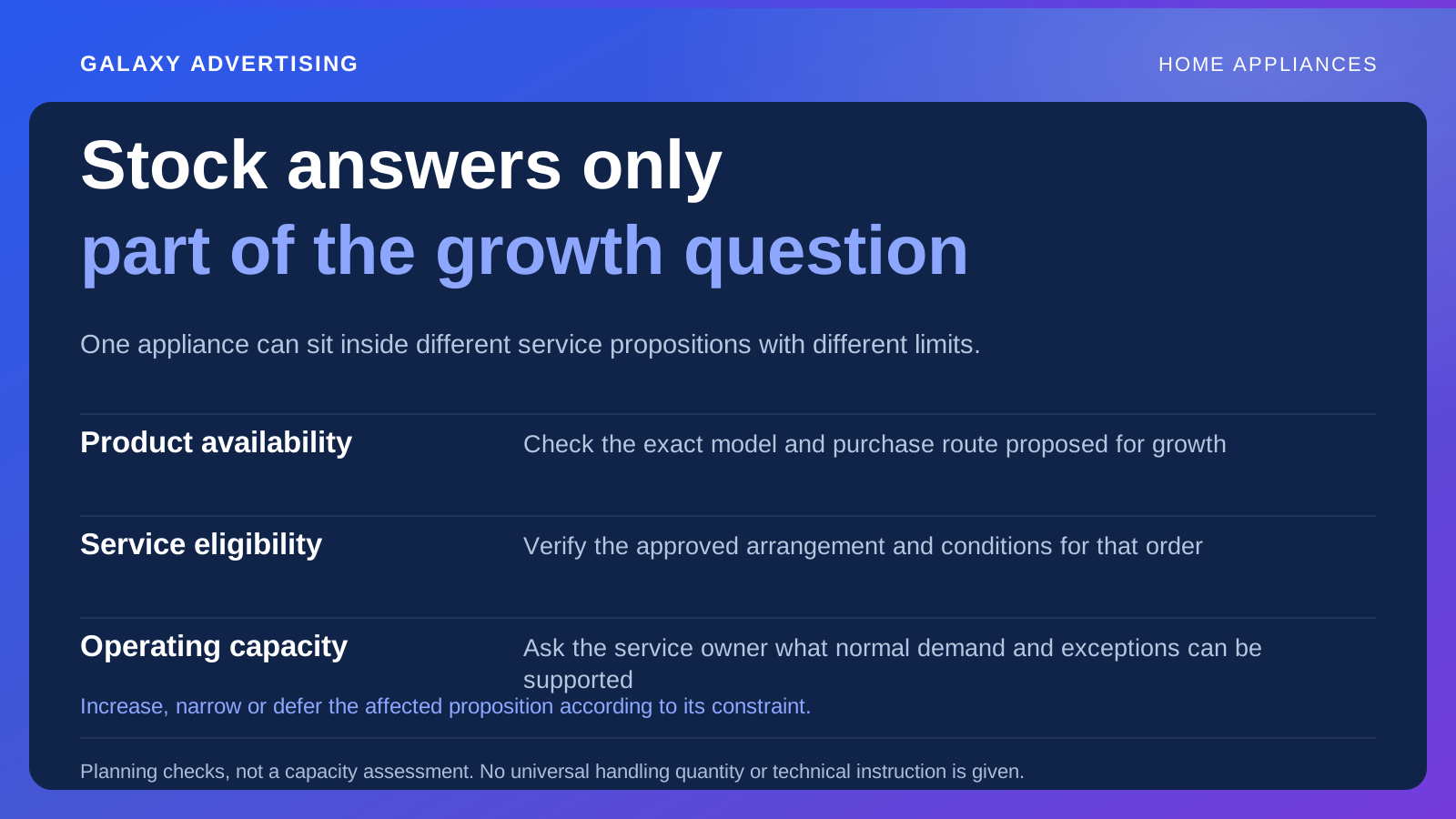
Growth needs to follow the constraint on the transaction you are promoting. Product availability, service eligibility and capacity to provide an approved arrangement are connected, but separate. Bring them together without making marketing the authority on technical work, or assuming every stocked appliance can be sold under the same promise.
Define the order you want more of
Record the exact model, customer area and service arrangement behind the existing result. A general appliance order total may combine straightforward product deliveries with transactions needing another approved service. A single figure can conceal those differences.
Identify which routes the proposed increase would grow. If your advert emphasises assistance beyond supplying the appliance, that assistance belongs in the operating review. It should not sit in a footnote beneath an otherwise reassuring stock report.
Keep the scope precise. You do not need to document every possible household situation before acting. You do need a verified description of the offer you intend to promote and the person who can confirm the arrangement. That gives the decision an actual promise to assess.
Ask operations what limits the promise
Have the responsible owner identify the constraint. It may be an approved delivery arrangement, an optional service schedule, a particular region or staff needed to resolve order exceptions. Busy is a starting observation, rather than a sufficiently specific operating answer.
Do not invent a universal number of appliances a team can handle. Capacity depends on the operation and included work. Use approved information instead of turning a convenient ratio into a rule for planning future demand.
Separate ordinary capacity from an optimistic maximum. A schedule that works only when every order is uncomplicated may be a weak foundation for a stronger public promise. Ask how normal exceptions appear in the operating view your business actually uses. The campaign needs a supportable arrangement, not merely a best case schedule.
Keep stock and service states clear
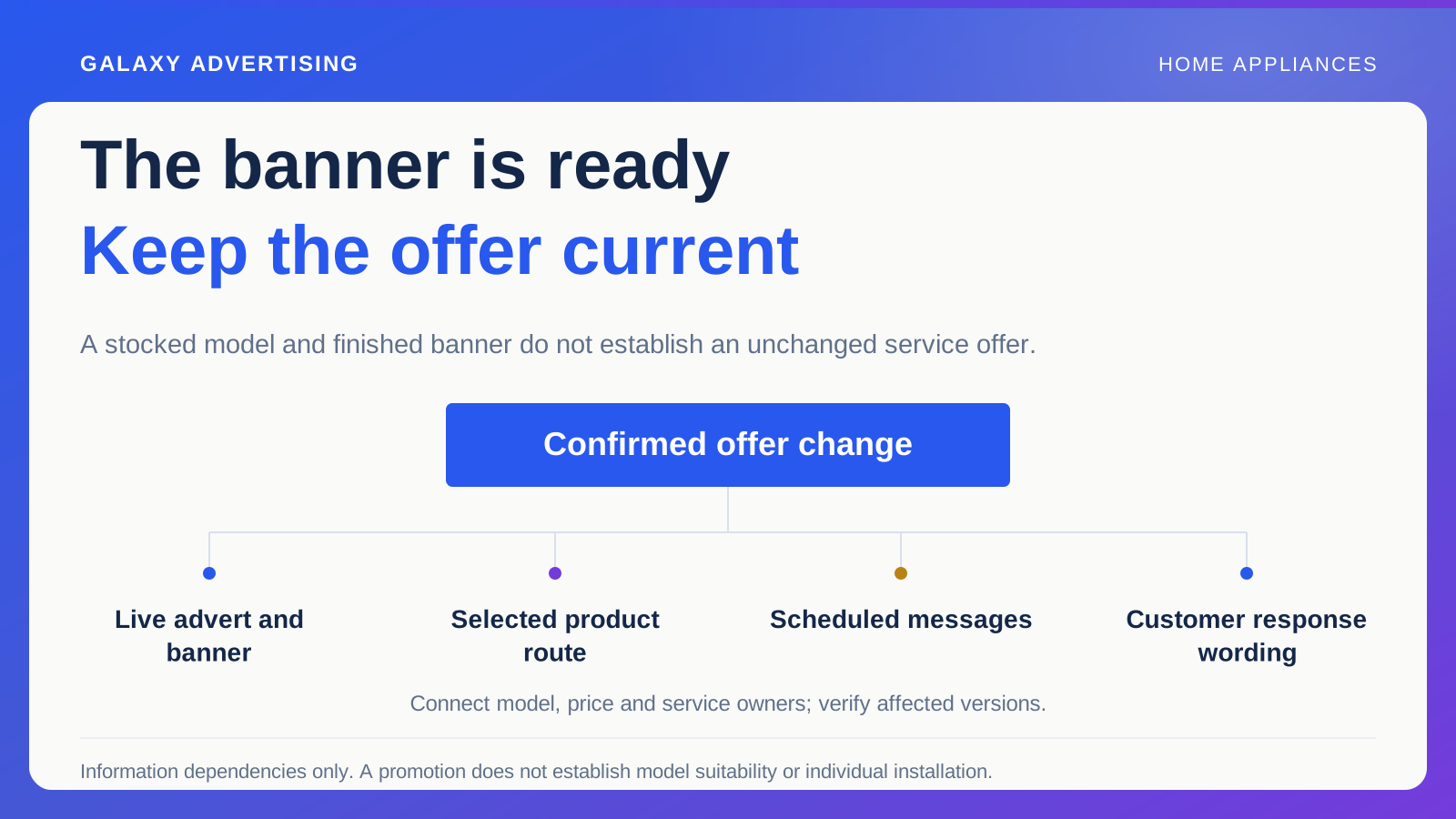
Agree how the live route describes an available appliance when a selected service is constrained. Customers should not have to guess whether the product is unavailable or another part of their order has changed. Those answers lead to different decisions.
Check broad campaign wording too. An accurate service checker does not automatically repair an advert promising the same assistance without qualification. The whole route creates the expectation, including what somebody sees before reaching the checker.
Use a shared reference both campaign and operating teams can maintain. Identify the offer, current status and person authorised to change it. A complicated forecast is less useful than a dependable signal reaching whoever controls spend. Make the connection practical enough to work when the position changes during normal trading.
Consider growth that uses a different resource
You may be able to promote another documented offer without increasing the constrained resource. Make that a genuine commercial decision. Do not silently substitute a different arrangement after the customer follows the original promise.
Describe the alternative accurately. A product only purchase may suit some households while others need the unavailable assistance. The transactions are not interchangeable just because both contain the same appliance. Each asks a different question of the customer.
If you materially change the service proposition, record it and assess its response on that basis. Do not evaluate the work as though only budget increased. The original campaign average cannot establish that people will value a different arrangement equally, however familiar the model remains.
Fund the operating response alongside media
Where extra demand requires another resource or approved service arrangement, identify that dependency before authorising more media. The commitment is broader than the advertising invoice. Keeping preparation outside the proposal would not make the dependency disappear.
Separate recurring order costs from a capacity investment, explaining each on your chosen business basis. Neither should vanish because the customer sees a bundled price. Equally, avoid assigning every fixed expense arbitrarily to manufacture a precise looking marginal order figure.
Ask what happens if additional capacity arrives later than expected. Your account team needs an accurate interim offer or a clear reason to defer the affected activity. A dependency written in a plan remains unresolved until its operating owner confirms it.
Consider two campaigns for the same model with different approved service propositions. One might remain supportable while the other depends on the constrained arrangement. A model level stock signal cannot distinguish their readiness.
Preserve the proposition in the operating record. You can then adjust demand for the affected offer instead of making a broad decision from a shared product code alone. That keeps your response connected to the actual constraint rather than stopping or growing everything together.
Give changing conditions a prompt response
Define who can narrow the proposition, update a destination or pause an affected asset when the service position changes. Respond proportionately to the offer. A constraint on one arrangement does not automatically require stopping every model.
Use observable conditions. A named service becoming unavailable is more actionable than a general feeling that operations is busy. Your account manager should know which public message depends on that changed condition and who can verify it.
Check the revised customer route. An updated internal schedule does not establish agreement between the caption, product panel and saved landing page. Connect the operating decision to the communication that creates the expectation. That is where an internal change becomes an accurate customer offer.
Judge growth through what you supplied
Review completed activity, relevant order exceptions and customer questions alongside campaign figures. More initial purchases can conceal a weaker experience if the operation repeatedly revises the promised arrangement afterwards. Look beyond the first event.
Keep ordinary trading changes visible. Model mix or service scope can affect results independently of media spend. Explain those conditions before concluding that expansion is commercially repeatable.
Let the identified constraint determine the next move: supply, scheduling, clearer eligibility information or a narrower promotion. Dependable growth means knowing which promise you can increase, who confirms its capacity and how quickly the campaign responds when that answer changes. A healthy stock record answers only part of that decision.