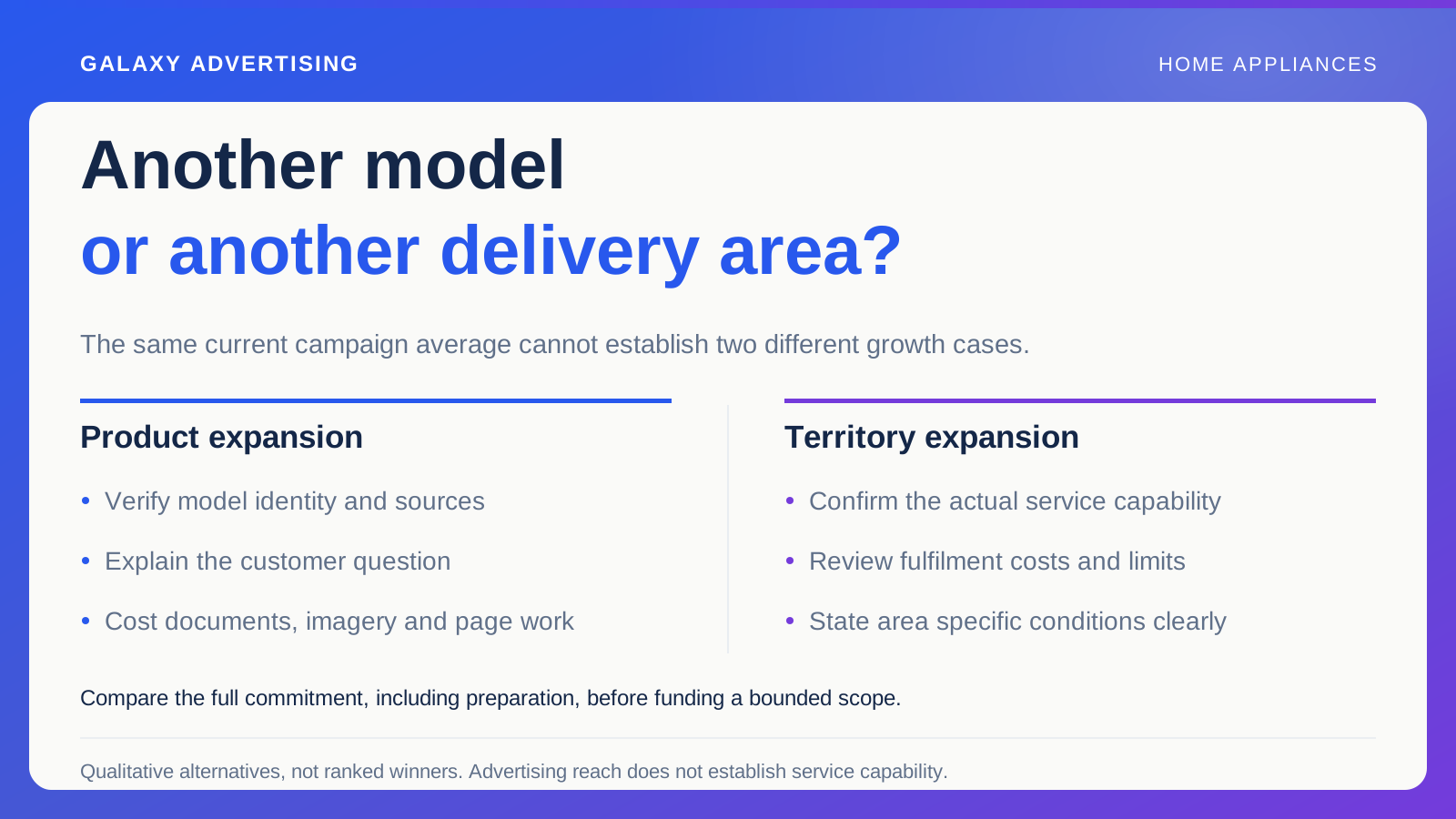
What if the next step after an encouraging washing machine campaign is another model, rather than another delivery area? Or the other way round? Both could create more activity, but they ask different things of your business.
A bigger catalogue is a product decision. A wider territory introduces operating dependencies. Neither inherits a right to investment from the current campaign average. Compare what each commitment changes, whether you can support its offer and which question you need the next review to answer.
Identify the offer behind today's result
Record the model, availability, service area, price and selected service package. Include relevant changes during the observed period. Appliance sales is a convenient label, but it can hide a narrow offer working under particular conditions.
Use your approved definitions for retained orders and contribution, the money remaining after the costs included in that calculation. Initial checkout revenue may differ from the outcome after cancellations or service adjustments. Know which commercial outcome the allocation discussion is comparing.
Keep uncertainty visible. An encouraging early group can justify a further step without establishing that every additional location or model will have the same acquisition economics. Make the decision proportionate to the evidence, rather than treating an average as a guarantee of what happens next.
Assess another model as a product opportunity
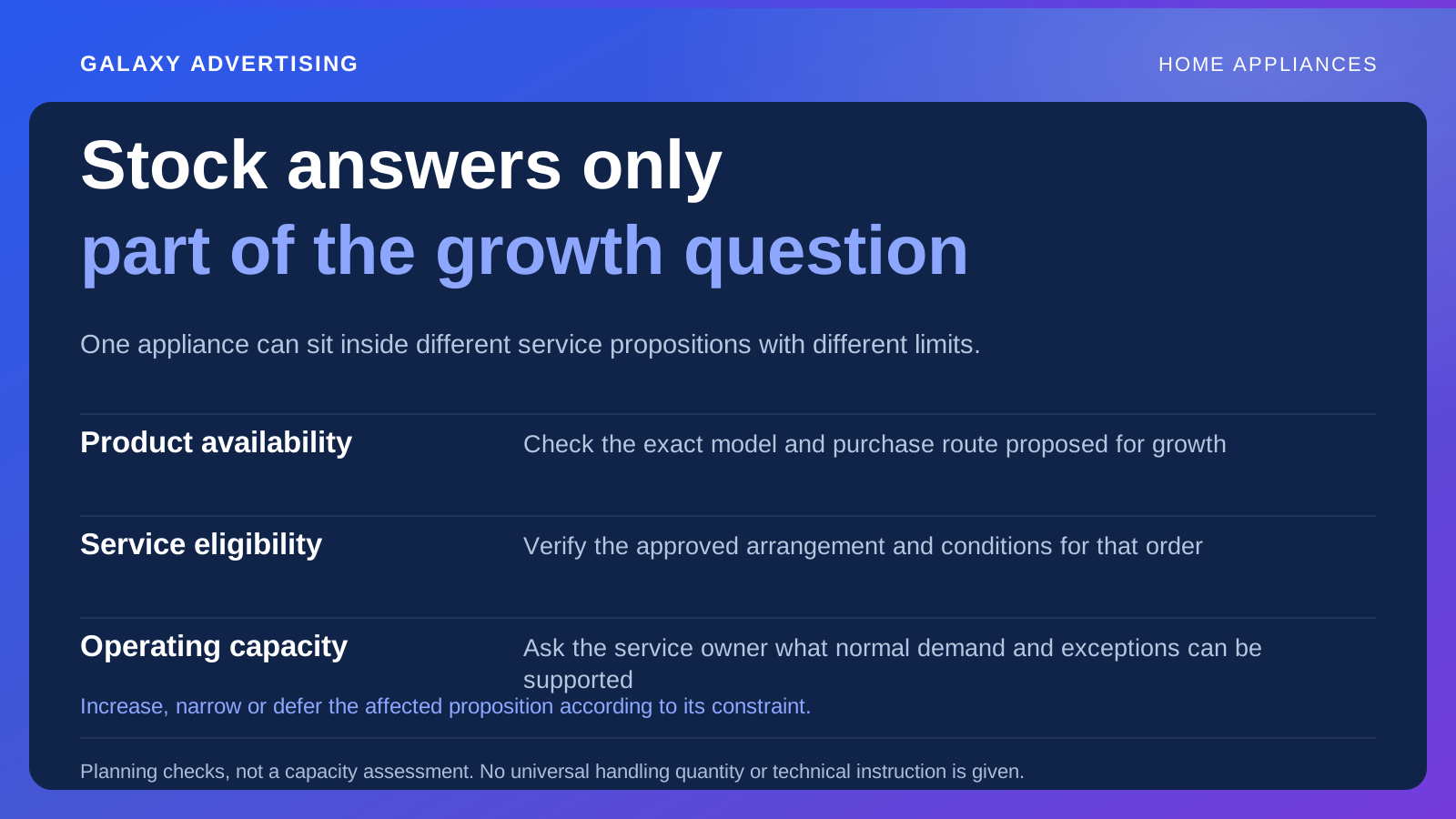
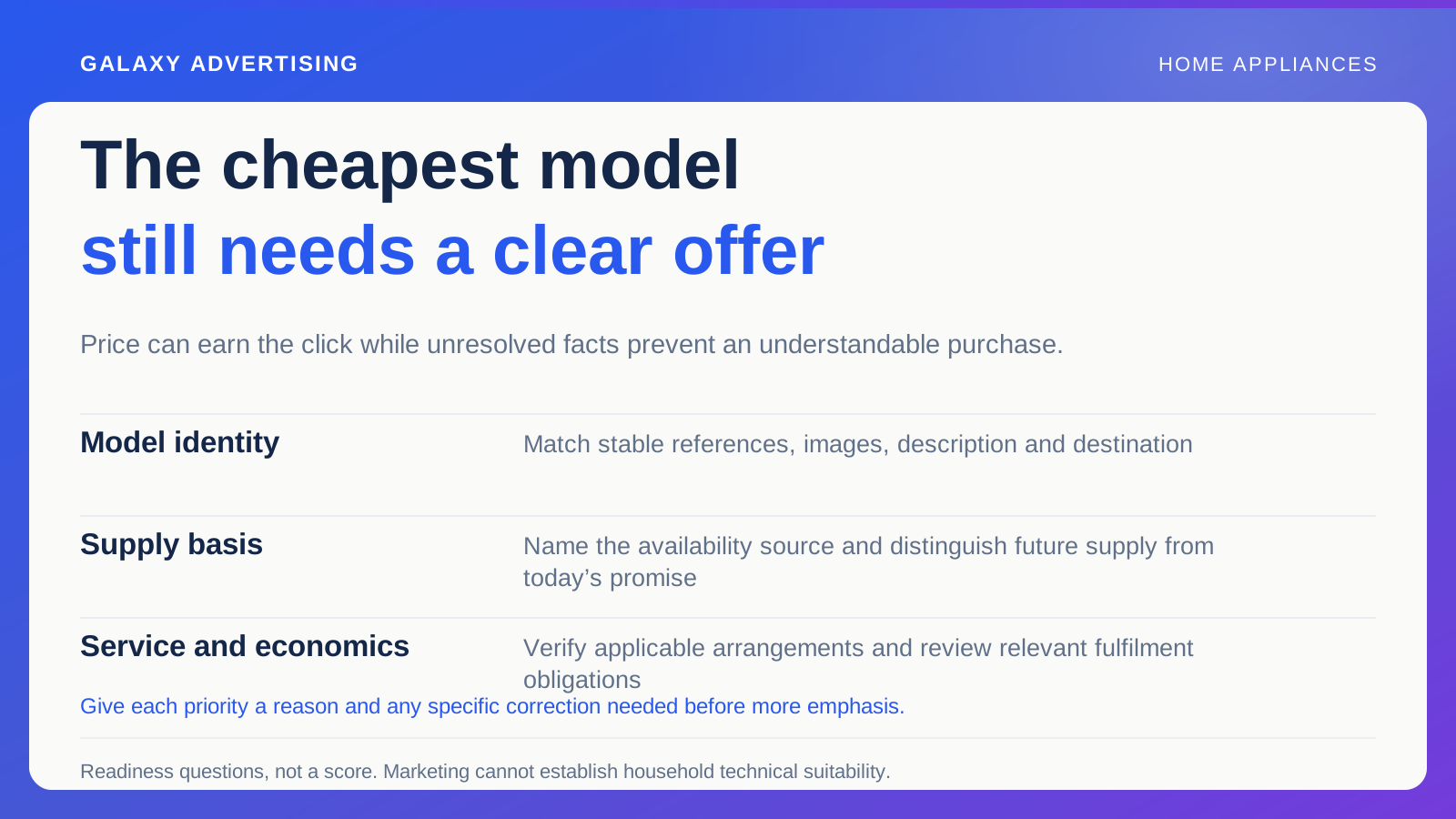
For a proposed addition, verify the exact identity, reliable technical sources, images and an understandable destination. Check the current product and service offer. Catalogue presence alone does not make an appliance ready for promotion.
Explain the customer question it answers. Perhaps it introduces a documented difference within a family, or supports another clearly defined comparison. A longer product list does not automatically give somebody a stronger reason to buy.
Identify prerequisites and owners. Missing documents, unclear labels or conflicting service wording need specific corrections. That lets you distinguish an opportunity ready for media from one requiring another commitment first. Otherwise preparation can disappear from the proposal, only to become urgent once advertising starts sending people towards the gap.
Assess another area as an operating commitment
Ask the responsible owner to confirm the service actually offered in the proposed area, its relevant conditions and the customer's verification route. Being able to reach an audience through advertising does not establish delivery or optional service capability.
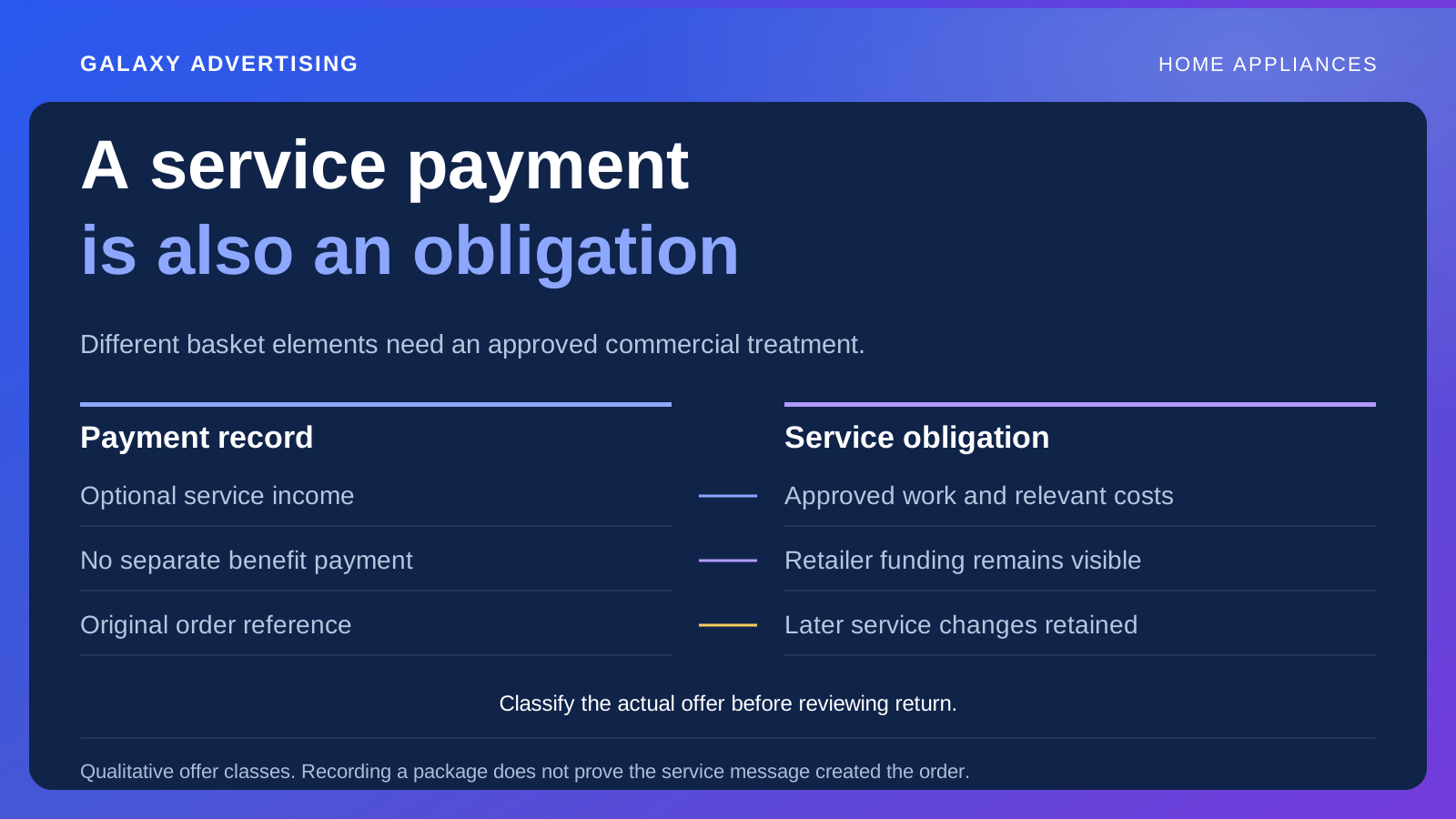
Review complete order economics for that arrangement. Relevant fulfilment costs and commercial limitations may differ. A familiar product margin should not be assumed to describe every destination equally.
Make the geographical promise clear on the landing route. A general banner must not imply that the same service is available everywhere. Customers need an accurate account of the offer for the order they are investigating, rather than a campaign promise that operations later has to explain differently.
Compare the whole commitment
Include relevant production, page work, source corrections and operational preparation. New infrastructure or substantial information work has a cost beyond media. Leaving it out makes the options look more comparable than they are.
For illustration, a £1,000 media test requiring £700 of preparation needs a different approval from £1,000 using an already verified route. These hypothetical figures expose the commitment. They do not automatically rank either option as better.
Separate preparation that happens once from costs recurring with orders. Both can matter, but to different decisions. A shared asset may support later work without proving a precise future value you have not observed. Keep that potential usefulness distinct from a return somebody has actually measured.
Ask which constraint deserves attention
Look at whether current demand is constrained by an unavailable model, unclear information or an operating boundary. Those observations suggest different priorities. Collapsing them into a general request for traffic makes the allocation less useful.
Do not turn every enquiry from outside your service area into lost revenue. Recorded interest can justify investigation while remaining uncertain as a forecast. State what evidence you have and which assumptions require funding.
A small source correction might allow a clearer product test. A territory expansion could need a wider operational decision. Rank work on those practical differences, rather than letting the biggest projected audience dominate simply because its headline is more ambitious.
Fund a step you can evaluate
Choose an initial scope you can afford and assess. Keep enough of the offer stable to interpret the evidence. Several new models, a new territory and a promotion launched together limit what your review can explain.
Agree the main question, approved commitment and condition for authorising more. There is no universal useful spend amount for appliance retailers. Your scope should reflect economics, capacity and willingness to fund uncertainty.
Separate fault correction from the commercial review. An incorrect availability statement needs prompt action. Judging acquisition more broadly may require a fuller order history. Make those different responsibilities clear before launch.
For a territory test, ask a colleague to describe the offer using only the destination a customer sees. Compare that account with the operations owner's confirmed arrangement. A disagreement shows preparation needed before funding reach, whether it concerns a label, a cost route or a service's scope.
This does not assess a property's technical requirements. It checks whether the area has an intelligible commercial proposition, rather than merely an audience your advertising system can include.
Review the offer you changed
Compare actual fulfilled orders, relevant costs and customer questions with the original assumptions. Did the business genuinely supply the offer you intended to investigate? That question comes before defending the budget.
If the new territory proved difficult to explain, the next action may involve the service route. If another model drew suitable interest but lacked reliable supply, merchandising may regain priority. Follow the constraint you observed.
An additional product and an additional delivery area are different commitments needing their own evidence. Your next investment becomes more useful when it funds an understandable improvement, rather than a bigger version of an average whose original conditions no longer apply.