A complete product page redesign can make it harder to discover why customers hesitate. If your modular sofa page gets new photography, new prices, a different option selector and a shorter description together, even a welcome improvement leaves an awkward question: which change helped?
It is tempting to fix the whole page when you know something is wrong. But a focused test starts with the customer's difficulty, then asks which correction could address it. You want useful learning about a buying decision, without disturbing unrelated parts of the offer.
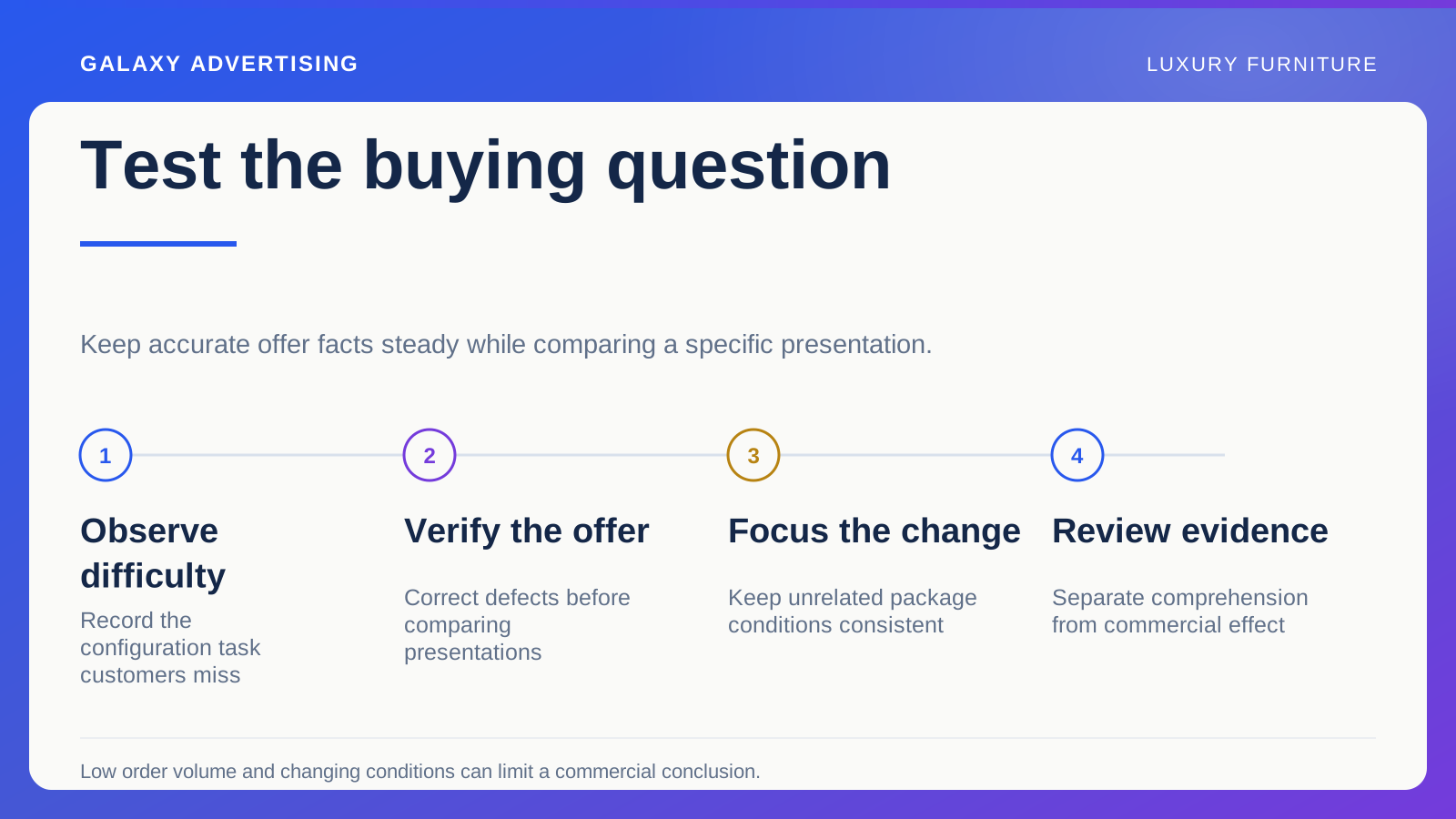
Name the difficulty you can actually see
Gather examples from enquiries, reviews of the buying route or other evidence your business can reasonably use. Customers repeatedly asking whether the ottoman is included gives you something firmer to investigate than a feeling that the page looks dated.
Describe the task they cannot complete. Perhaps a visitor cannot tell the photographed corner arrangement apart from the smaller configuration behind the starting price. That is a problem your team can inspect and potentially put right.
Keep what you observed separate from your explanation. The question could come from the image, the option labels or the price information. Choose a starting hypothesis, but keep the alternatives on the table. Otherwise you risk designing an exercise that simply confirms your first hunch.
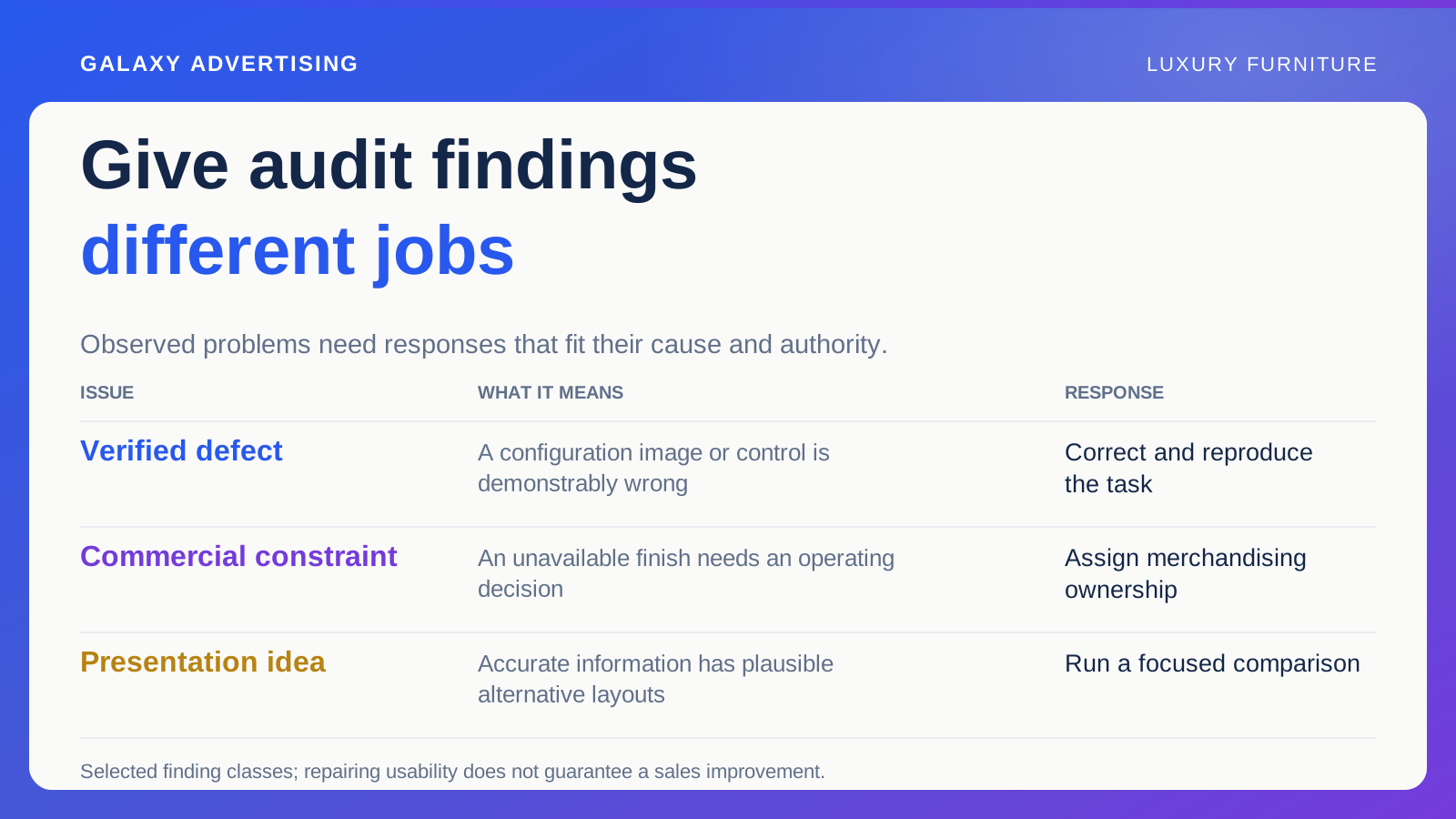
Fix mistakes before you start experimenting
An incorrect price, broken selector or misleading package description needs correcting. You do not need to leave a defect live to discover whether customers fare better without it.
Testing makes more sense when the facts are accurate and you are unsure how best to present them. You might have two clear ways to label configuration choices. Comparing their usefulness can teach you something while both versions still describe a truthful offer.
Ask the product and operations owners to review the change before launch. A shorter label can look wonderfully tidy while losing an important distinction. Customers still need the facts for an informed purchase, however clean the design becomes.
Change the thing your question is about
If customers cannot identify a configuration, work on the labels or the connection between the image and the option. Replacing the entire brand message at the same time makes little sense unless that broader change is what you intend to investigate.
Write down what will stay consistent, including the product package and its supply conditions. You make the comparison easier to interpret, and give staff a way to spot unrelated changes that could affect it.
Take a hypothetical sofa collection. You could place a labelled arrangement image beside each option because you believe it will help people identify the included components. That is a question you can examine. Whether an entirely redesigned page sells better in every respect is a much bigger, murkier one.
Agree what would count as useful evidence
Choose observations that relate to the intended improvement. Look at the nature of configuration enquiries, whether people can identify an arrangement during a usability review, and the commercial outcomes available to you.
One encouraging signal will not settle it. More use of the option selector could mean interest, confusion or simply a different interface. Give the observation its context before deciding it is good news.
Agree the limits before you see the result. Low order volume, a changing product mix or differences in visitor sources can prevent a confident commercial conclusion. You may still uncover a comprehension problem. Just say which question your evidence answers, rather than asking it to answer every question at once.
Keep an eye on the offer while the test runs
Record relevant changes to stock, price, delivery and promotions. If a configuration becomes unavailable, the outcome can change even though your tested information has stayed exactly the same.
Decide who can pause or revise the activity when the product promise becomes inaccurate. A dependable buying route comes first. A material change to the offer may mean restarting the comparison or interpreting it with a clear qualification.
Tell customer service which versions are live. Their feedback becomes more useful when they know the labels a customer may have seen. Without that context, an enquiry about unfamiliar wording can look like a new product question when it is actually a consequence of the test.
Go back to the question you started with
Did customers identify the included components more clearly? Did their enquiries change? What happened to the available order evidence under the conditions you recorded? Those are the questions to bring to the review.
Separate an observation worth pursuing from a reliable commercial effect. A small number of favourable orders can warrant further investigation. It cannot establish that the same presentation will deliver the same result across your range.
Look for evidence against your preferred change, too. Perhaps one label became clearer while another option slipped out of attention. The next version may need adjusting. The job is to improve the buying information, not defend the hours already spent on the design.
Put the corrected wording into staff reference material. A customer discussing the page should hear an explanation consistent with the version being tested.
Leave the next person something they can use
Save the versions, relevant product references, hypothesis and decision. A future designer needs to understand why you arranged the information that way. An old approval tells them very little on its own.
Then ask where the learning applies. Two collections can look similar on screen and still raise different customer questions. A fixed sofa range and a complex modular range may share a page template while needing quite different explanations.
A useful test leaves you less uncertain about a specific decision. You might roll out clearer configuration information, investigate another cause or leave an adequate presentation alone. Any of those decisions gives you firmer ground than a broad redesign whose story is tangled up with everything else that changed.