A furniture collection can have strong past results and still be a poor place for your next advertising pound. If the finishes people want are unavailable or the lead times have changed, more attention may arrive before the offer is ready for it.
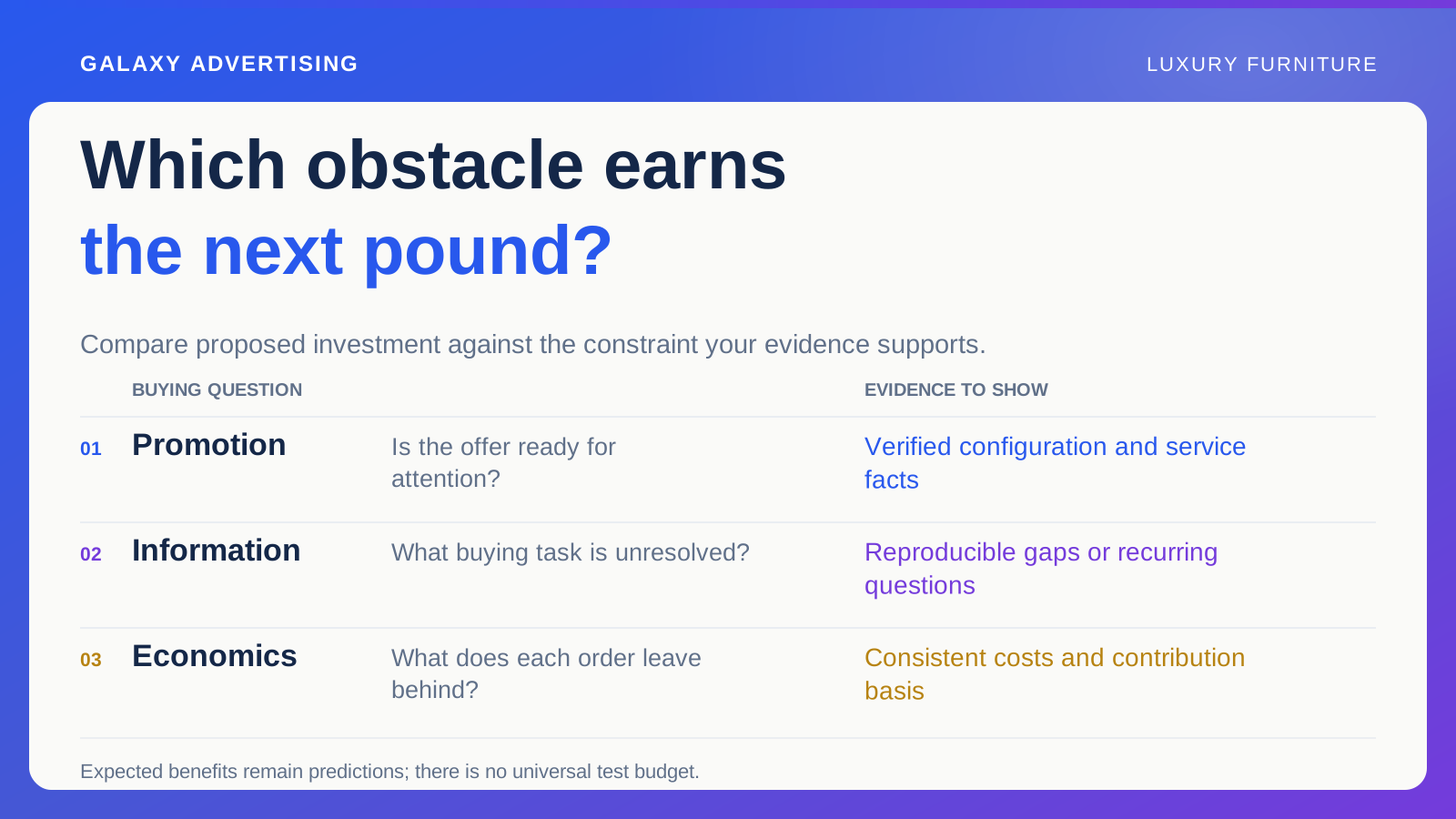
That makes a spare budget less straightforward than it looks. You could promote an established collection, commission configuration imagery or improve answers to delivery questions. All sound worthwhile. The decision rests on which investment addresses the best evidenced constraint on worthwhile orders, not which proposal produces the longest task list.
Say what each proposal is meant to achieve
Name the collection, the customers you intend to serve and the result the investment would support. A broad request to increase brand awareness is hard to compare fairly with a specific configuration correction unless you explain what the awareness work is for.
For an established sofa range, extra promotion might seek more suitable enquiries from a defined market. New imagery might clarify an arrangement people often misunderstand. A service change might answer questions before customers lose confidence in buying.
Write down the expected consequence of each option and the observations behind it. Keep predictions labelled as expectations. A proposal should not win simply because somebody describes its possible benefits with greater confidence than everybody else.
Walk the route your current customers meet
Start with the collection already receiving meaningful attention. Check for material gaps in configuration, finish, price and fulfilment information. Can suitable customers work out what is on offer and obtain the answers they reasonably need?
Give isolated comments and recurring obstacles different weight. One unusual enquiry deserves an answer without necessarily deciding your next major investment. On the other hand, a mismatch between an image and its package that you can reproduce may justify action without a queue of complaints.
This does not establish how much extra revenue clearer information will produce. It tells you whether more promotion would send people into a known, unresolved problem. That is useful evidence when your budget has competing demands.
Count the work needed to learn something
What would it cost to investigate each proposal sensibly? A small configuration clarification might be inexpensive to implement and review. A new audience or collection expansion could need creative, destination work and enough operating capacity to deal with the interest it generates.
Look beyond the media account. Production time, merchandising input and staff follow up all affect the actual cost. A modest advertising figure can sit on top of a substantial internal workload.
There is no universal test budget to reach for here. The sensible scope depends on the decision, the evidence already available and your capacity to fund uncertainty. Explain those dependencies instead of choosing a familiar amount and hoping it fits.
Ask what happens if the promotion works
Bring merchandising and operations into the discussion. Check availability in the configurations you would feature, documented delivery arrangements and the team's ability to answer the relevant enquiries.
Past success does not make a collection ready today. Unavailable finishes or changed lead times can alter its immediate suitability for more spend. The opportunity may still be there; it needs preparation before you expand promotion.
Keep demand potential and operational readiness separate. You can give a promising range a specific preparation task. You do not have to choose between approving it unconditionally and dismissing it as commercially unsuitable.
Compare the orders on a consistent basis
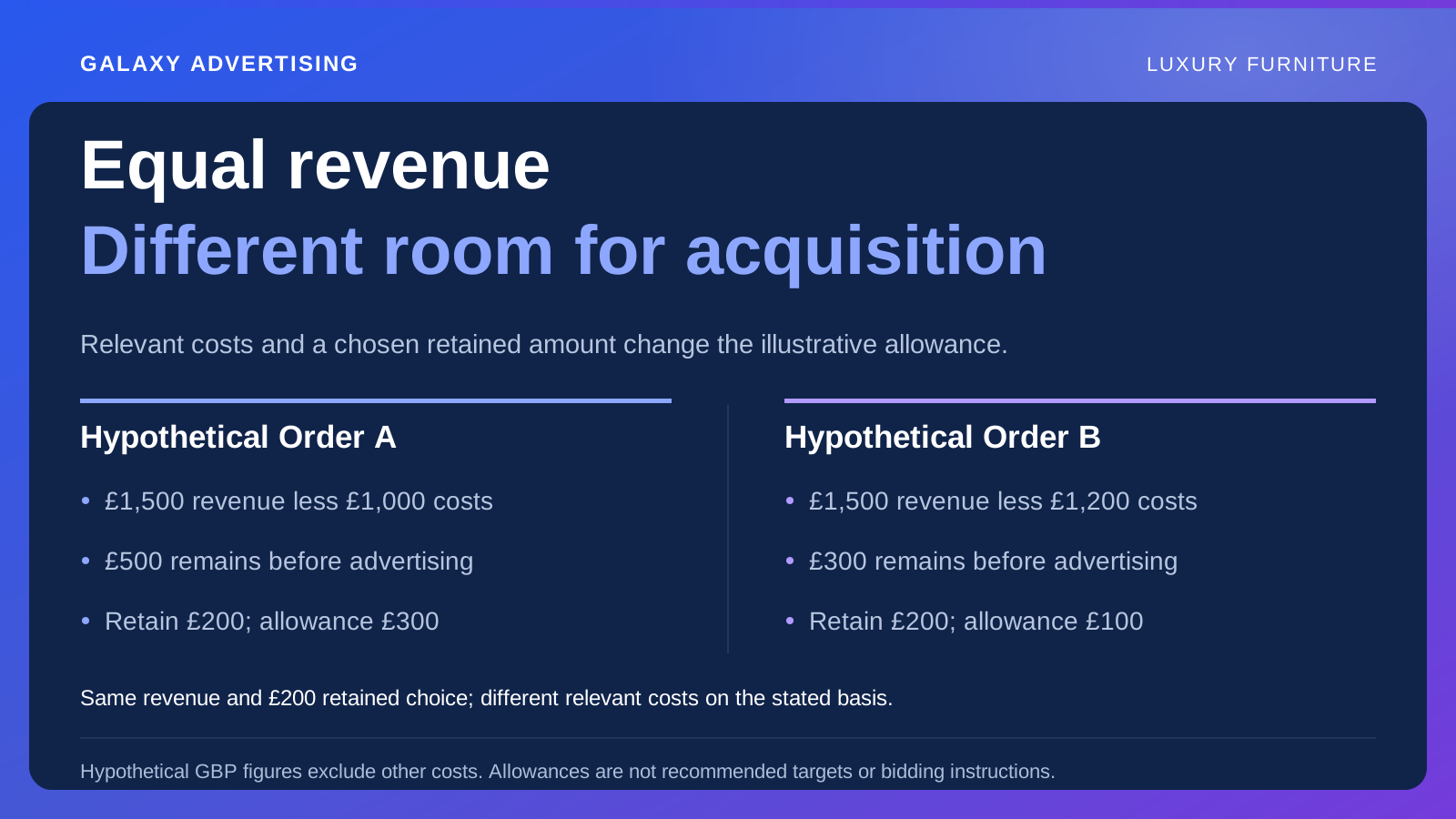
Agree the commercial basis with finance. Contribution is the money remaining after the costs included in your calculation. Revenue alone can favour large orders whose configuration or fulfilment costs leave little of it. A smaller, more dependable pattern of orders may deserve a different assessment.
Make your expected product mix and material variable costs explicit. If the recommendation depends heavily on an uncertain delivery exception rate or a speculative repeat purchase, show that dependence. It belongs in the decision, however inconvenient it makes the comparison.
A hypothetical comparison can explain the reasoning, but it cannot supply a target for another retailer to borrow. Use your own opportunities, costs and obligations on a consistent basis. Those are what the proposed work will have to live with.
Pay for the right sequence of work
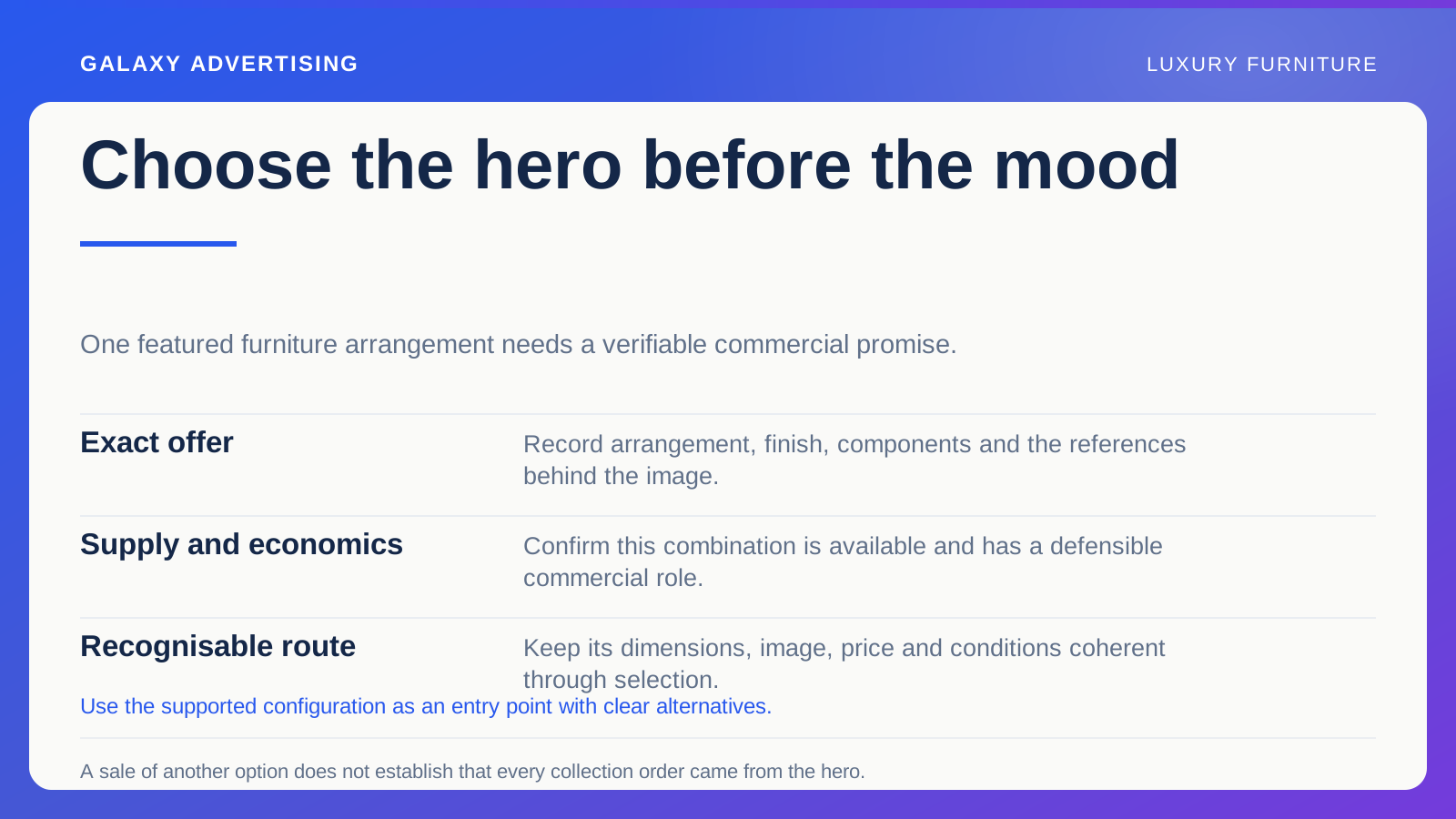
Some actions make others possible. You might first clarify the promoted configuration, verify the buying route and then investigate a defined increase in promotion. That can give you a more interpretable result than changing everything together.
Assign an owner and an acceptance condition to each step. New imagery is ready when the product details are verified and the destination clearly identifies the arrangement. Receiving the files is only part of that job.
Keep the preparation proportionate. It can turn into a comfortable reason to postpone a viable commercial test indefinitely. Resolve the dependency your evidence supports, then act within the agreed scope. You do not need a perfect website before any additional investment becomes possible.
Write down why this choice comes first
Record the selected action, what you expect it to achieve, the evidence and the main uncertainty. Include the opportunities you have deferred and what would make them worth reconsidering. A decision is easier to revisit when its reasoning has not disappeared into a conversation.
Review it once the relevant work and observations exist. If your correction did not address the expected obstacle, revise the diagnosis. Completing a task does not prove that funding it was commercially the right choice.
The next allocation should be easier because you have learned something specific. Furniture marketing spending belongs alongside the buying and operating route. Advertising is one possible answer, and an information improvement still has to earn its place in the budget through a clear commercial reason.