 Meta Ads
A homeowner with disposable income could need a balcony set, a table for larger gatherings or furniture that's easier to store. That audience description tells you very little about which advert will help them decide.
If your garden furniture brief stops at the demographic, the writer still has the difficult work ahead. Each of those buying situations suggests a different argument, demonstration and destination.
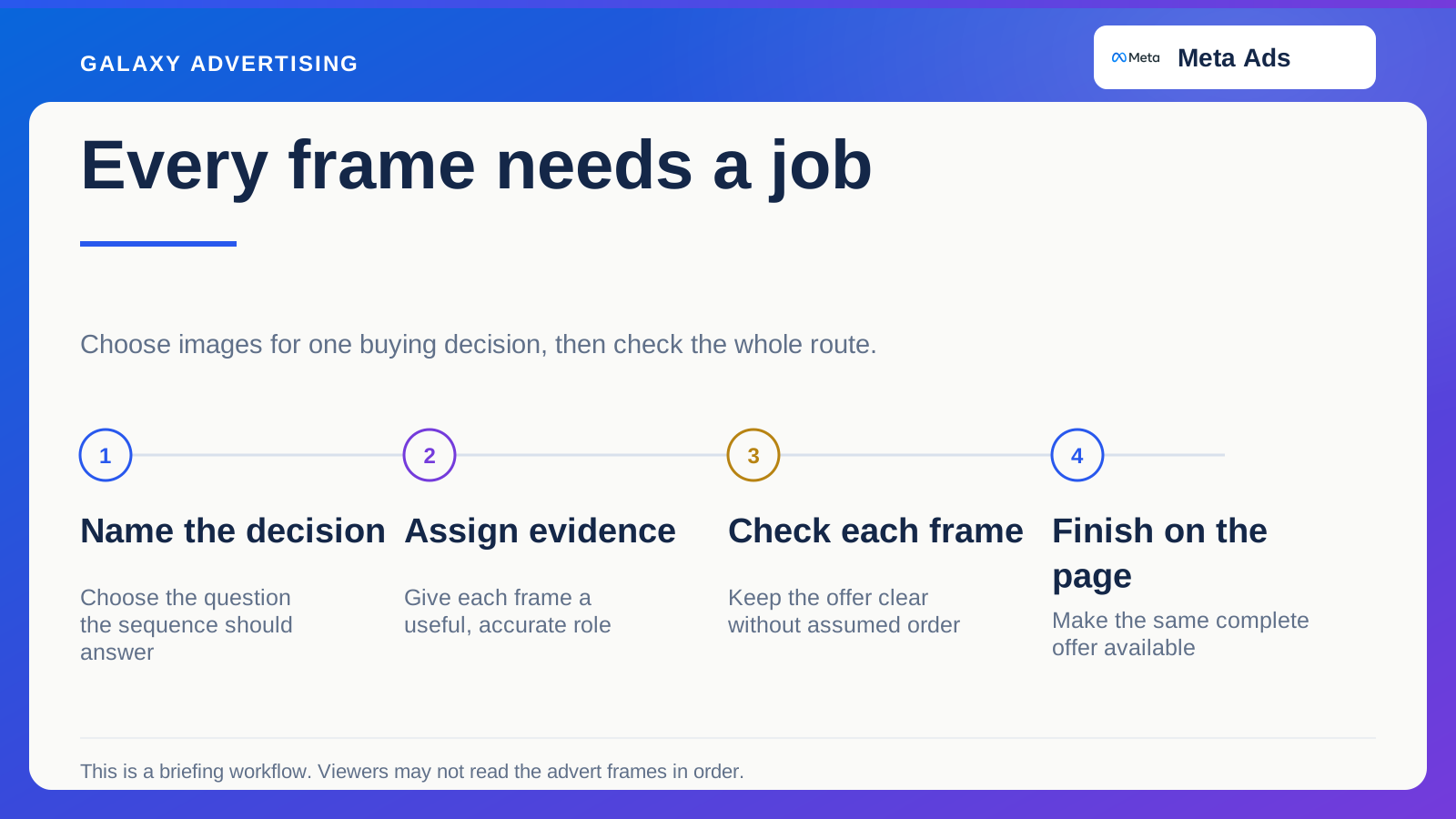
Start with the decision your product can help someone make. A recognisable situation gives you something to show; a broad personality description could fit hundreds of unrelated offers.
Describe why the product matters now
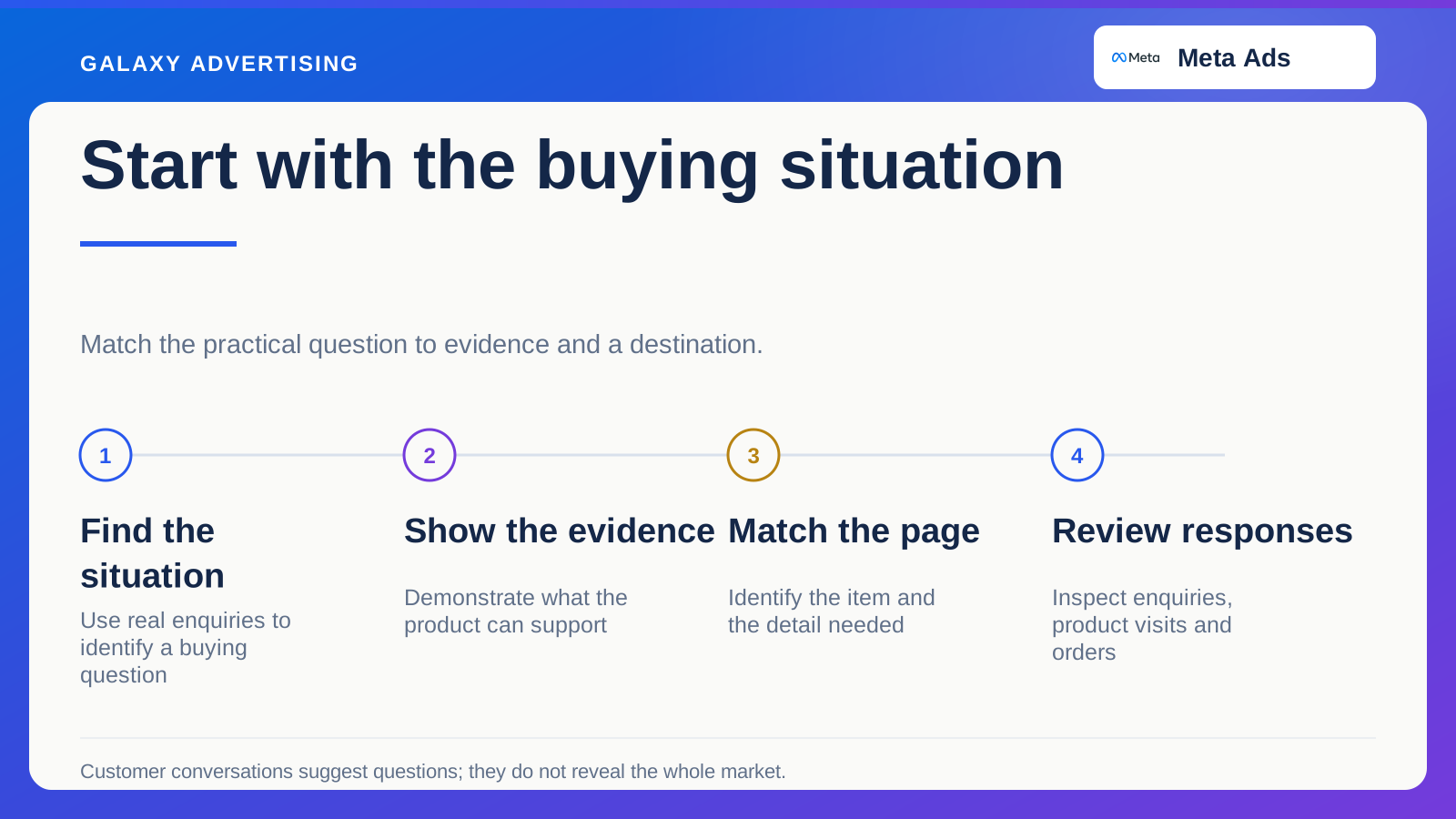
What has made this product relevant to the person? Perhaps there's a practical constraint, a household change or a comparison between different ways to solve a problem. Use real product enquiries and customer conversations to choose plausible situations.
Keep those conversations in proportion. A handful doesn't explain the whole market. It can reveal questions worth answering, provided you state the limits instead of turning an example into a claim about every customer's thinking.
For a balcony set, the issue could be limited space that still needs to remain usable. Your brief now has a job: show the furniture in a realistic layout and represent its proportions accurately. That's something production can act on. “Affluent people who enjoy outdoor living” leaves the practical question untouched.
Say what would change after the purchase
Ask what the product would help the customer do differently. An extension table might accommodate occasional guests while staying practical for ordinary use. A storage solution might make an existing room easier to use. Whatever difference you describe, the actual product and offer must support it.
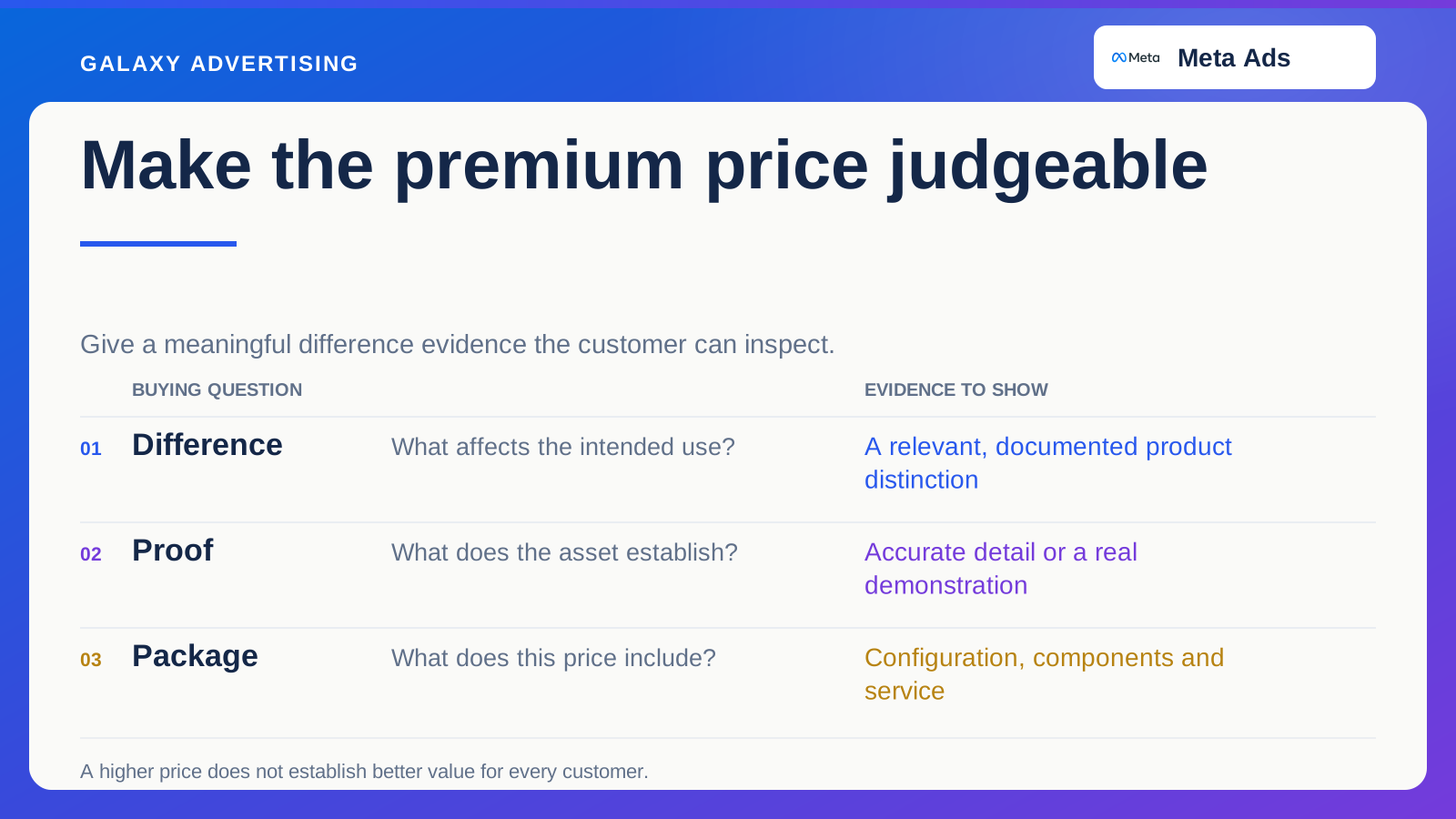
Keep that task separate from your favourite brand adjectives. Premium, stylish and innovative can describe a position. They don't establish which buying decision the advert helps resolve.
A useful proposition can expose a limitation too. A compact product isn't automatically right for a large gathering. An elaborate configuration may not work in a restricted space. Helping the wrong customer see that distinction is accurate communication. Persuasion doesn't require you to blur the fit.
Find the evidence before writing the hook
Decide what viewers need to see to understand your proposition. A room layout may establish scale. A continuous demonstration may show a mechanism. An accurate material reference, presented consistently, may explain a finish.
Write the opening around that evidence. If your most exciting line promises something the rest of the asset can't demonstrate, revise the concept. The hook shouldn't leave the product trying to catch up.
Take a hypothetical balcony campaign. One concept shows the furniture's footprint in an ordinary space. Another explains storage using the documented product arrangement. They address the same general market while investigating different reasons to consider the offer.
A vague lifestyle montage might convey a mood. That's a different, less specific question from whether the set fits or stores as the customer needs it to.
Help the person find the detail they came for
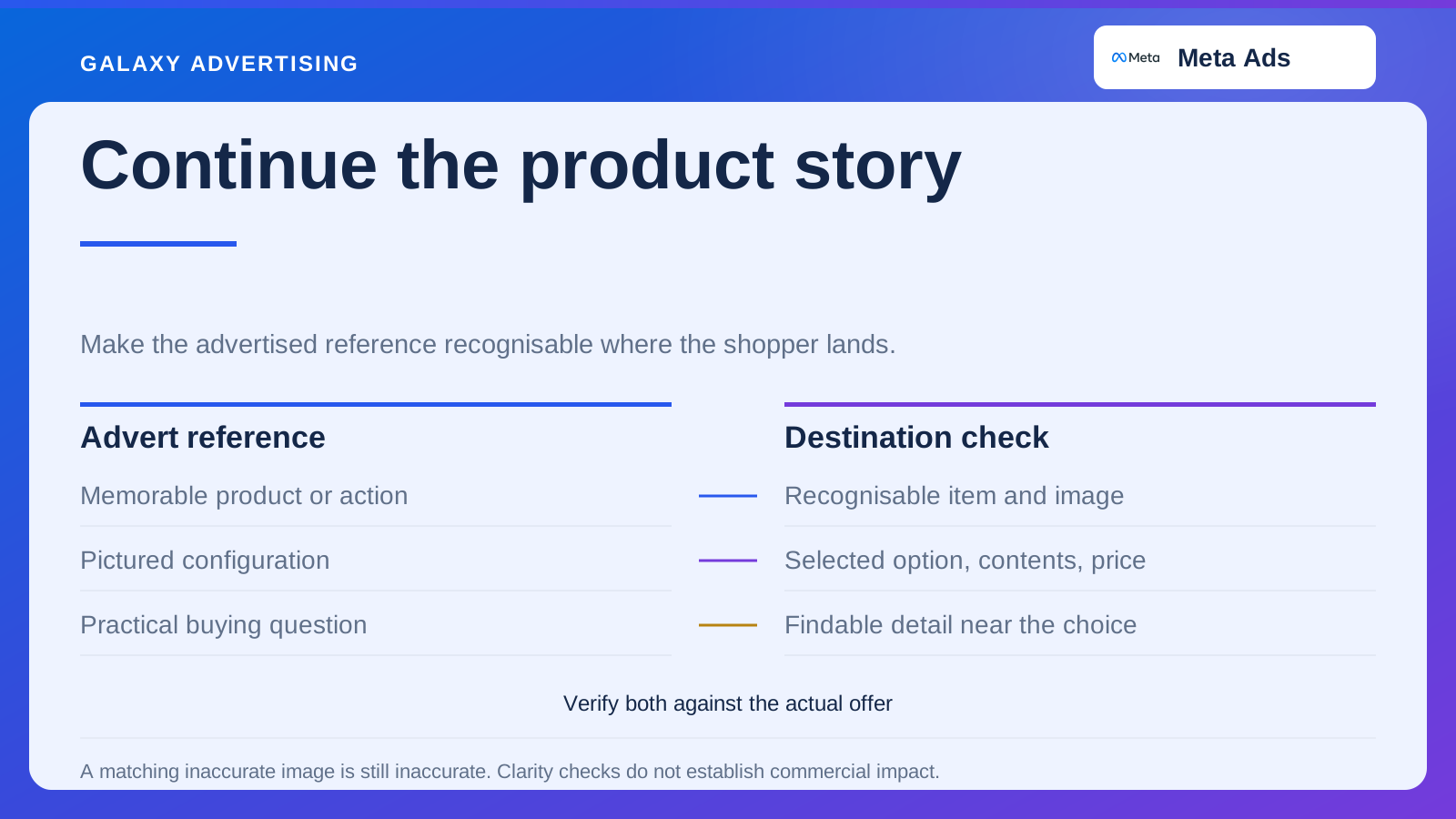
Someone investigating a small space shouldn't have to search your whole garden catalogue for the item they've just seen. Identify the product and provide the measurements or configuration information they need to assess it.
Where the advert shows an optional accessory or particular arrangement, explain how it relates to the price and package. Customers shouldn't need access to your production brief to understand what you're selling.
Try the route on a phone as well. A useful measurement can disappear behind unclear labels. A page can open on a different variant, meaning a different selected size, colour or configuration. Either can weaken a relevant promise. Creative relevance runs through the whole route, rather than ending with a good first impression.
Make the audience setup serve the question
A creative situation doesn't automatically prescribe a targeting configuration. Meta's system uses prediction and the controls available to your account. Inspect those current controls instead of assuming a neatly written persona translates into a perfect technical audience.
Keep the intended market and genuine constraints clear. If you're comparing arguments, avoid changing the product, message and audience conditions all at once. Otherwise, the result becomes harder to interpret.
Be precise about the learning question. You might investigate whether a storage demonstration attracts people whose product exploration reflects that practical need. That doesn't demonstrate that everyone in a demographic group shares the same objection. A useful test has a narrower claim than that.
Ask customer service to challenge the idea
Before commissioning several balcony concepts, ask whether the situation matches the questions the business hears. Do shoppers ask about fitting the set into a narrow space? Or do they keep asking about rain exposure and where to keep cushions?
Those answers could change the demonstration entirely. A plausible creative idea is still a hypothesis until it connects with questions your business encounters.
Write down what would make it less useful. Perhaps the advertised arrangement needs more space than the intended customer is likely to have. Perhaps the storage demonstration depends on an unavailable accessory. Revise the proposition before production if that's the case. These aren't small details to tuck into a caption later.
That short challenge gives the creative budget a clearer purpose and protects the customer's understanding of the offer. It also stops a convincing brief becoming its own evidence.
Look at who the argument appears to attract
Go beyond whether people liked the scene. Look at the product visits, questions and orders your business can inspect. Did viewers understand the configuration? Did enquiries concern the practical problem you intended to address? Were the purchases commercially suitable?
Those observations won't reveal every person's motivation. Use them to refine the argument and destination, keeping that limitation visible. You can improve the work without claiming complete knowledge of the audience.
Keep a simple record of the buying situation, evidence shown and outcome observed. It should explain why the next concept deserves production. If its reasoning can't be distinguished from the previous brief, another asset may add volume without adding a useful idea.
A good advert gives a suitable shopper something recognisable to assess: their situation, an accurately represented solution and a route to the right information. That's when audience thinking starts changing what the customer actually sees.