 Meta Ads
What if Meta shows twelve purchases, analytics shows nine and your store records fifteen orders? Before you change the budget, you need to know why they disagree. Picking the most reassuring total won't explain the gap.
The systems could be using different attribution rules, time boundaries or definitions of value. There could also be a genuine implementation fault. Disagreement alone doesn't tell you which.
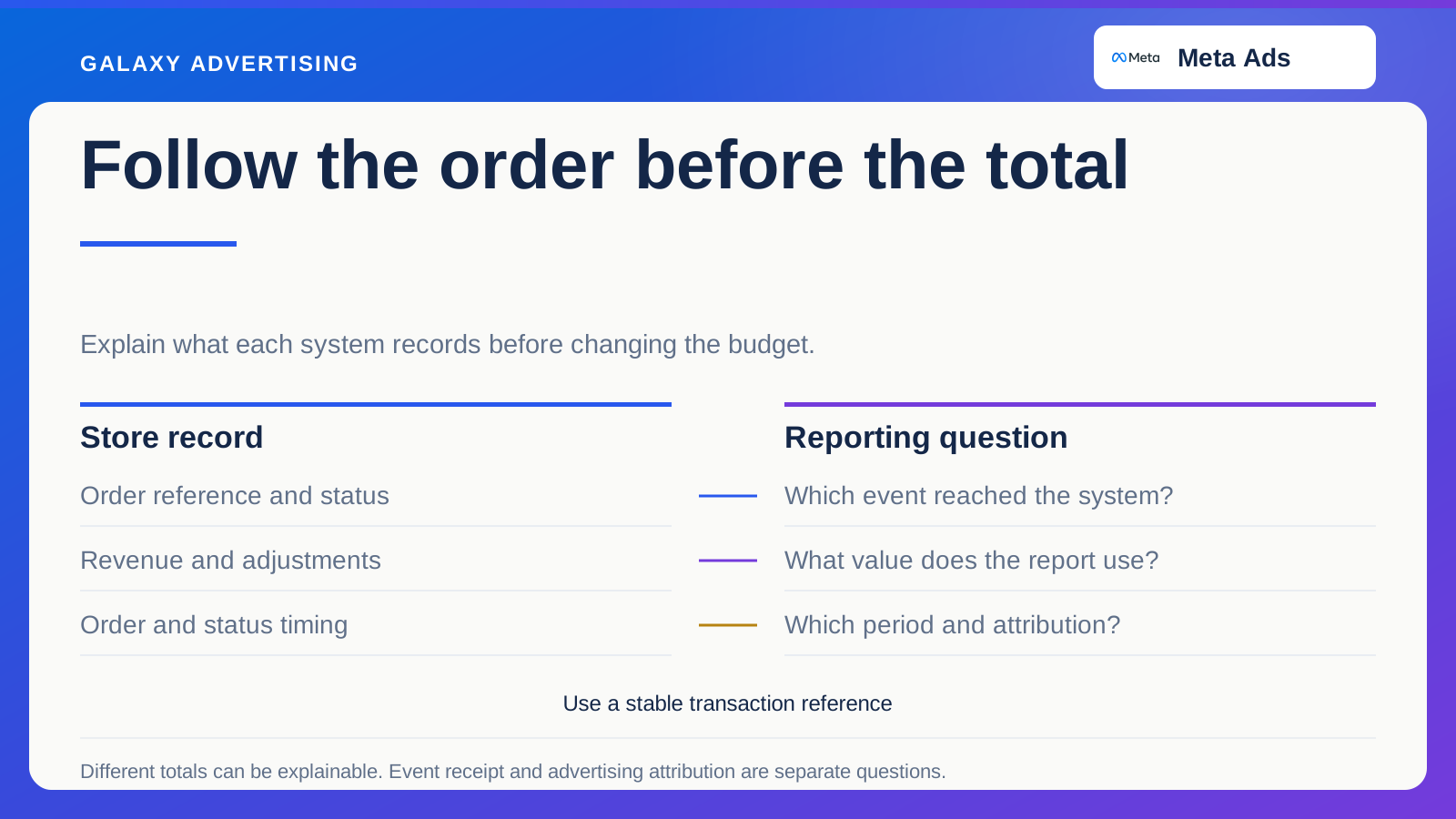
Start with a stable transaction reference and follow the information through the relevant systems. The useful outcome is an explanation you can base a decision on, rather than a promise to make every dashboard show the same number.
Start with what your store calls an order
Identify the store record of actual orders and establish what each status means. Creating an order, receiving payment and fulfilling a purchase are connected events. They aren't interchangeable commercial outcomes.
Choose a sample containing ordinary orders and relevant exceptions, including cancellations or refunds. You're trying to understand the route, so don't select only the transactions that make the reporting look consistent.
Keep personal information out of the general working report unless a specific authorised investigation requires it. An internal order reference, value, status and relevant event details can often do the job. Everybody involved doesn't need to see a customer's contact information simply to reconcile a transaction.
Agree what the value includes
Record how each system treats tax, delivery income, discounts and other adjustments. A ratio using gross order value cannot be casually compared with a management calculation using net product revenue. The same transaction can produce different figures for an entirely explainable reason.
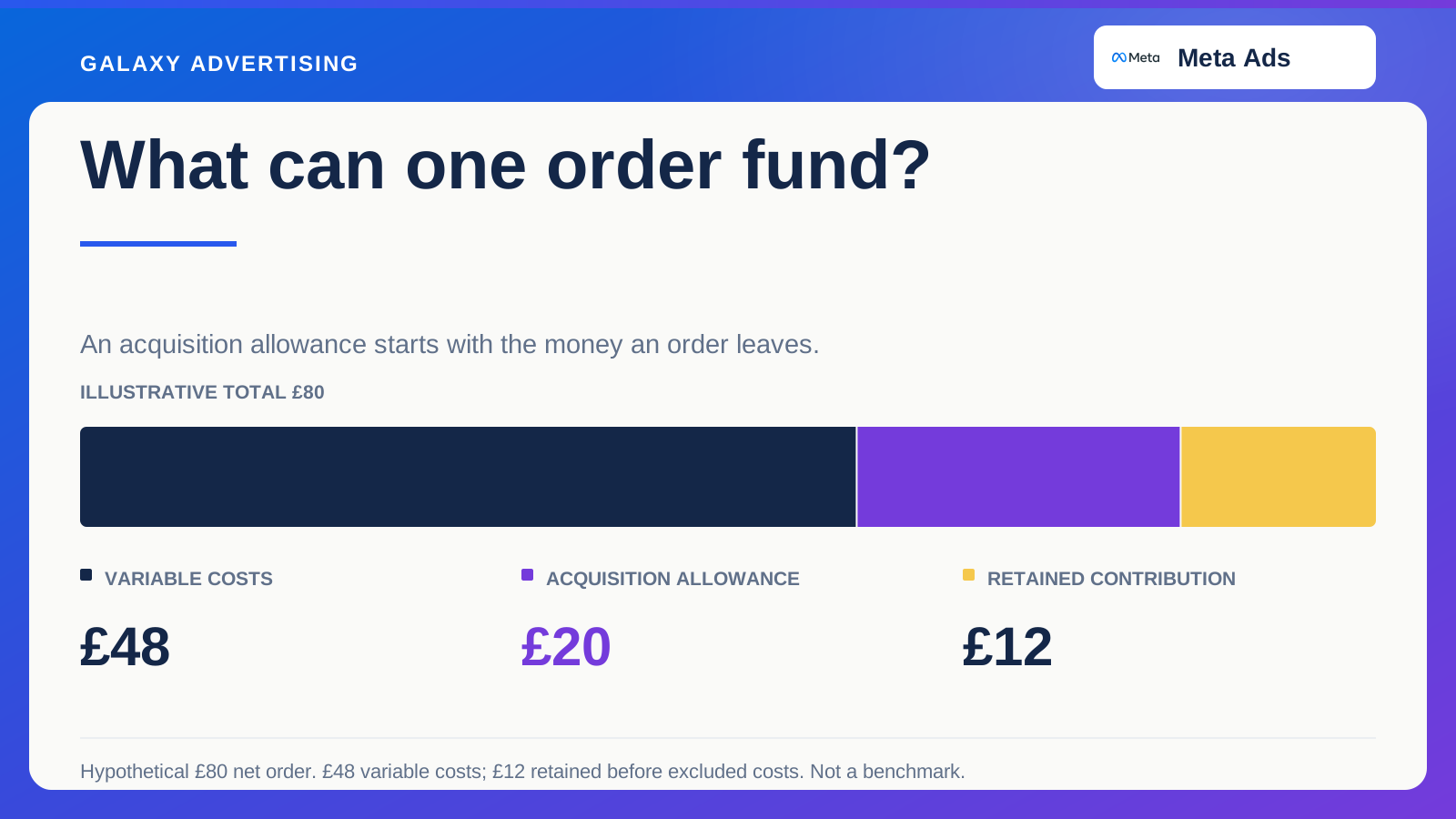
Take an explicitly hypothetical example. Your store records £120 received, including £20 tax. Your commercial review uses £100 before relevant variable costs. A reporting ratio using £120 will differ from one using £100, although both refer to the same order.
Don't choose the definition that flatters the campaign. Agree the operational definition, document the differences and assess changes on a consistent basis. Give any adjustment an owner who understands both the store and the measurement implementation. Otherwise, one team can fix a number while another loses its meaning.
Follow each route the order information takes
Ask the implementation owner to explain how a completed order reaches the advertising system. You need to understand which integrations or event routes are active and how each connects to the actual transaction.
If you use both browser and server routes, ask the specialist to verify the current platform requirements for identifying the same event. Adding another route doesn't necessarily improve measurement. Matching totals doesn't prove everything is correctly implemented either.
A generic technical checklist is no substitute for reviewing your installation. The integration, consent implementation and store workflow can all affect what needs checking. These are the reconciliation questions to ask. The implementation owner should use current primary documentation for the exact configuration.
Did the event arrive, or was it attributed?
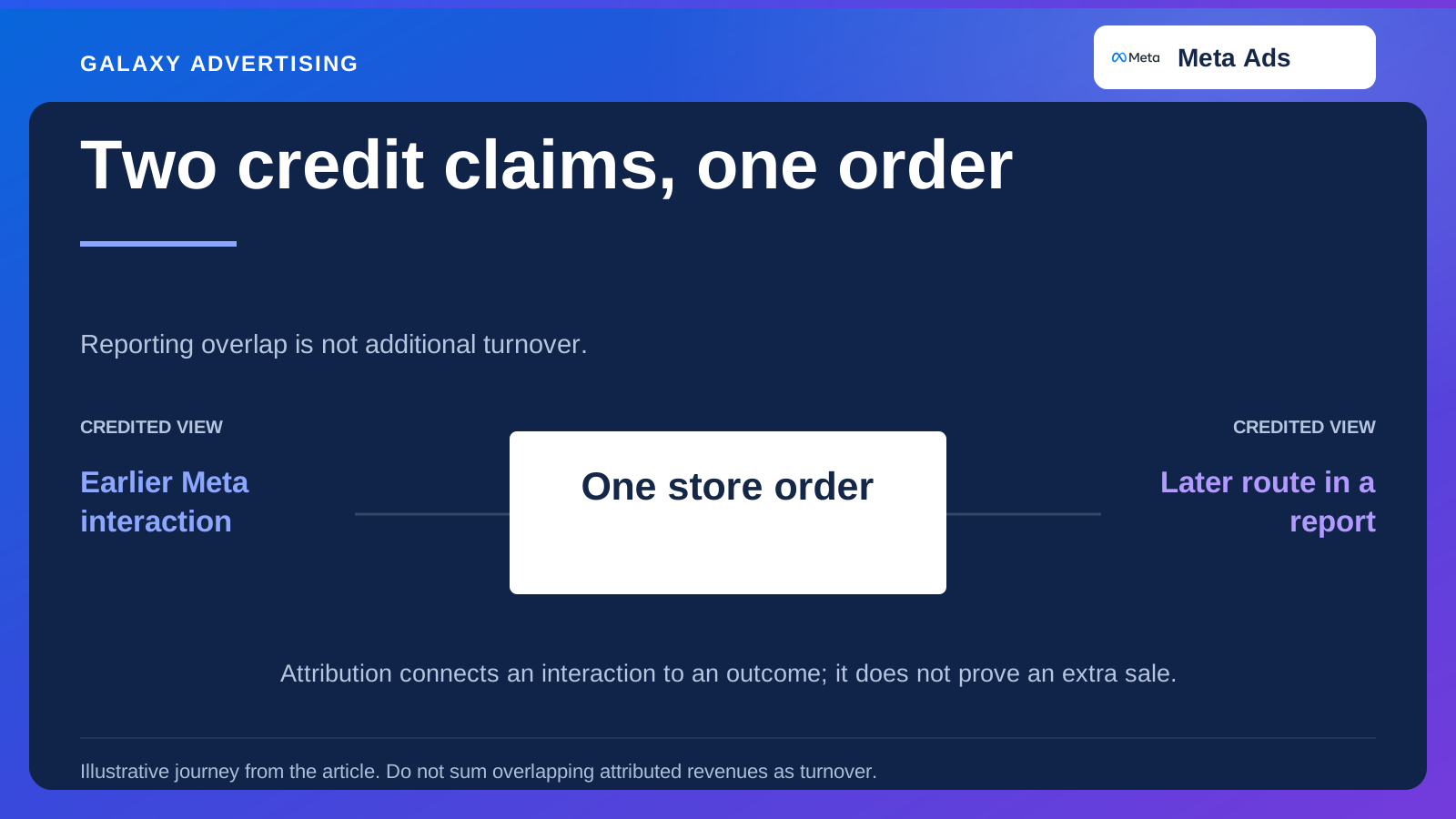
Those are different questions. An event can reach the system without being attributed to a particular advert in the report you're viewing. Equally, the reporting basis can connect an order to an earlier interaction that your store's own channel summary treats differently.
Ask what each report actually answers. Does it show transactions received, purchases attributed under a selected basis, or store orders recorded during a particular period? Make those labels explicit before interpreting the totals.
Don't change a working purchase event to solve an attribution difference. You could turn an understandable reporting distinction into a real measurement fault. First establish whether the discrepancy concerns receipt, classification, timing, value or attribution. The correction depends on the answer.
Check what happened after the order
Compare the time boundaries and when order statuses changed. An order near the edge of a reporting period can appear in different summaries because those summaries are defined differently.
Give refunds and cancellations particular attention. The campaign's originally attributed value might not reflect the final economic result on the same timetable as your store records. Explain how the management review handles those adjustments. The original value isn't permanent profit.
Keep the reconciliation date in your internal record, even though these public articles have no publication dates. A later reviewer needs a point of reference to distinguish a changed integration from an earlier observation. Leaving dates out of editorial presentation doesn't mean stripping timing out of measurement work.
Name the difference before assigning the fix
Keep a concise investigation record: order reference, observed values, relevant systems and current explanation. Mark each difference as explained, uncertain or apparently a reproducible fault. A general complaint that tracking is wrong gives nobody a clear finish line.
A fault needs a correction and verification. An explained difference needs its interpretation recorded. An uncertainty needs an owner and a specific next check. Treating all three alike makes the work harder to finish.
After correcting something, inspect a fresh, suitable sample. Check that the intended behaviour now occurs and neighbouring events or values haven't changed unexpectedly. A successful technical fix tells you something about the implementation. It doesn't retrospectively prove every campaign's commercial value.
Bring in the people who own the order process. An analyst might spot an event discrepancy without knowing that the store creates provisional orders before payment, or that a fulfilment exception changes final value. A short walkthrough with operations can explain this faster than adjusting tags in isolation. Record the explanation so the next specialist inherits the business meaning as well as the configuration.
Say which figures the next decision can use
Set out the agreed transaction and value definitions, material limitations and unresolved issues. Be clear about which figures can support the next spending decision and which need caution.
If your sample reveals a serious unresolved fault, don't present a precise return as settled. If the differences are explainable, you can make a proportionate decision without waiting for impossible agreement between systems answering different questions.
Measurement stays reliable when somebody maintains that understanding. A dashboard earns its place in a budget conversation when you can connect what it says to real business records and explain the parts that differ.