 Meta Ads
It's easy to mistake a second chance to advertise for a reason to offer a discount. Someone looks at your modular sofa and leaves, so the next advert shows the same room photograph with money off. But what if they're still checking access to the room, comparing configurations or waiting for a fabric reference?
The discount assumes price was the problem. Their earlier visit doesn't tell you that.
A useful retargeting plan, meaning advertising aimed at people who've already interacted, starts with what they still need to understand. Then it asks whether that extra message was worth paying for. Those are separate questions, and both matter.
What might they still need to know?
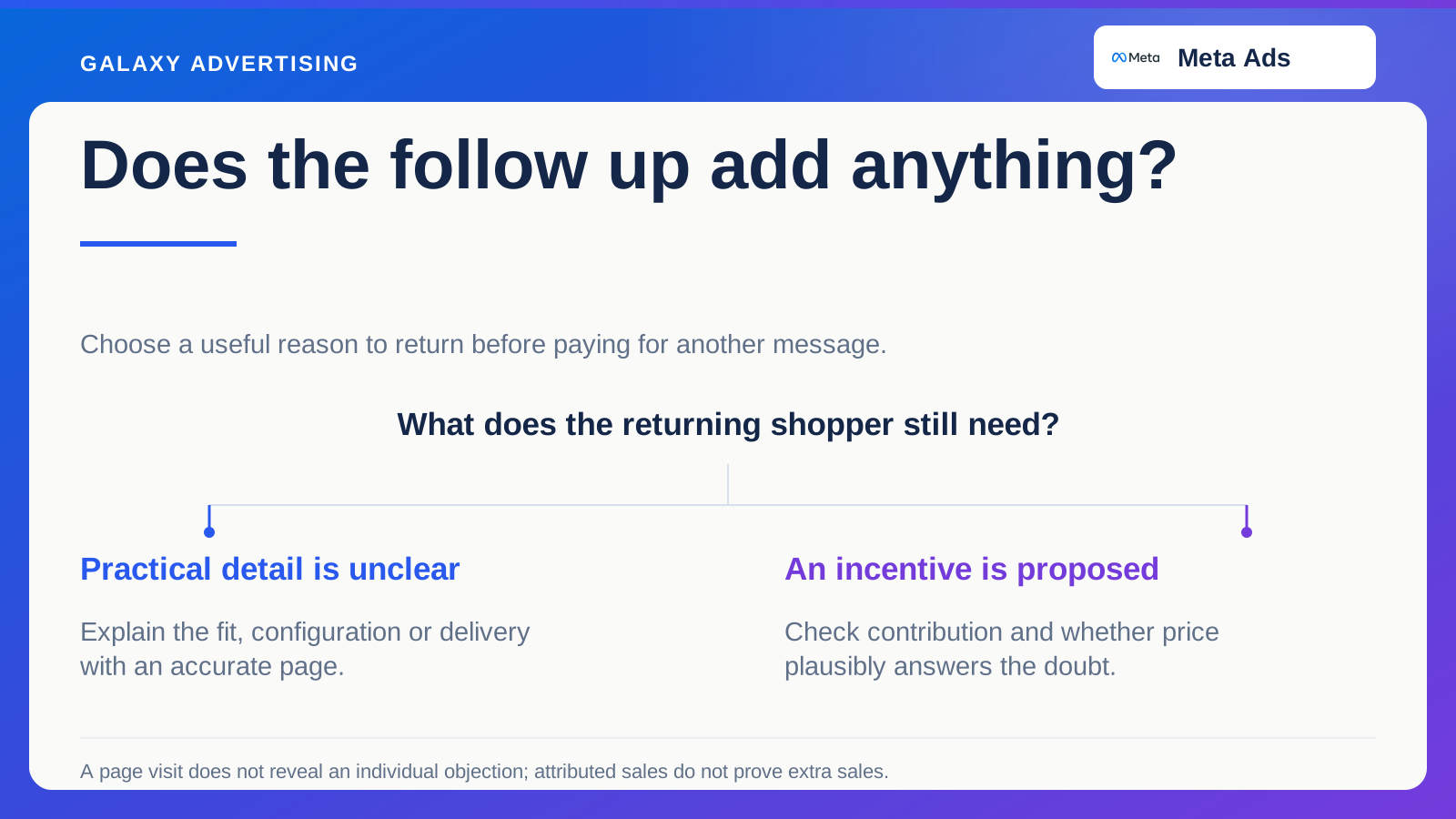
Start with the questions people ask between discovering a product and ordering it. Look through customer enquiries, sales conversations and the information already available on the destination page. For a considered furniture purchase, practical fit and delivery detail may matter just as much as how it looks.
Don't take a page view as proof that you know an individual's objection. You're identifying plausible information needs across shoppers. You're not reading the mind of everyone who left.
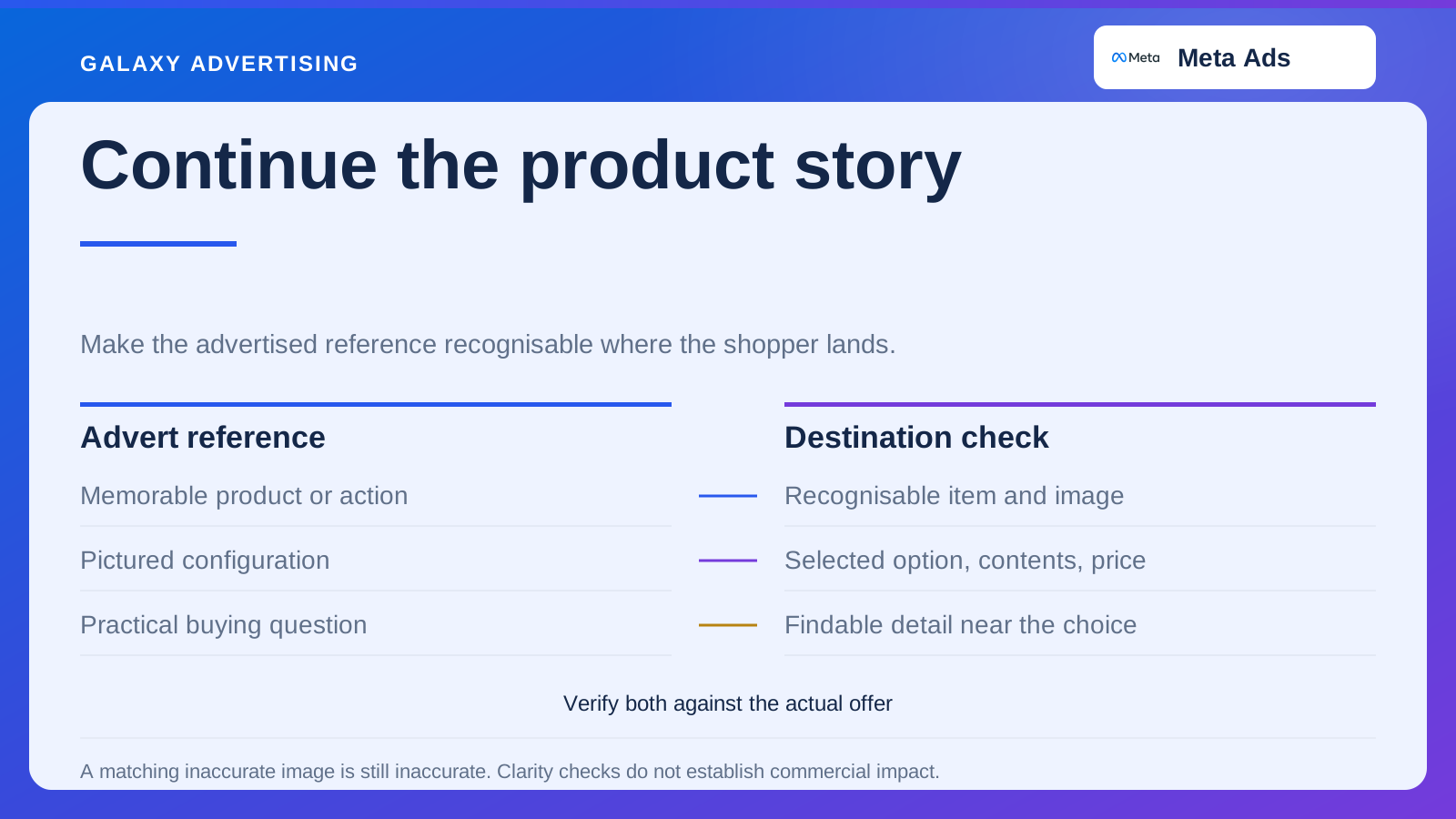
Choose a manageable set of arguments for following up. You could explain a configuration choice, show a relevant feature or make the delivery service clearer. Give each argument an accurate destination where the person can inspect that detail. Another general sales pitch leaves the original question hanging.
What does the next advert add?
A reminder can be useful when somebody reasonably needs to return to an offer. A familiar image isn't automatically wasted. Still, you should be able to explain why showing it again deserves more of your budget.
Ask what the next asset contributes. Perhaps an important product fact becomes easier to see. Perhaps the offer has genuinely changed. Perhaps it gives the shopper a clear way back to a configuration they can assess. Turning up the urgency doesn't, on its own, create another reason to buy.
Resist anyone offering a universal number of exposures that makes a shopper annoyed or ready to order. Buying journeys and advertising conditions differ too much for that claim. Review the delivery and response you can actually see in your account alongside the quality of the message.
Keep the connection to the product clear
If somebody was considering a large sofa, an unrelated accessory shouldn't become the automatic follow up just because it's easier to advertise. The commercial connection needs to make sense to them.
Check availability before repeating the product. If that configuration has sold, the job changes. The shopper may need a clearly identified alternative, with a destination that explains the change, rather than another invitation to buy something unavailable.
Audience and exclusion controls need checking in your particular account. Don't build the commercial plan around a setting somebody assumes exists. Record who the follow up is intended to reach and ask the account owner to verify how the current setup supports that scope.
That keeps a sensible intention connected to what the account can actually do.
Give the discount a commercial job
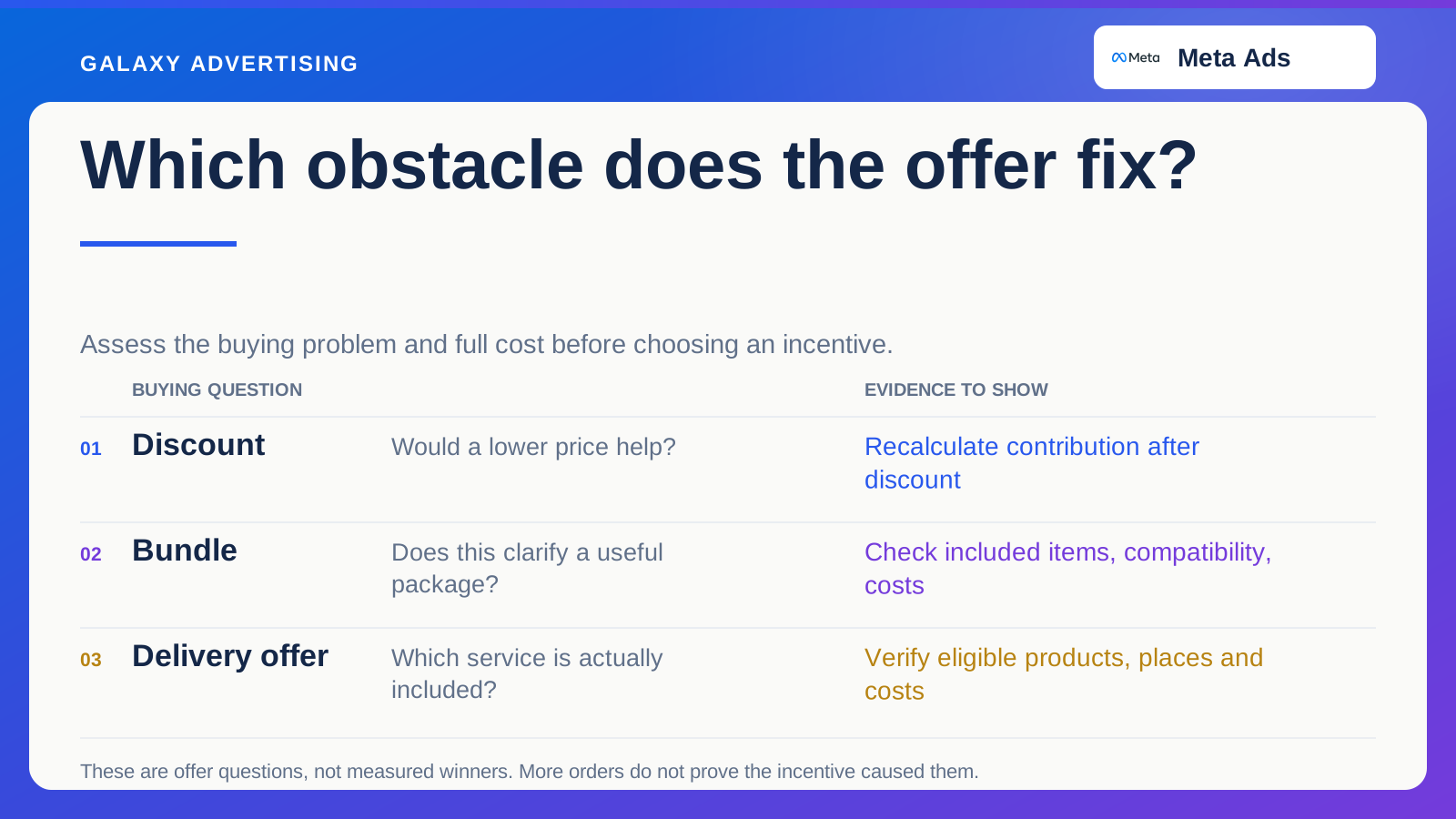
Before adding an incentive, calculate what a hypothetical order would leave after the discount and relevant costs. A lower cost to acquire the order isn't automatically better if the incentive consumes more contribution, the money remaining after the costs in your calculation, than it saves.
Then return to the buying question. Could a discount plausibly answer it? A shopper who doesn't know whether the sofa will fit through the doorway still needs that information. A cheaper sofa has the same physical constraint.
Where an offer makes commercial sense, make its conditions clear and retire the message when it ends. Keep the reporting conversation honest too. A discounted returning order doesn't prove that person needed a discount. You've seen a purchase with an incentive. You haven't seen the purchase that would have happened without one.
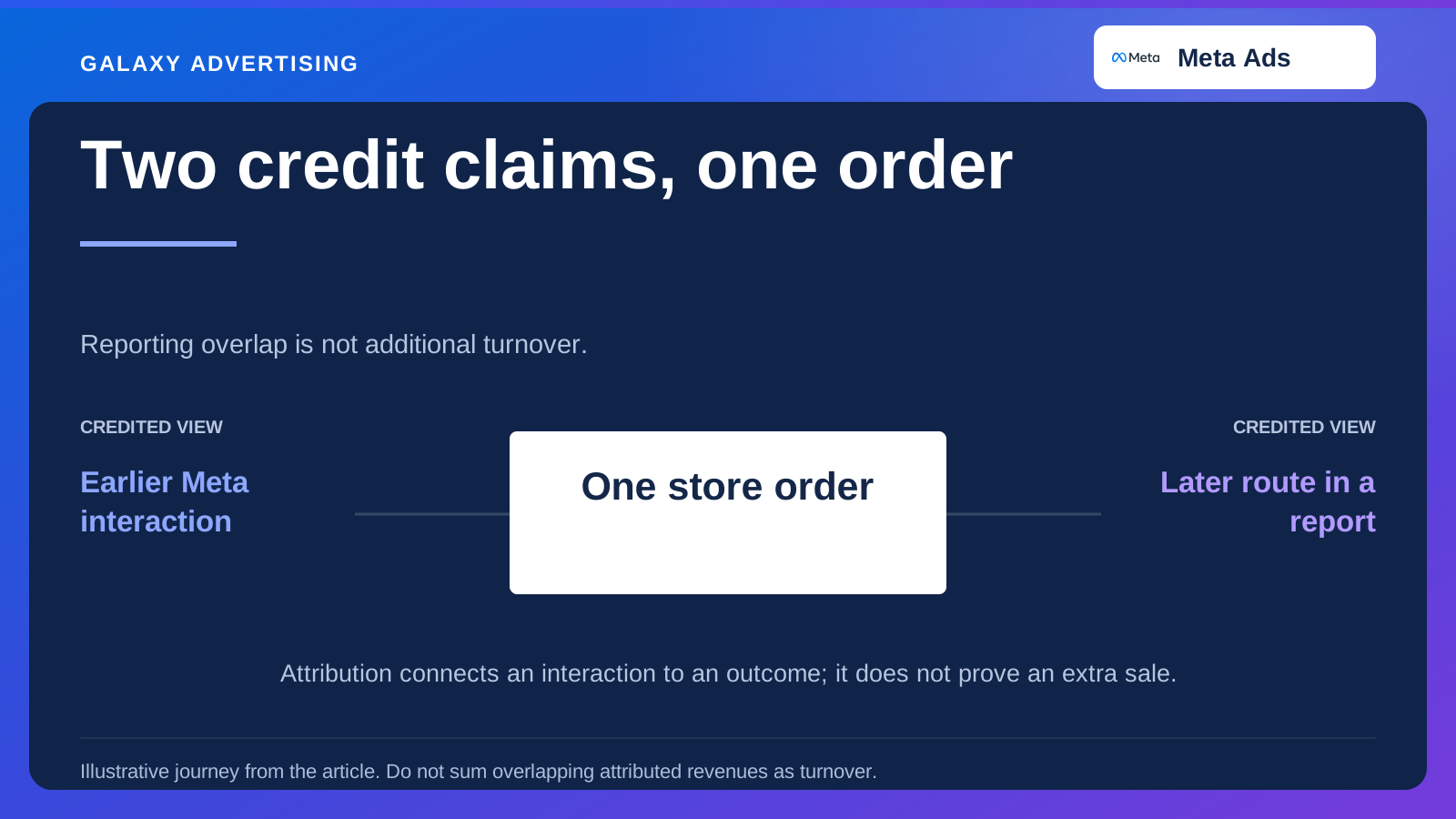
An attributed order isn't proof of an extra order
Platform attribution assigns orders according to the platform's reporting basis. By itself, it cannot tell you how many orders you would have lost without the follow up campaign.
Some returning shoppers are already close to buying. Others really benefit from an explanation that settles a hesitation. Both can show up in the attributed result, which is why a strong headline return needs interpretation before you expand spending.
If your scale and available tools support a suitable comparison, discuss a controlled evaluation with the account team. If they don't, make the spending decision proportionate and keep the causal limitation visible. Imperfect evidence doesn't entitle anyone to present attributed revenue as guaranteed additional business.
You can make a decision without pretending you've established more than you have.
Look at the sequence as a customer would
Inspect the messages somebody might encounter. Are several adverts making the same claim? Is one promoting an offer while another shows an obsolete price? Does the route still make sense if the person has already ordered or chosen a different product?
You cannot observe every individual's experience. You can still review the actual assets, intended audience conditions and common routes for avoidable contradictions. Describe each problem concretely enough that somebody can fix it.
Customer feedback helps, provided you keep its limits in view. Investigate a complaint about repetition, but don't treat one comment as the experience of the whole audience. Positive engagement has limits too. It doesn't establish that the sequence supports worthwhile purchases. Put those observations together without asking any one of them to prove too much.
Which message still earns its place?
At review, connect each argument to its purpose, spend, available outcomes and limitations. You might keep an explanation that helps, correct a destination that doesn't match or stop a message whose commercial role nobody can explain.
Record what you've learned about the buying question. If configuration enquiries fall because the destination is clearer, the next move may be to change the sequence. You don't have to keep advertising the same answer indefinitely.
The returning shopper should come back to something more useful: a relevant reason to reconsider an offer that's represented accurately. Your business needs a defensible reason to pay for that opportunity. Seeing the same picture again doesn't settle either question.