 TikTok Ads
A test spending £600 on media and £400 on attributable production costs more than its media report alone shows. Those hypothetical figures matter when you're deciding where the next pound should go. They don't mean all production must be charged to one short reporting period.
It's a familiar allocation problem: the entire TikTok budget becomes media, while the only usable video is a polished montage from another campaign. Results disappoint, production is asked for more creative, and neither money nor the product is available for a shoot.
Consider the dependencies together. Media creates opportunities to see the asset. Production determines what evidence it can show. Your next investment needs to address the actual constraint while keeping commercial uncertainty visible.
Identify what's preventing useful progress
Ask what the team needs to make a worthwhile next decision. A weak proposition, missing footage, unclear destination and insufficient response evidence are different constraints. They won't all be solved by putting more money into the same department.
More media can help you observe a usable asset in suitable conditions. It can't film a missing demonstration or fix contradictory product information. Another shoot can also waste money if nobody has chosen the buying argument it needs to explain. Settle the task before pricing the response.
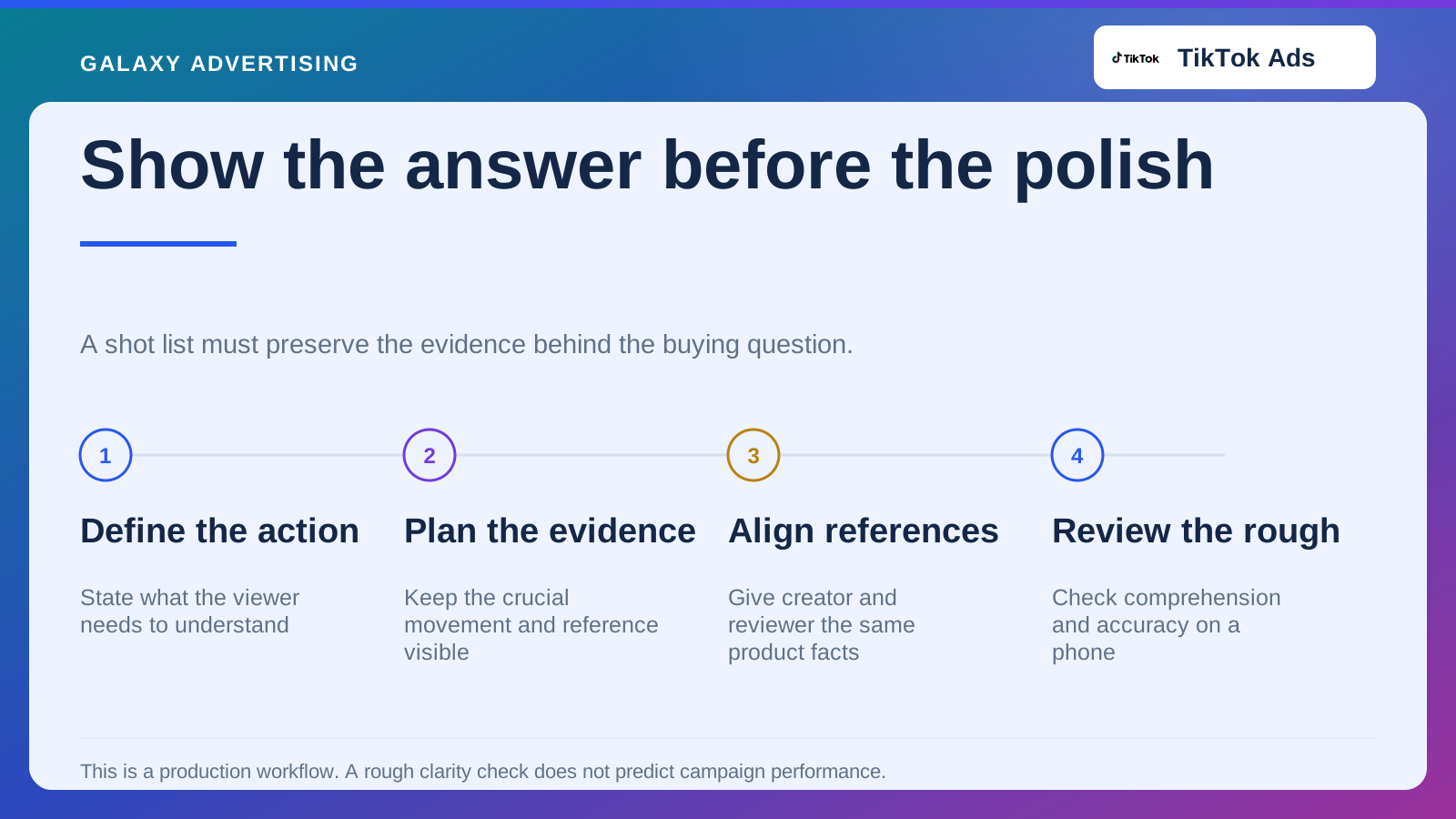
Write the proposed decision in one sentence. A hypothetical desk retailer might ask whether the folding feature deserves a continuing acquisition test. That makes necessary production and media inputs easier to identify. An inherited allocation percentage doesn't tell you what evidence that particular question requires.
Check what useful material already exists
Review footage against the question you intend to investigate. Identify accurate demonstrations, useful details, missing views and material invalid for the current offer. The library's size matters less than whether it contains the evidence you need.
A new edit may be enough when the evidence exists but the story is unclear. A new shoot may be necessary when the crucial action was never captured. Distinguish those situations before requesting another complete production package. They create different work and different costs.
Verify restrictions on existing material with the responsible person. Having the file doesn't establish permission for every proposed use. Don't base production savings on an assumption that later prevents the asset from running. The usable inventory includes what you may legitimately use, as well as what you can open.
Price the work needed for an approved asset
Cost more than the filming session. Product preparation, relevant transport, editing, factual review and necessary adaptations can all affect what it takes to reach a usable result. The budget needs to cover the route to approval, rather than only recording the footage.
Define the evidence the package must provide. A promise of many videos can hide repeated edits of one unsupported argument. Depending on the question, fewer accurate concepts making genuinely different arguments may give you a stronger basis for learning. File count shouldn't substitute for that distinction.
Separate optional polish from essential work. A sophisticated location might support the brand, but it shouldn't consume the money needed to show the product action clearly. Explain what each cost contributes to the commercial test so the allocation can be assessed against its purpose.
Leave enough media to learn something interpretable
The imbalance can run the other way. Commissioning an extensive library while leaving too little to investigate any concept produces assets without a credible learning plan. Production volume doesn't establish what the response would tell you.
Ask the account team what observation the proposed media amount can reasonably support under actual conditions. Don't demand guaranteed purchases from an uncertain first test. Don't import a universal minimum budget either. The explanation needs to fit this scope and decision.
If you cannot afford the proposed programme, narrow it. Choose one product family, fewer arguments or a different sequence. A bounded test with explicit limits is easier to review than a broad launch whose funding cannot support the claims you want to make from it.
Include the destination in the allocation decision
Check that the page can continue the demonstration accurately. Missing dimensions, confusing variant selection, meaning the selected size, colour or configuration, and unavailable options can reduce the usefulness of both media and production. The customer needs a coherent next step.
A small website correction may deserve priority over another creative version. Assign it, verify that the fix reaches the customer's route and ask the account manager which obstacle it removes. Completion needs more than agreement that somebody will update the page.
Keep that dependency tied to a demonstrated problem. It isn't a reason to redesign the whole store before testing anything. You're removing a material ambiguity in this route, rather than turning a campaign brief into an indefinite website project.
Show the combined economics and their assumptions
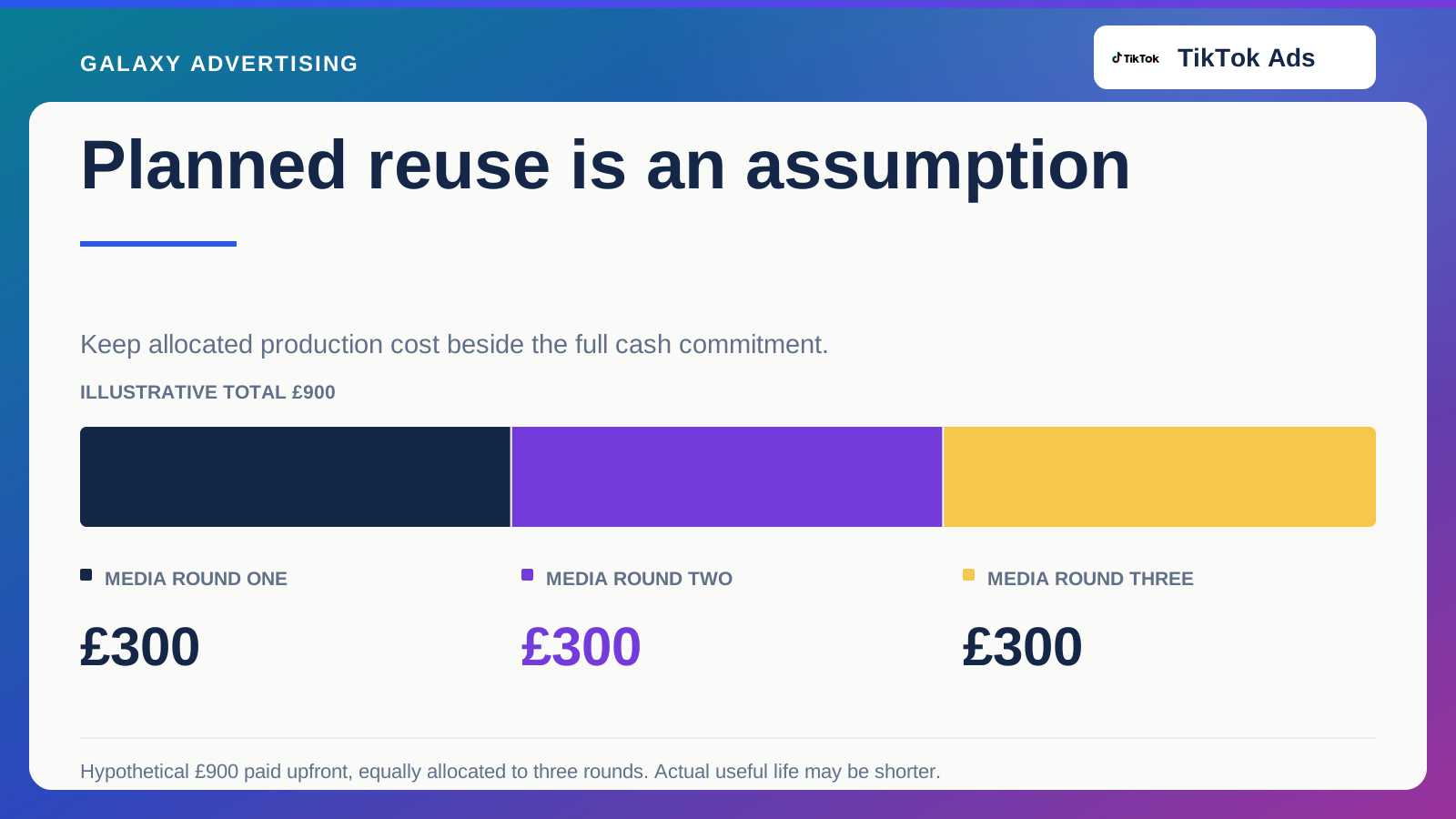
Return to the hypothetical £600 media and £400 attributable production test. Reporting media alone omits part of what you funded to obtain the evidence. Show the relevant commitment so its commercial role can be judged.
Production may remain useful later, so it needn't always fall entirely into one short period. State how you treat the cost and why. Don't quietly change allocation methods to improve the reported result. The assumptions should remain visible alongside the number.
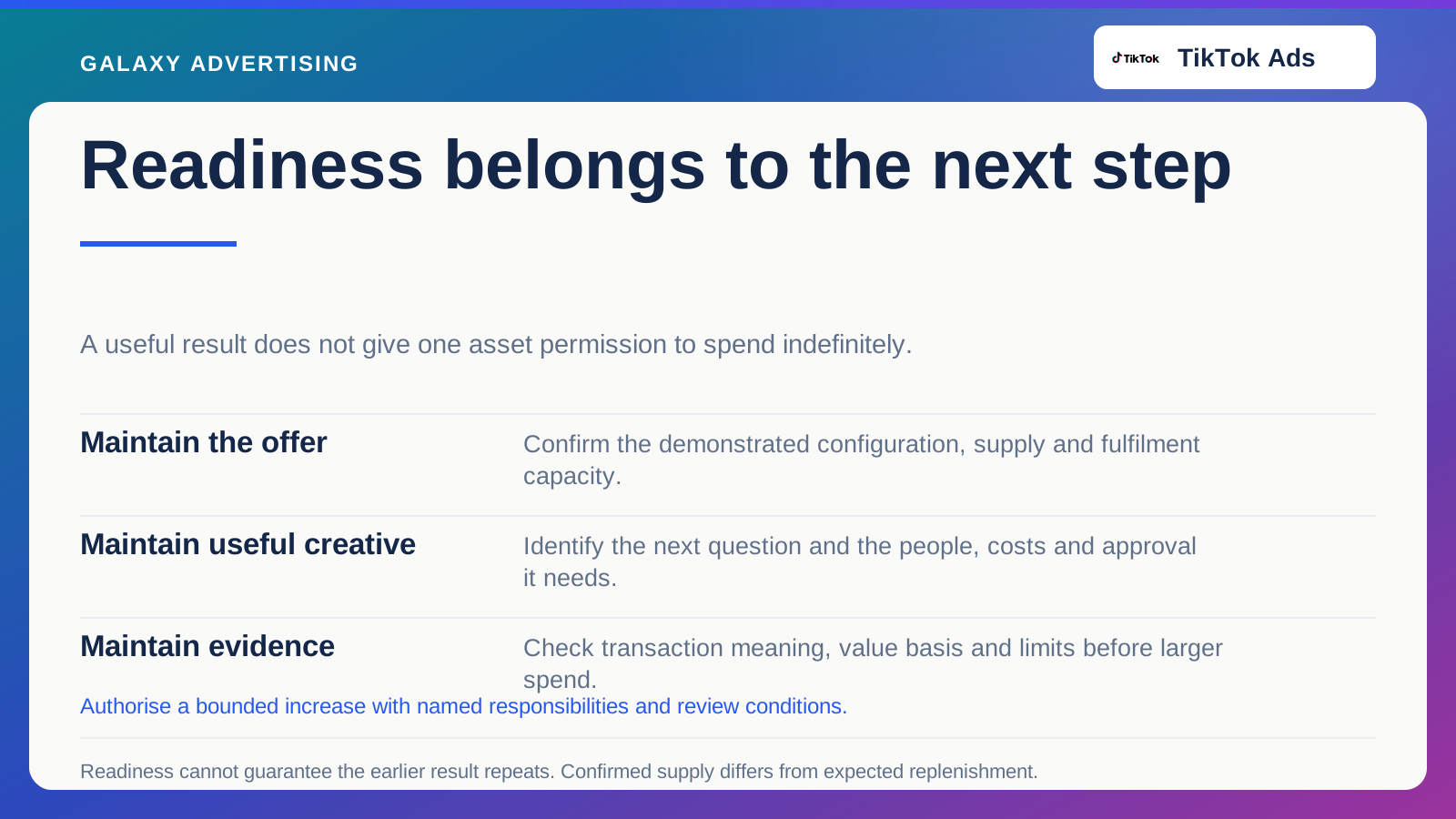
Distinguish a learning investment from a repeatable acquisition model too. Accepting a bounded cost to explore a new route doesn't establish that the same cost structure suits continuing operation or expansion. A useful test and a sustainable programme are connected decisions, rather than interchangeable descriptions.
Put the next pound against the constraint that remains
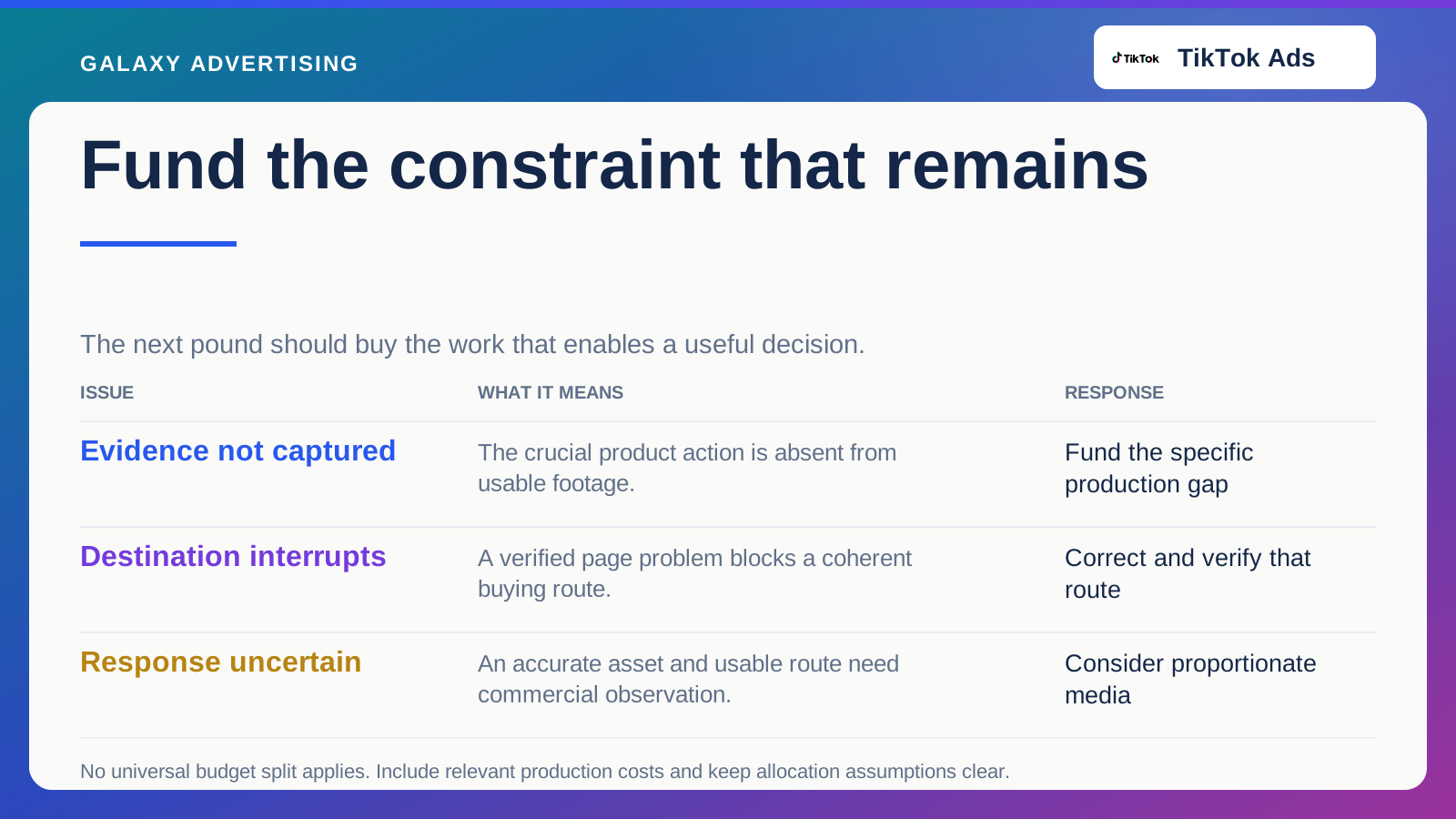
At review, ask what's now blocking a worthwhile step. Useful interest interrupted by the page may justify destination work. A misunderstood argument may require a specific production correction. A coherent route with remaining uncertainty about commercial response may justify more media.
Explain the intended learning and spending authority without promising unsupported results. Good allocation gives production resources to show evidence, media scope to observe it and corrections a place when they improve the route. The next pound belongs where it removes the current constraint, whatever share that department traditionally received.