 TikTok Ads
A promising storage product video can coexist with a dwindling supply of the finish it demonstrates and no plan for the next production cycle. That is an uncomfortable place to increase TikTok spend, however encouraging the response looks.
One result tells you something useful. It does not tell you that the offer, production and fulfilment behind it can keep up with expansion.
Treat a scaling review as a decision about another bounded investment. You are checking whether the business can support the next step, rather than giving one successful asset permission to spend indefinitely.
Work out what made the present result possible
Identify the product, configuration, offer and destination behind the outcome. Record the commercial basis too, including contribution: the money left after the costs your business has agreed to include in that calculation.
Look at the conditions around it. Existing demand, a temporary incentive, particularly good availability or activity in another channel could all be relevant. They do not invalidate the result. They do affect how confidently you can expect it to hold beyond those circumstances.
“The algorithm found the audience” leaves too much unexplained. You need to understand the actual proposition and operating conditions, especially if the next investment takes you beyond anything you have observed so far.
Check the stock people will really be buying
Review availability at the level of the customer’s purchase. A style can still be on sale while the demonstrated finish or useful configuration is almost gone. A general in stock label does not settle that question.
Ask operations about fulfilment capacity and service constraints. Something that looks commercially suitable at modest order volume can look different when more demand creates costly exceptions or a promise you cannot maintain.
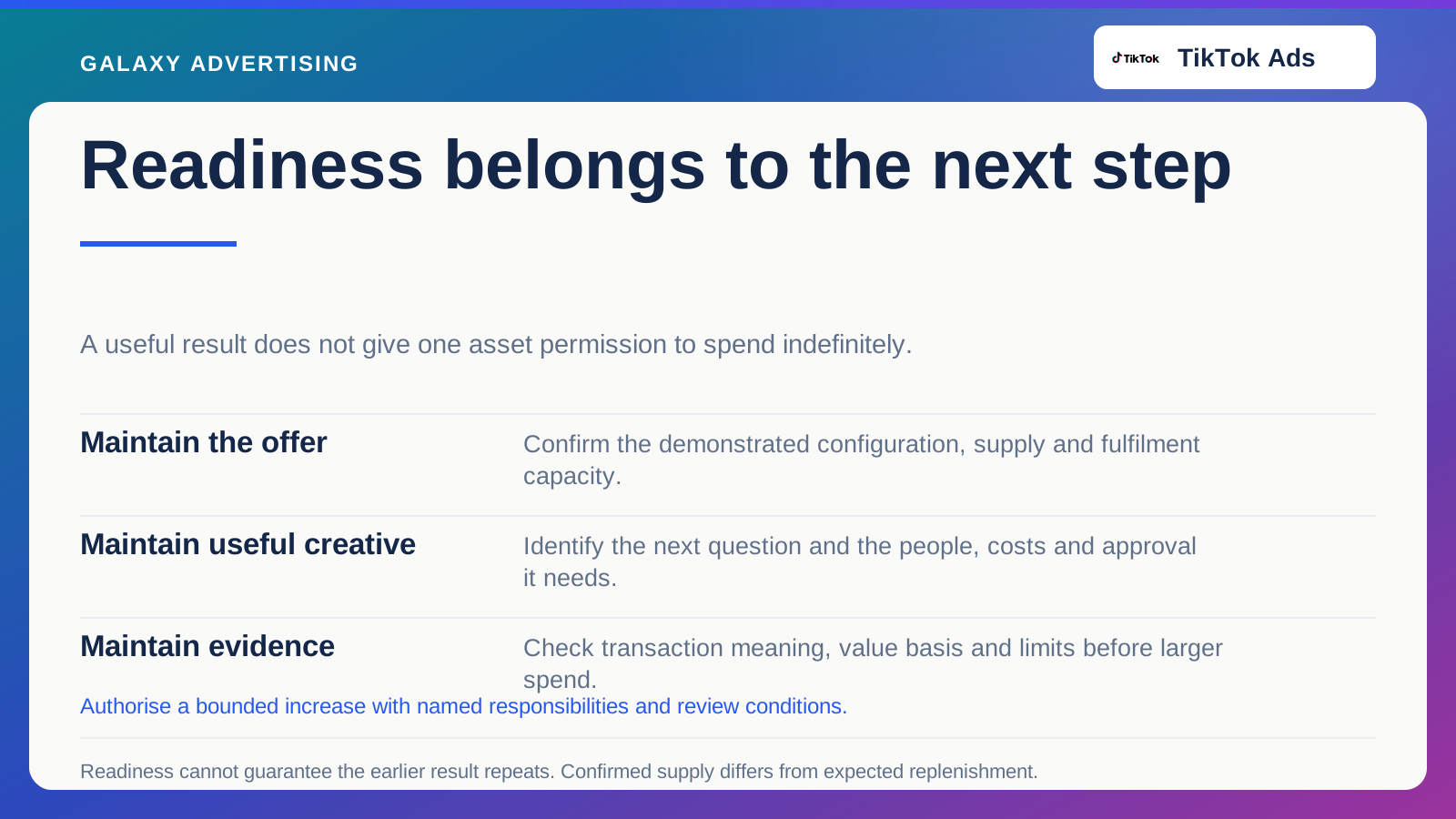
Separate confirmed supply from expected replenishment. If expansion relies on a delivery that has not been secured, write down the dependency and let it inform how much spending you authorise. A good campaign result does not make the supply uncertainty disappear.
Find the question your next creative should answer
Review the asset library by its arguments and evidence. Several edits of one demonstration give you ways to execute the idea. They do not necessarily give you another worthwhile proposition to investigate.
What remains uncertain? Perhaps you need to show scale more clearly, demonstrate another use or provide evidence about a different product in the range. Let that question shape the production brief, instead of asking for more videos because the folder looks thin.
A new concept is not always necessary for expansion. A factual adaptation or a clearer demonstration may be appropriate. What matters is knowing why you are commissioning it and how you will check its accuracy against the offer currently available.
Include the work behind usable creative
Confirm that you can access the products, creators, editors and factual approvers needed to keep producing material. A repeatable programme needs a practical way to respond when the product offer or the customer’s question changes.
Estimate the real time and cost involved. The filming fee is not necessarily the whole commitment. Include what it takes to get the material approved and into a usable state.
Keep your commercial treatment consistent when assets remain useful across periods. You can choose a reasonable method for handling production costs. State it. Switching between including and excluding them to flatter whichever result you are reviewing makes comparison less dependable.
Check measurement before making an error more expensive
Revisit the event and value definitions behind the campaign review. An apparent small discrepancy matters more when it guides a much larger spending decision.
Challenge the assumptions with a manageable sample of real transactions and relevant exceptions. Does the recorded purchase represent the action you intended? Does its value use the same basis as your commercial calculation? Those are practical questions worth settling before increasing the consequences.
Keep attribution limits visible too. Accurate measurement supports routine decisions without proving that every reported order was additional. If expansion relies on that stronger causal claim, identify the comparison required. Do not present an attributed result as enough evidence for a question it cannot settle alone.
Give the next increase a purpose you can review
Say what the investment should establish. You might investigate whether the same offer remains commercially suitable under broader delivery conditions, or whether another accurate demonstration can support useful acquisition.
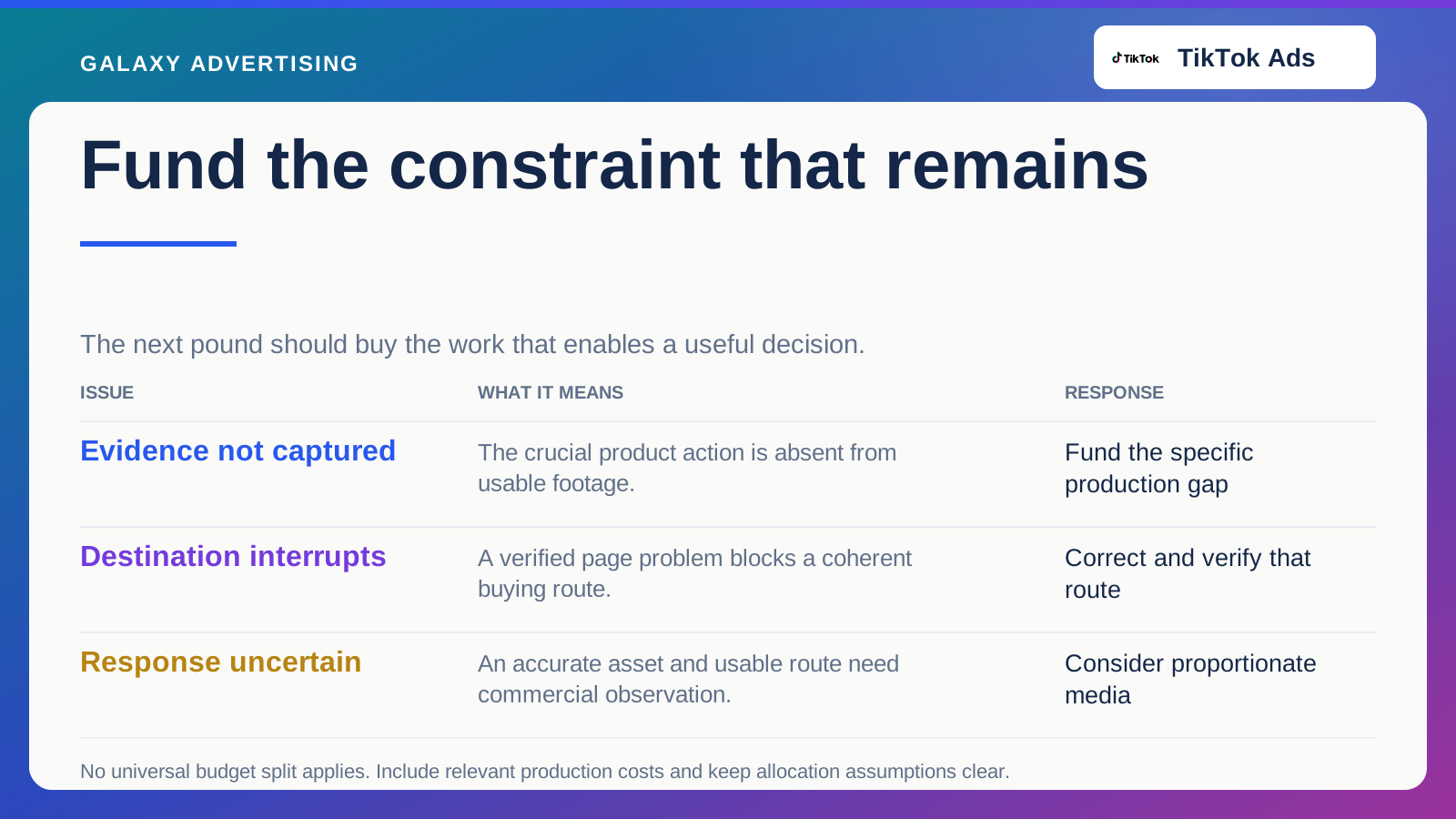
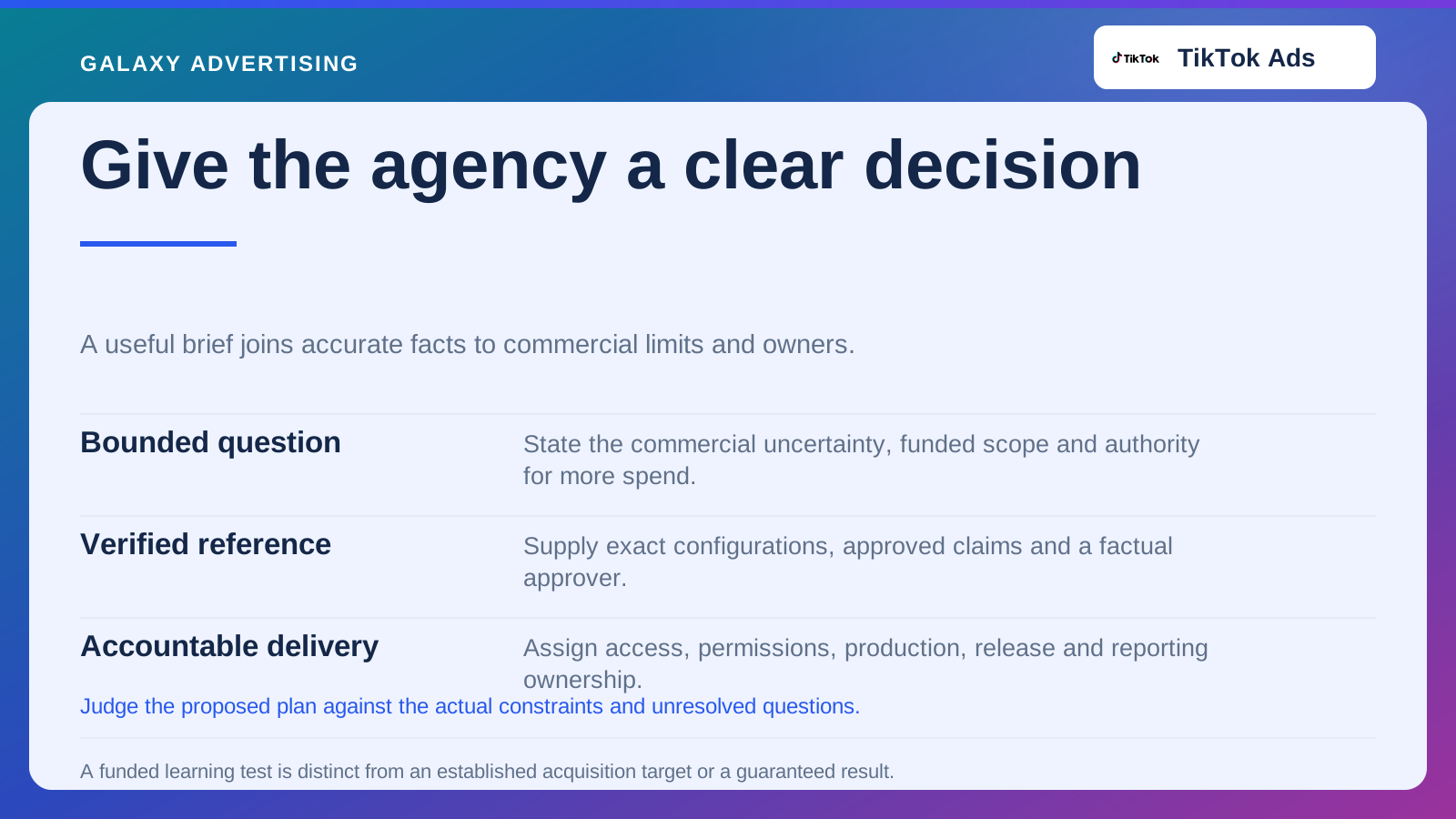
A universal percentage increase cannot do that thinking for every account. Funding, supply, evidence and tolerance for uncertainty all affect the appropriate change. Ask your account team to explain its proposed scope in those terms.
Distinguish conditions needing prompt correction from the evidence needed for a broader performance judgement. An unavailable product or broken destination needs attention. Every ordinary movement in results does not necessarily mean the strategy has failed. Your agreed rules should help you avoid both ignoring known faults and reacting indiscriminately.
Before authorising substantial expansion, run a realistic exception through the process. Suppose the demonstrated finish sells out while the video keeps attracting interest. Who notices? Who can stop or revise the activity? Which alternative can be shown accurately? The answer should survive without somebody remembering an informal message. This checks whether you can maintain the offer under pressure. It neither predicts performance nor independently justifies more spend.
Put names against the responsibilities outside the account
Assign ownership of stock communication, product changes, production and spending approval. Your account manager needs access to those decisions. Platform reporting cannot tell them every operational constraint your business faces.
Keep a concise record of why the increase was approved and what would change that judgement. When the offer changes materially, revisit the reasoning rather than defending spending authorised for different conditions.
Readiness gives a worthwhile next step an accurate offer, usable material and accountable operations. It cannot guarantee that a larger campaign will repeat the earlier result. It lets you treat expansion as a commercial investigation, with a clearer basis for continuing, correcting or stopping when the evidence changes.