 TikTok Ads
It's easy to brief a video that makes the desk look impressive and forget to show what makes it useful. An immaculate room, a moving camera and text calling it revolutionary can look polished. They can still leave somebody guessing how the desk would work in their own space.
Take a compact adjustable desk. Another approach shows a person moving from seated work to standing, checking the space underneath and returning it to an ordinary working position. Now there's something to judge.
That isn't a guarantee of better performance. It does create a more useful question: does seeing the product solve a recognisable problem attract suitable buyers? That's a firmer starting point than whether the next video feels sufficiently viral.
Pick an action with a consequence people care about
Look for an action that visibly changes something relevant. Folding creates space, an adjustment changes use, and storage holds something that would otherwise get in the way. The viewer should understand the action without a lengthy explanation.
Choose it for the intended buyer. An elaborate feature isn't necessarily a meaningful benefit. Showing how the desk fits a small home office may explain more than a montage of its control panel. The most technically impressive shot needn't be the most useful one.
Write down what someone should understand afterwards. If the answer is only that the brand looks modern, the brief may have missed the product decision. You need a reason for the particular demonstration, beyond a desirable impression of the brand.
Let the opening establish the problem
Give viewers an immediate way to understand the scene. Show the constraint or product action instead of using the opening for a logo animation. People need to recognise the situation before judging whether it matters to them.
You don't need an exaggerated claim. A desk sharing space with a dining area can establish a genuine use case. Don't invent dramatic frustration that the product doesn't meaningfully resolve simply to make the opening louder.
TikTok's creative guidance describes a hook, body and close. Use that to plan relevance, a useful demonstration and an intelligible next action. Let the structure serve the product. It shouldn't become the same script formula repeated across every asset.
Leave enough evidence in the shot
Film enough of the action to show what happened. Hiding the crucial movement in a cut can make the result impressive without making it evidence. Consider a stable shot for the important mechanism and closer views for detail that would otherwise disappear.
Preserve proportions and actual product behaviour. If visual tools create supporting scenes, compare the result with real references. The desk shouldn't gain extra storage or an easier mechanism because an editing system produced a convincing image.
Choose sound, captions and framing deliberately. Essential text needs to remain legible in the intended placement. The story should also make sense when somebody cannot, or chooses not to, listen to the audio. The explanation shouldn't depend on a viewing condition you can't assume.
Give each concept one main job
One asset needn't settle dimensions, materials, delivery and assembly together. Choose the decision worth demonstrating, then provide a destination for the other practical details. Focus doesn't mean withholding what someone needs to know next.
Create concepts around different jobs. A desk video might demonstrate space, another adjustment and another assembly. Those are different buying arguments. Putting the same shot against a new background mainly changes execution, rather than creating a new question to investigate.
When briefing creators, specify evidence and factual boundaries while leaving room for natural delivery. Overly scripted praise can obscure the demonstration and make the product feel less concrete. The product action should remain visible through the performance.
Carry the demonstration through to the destination
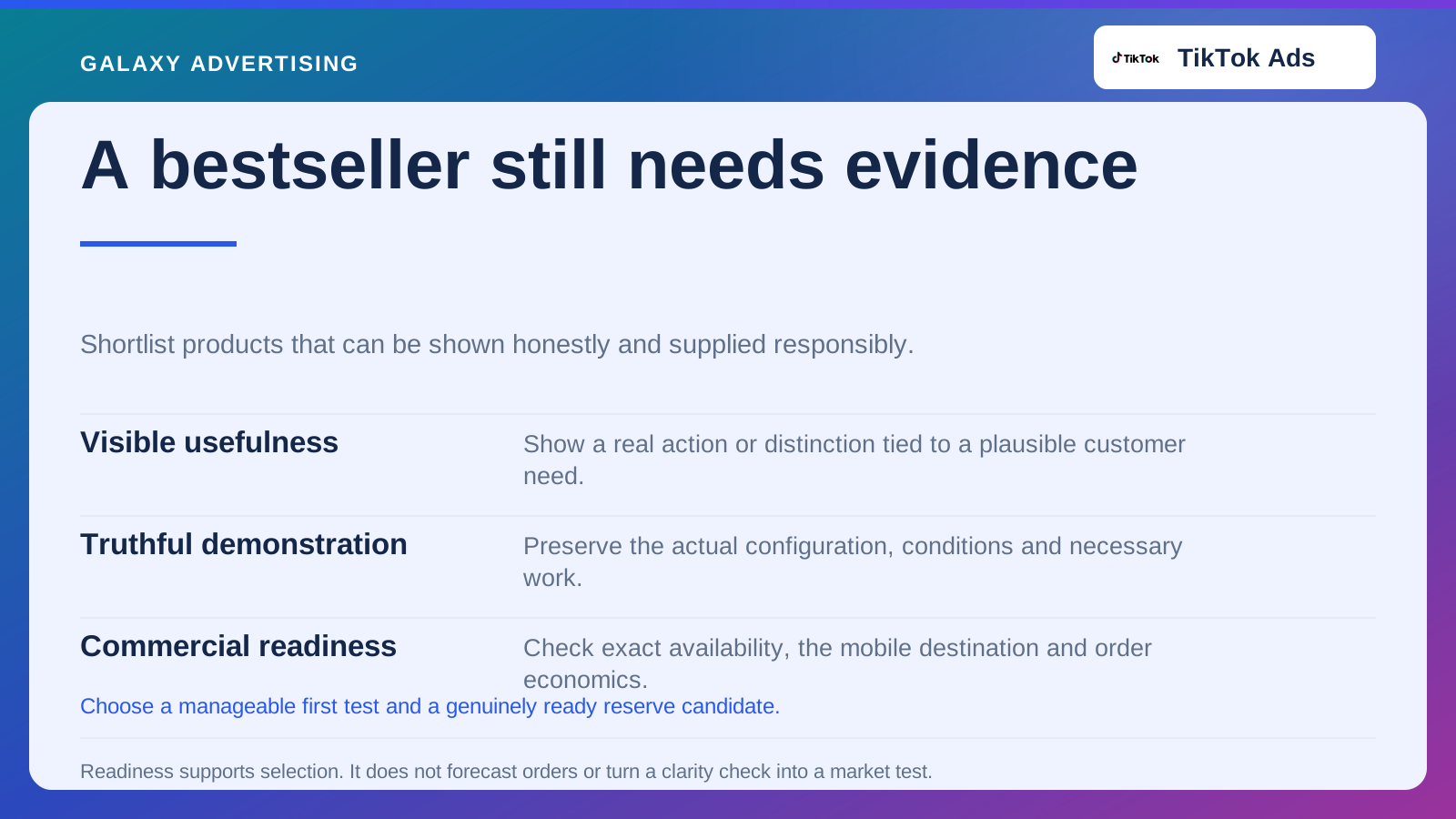
The landing page should identify the model and configuration shown. If the video features a particular finish or accessory, make availability and inclusion clear. Somebody interested in that arrangement needs to know whether it's actually the offer.
Check the purchase route on a phone. Can the visitor find dimensions, understand options and locate relevant delivery information? The video shouldn't reward interest with a practical puzzle once someone wants to look more closely.
Don't assume every viewer is ready to order immediately. Helping somebody compare a considered product responsibly can be a useful next step. Give that step a commercial purpose, though. An invitation to explore everything leaves the team with little to learn about the demonstration.
Write the desk sequence before filming it
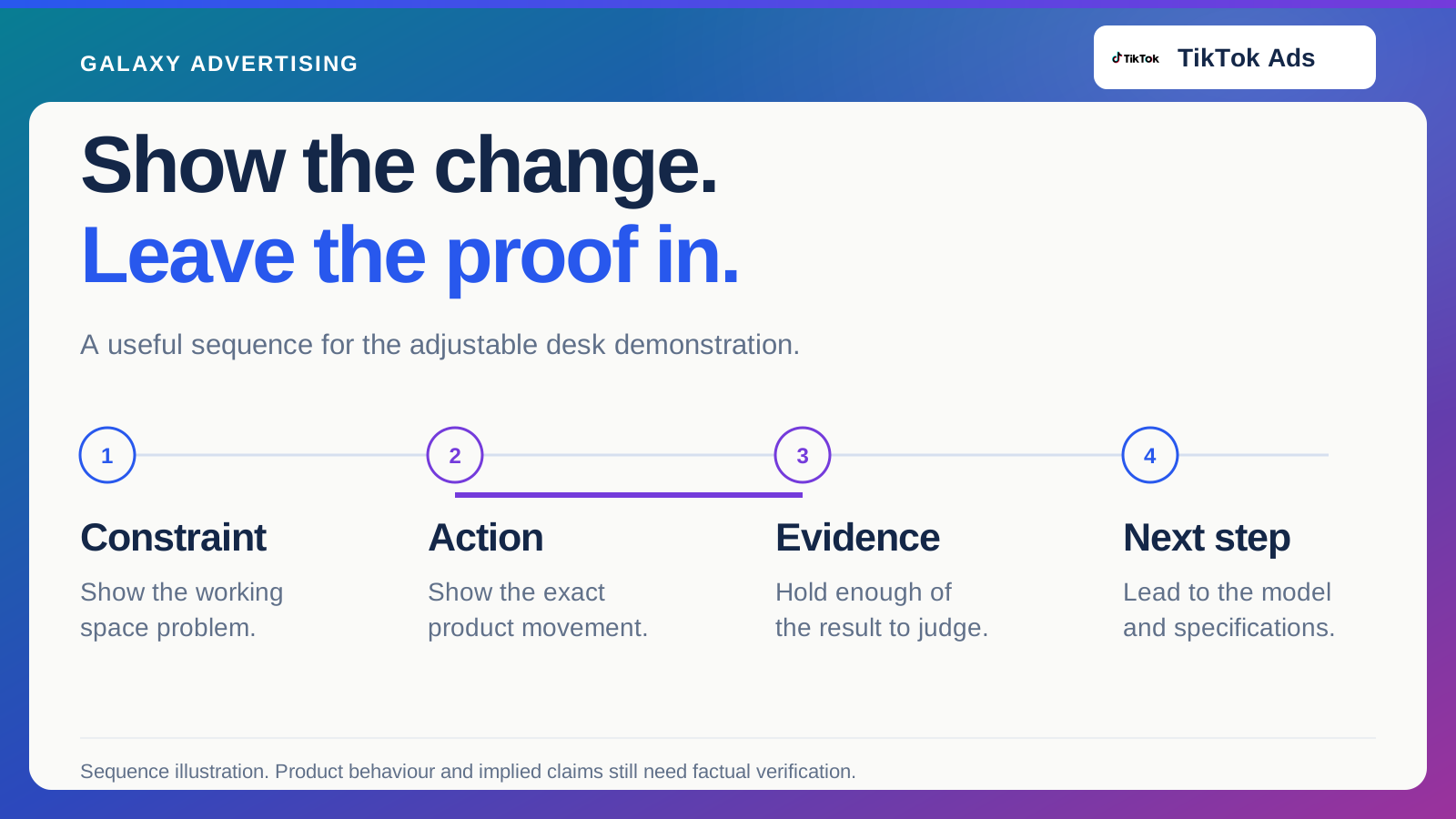
First show the working-space constraint. Then show the exact action that changes it. Hold enough of the result for the viewer to understand the difference, and close with a clear route to the demonstrated model and specifications.
Mark shots that imply claims requiring verification. Does the scene suggest a particular weight capacity, effortless assembly or an included accessory? Check against the actual offer even when the script never says the claim aloud. Images make promises too.
Prepare another concept around another question instead of stretching the first into almost identical versions. An assembly concept can use actual preparation information; a space concept can use room scale. Shared product references keep the plan efficient while customer arguments and evidence requirements differ. Repeatedly accelerating the same montage doesn't provide that variety.
Test the argument behind the edit
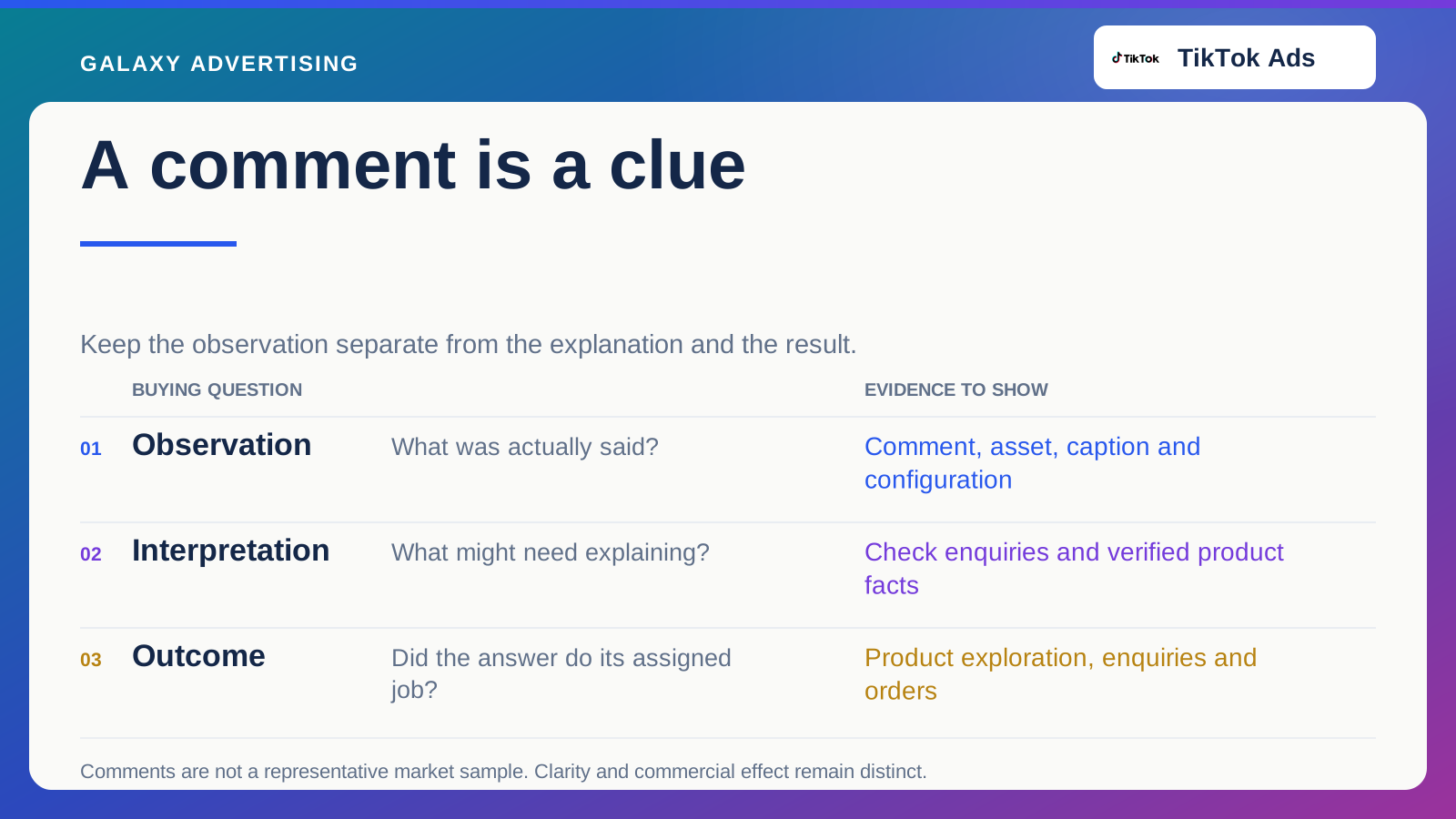
Compare concepts using a written hypothesis. You might expect the space demonstration to attract people whose existing desk doesn't fit their room. Check whether visitors explore the relevant configuration or ask questions consistent with that need.
Read advertising and website evidence together. Views say something about attention, rather than establishing suitability or contribution, the money remaining after the relevant costs. A short period without attributed purchases doesn't settle every question about a longer buying journey either. Keep unequal delivery, small order samples, stock changes and destination differences visible when interpreting results.
Let that learning direct the next investment: clarify a promising demonstration, investigate a destination that interrupts it or retire an argument attracting the wrong interest. A credible demonstration gives you something specific to improve. Making it more exciting needs more explanation before it becomes a useful brief.