 TikTok Ads
What if your adjustable desk video draws praise for the room, requests for the music, a few price questions and one enquiry about a narrow space? That's several kinds of attention. It isn't proof that the product has reached the intended audience, however encouraging the comments feel.
It's tempting to commission more of the same attractive scene. Before you do, separate what people actually said from the explanation the team wants to attach to it.
Comments can make the next brief more concrete. Their useful role is to reveal a question worth investigating, rather than supply a complete account of why customers buy.
Keep the comment attached to what prompted it
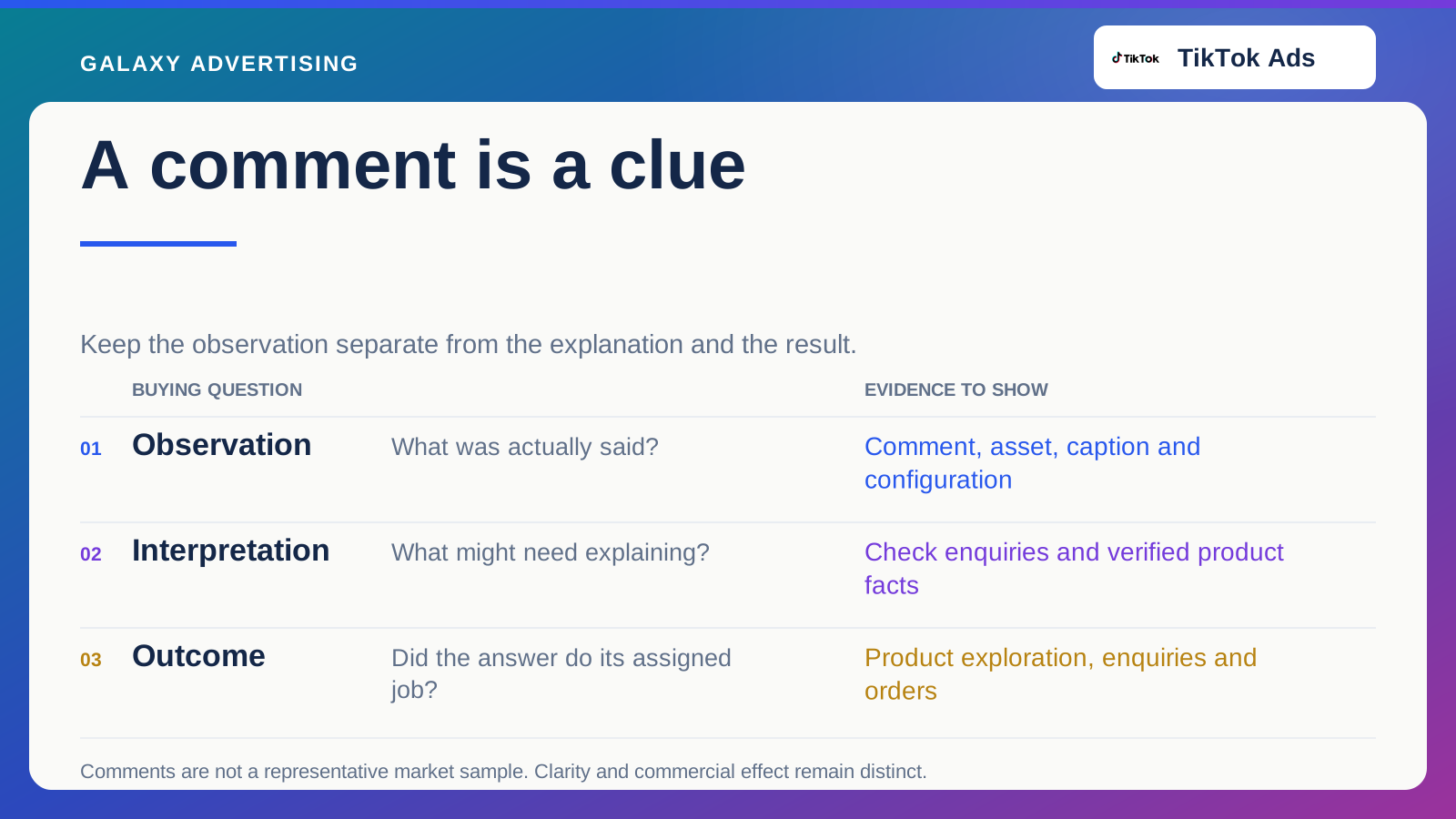
Record the asset and relevant product configuration with the observation. A price question under a complete-room video can mean something different from the same question beneath a clear demonstration of one item. The surrounding presentation matters.
Keep the caption and destination context too. Perhaps the answer already exists on the page. Perhaps the caption leaves the package unclear. Without that context, a communication gap can be mistaken for a customer objection, and the team can end up solving the wrong problem.
Don't assign motives the commenter didn't express. Too expensive describes the written response. It doesn't establish their budget, product knowledge or likelihood of ordering at another price. Those explanations remain hypotheses until further evidence supports them. The comment gives you a starting observation, rather than permission to fill in the rest.
Separate what they enjoyed from what they need to know
Group responses by what the business is being asked to clarify. Some concern entertainment or setting. Others concern product identity, practical suitability, purchase conditions or comparison with another option. These differences can guide research without pretending every reaction has equal commercial meaning.
Don't turn the groups into fixed customer identities. Someone can enjoy the room and have a real buying question. Another person can ask a specification purely out of curiosity. The task is more useful than a confident label for the individual.
For a hypothetical desk, repeated questions about the folded footprint suggest information worth investigating. They don't show that every viewer has that requirement or that answering it guarantees extra orders. Keep the possible need separate from the commercial outcome you still need to assess.
Ask whether the question appears elsewhere
Speak to customer service and sales. Do similar questions appear in enquiries, returns explanations or conversations about the range? Compare the wording and relevant configurations. Similar sounding mentions don't always concern the same issue.
Several sources can strengthen the reason to investigate. They still aren't automatically a representative market sample. People who contact the business may differ from those who decide quietly or leave without explaining why. More sources help challenge an interpretation without eliminating that limitation.
Use the comparison to question the brief. If the video prompts many enquiries about an accessory that isn't included, clearer package information may be the next action. Another lifestyle concept could amplify the misunderstanding while leaving its cause intact. An appealing scene doesn't make the information problem disappear.
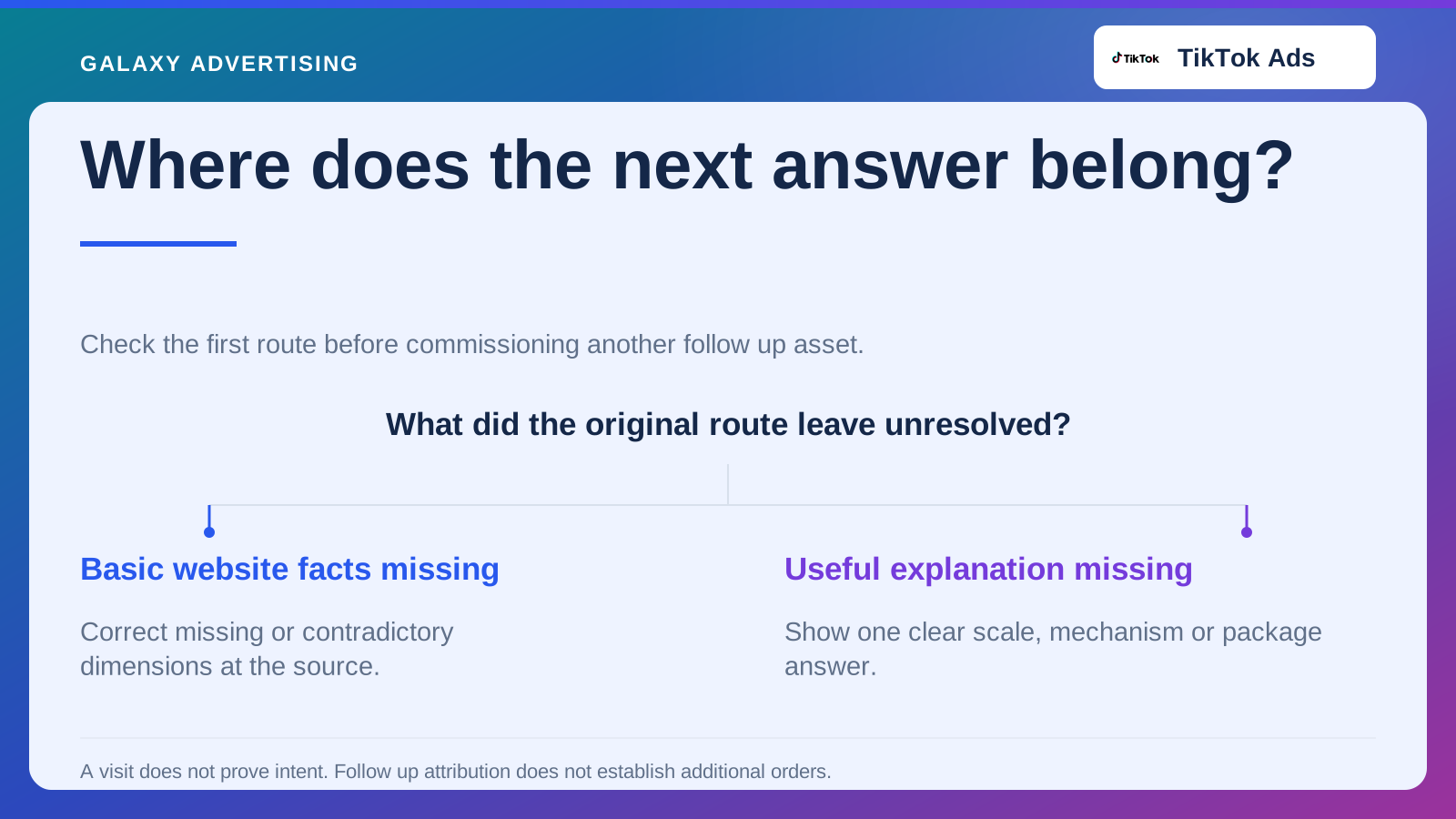
Decide where the answer belongs
Some questions need a demonstration. A continuous view of the folding action can explain something a sentence may struggle to convey efficiently. Others require accurate written facts, including current dimensions or included components. Choose the form around the uncertainty.
Fix missing product information at its source before repeatedly paying to answer it in adverts. Another video can introduce a useful perspective. It shouldn't become a permanent workaround for a destination withholding basic facts. The information needs to be reliable where the customer investigates it.
Give the asset a defined role. It could show the stored product's scale and point to relevant configuration information. A broad instruction to overcome objections leaves the creator deciding what your business has actually verified. A specific task makes the factual boundaries and intended explanation clearer.
Make the production question open to challenge
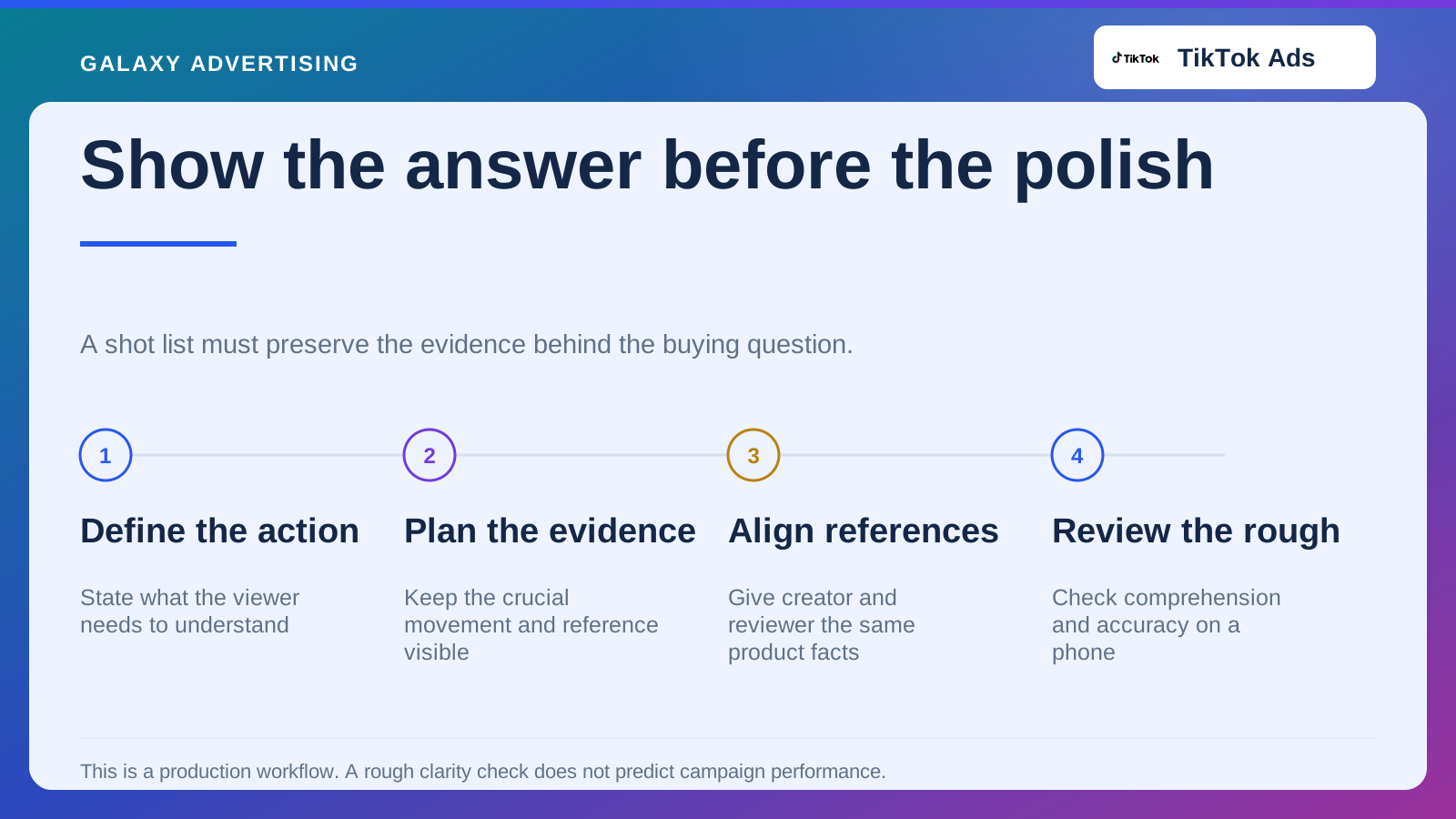
Write a hypothesis stating what you want to learn. A new demonstration might investigate whether a clearer scale reference helps relevant viewers identify the right model for further research. Now the team has a question against which it can review the response.
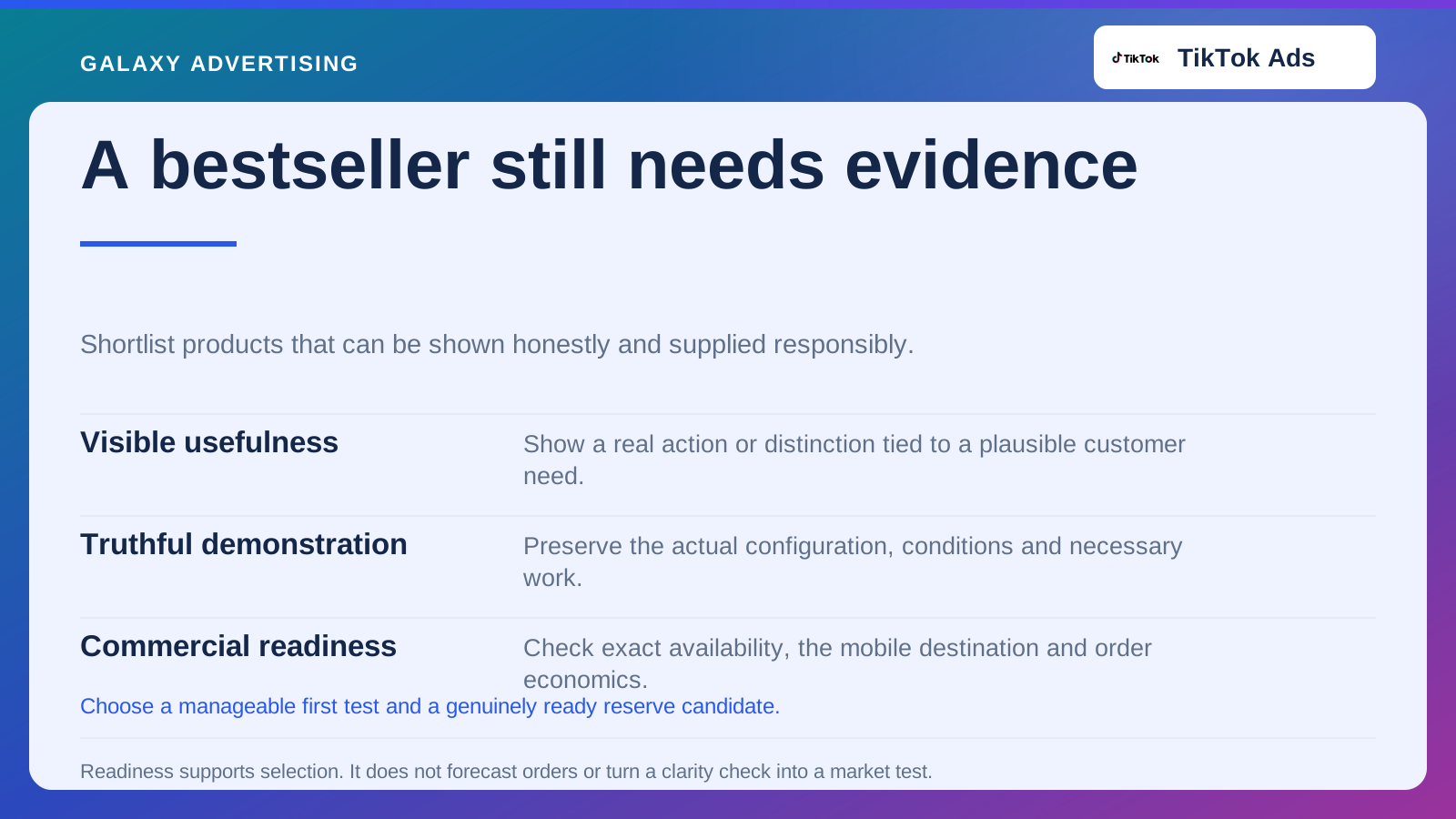
Specify the evidence needed: actual product, accurate reference and a view preserving the important distinction. Don't change proportions or omit a necessary condition to make the result look more impressive. Dramatic staging shouldn't do the explanatory work by distorting it.
Leave room for the hypothesis to be wrong. The original question may prove narrow, the answer unclear or the resulting interest commercially unsuitable. Useful research allows those conclusions. It doesn't exist to defend the team's first interpretation of a comment.
Review the response against the job you gave it
Read available enquiries, product exploration and orders beside campaign reporting. Are people reaching the right configuration? Do their questions suggest the demonstration clarified the original uncertainty or created another one? Keep the review attached to its assigned purpose.
Fewer comments aren't automatically failure. A clearer answer may leave fewer obvious questions, and your observations remain incomplete. Compliments about production don't establish success either. They might say something favourable without answering the buying question.
Keep communication clarity separate from commercial effect. A well explained feature can still be irrelevant to a suitable purchase. A useful product may need another route to convey its value. Let the next recommendation follow that evidence, rather than trying to maintain an unbroken run of winning concepts.
Leave a record the next person can use
Keep the original observation, interpretation, commissioned work and available outcome together. Another team member should be able to understand why the concept exists without manually reconstructing the comments. That also preserves the distinction between the initial clue and what you later learned.
Include questions you chose not to pursue and why. They may concern unavailable products, unsupported claims or issues better resolved in the catalogue. Declining to make content can be useful judgement, rather than a missed production opportunity.
Comments give you language, uncertainty and misunderstandings worth considering. Their value grows when the team verifies the relevant facts and develops a useful answer to a specific clue. Visible reaction becomes more informative when you stop asking it to stand in for complete knowledge of the customer.