Twenty adaptations of an unclear argument do not automatically give you a productive video library. Before paying for another production round, it is worth asking what is actually missing.
One weak video may have an accurate demonstration sitting unused in the source footage. Another may promise a feature the library cannot show at all. Recommending a new shoot for both ignores the difference in what they need.
Start with the gap between the intended explanation and the material available. Then choose work that can responsibly close it. The cheapest option will not always be best, but disappointment with the last asset is not enough reason to select the most expensive one.
Describe the gap before choosing the job
Say what the current asset fails to establish. Perhaps the customer cannot recognise the situation, follow the action or connect the offer shown with the destination.
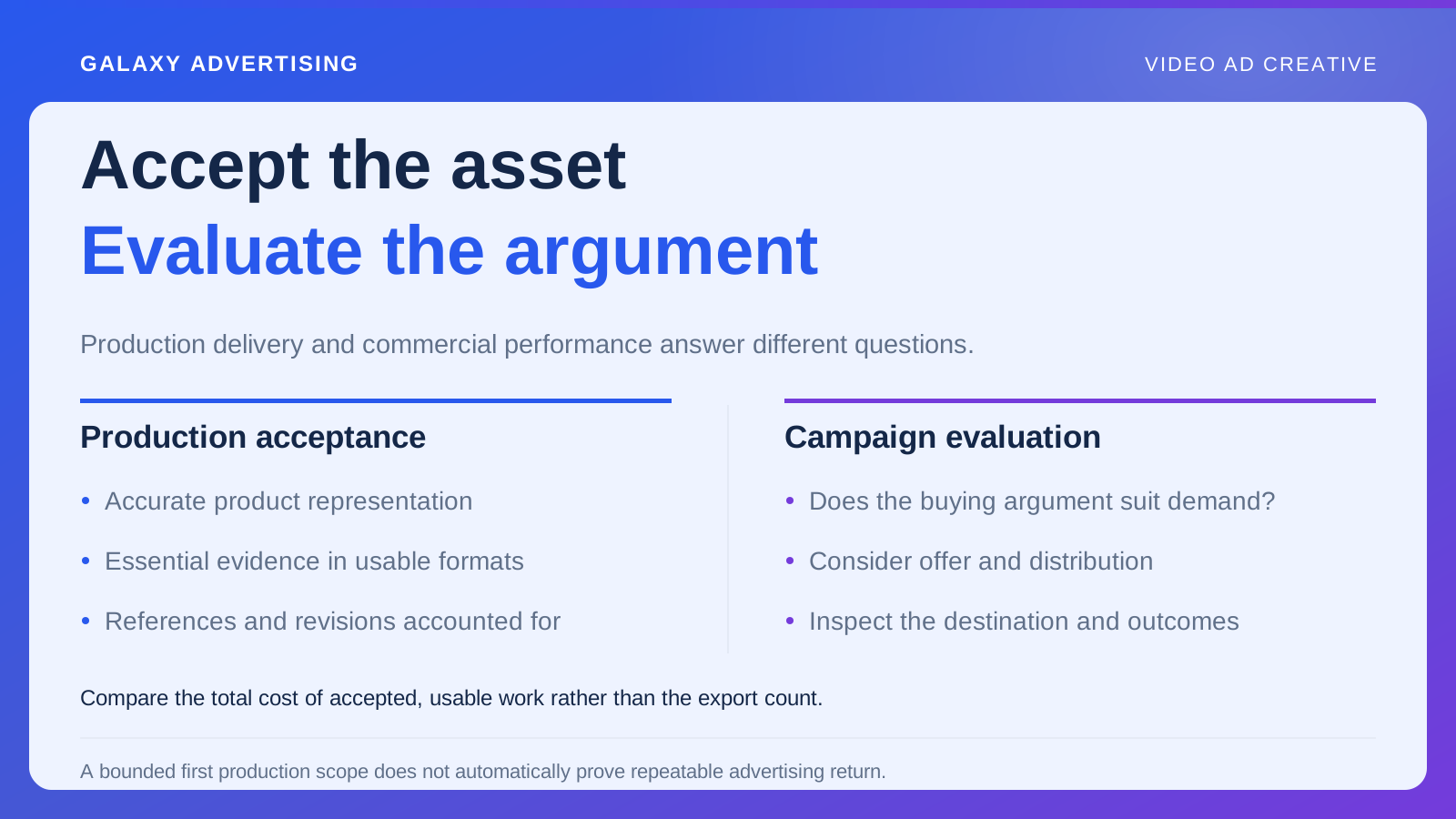
Keep that observation separate from your explanation for a performance change. A weak commercial result is a reason to inspect. On its own, it does not identify the visual or editorial fault.
Use the original brief and approved references to organise your review. If the brief never named the evidence needed, acknowledge that planning gap. A different supplier cannot reliably solve an undefined problem simply by making the production more polished. Give them something clear to solve.
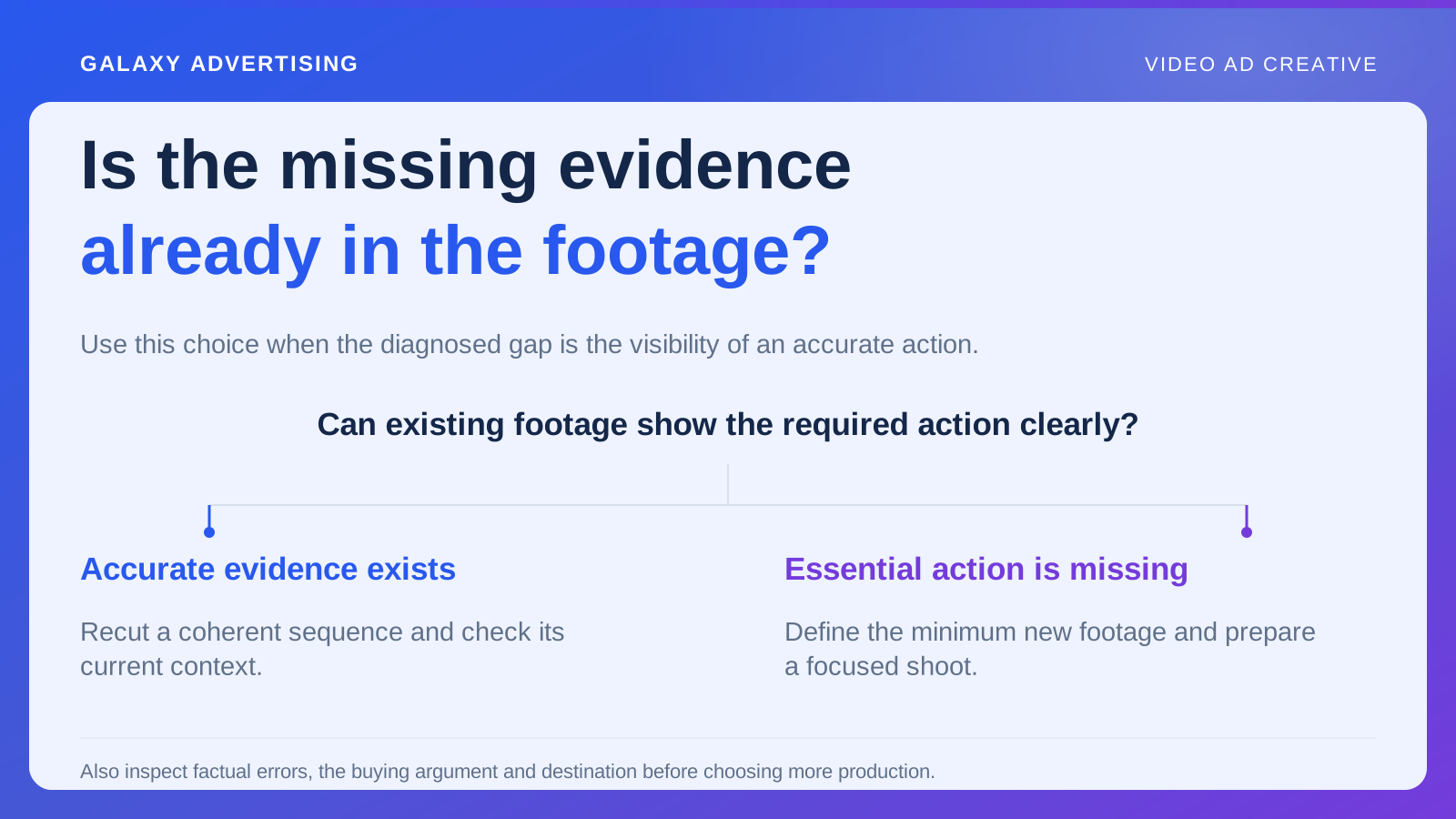
Recut when the evidence is already there
Look through the source footage for a coherent sequence the current edit obscures. A clearer opening, longer view of the important action or more useful closing route could improve the explanation without filming again.
Make the instruction specific. “Use the continuous adjustment shot to show the movement before the close detail” gives an editor work they can do. “Make it more convincing” leaves them to diagnose the problem for you.
Check accuracy in the new context. An old shot might reintroduce an obsolete configuration or service claim. Saving production cost only helps if the resulting video still represents the offer you mean to promote.
Reshoot when you cannot show the action
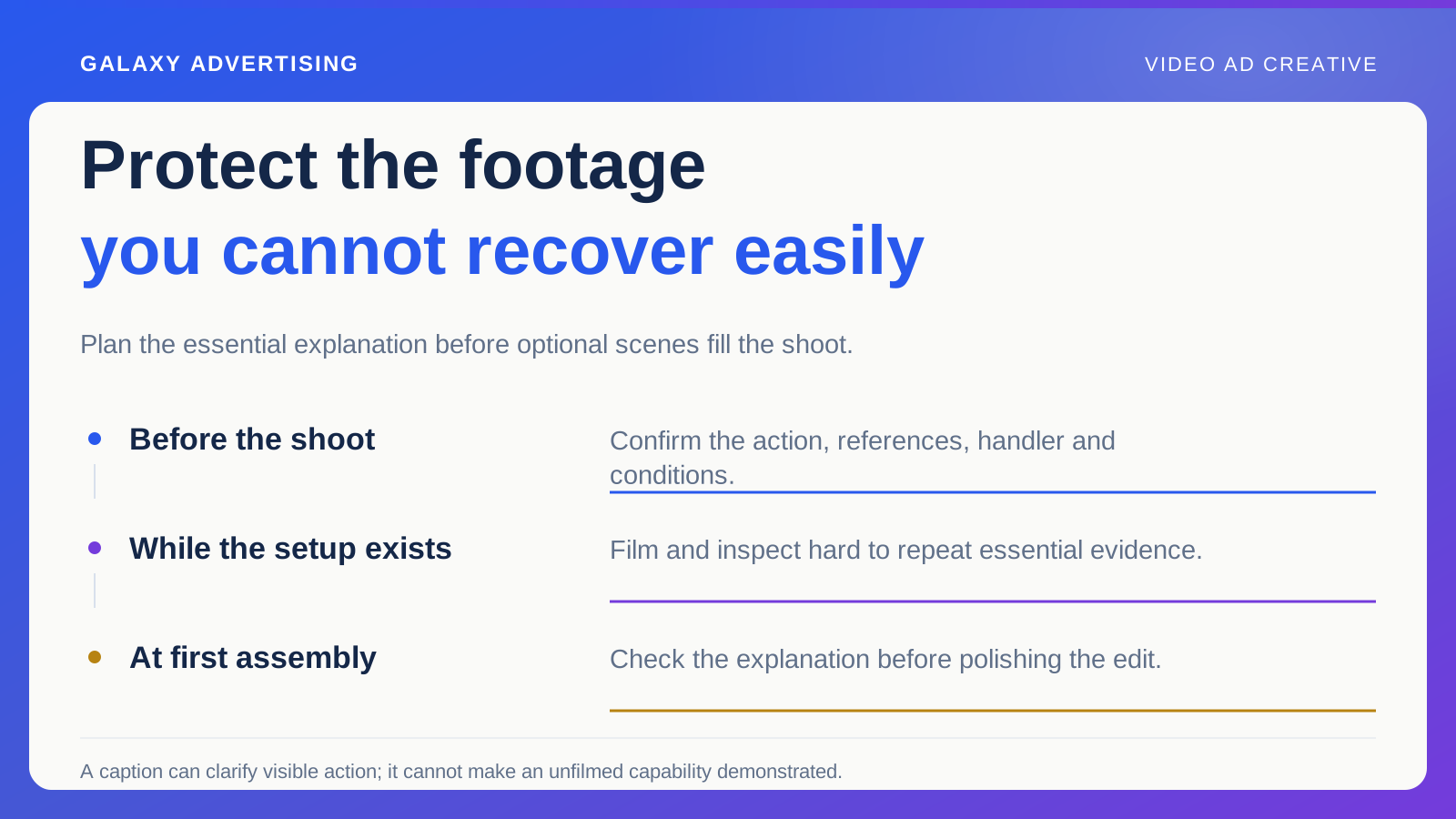
A script cannot conjure missing footage. If the buying argument depends on watching the mechanism operate, disconnected positions may leave the same uncertainty after another edit.
Define the minimum new material required. A focused return shoot could capture the essential action without rebuilding an entire room scene. Compare its cost and practicality with the consequence of abandoning the concept altogether.
Prepare the dependencies before committing: the exact product, relevant configuration, handling requirements and factual approval. Otherwise the return shoot can repeat the original failure, with the extra discomfort of a more urgent schedule. More filming only helps when the missing evidence can actually be obtained.
Repair the facts before judging persuasion
Separate a wrong finish, unavailable accessory or unsupported claim from the performance discussion. Identify the factual correction on its own terms.
A repair should not depend on favourable results. Equally, strong results do not make an incorrect representation acceptable. You need a usable offer before you can meaningfully assess how persuasively it is being presented.
Trace how far the problem has travelled. A shared source image or claim might have entered several versions. Fixing one output can leave related assets carrying the same error unless someone follows the dependency and verifies them too.
Change the argument when clarity is not enough
Sometimes the video explains its intended point clearly, yet that point does not appear to help the desired decision. Refining the execution further may then offer limited value.
Return to the customer situation and the product difference being promoted. A feature your business enjoys discussing may matter less than a practical uncertainty customers repeatedly raise. A new concept should respond to that reasoning, rather than merely arrive wearing a different visual style.
Keep the conclusion as strong as the evidence allows. You could have a plausible reason to investigate another argument without proving the first could never work. State what you know and what the next concept is intended to teach.
The page might need the budget instead
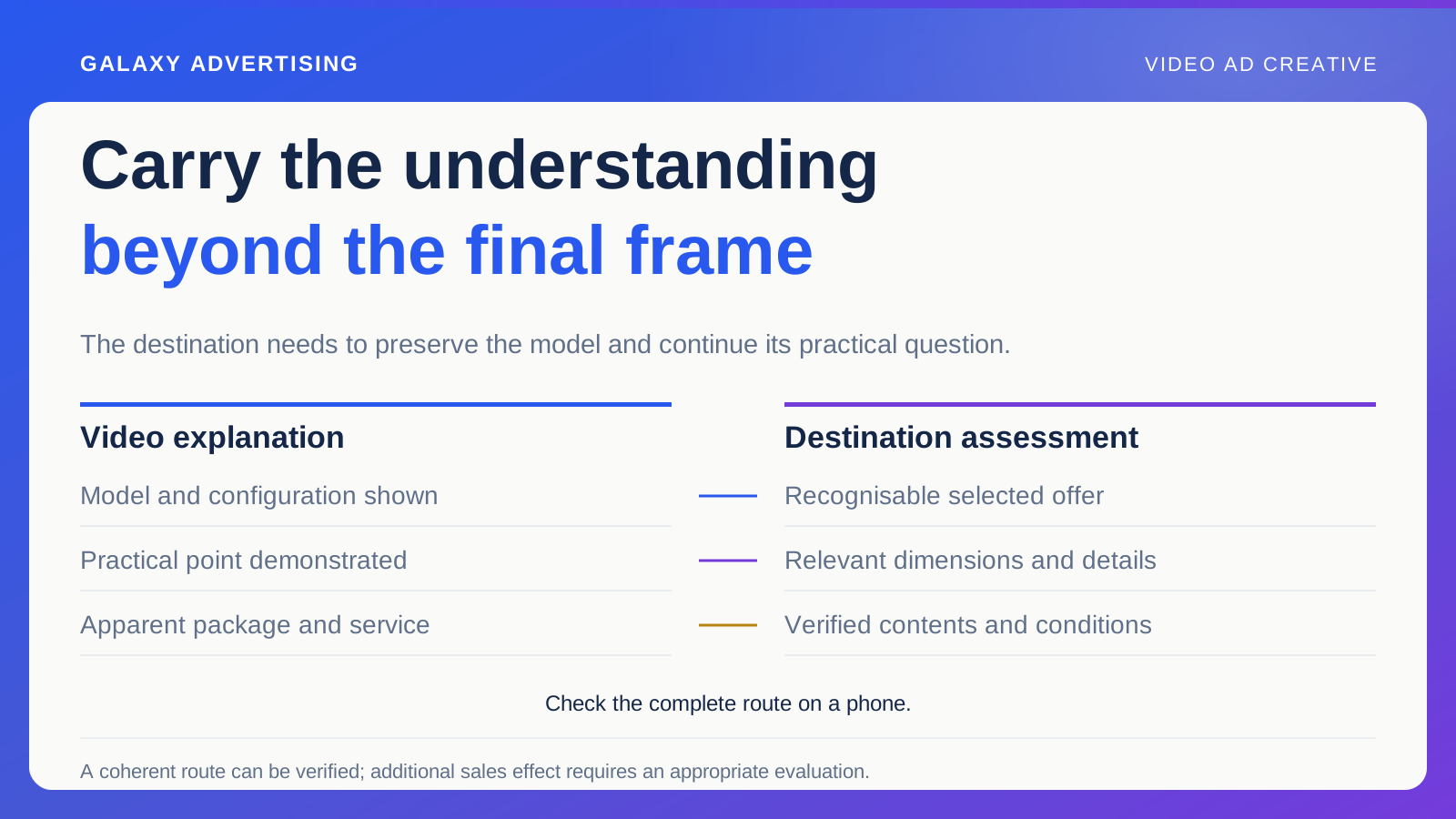
Your video could create a clear, accurate expectation that the product page fails to continue. Customers then meet unclear options, missing dimensions or a different default configuration.
Improving that destination may deserve priority over more production. Consider the whole route before assigning every weak outcome to the video supplier. The customer experiences the connection, even when different teams own its parts.
Coordinate necessary changes and record them. If both a recut and page repair are required, say so. A later result should not be presented as proof that one isolated creative change caused the movement when the customer route changed as well.
Could another producer price this instruction?
Write the correction so somebody who missed the performance meeting could understand it. Include the product reference, missing evidence and available source material.
If it still relies on “more premium” or “more dynamic”, sharpen the diagnosis before requesting another estimate. You are leaving room for visual judgement while distinguishing required work from optional choices that improve its expression.
That clarity also makes competing quotations easier to compare on a meaningful basis. Suppliers can respond to the same actual requirement, rather than each pricing their own interpretation of an aspiration.
Count the full effort and useful life
Include internal review, product preparation, supplier time and the material's expected life. A modest recut might suit a short offer; a planned demonstration could provide durable coverage for several distinct briefs.
Potential exports do not automatically establish reuse value. The footage needs to remain accurate and answer a useful question in each context. Count the usefulness, rather than multiplying files.
Finish with a specific recommendation, accepted output and verification requirement. Your budget then buys an answer to an evidenced gap. That is a better reason to commission the next explanation than simply hoping another production round will finally impress.