We can get so absorbed in making the footage look good that we forget to film the thing the customer needs to understand. The crew captures lovely room scenes, transitions and close details. Then the editor asks for a continuous view of the product's key adjustment, and nobody has it.
Disconnected fragments might not explain that movement. Now you are choosing between a return shoot and a video that cannot make its principal point.
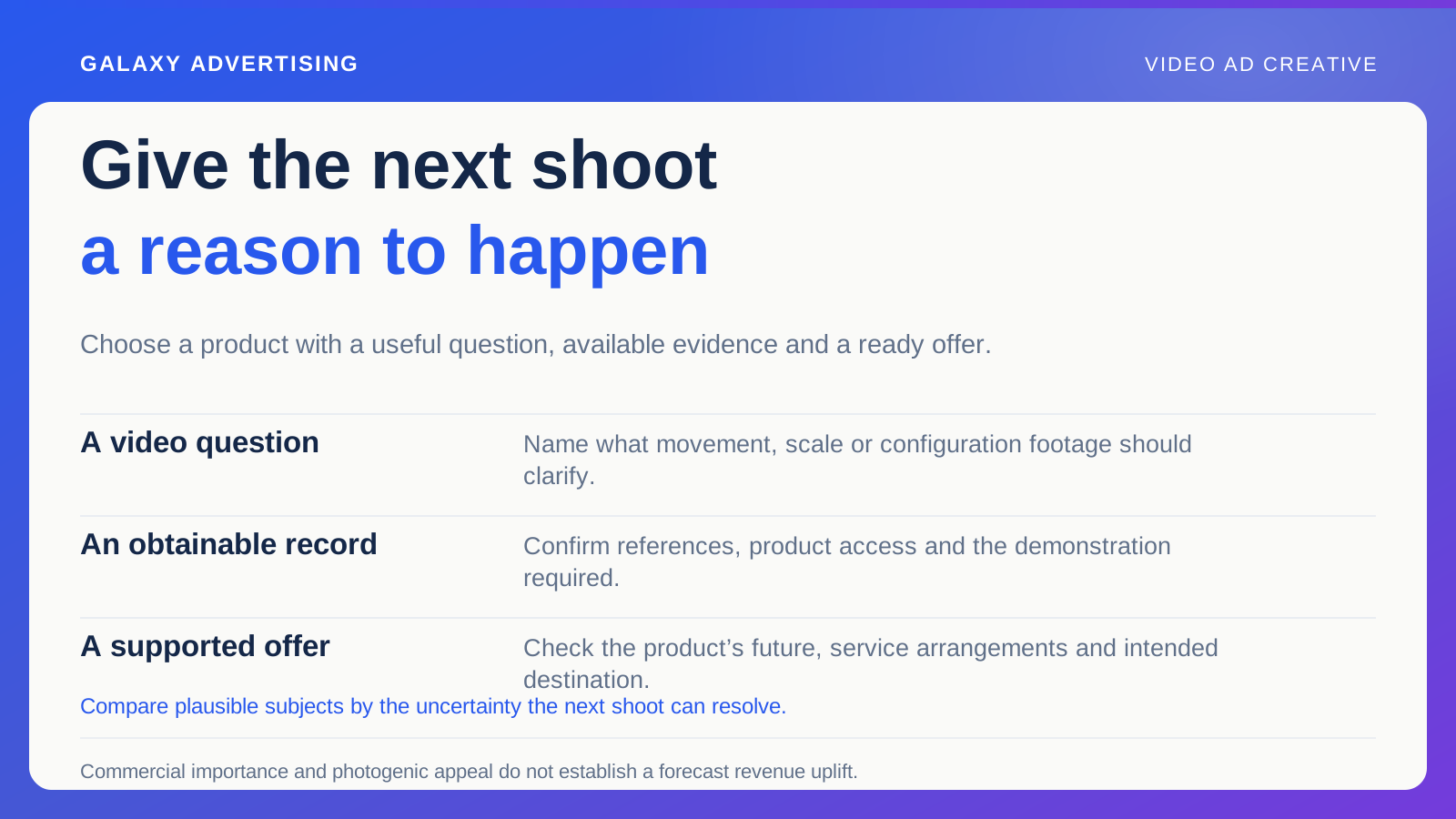
Start the shoot plan with the evidence your story needs. Identify what would be costly to recover later and prepare the conditions for capturing it. Atmosphere has a place. It just needs to leave room for the reason you commissioned the work.
Which sequence must you come home with?
Describe the customer's question and the action that answers it. From there, work out the minimum understandable sequence: the initial condition, the product action and the relevant result.
For a hypothetical extending table, you might need the original arrangement, the actual extension process and the final configuration. A set of attractive positions does not necessarily show how the table works. The customer needs to follow the change.
Where practical, let your editor review the plan before filming. They can spot transitions or evidence that would be hard to reconstruct. That conversation is much more useful while you still have access to the location, product and contributors.
Make sure the demonstration is possible
Confirm the exact product, configuration and accessories required on set. Check the approved references and any documented instructions relevant to the demonstration. An operation production has not prepared properly should not become an on the spot improvisation.
Name the person responsible for handling the product and the person who can answer factual questions. The director may know how to tell the visual story without being qualified to verify the intended use.
Check what the location actually provides. Space, light, power, access and product preparation can determine whether the action is clear enough to film. List those dependencies before the schedule commits you to a scene the team cannot execute. Discovering the missing condition on set gives everyone fewer good options.
Give every important shot a job
Say what the important coverage must communicate. A wide view might establish scale, a continuous action might demonstrate the mechanism, and a close detail might identify a control that disappears in the wider frame.
That is a more useful plan than a list of camera angles. If conditions change, the crew can alter the execution while preserving the job. They understand which meaning needs to survive.
Keep each job narrow enough to check. Asking one shot to communicate craftsmanship, scale, ease of use and brand personality all at once invites compromise. Several purposeful views can explain more than one ambitious image whose significance nobody quite understands.
Film the difficult things while you can
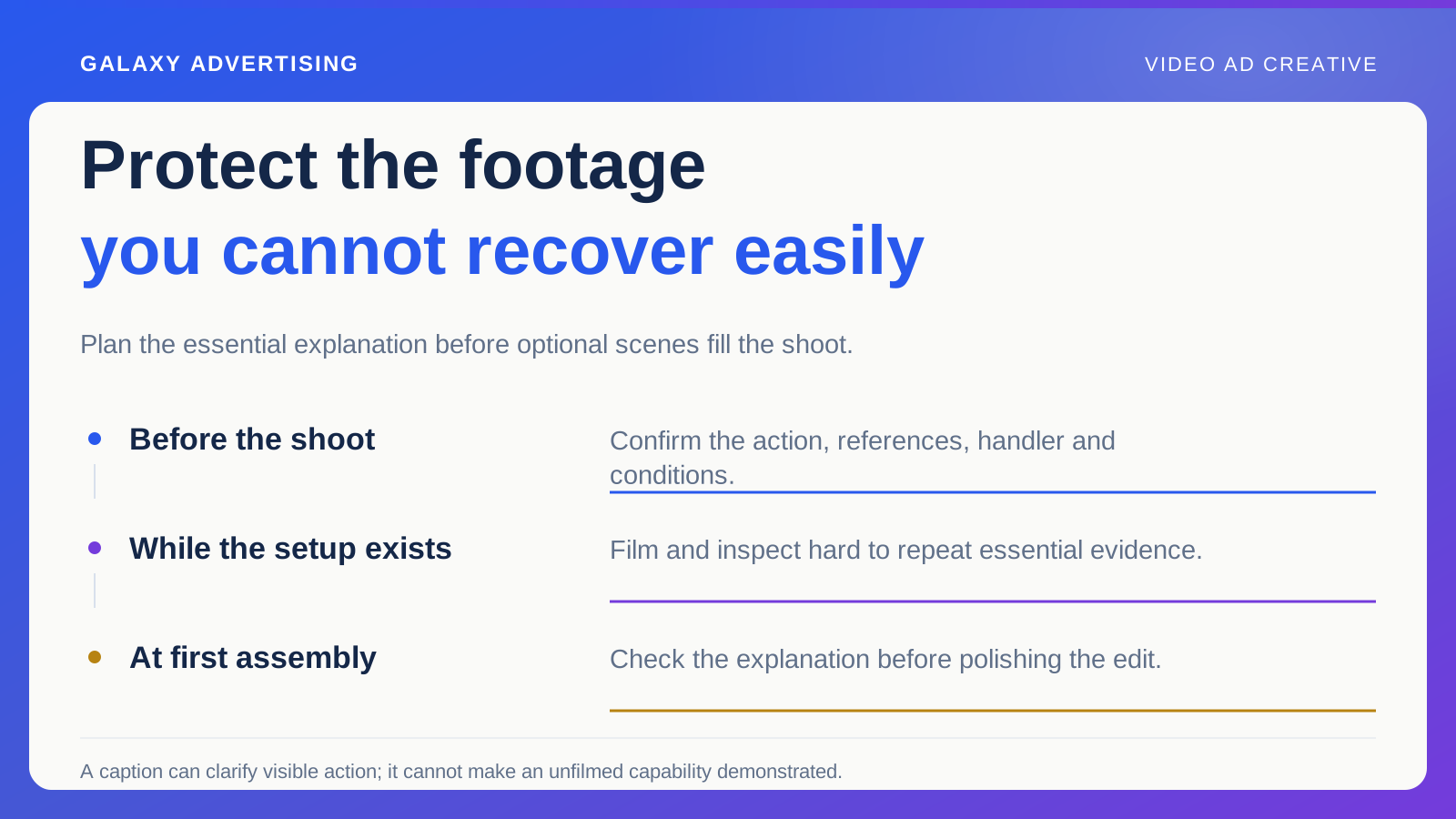
Prioritise essential material that is hard to repeat while the necessary conditions are available. A contributor's demonstration or complex configuration could be much harder to recreate than a straightforward detail shot.
Allow time to inspect the important footage before moving on. A short review may reveal that the movement is obscured, or that the product unexpectedly changes state between takes. Those are useful discoveries while the setup still exists.
Judge the day by what the story can now explain, rather than how many scenes were completed. Plenty of optional footage can fill a library while leaving the central demonstration missing. A busy shoot and a usable argument are different achievements.
Keep the offer consistent between takes
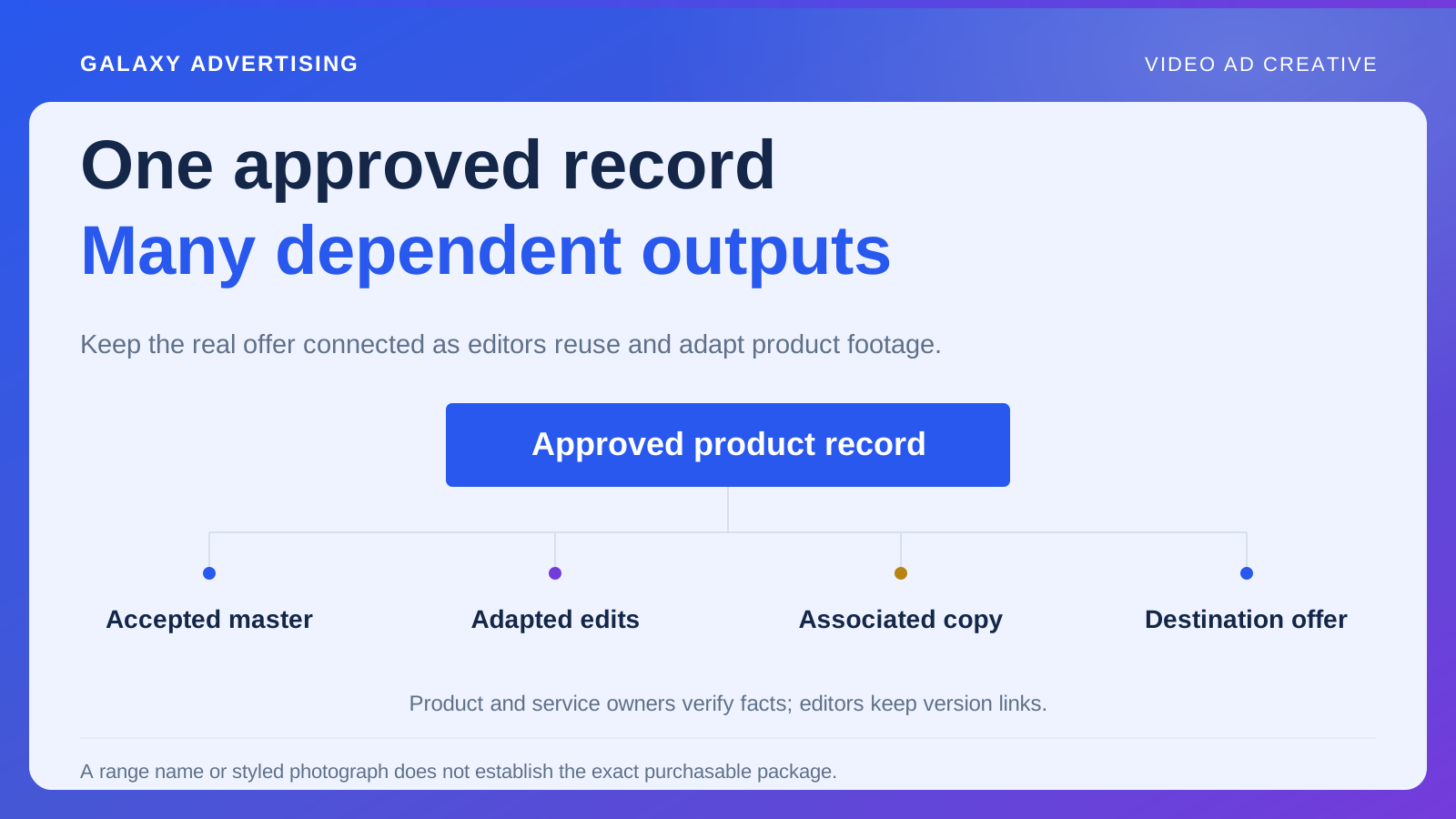
Record the configuration, accessories and relevant scene state for important takes. Your editor should not have to join incompatible versions simply because they look similar at first glance.
Notice changes that alter meaning. An accessory appearing between shots can imply it is included. A close view in another finish can undermine the product identity established in the wide scene.
Continuity therefore protects the offer as well as the appearance of the edit. Keep the approved product record available on set. Resolve a question there, before another take makes the inconsistency harder to trace.
Check the explanation before polishing it
At the first assembly, ask whether a customer can follow the intended action and identify the offer. Check accuracy and essential context before spending the remaining editing allowance on finishing touches.
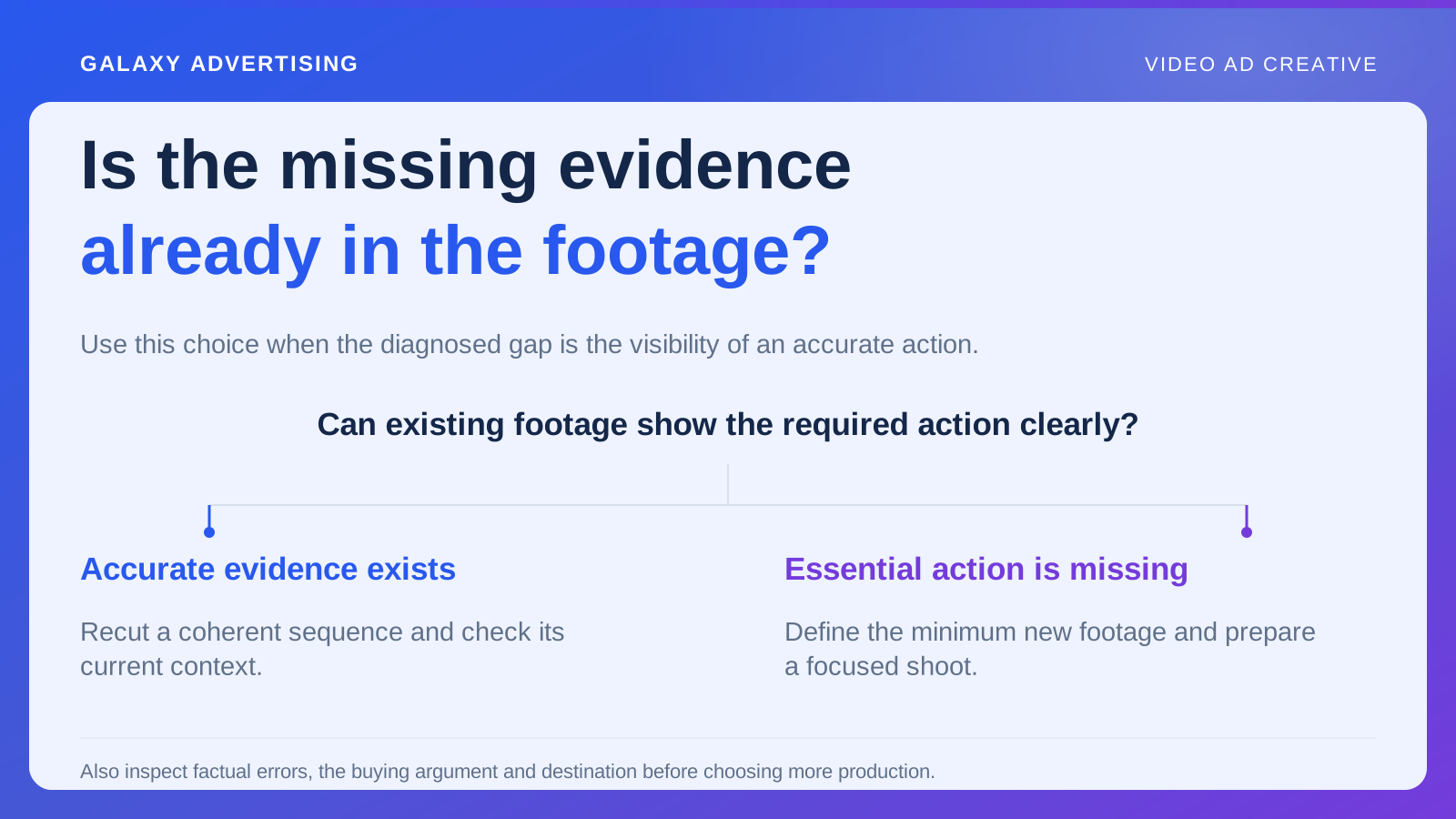
If evidence is missing, consider what existing coverage can honestly explain. A caption can clarify an action viewers can see. It should not pretend an unfilmed capability has been demonstrated. The words cannot make the camera have witnessed something it missed.
Sometimes a return shoot is the responsible choice. Compare its cost with the consequence of releasing something unclear or unsupported. Protecting the effort already spent by overstating the footage can leave you with a worse commercial problem.
Walk through the action first
Before the full setup, have the responsible product handler and director rehearse the important action together. Does the planned angle show the relevant movement? Does the result stay visible long enough to understand?
That walk through might reveal the need for another view, or show that an assumed configuration is impractical in this space. Settle it while the plan is still flexible, rather than asking the editor to solve a physical limitation afterwards.
A rehearsal does not replace appropriate handling instructions or specialist judgement. Its purpose is to discover whether the communication you have planned can actually be filmed.
Send the next team more than footage
Store the accepted takes with relevant references and notes on what each sequence establishes. Identify material that must not be reused because the offer is obsolete or a factual issue remains unresolved.
Keep the lessons too. If an operation needed more preparation than expected, record that dependency for the next shoot. If a particular reference made checking easier, add it to future packs. The next team should benefit from what this one learned.
A good shoot plan gives creative decisions a dependable foundation and leaves the remaining choices more flexible. When the essential buying question is answered in the footage, you can use the editing room to make the explanation better, instead of wishing someone had pressed record on the part that mattered.