What if the premium desk video showed why the room needs that desk, as well as how good it looks? A slow camera move around a carefully styled room can create atmosphere without explaining why somebody would need this product rather than another.
Now imagine a person trying to work in a room that must also serve another purpose. The desk has a situation to answer.
You do not need exaggerated frustration or a dramatic promise. Start with a recognisable task and an accurate connection to the product. That gives the footage something to communicate beyond an attractive object moving on screen.
Describe the situation your customer is in
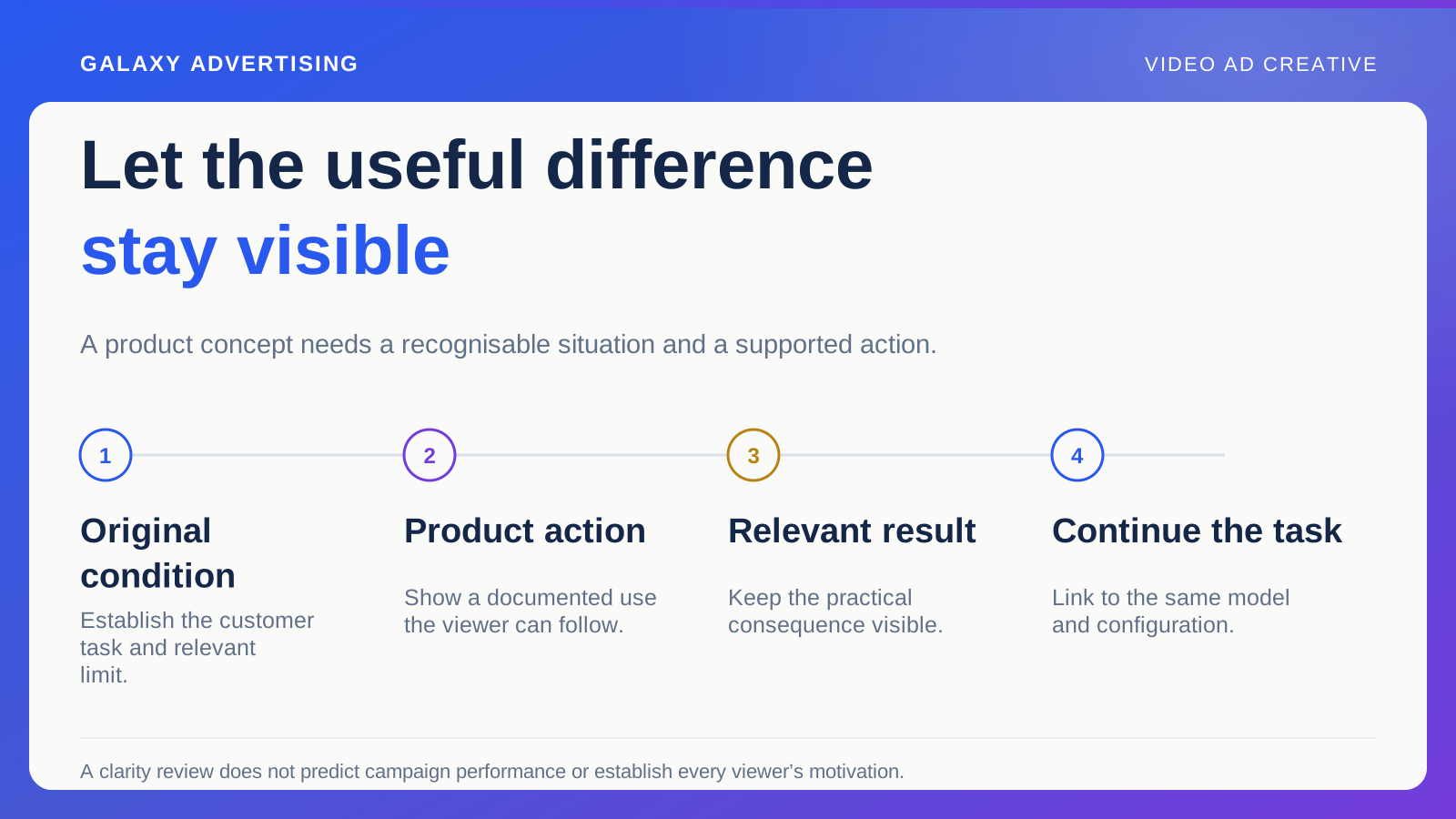
Ask what makes the item relevant now. Restricted space, changing household needs or a particular practical requirement can each give a concept a concrete starting point.
Use actual enquiries and product knowledge to identify plausible situations. A few conversations do not establish a confident psychological profile. They can reveal questions and constraints worth representing accurately, which is a more useful basis for the brief.
“People who appreciate quality” gives the camera little direction. “Someone comparing desks for a room that also needs space for guests” suggests a physical task, a scale reference and a possible demonstration. The concrete description helps production decide what viewers need to see. You are describing a situation the product can answer, rather than asking the camera to illustrate an audience label.
Choose an action whose consequence is visible
Identify the relevant difference the product makes. An adjustment could change the working position. Folding could change the use of the room. Storage could organise particular objects, provided the real dimensions support that use.
Choose an action viewers can understand visually. A detailed technical feature might need another explanation rather than a rushed demonstration. The most impressive feature is not necessarily the clearest first concept.
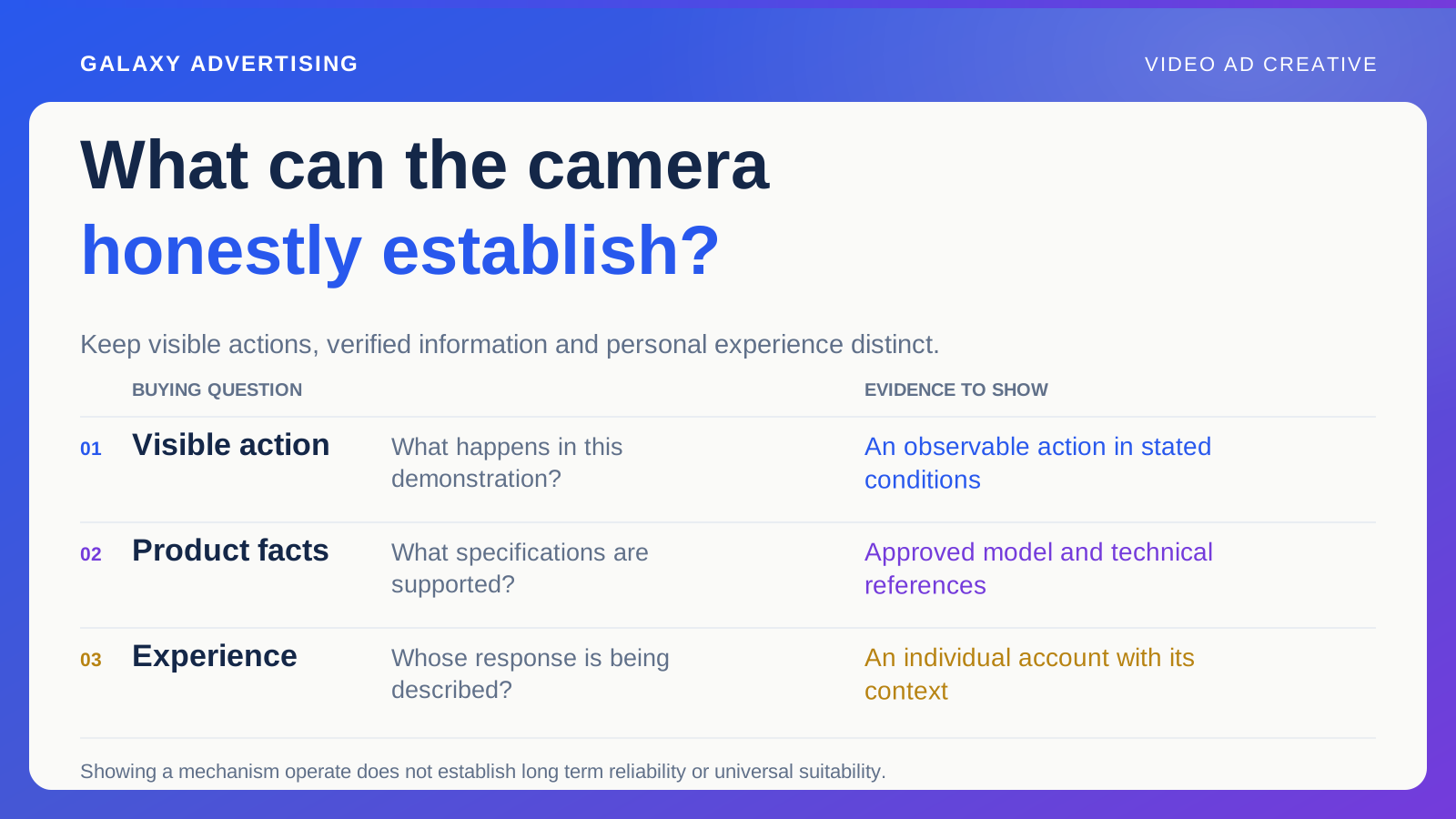
Stay within documented product use. The situation should not require the item to do something it was never designed to support. Where a claim depends on technical information, obtain the approved source before treating the scene as a demonstration. A plausible setting cannot establish a capability on its own.
Make the opening clear without overplaying the problem
Show enough context for people to grasp the situation quickly. An ordinary room constraint can make the product relevant without a long introduction. Let the item enter as a credible part of the situation, rather than an unexplained miracle.
If viewers need several unrelated events to understand the setup, narrow it. A premise consuming most of the available screen time leaves little room for evidence of the useful difference.
Avoid presenting one requirement as a universal pain point. You can address a particular customer without claiming everybody shares the difficulty. That honesty makes the proposition more precise and helps unsuitable viewers recognise that the offer is not intended for their circumstances.
Keep the evidence visible when you edit
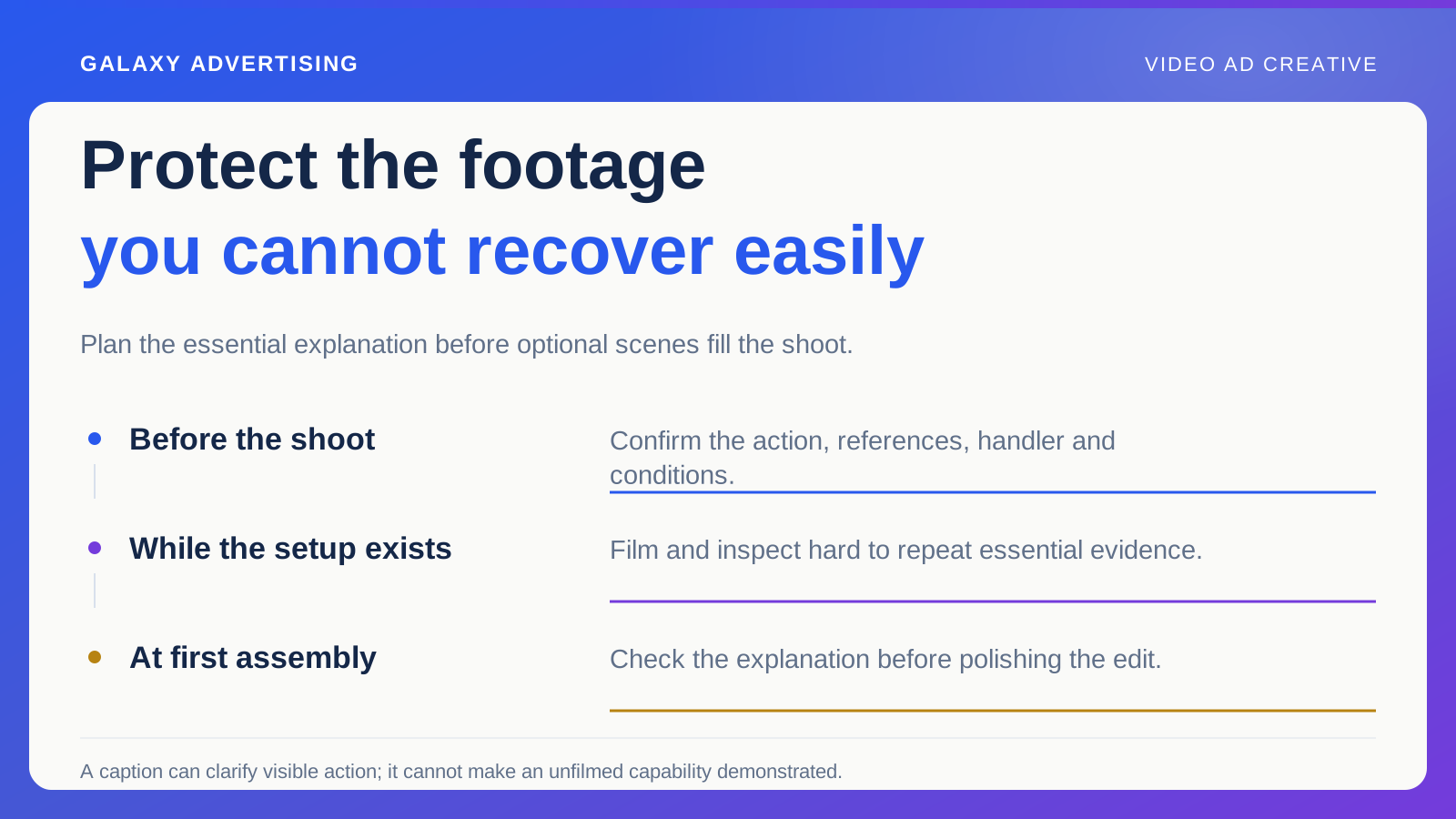
Plan shots showing the original condition, the relevant action and the result. If a cut hides the important mechanism, the sequence could imply a benefit without showing how it happens.
Use framing and pacing for comprehension. A stable view may explain change more clearly than several rapid angles. Close footage can then reveal detail that would be lost in the wider scene.
Review the scene without captions and ask whether the practical difference remains understandable. Then review captions separately for claims the footage does not support. Words should clarify the evidence rather than stand in for missing proof. The sequence and its wording need to make one coherent communication.
Let the destination continue the same situation
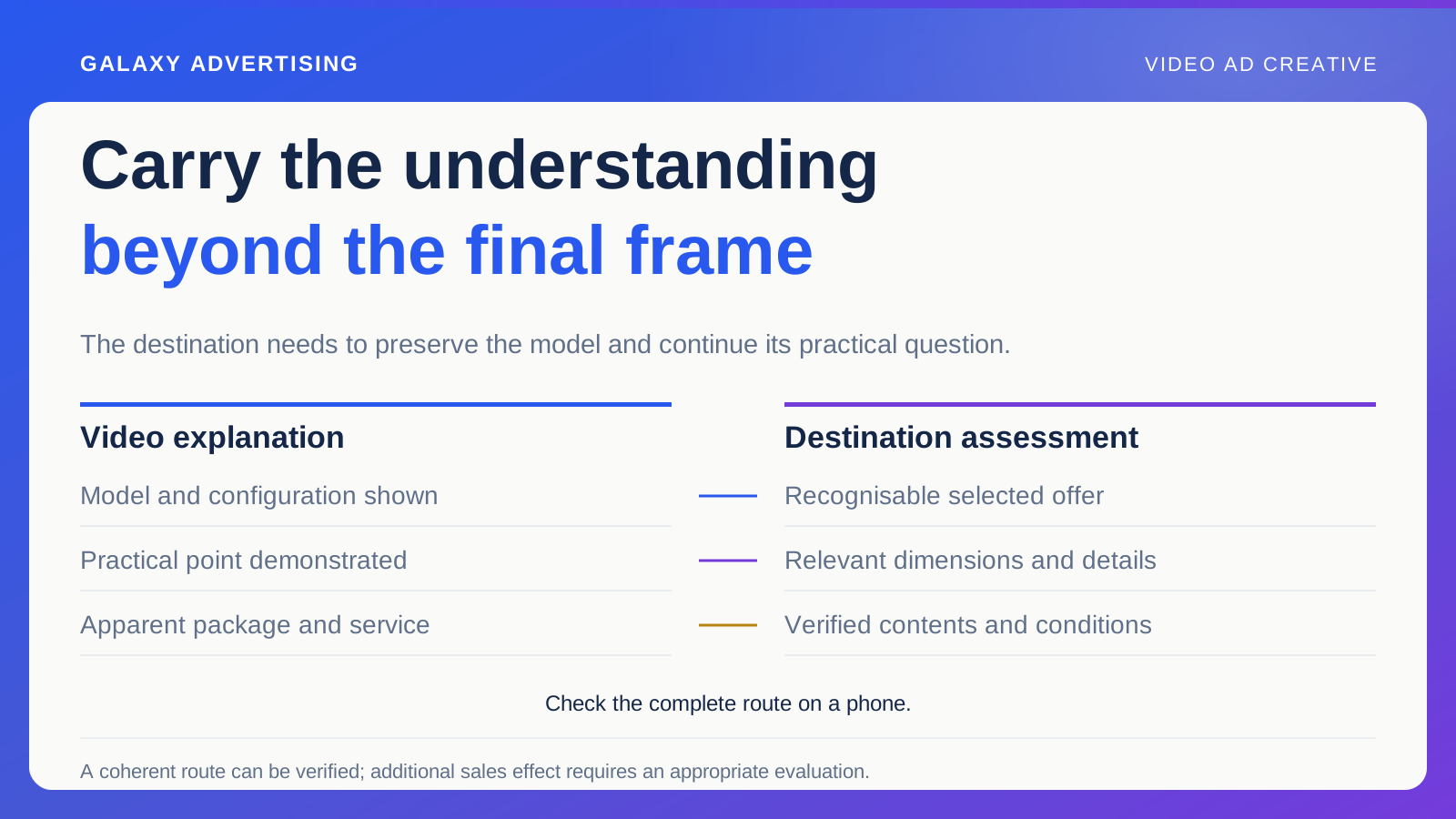
Link to a page identifying the model and configuration shown. Someone interested in a desk for a shared room should be able to inspect its dimensions and options without searching a broad catalogue to find it again.
Distinguish optional accessories and styling objects from the package customers can buy. A scene can be plausible while leaving the offer ambiguous. Resolve that before interpreting whether the video attracted suitable demand.
Where shoppers need more guidance before choosing a model, give them a clear route to it. Continue the practical decision the video introduced. A general exploration of the brand should not require every visitor to abandon the context that made them click in the first place.
Check what an unfamiliar viewer understood
Before launch, show the draft to somebody unfamiliar with the brief. Ask them to describe the situation and product difference. Their answer checks clarity; it does not predict campaign performance.
After launch, inspect available product exploration, enquiries and orders for signs consistent with the intended use. Keep the interpretation cautious. Those records cannot reveal every person's motivation, and a pleasing view count cannot establish commercial suitability.
Use the observations to define the next question. You might need a clearer scale reference, a better destination or a different practical argument. “Make it more engaging” is less useful than naming the part of the customer's decision still unexplained. Specific feedback gives the next production choice a purpose.
Save the situation and evidence with the final video
Store the intended task, demonstrated action and factual references alongside the asset. That makes it easier to distinguish a genuinely new concept from another edit of the same argument.
Retain what the review established and what remained uncertain. A later campaign can reuse accurate footage while deliberately changing the customer question. Without that context, the team has to rediscover the purpose of each clip by looking at its appearance.
Strong concepts begin with relevance the product can substantiate. A recognisable situation, meaningful action and understandable result give customers something useful to assess. They also give your business a specific idea to improve when it is time to decide what to film next.