Your agency opens the room photograph folder and can see plenty to build creative around. What it can't see is which vintage pieces are still available, which maker attributions are uncertain or who can confirm a reservation.
Creative can move quickly while the facts needed for accurate purchase promises remain missing. A useful handover explains how individual objects move through your business and which records define the offer. Connect marketing access with buying, preparation and sales responsibilities. Attractive public pages alone can't reliably tell an external team how those things work.
Explain the business problem before requesting a channel
Describe what needs improving. Perhaps prepared stock needs more suitable visibility, enquiries repeatedly uncover missing information or marketing continues after sale. Each is a different starting point for recommendations. Give the agency the problem rather than only the activity you'd like to see.
Keep that problem separate from a predetermined answer. More adverts might be reasonable. Within the agreed scope, the agency also needs permission to identify whether the offer or operating route requires preparation first. Otherwise the brief can prevent it from recommending the work the evidence points towards.
Explain affordable investment and implementation capacity. Ambitious revenue expectations don't make unlimited photography or immediate website changes practical. Clear constraints help the agency propose something you can execute. They belong in the brief, rather than arriving as a surprise once the plan has been written.
Show how you identify each piece
Explain the references used across acquisition, preparation, listing and promotion. They should stay stable even if a more accurate public description changes the title. A new name shouldn't break the link with the object's earlier records or its approved material.
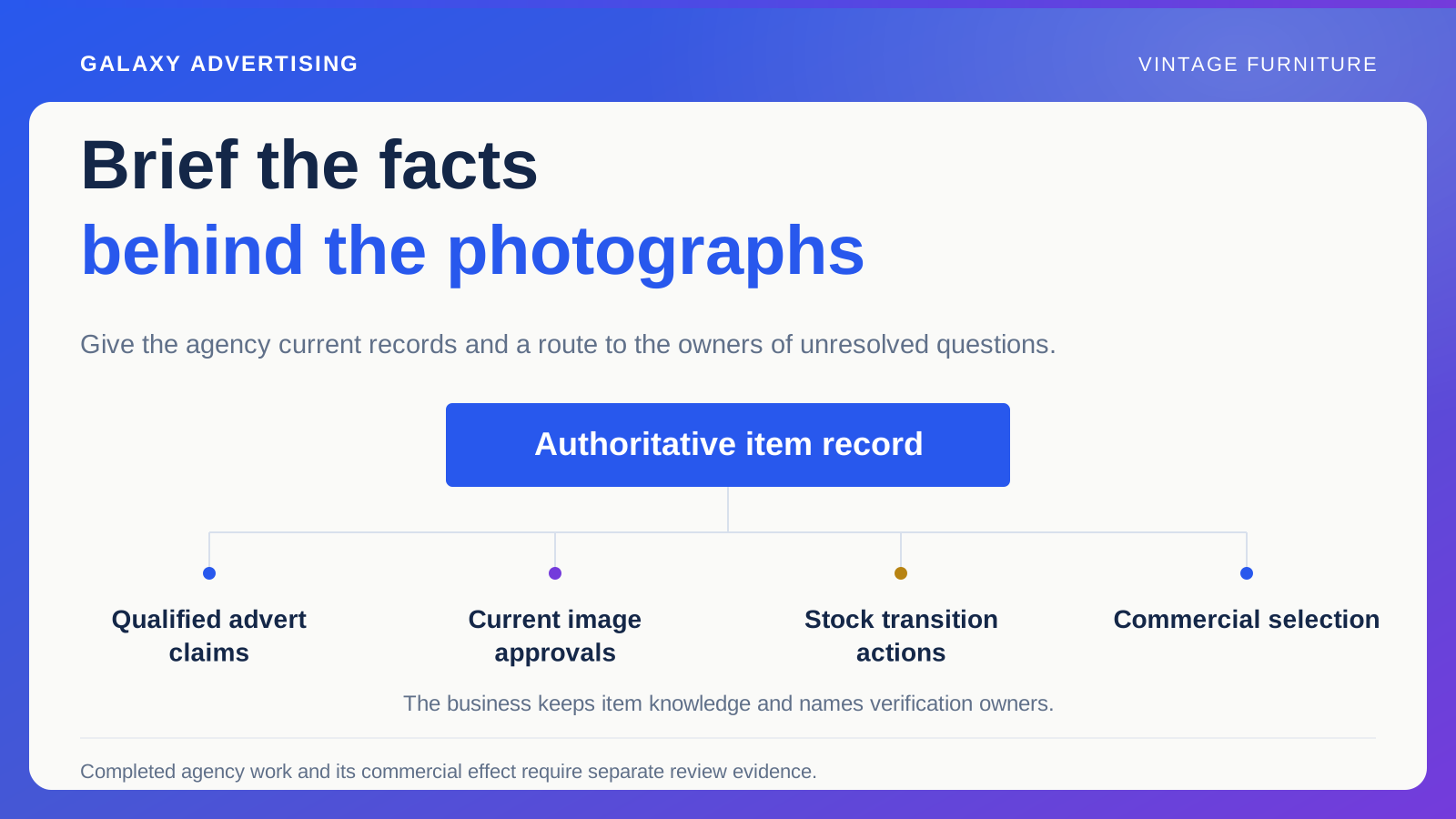
Provide a manageable set of representative records with current statuses. Show where authoritative information lives and who corrects it. The agency shouldn't have to choose between conflicting captions or deduce availability from an old image folder. Give it a dependable place to start and a clear route for discrepancies.
Include the known source of material claims. A qualified maker attribution must remain qualified in shorter promotional copy. If the handover supplies only the confident version, the advert can become inaccurate even while the detailed item record remains careful. The qualification needs to travel with the claim.
Explain how preparation and condition are verified
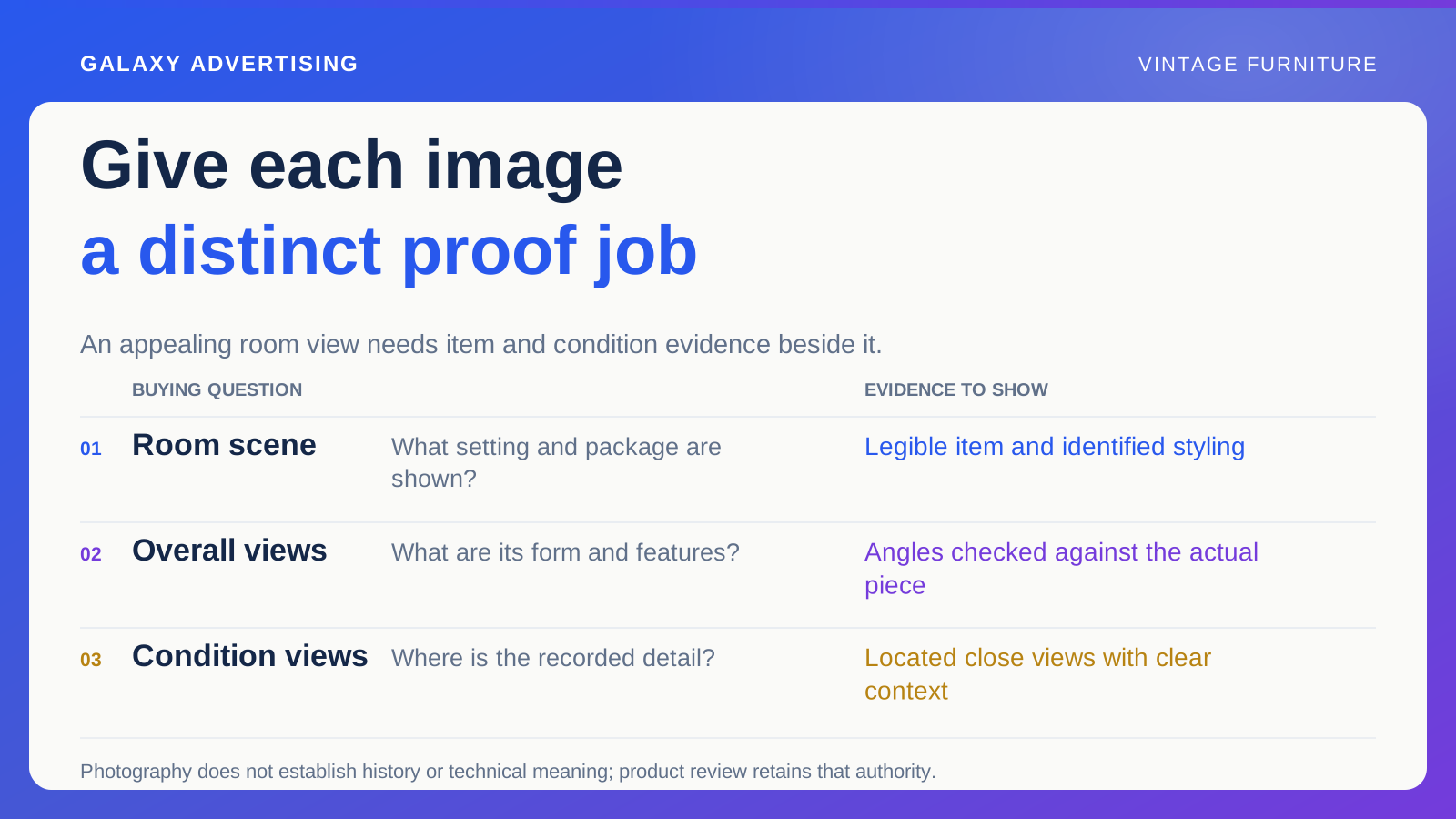
Show the inspection, photography and approval process. The agency needs to know which images represent the current piece and which predate relevant work. An older photograph can be attractive without remaining accurate evidence of what's being offered now.
Make condition observations and restoration information accessible in the form the task needs. Saying every item is checked doesn't tell a writer which details belong in this listing or where uncertainty remains. Supply enough context to support the actual description, rather than a broad assurance about your process.
Identify who answers questions beyond the supplied record. Nobody should invent technical or historical details to complete an appealing story. A clear escalation route makes creative work more efficient because it gives uncertainty somewhere to go before convenience turns it into confident copy.
Name the owners of stock transitions
Define enquiry, reservation and sold states, including what event changes each status. Explain how changes reach page and advertising owners. Different people need the same current understanding if they are to maintain one coherent purchase offer across their work.
Agree the response when an item becomes unavailable. The agency may need to stop an invitation to buy, revise the destination or introduce accurately labelled alternatives. These choices need an operating agreement. They shouldn't depend on someone guessing your preferred treatment after the sale.
Keep item references with approved assets so affected material can be found. A campaign manager shouldn't need to recognise every object visually while searching a large folder. Reliable identification makes maintenance faster and helps preserve the connection between the live message and actual stock.
Share the economics that change selection
Agree which revenue, preparation and fulfilment information the agency needs to recommend promotional scope. A high selling price doesn't automatically provide a generous advertising allowance. The obligations attached to the piece can change what the sale can sensibly afford to spend.
Explain cost definitions and important estimates. Visible uncertainty can be worked with. A margin label with unexplained contents can't produce a dependable target. Make the basis understandable before asking the agency to recommend how much attention each piece deserves.
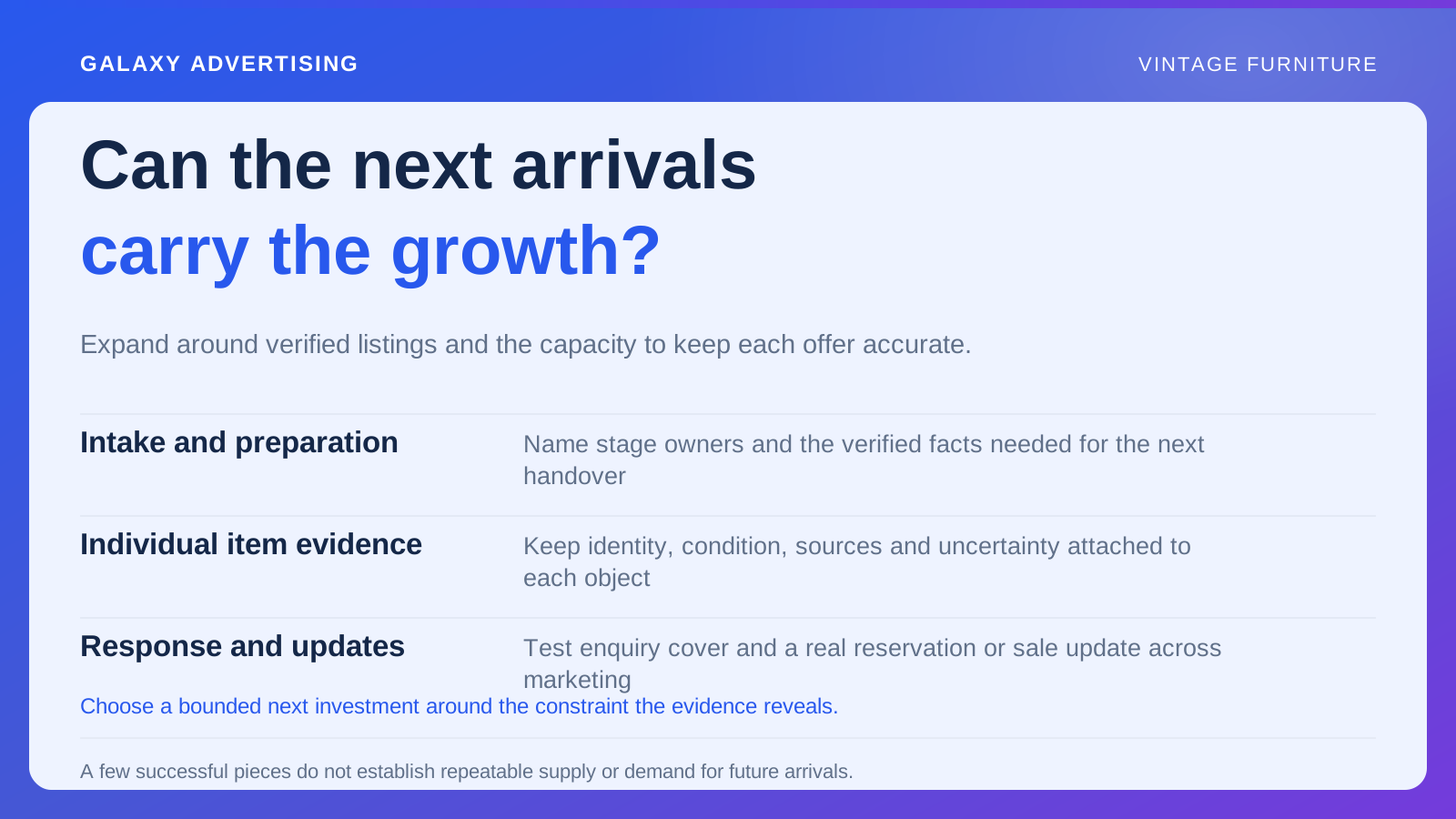
Distinguish item promotion from wider retailer introduction. Both may deserve investment, but their purposes and useful lives differ. The brief should let the agency explain which work seeks a sale of one object and which supports an accurate wider stock discovery task. Don't leave that difference implicit.
Bring previous learning with its limits intact
Provide campaign versions, customer questions and decision context. A claim that room scenes work better says little if it came from one unique piece whose price changed too. Give the new team enough evidence to understand what was observed and what was only inferred.
Keep operational learning alongside results. Recurring internal dimension questions may justify improved inspection records even when the advertising effect can't be isolated precisely. Practical preparation can improve without a claim that you've established its exact contribution to sales.
Allow assumptions to be challenged without losing the history. Explain what remains open instead of passing over confident rules nobody can trace to the pieces behind them. Continuity should preserve useful knowledge, rather than prevent the team from reconsidering its interpretation.
Include a sold item transition example: original listing, status change and campaign response. It shows your intended customer experience more clearly than “keep stock updated”. It can also reveal responsibilities otherwise left implicit between website owner and campaign team. Make that handover visible before it needs to happen live.
Agree what an accountable review looks like
Ask for recommendations connected to the business problem, with implementation dependencies identified. Product verification, website changes and spend approval may sit with different people. Define how completed work, observed outcomes and uncertainty will be reported. A new listing or advert is a deliverable; its commercial effect needs separate evidence.
The review should retain that distinction while recommending a practical next step. Your external team shouldn't become the sole keeper of your item knowledge. Dependable records, clear owners and an honest commercial basis give specialists room to exercise judgement while the truth of each individual object stays with the business.