The vintage cabinet looks beautiful in the room photograph, but the lighting hides a surface variation and the angle makes it look shallower than it is. You've got an appealing image. Your customer still has an incomplete impression of the object they're considering.
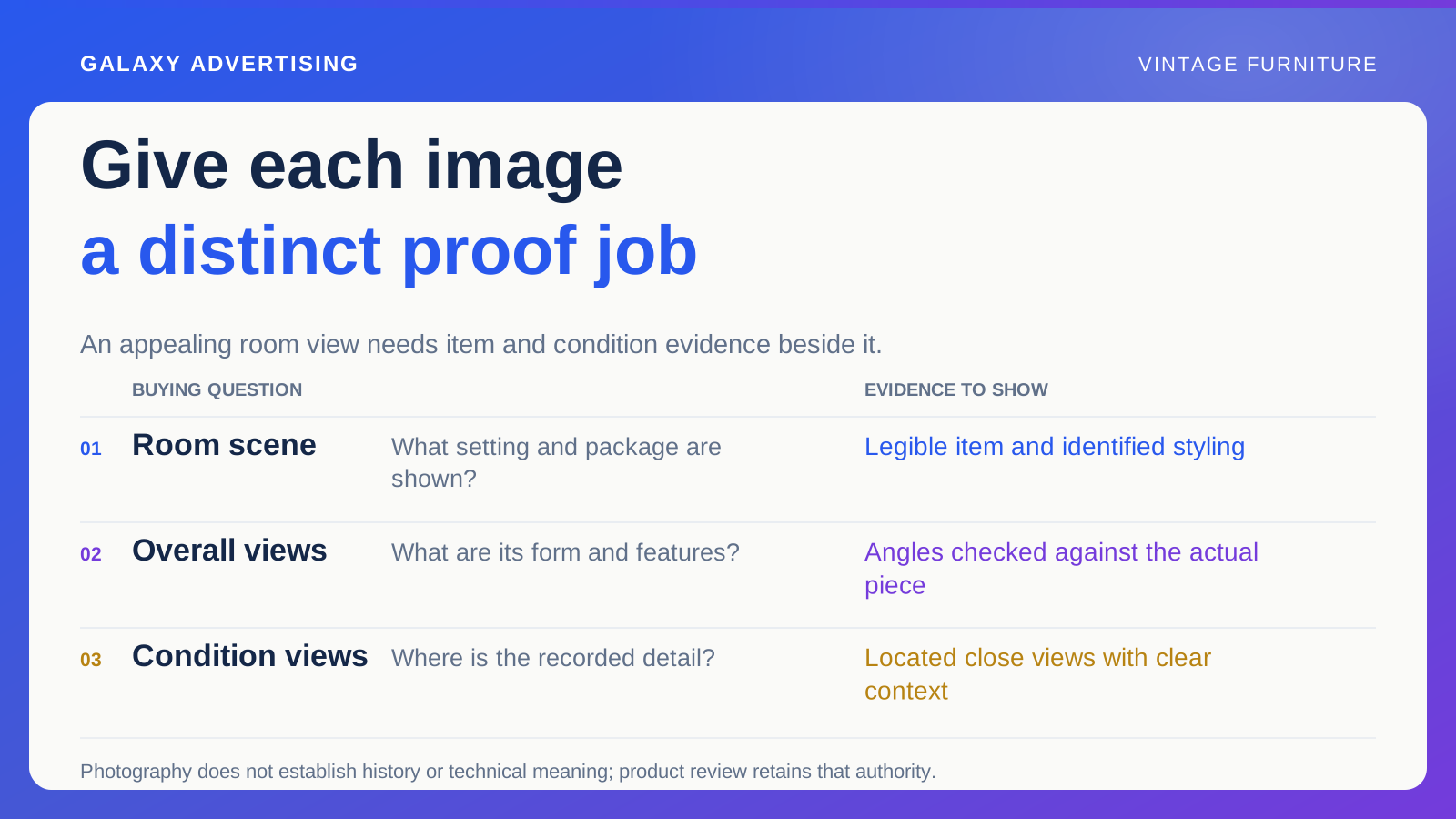
A useful brief gives different images different jobs. The room scene supplies context, overall views establish identity and form, and details support condition and restoration information. Together they should help someone assess the actual piece. That needs to remain true even when a more convenient version would make a prettier image.
Start by giving the photographer the item record
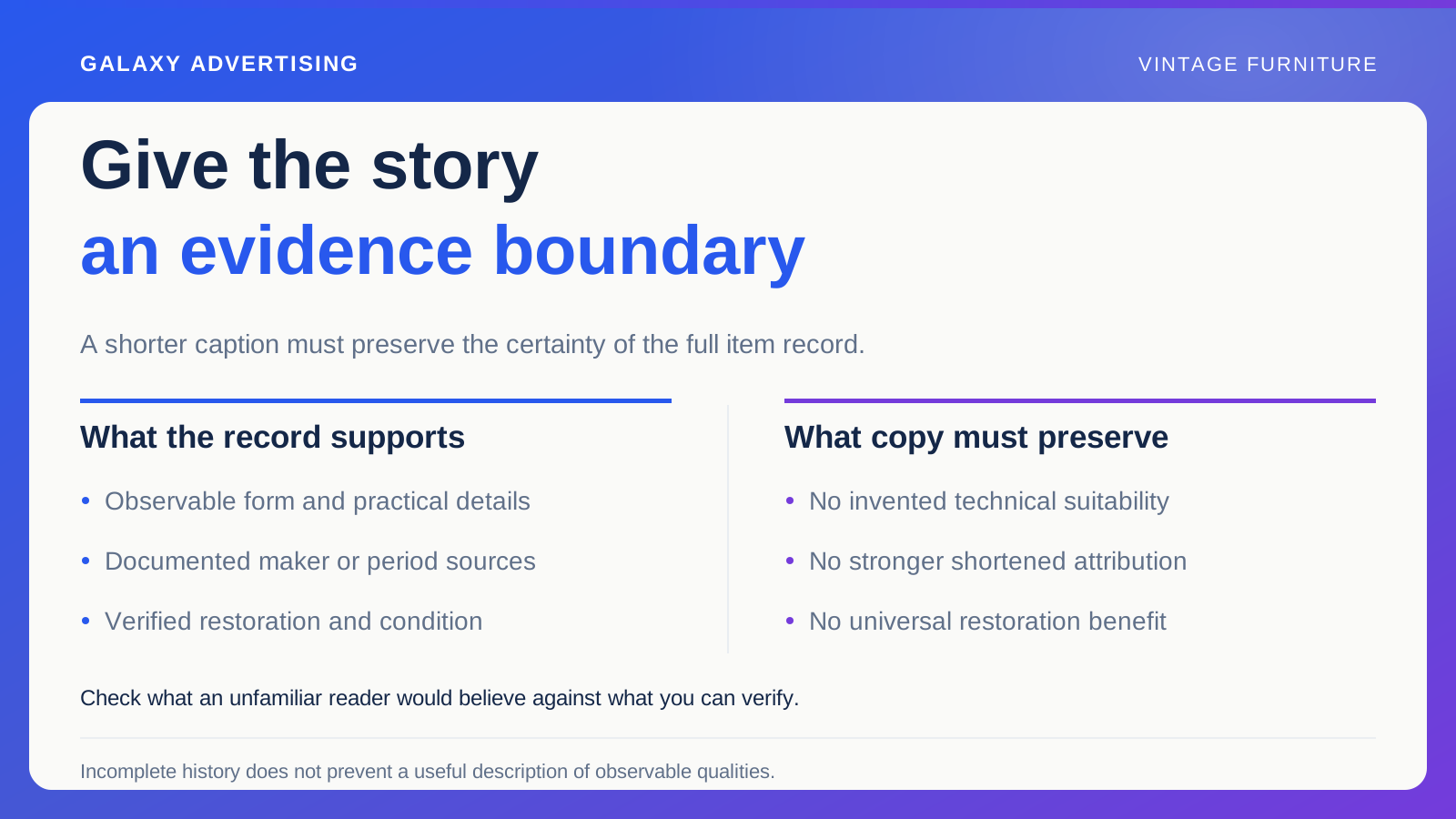
Supply the stable item reference, verified dimensions and relevant condition observations. Identify the details that need to stay visible somewhere in the final set. The brief should connect the creative work with what you already know about this particular object.
Distinguish recorded facts from questions still needing inspection. A photographer can capture a detail clearly without being qualified to establish its history or technical meaning. A useful image doesn't automatically settle what the image proves. Keep those responsibilities clear.
Use current references. If preparation changes the object's appearance after an early shoot, review which photographs remain accurate. Combining images from different stages can create an impression that never described the piece in one actual condition. The finished gallery needs to represent the object coherently.
Let the room scene provide context
Use styling to show a possible setting while keeping form and relevant scale legible. Surrounding the piece with more visually dominant objects can make a scene attractive while making the item harder to understand. The context should help someone see it.
Identify what's included and what's styling. A room containing a pair of chairs shouldn't suggest both are available together when you're advertising one. The same goes for objects sitting on or inside a cabinet. An image can imply a package even if nobody writes that promise.
Don't treat the scene as proof the piece will suit every similar space. The customer's measurements and intended use still matter. Invite investigation and provide a clear route to documented dimensions and other buying information. The room photograph isn't a substitute for that decision.
Plan views that explain the whole piece
Choose angles that make form and important features understandable. The right set depends on the object, so say which question each view should answer. Asking for more images without a purpose can leave you with a longer gallery and no better explanation.
A front view may establish how compartments are arranged. Another angle can clarify depth or reveal a detail invisible from the front. Give each view a reason to exist, rather than relying on a collection of similar photographs to feel comprehensive.
Check consistency with the actual piece. Perspective and composition can change perceived proportions without deliberate editing. Compare the final presentation with verified references. Approving the images because they look attractive doesn't answer whether they show the object faithfully enough for purchase.
Put condition close ups in context
Photograph useful views of areas identified in the condition record. Help the customer locate each one through an overall reference or clear description. A close image is more useful when the viewer understands where that part sits on the whole object.
Light the relevant observation so it's visible without deliberately exaggerating or concealing it. You don't need a dramatic treatment proving the piece flawless or heavily worn. You need an understandable representation that supports the condition record. The lighting should serve that job.
If someone later asks about an unshown area, improve the record where appropriate. Respond with the actual piece in its current condition. A detail image borrowed from a similar object cannot supply the evidence requested, however similar the surface or feature appears.
Agree where editing would change the offer
Decide which adjustments preserve a faithful representation and which alter the product or condition. Include the responsible product reviewer. This decision needs more than aesthetic judgement, because the approved image becomes part of what a customer expects to receive.
Don't remove a relevant mark or change material appearance just to make the photograph cleaner. The customer receives the object, rather than its edited version. Creative work should support that expectation and keep the relevant information intact.
If you use generated backgrounds or other visual tools, verify the product itself. Check proportions, handles, legs, surfaces and included components. A plausible scene can still introduce a difference absent from the original photograph. Looking convincing isn't enough to establish accuracy.
Adapt the photographs for adverts deliberately
Identify which images suit a short advert and which belong in the detailed listing. An overall view can introduce the item, but the destination still needs to provide condition and measurement evidence. The advert and page need to carry the purchase explanation between them.
Review crops in their intended formats. Removing an identifying detail or covering the piece with text can weaken the connection with the listing. Fitting an image inside a frame doesn't, on its own, mean you've adapted it successfully.
Keep the item reference with approved assets. Unique inventory changes quickly, and marketing needs a dependable way to identify which advertisement belongs to which available piece. File organisation helps maintain accurate promotion; it isn't simply a preference about tidy folders.
Ask the product reviewer to identify the object from the final set without its filename. If they notice a changed handle, missing detail or inconsistent surface, resolve it before approving the room scene for reuse. That observation deserves a correction, rather than being lost in an aesthetic approval.
Approve a purchase presentation, not isolated artwork
Review images alongside the listing. Could a new customer identify the object, understand relevant condition details and find the practical information needed to assess it? The set needs to work with the words, rather than pass review as attractive images in isolation.
Retain approved versions and their item context. If the piece sells or its description changes, you should be able to identify affected assets without searching through ambiguous room scenes. Keep that connection usable after the shoot is finished.
Vintage photography can be expressive and precise together. The room scene earns attention; the supporting set gives that interest somewhere credible to go. Its success lies in helping someone appreciate and judge the piece they'll actually receive.