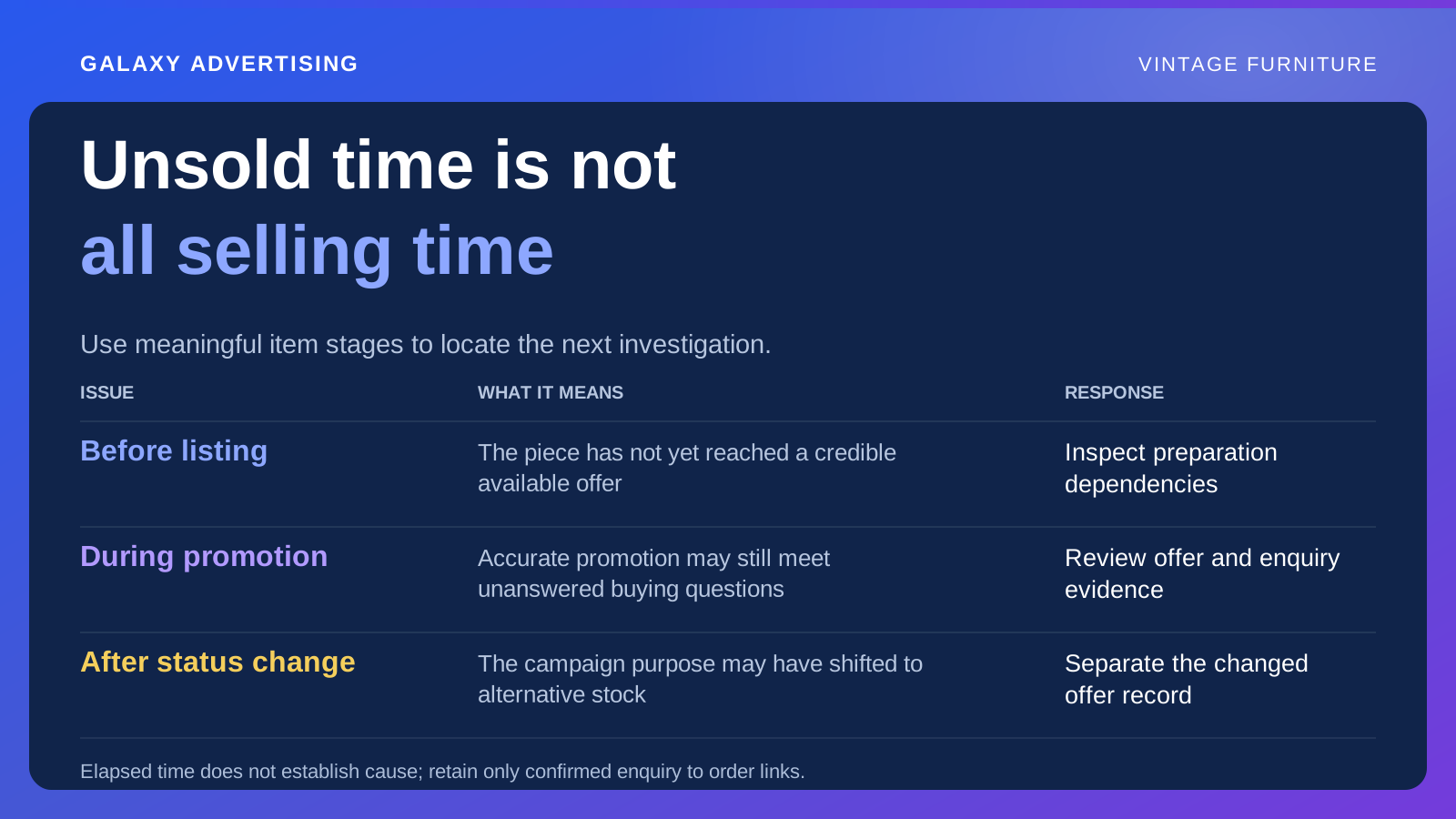
It's tempting to give the cabinet advert full credit when a customer later returns and buys a different table. The campaign may have introduced your business. That doesn't mean your records establish its exact role in the eventual purchase.
The cabinet might have sold to somebody else in the meantime. Unique stock can generate interest beyond the featured piece, while its own costs and actual transactions still need careful review. Keep both questions alive. A plausible connection can be useful without becoming complete proof of what caused the sale.
Start with what the business actually received
Use the order record your business relies on to establish the commercial outcome. Identify the purchased object, value basis and relevant status or later adjustments. This gives the discussion a consistent transaction to refer to before different marketing views enter it.
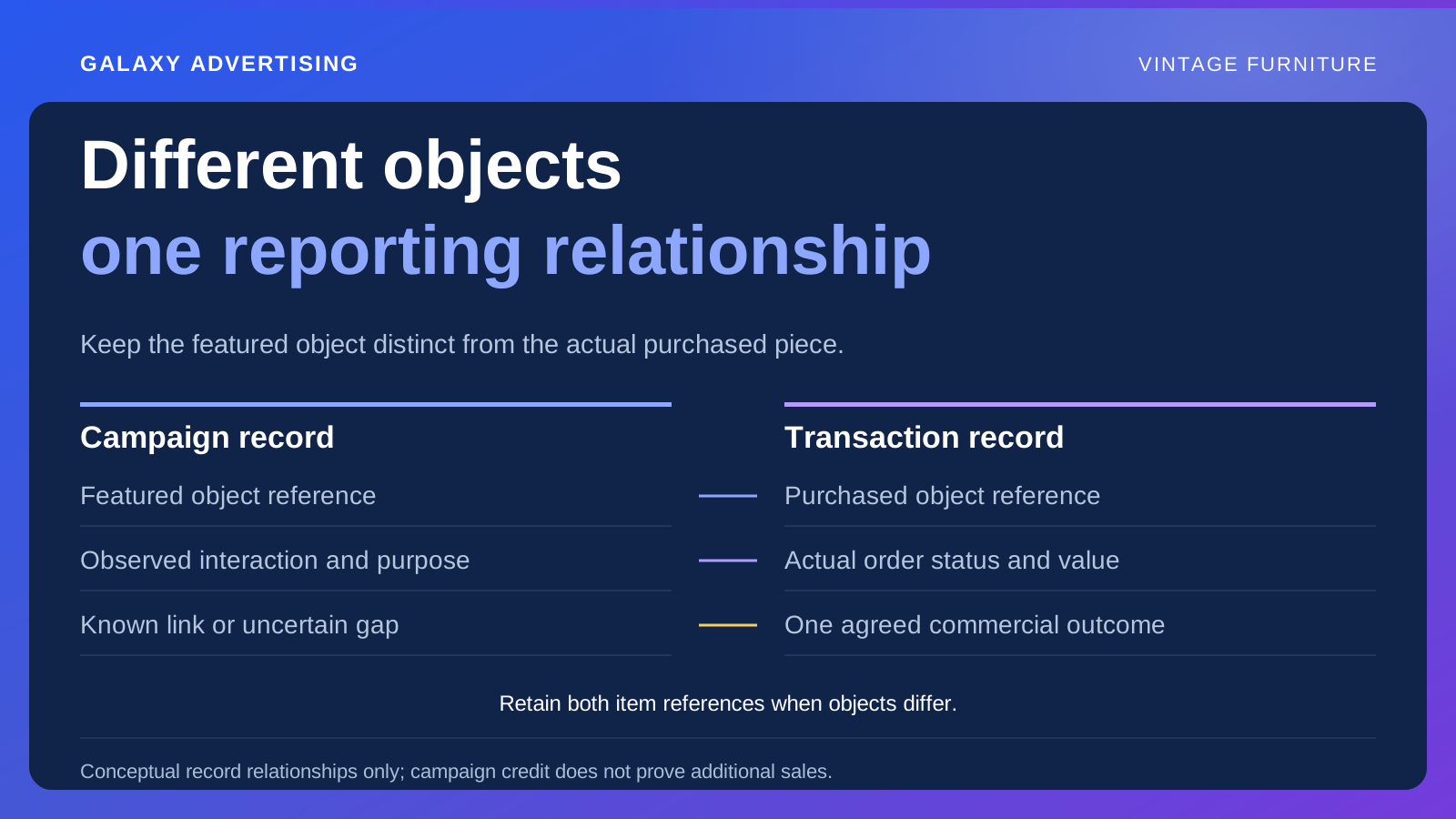
Don't count the featured cabinet and eventual table as two sales because two marketing records involve the same customer. The object in the creative and object in the transaction play different roles. Record those roles explicitly so the relationship doesn't inflate the revenue total.
An item review asks what expenditure supported the cabinet's offer. A wider marketing review may ask how you attracted useful attention to the retailer. A consistent transaction total lets you examine them without converting different views of one outcome into extra orders.
Say what each report actually observes
Identify whether the record shows an advert interaction, item page visit, enquiry or attributed order, meaning an order credited under the reporting system's rules. These observations don't necessarily have a complete, reliable connection.
Check reporting bases before comparing totals. Systems may use different periods, attribution rules or event definitions. A discrepancy can deserve investigation without proving one source wrong. You need the definitions to understand what kind of difference you're looking at.
Use a representative example to inspect the route from recorded action to reported result. Whoever decides investment should understand why the figure appears and which assumptions support its connection. A persuasive diagram isn't enough if nobody can reproduce the links it draws between events.
Keep known relationships without filling every gap
If a customer explicitly identifies the earlier object, or a confirmed record connects the interactions, retain that context appropriately. It can explain how one piece introduced a wider relationship with your business. Useful evidence doesn't have to account for everything to deserve a place in the review.
Distinguish it from a connection inferred only through timing or similar names. Where the relationship isn't established, the story remains uncertain. Mark that limit. Completing the sequence because it makes the report tidier would give the presentation more certainty than its records possess.
Remember influences you don't observe. The customer may have compared retailers, discussed the purchase privately or arrived through a route you cannot identify. The measurement record gives you a view of the journey. It cannot become the whole journey merely because it's the part you can report.
Separate campaign credit from additional sales
Attribution gives credit according to a system's rules and observations. It doesn't automatically establish whether the order would have happened without that campaign. That is a different question, and an attributed result cannot settle it by definition alone.
The cabinet advert could have introduced a new customer, reminded somebody who already knew you or formed one interaction among several. Your available records may support an attributed purchase while leaving those explanations unresolved. Keep that uncertainty in the commercial discussion rather than quietly choosing the most flattering version.
Use proportionate language. Saying the campaign was credited with a purchase under observed settings makes a narrower claim than saying it created all the demand for that order. That distinction matters when deciding whether to repeat the expenditure across future unique arrivals.
Keep the featured piece's economics visible
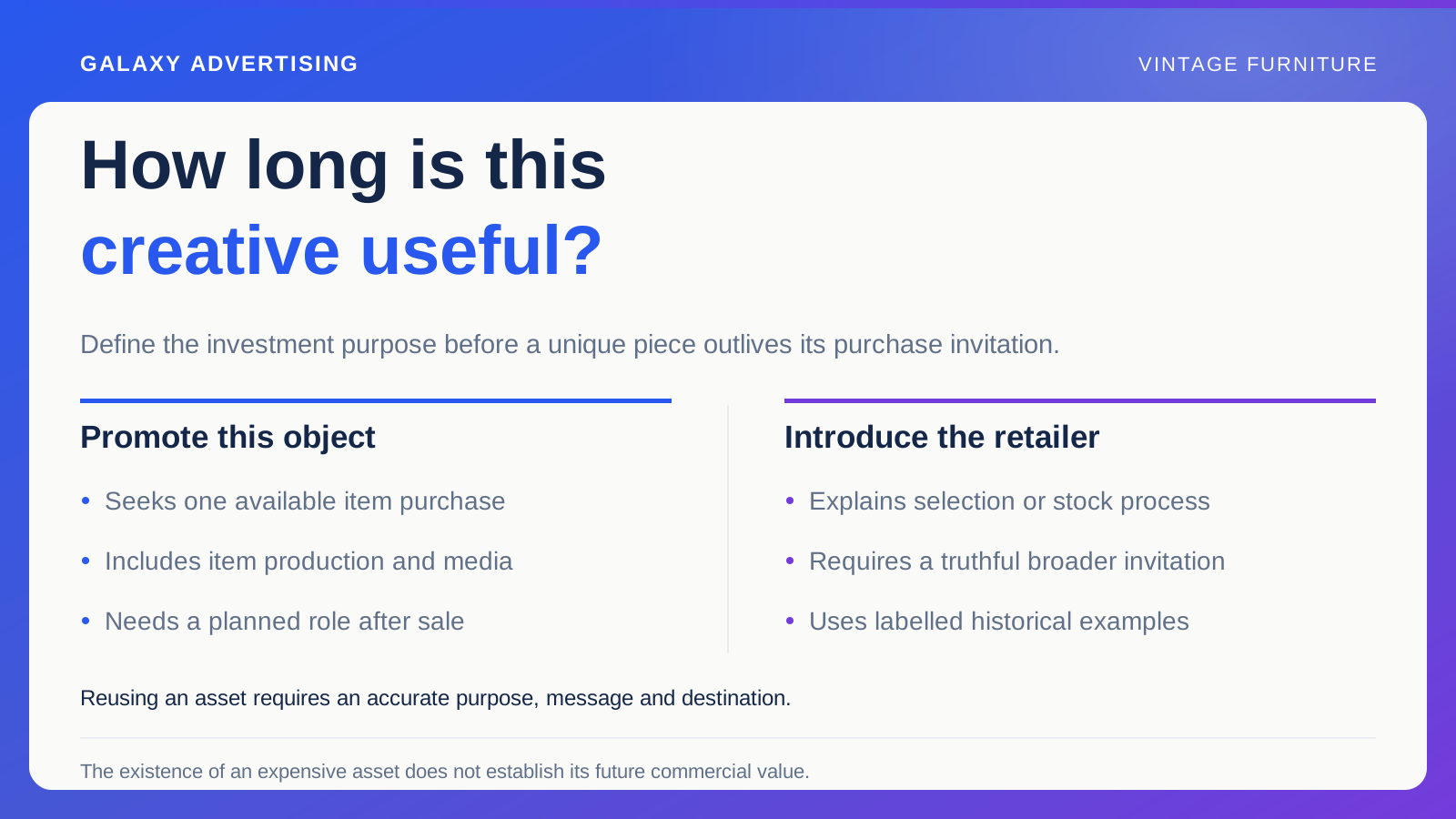
Retain costs belonging to the individual object and the purpose of its promotion. Possible broader influence shouldn't become permission to ignore an uncommercial item campaign indefinitely. The original job still deserves review, even if the asset also introduced people to your wider stock.
Equally, an object video isn't necessarily useless after its first transaction outcome. It could suit a clearly revised retailer introduction or historical editorial role, provided availability is represented accurately. Assess that new use on its defined purpose rather than automatically accepting or rejecting it.
If the role changes, record the new message and destination. Otherwise later reporting can mix direct item promotion with wider stock discovery while making the activity sound unchanged. The purpose belongs in the evidence because it changes what the result should be judged against.
Investigate a question you can act on
Choose a manageable sample of examples relevant to investment. Inspect purchased pieces, known enquiries and campaign records, identifying what can be connected confidently and what cannot. Start with a material question rather than trying to recreate every possible interaction your customers could have had.
Use the sample to diagnose the reporting need. More consistent item references, clearer campaign purpose distinctions and a better transaction definition are different corrections. Identify which problem the evidence reveals, so the next task addresses the gap rather than producing more reporting around it.
Don't consume the team's time pursuing uncertainty the available records cannot remove without a practical outcome. A clear limitation can be more useful than an elaborate unsupported explanation. The work should improve your next decision, rather than merely lengthen the account of how complicated the journey was.
When an example crosses from one object to another, keep both item references in the analysis. That makes it harder for a broader brand story to erase the original campaign's specific commercial purpose.
Give management a conclusion it can use
Present actual orders, attributed views and relevant stock context. Were featured pieces available throughout? Did the purpose change after reservation or sale? Explain those conditions so the figures can be read against the offer the campaign actually supported.
Recommend a bounded action: perhaps a clearer current stock destination, improved references or a focused retailer introduction test. A few plausible journeys between objects don't establish that every item campaign creates broad future value. You can recognise how one piece introduces interest in another while leaving uncertainty where the records leave it. That is firmer ground for balancing individual promotion with building a business customers remember.