What if you commission an elaborate room video for a vintage cabinet and the cabinet sells soon after release? You have a polished asset, but the purchase it originally invited is no longer available.
The work may have supported a worthwhile sale. You still need to know which investment belongs to that object and which parts can serve another purpose. Item acquisition and introducing your retailer can both justify spending. Their objectives and useful lives differ. Make those jobs explicit before short lived creative absorbs money needed for accurate preparation across your arrivals.
Decide whether you're promoting the object or the retailer
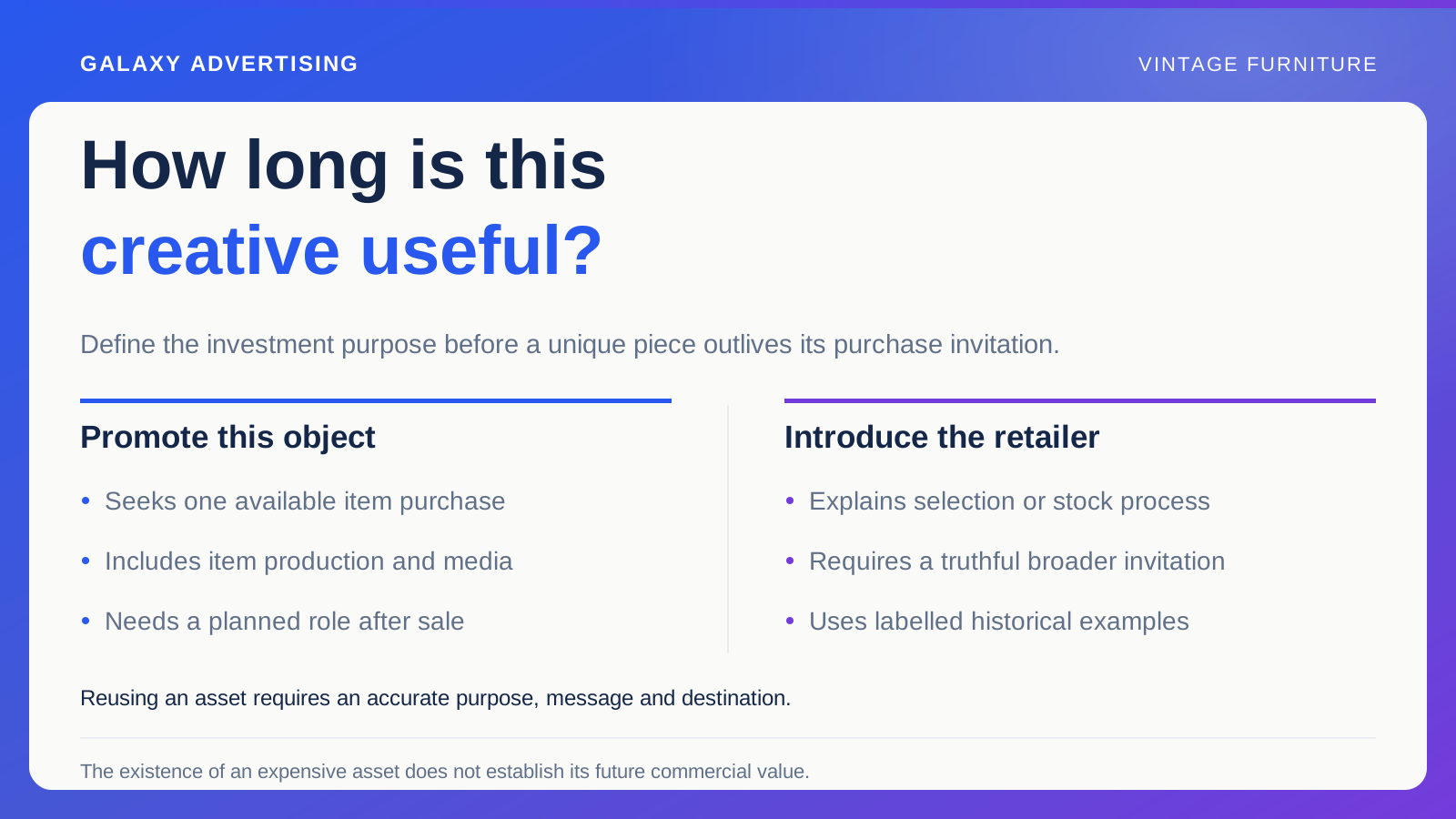
An item campaign asks someone to inspect or buy a particular available piece. A broader campaign might introduce your selection approach, stock process or range of current objects. Don't describe success as though those promises were identical. Each needs judging against the role it was meant to perform.
Name that role before approving production. A room video focused entirely on one cabinet doesn't automatically become reusable brand material after sale. Its context and call to action may need a deliberate revision before it can make an accurate broader invitation.
An expensive asset existing isn't evidence of broader value. Reuse helps when it serves a relevant, truthful purpose. Leaving an obsolete item invitation active under a new internal label doesn't create that purpose. The customer still sees the promise in the actual material.
Work out the commercial room for this piece
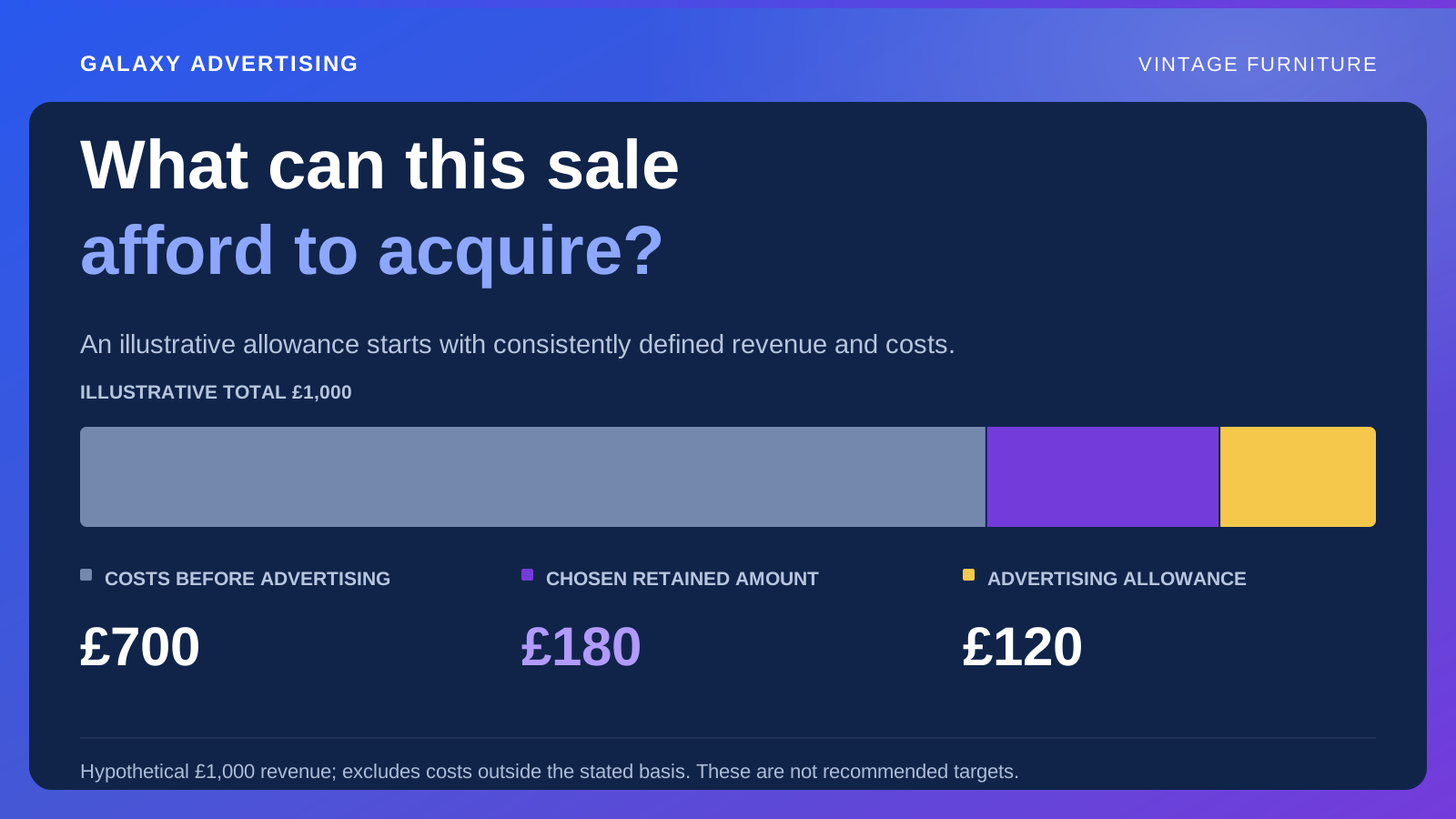
Review expected revenue and relevant costs using your agreed business basis. Acquisition, preparation and fulfilment can materially alter what remains for marketing. The price tag alone doesn't tell you how much attention the piece can afford to buy.
Include production belonging specifically to the object, rather than looking only at media spend. A small advertising bill can appear efficient while an elaborate asset consumes much of the available contribution, the money remaining after the costs included in your calculation. Put both parts into view.
Make estimates transparent. You can choose to invest in uncertain demand if the scope is affordable and the reason clear. An attractive object and internal enthusiasm don't replace an explanation of what a worthwhile sale needs to leave behind. Give the decision a commercial basis you can revisit.
Fund the information a buyer needs first
Inspect actual gaps before adding visual complexity. Accurate dimensions, condition photographs and a clear status record may be more urgent than another atmospheric edit. Ask what is preventing a customer from assessing the object, rather than what would make the production feel more elaborate.
This preparation supports several routes. Organic search visitors, direct enquirers and people arriving through paid promotion may all need the same verified information. You may not be able to allocate its commercial effect perfectly. Its operating purpose can still be clear enough to justify the work.
Fit preparation to the object. An unfamiliar cabinet interior needs different evidence from a table whose main questions concern surface condition. Efficiency means a consistent inspection process producing item specific information. It doesn't require the same decorative production package for every arrival.
Be specific about what can be reused
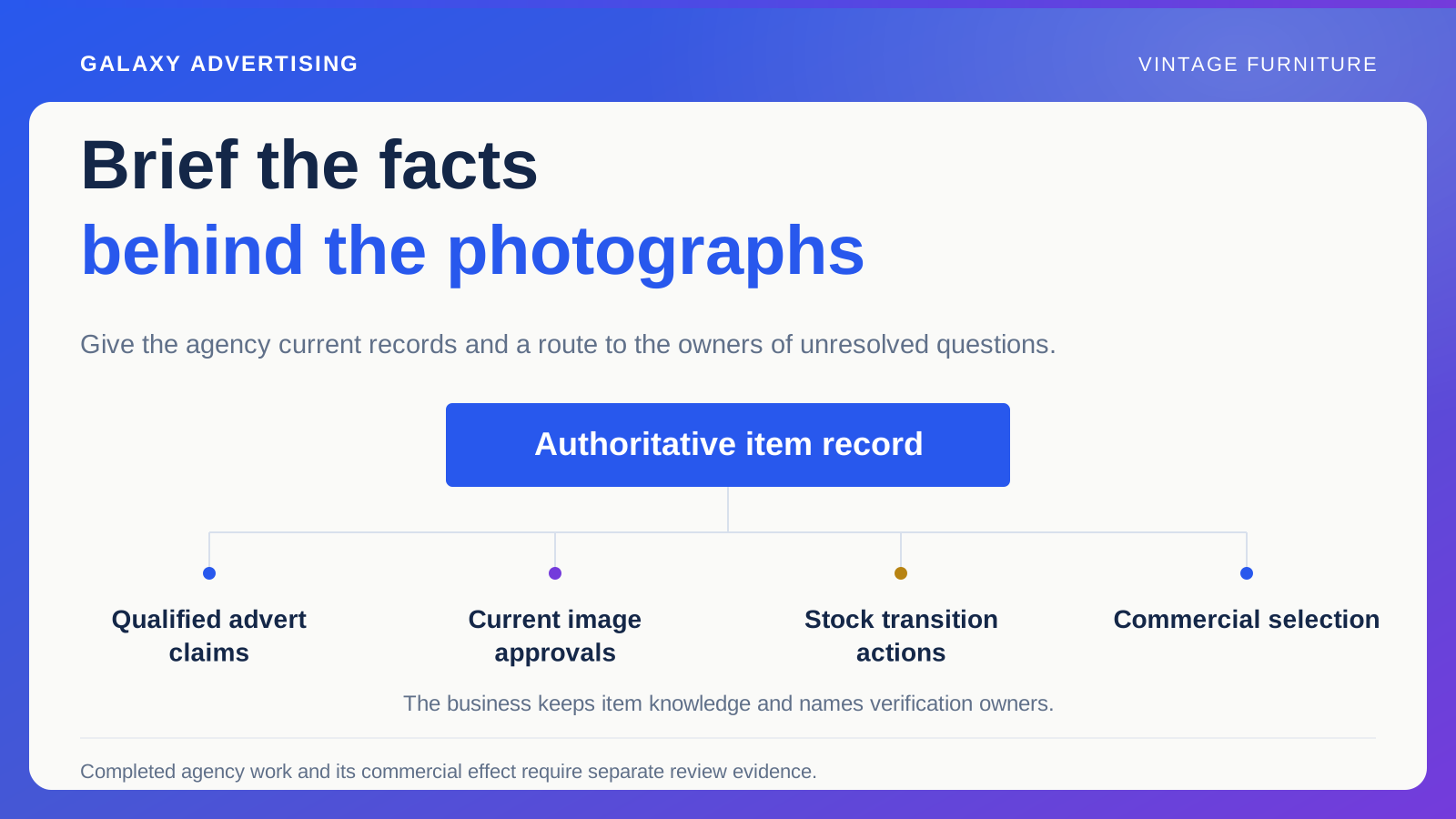
A clear photography process, dependable item record and organised sold status updates can support future stock. Those investments have a wider scope than a photograph of one unique object. Keep the distinction visible when deciding which work has continuing value.
If you intend creative reuse, name its subject honestly. An explanation of how you document condition can include suitable examples, provided it doesn't imply those pieces remain for sale. The wider argument must survive the change in their availability.
Keep original item references with assets. Future editors need to distinguish historical illustrations from current stock. Stripping away that context makes it easier for a familiar room scene to be mistaken for a live offer. Reuse needs the record as well as the image.
Ask which decision extra production helps
What will the additional cost help a customer understand? A stable demonstration of a relevant mechanism may supply useful evidence. A more elaborate background may add atmosphere without resolving a buying question. Both are creative choices, but their purposes aren't interchangeable.
You can choose to fund brand expression. Identify it as that objective instead of crediting every aesthetic refinement with conversion improvement you haven't established. Clear intentions make the later conversation about value more honest, including when the investment wasn't solely about an immediate order.
Keep approvals proportionate. A clear reference pack and early review can prevent expensive rework when the wrong detail is filmed or the scene changes apparent condition. That's a practical way to protect creative quality without making every piece a large campaign production.
Plan the role after sale before launch
Decide whether material will be retired, retained as historical reference or revised for a broader purpose. Name who makes that change when stock status moves. The piece selling shouldn't leave the asset waiting indefinitely for somebody to work out its next job.
If the destination becomes a sold page with alternatives, check whether the campaign still describes that route. Don't invite customers to buy an object you know is unavailable. The new destination may be useful, but the message needs to introduce it accurately.
Include maintenance work in the workflow. Assets don't stay useful indefinitely without attention, and the original promise's useful life matters commercially. Keeping unique stock advertising truthful takes operating effort after production, not just a decision at the shoot.
Distinguish preparing an accurate record from promoting it too. Both can deserve funding while solving different problems. Comparing them through media spend alone can misrepresent their value. Keep their purposes visible rather than forcing them into that misleading comparison.
Review the item and the programme on their own terms
At item level, examine the actual sale, associated obligations and known promotional costs. Across the programme, ask whether reusable preparation and retailer introduction work serve their stated purposes. Each investment needs an assessment suited to its job.
Don't assign every future sale to an old object video because it may have introduced the brand. Equally, don't assume a sold asset has no editorial value when you can present it accurately in a new context. A realistic useful life gives creative investment a firmer basis than either lavish production for every piece or refusing to market anything that can sell only once.