A bigger purchase button won't tell someone whether the vintage desk is right for them. Stronger promotional copy won't establish its condition, working dimensions or delivery route either.
If the listing gets visits but few useful enquiries, start with the particular object and the decisions it requires. Identify an obstacle you can reproduce, who can resolve it and how you'll verify the change. A design preference can deserve discussion. It shouldn't displace the evidence a careful buyer needs to assess unique stock.
Review the offer customers can see now
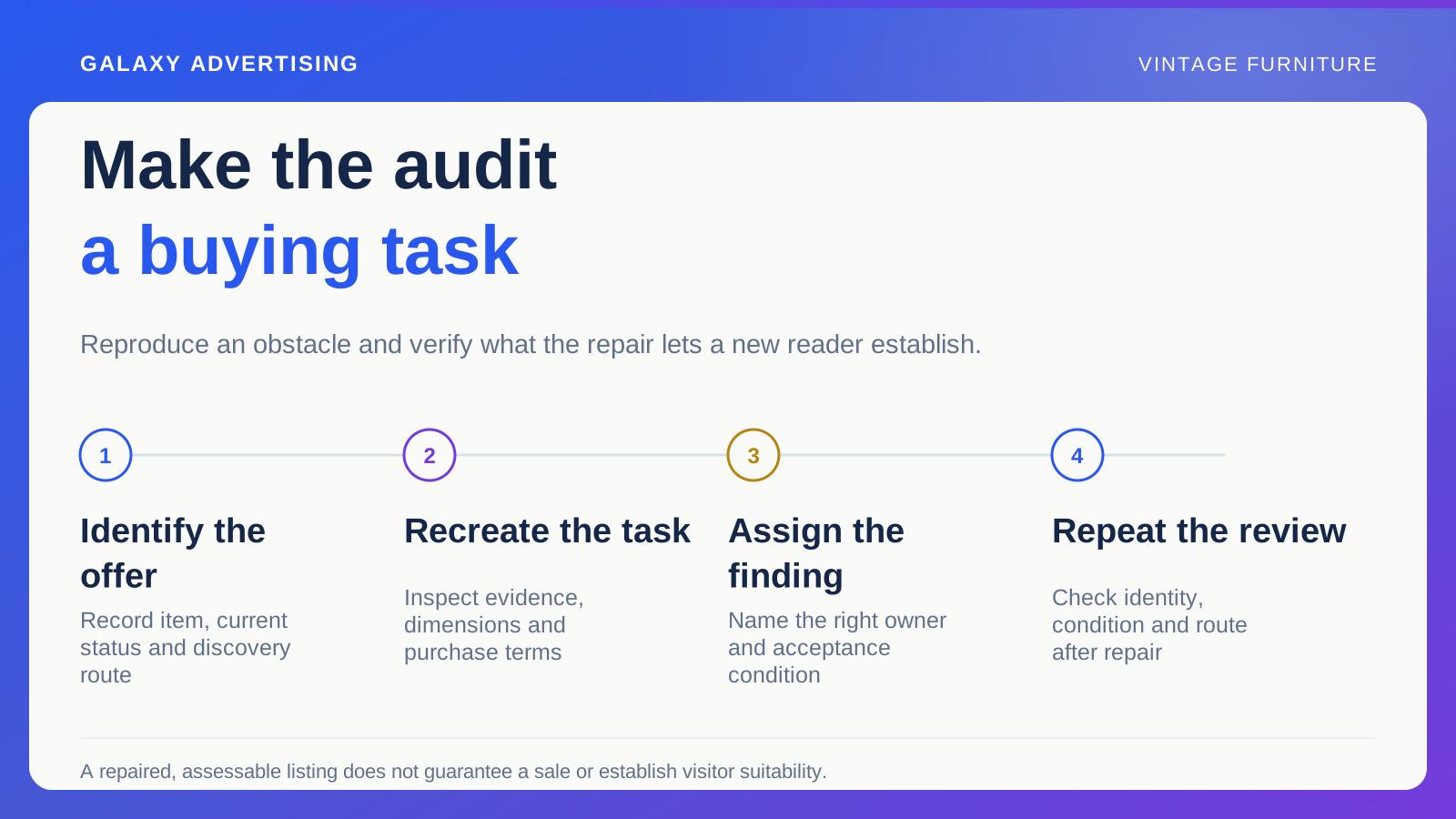
Choose an available piece representing a meaningful marketing priority. Record its stable reference, current status, price and likely discovery route. That gives the audit a defined object and offer, rather than a general impression of what your product pages usually contain.
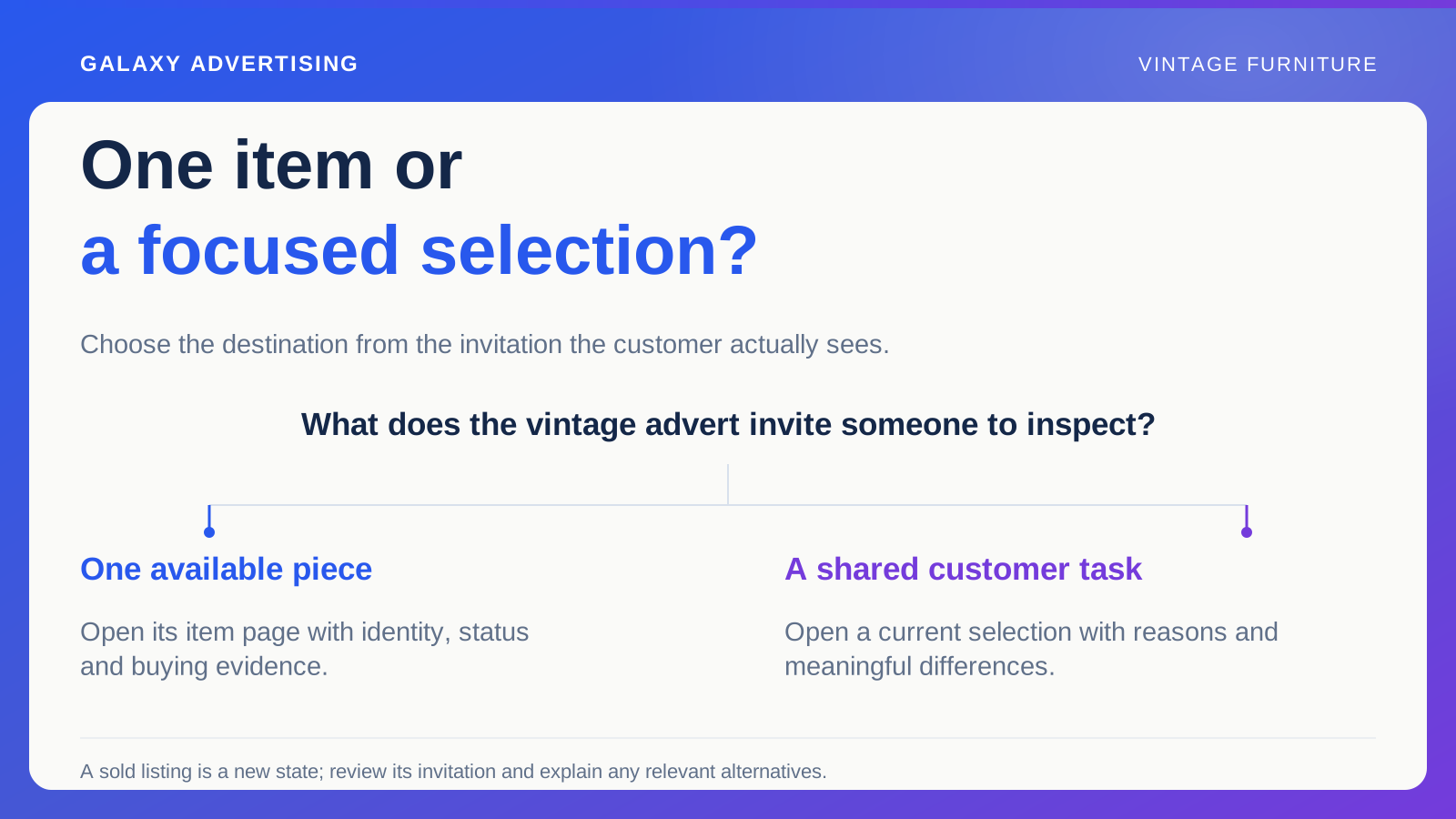
Use the actual advert or search destination where relevant. An employee going straight to the listing may recognise the object immediately. A visitor arriving from a cropped room image may be unsure which item is being offered. Recreate that introduction rather than skipping past it.
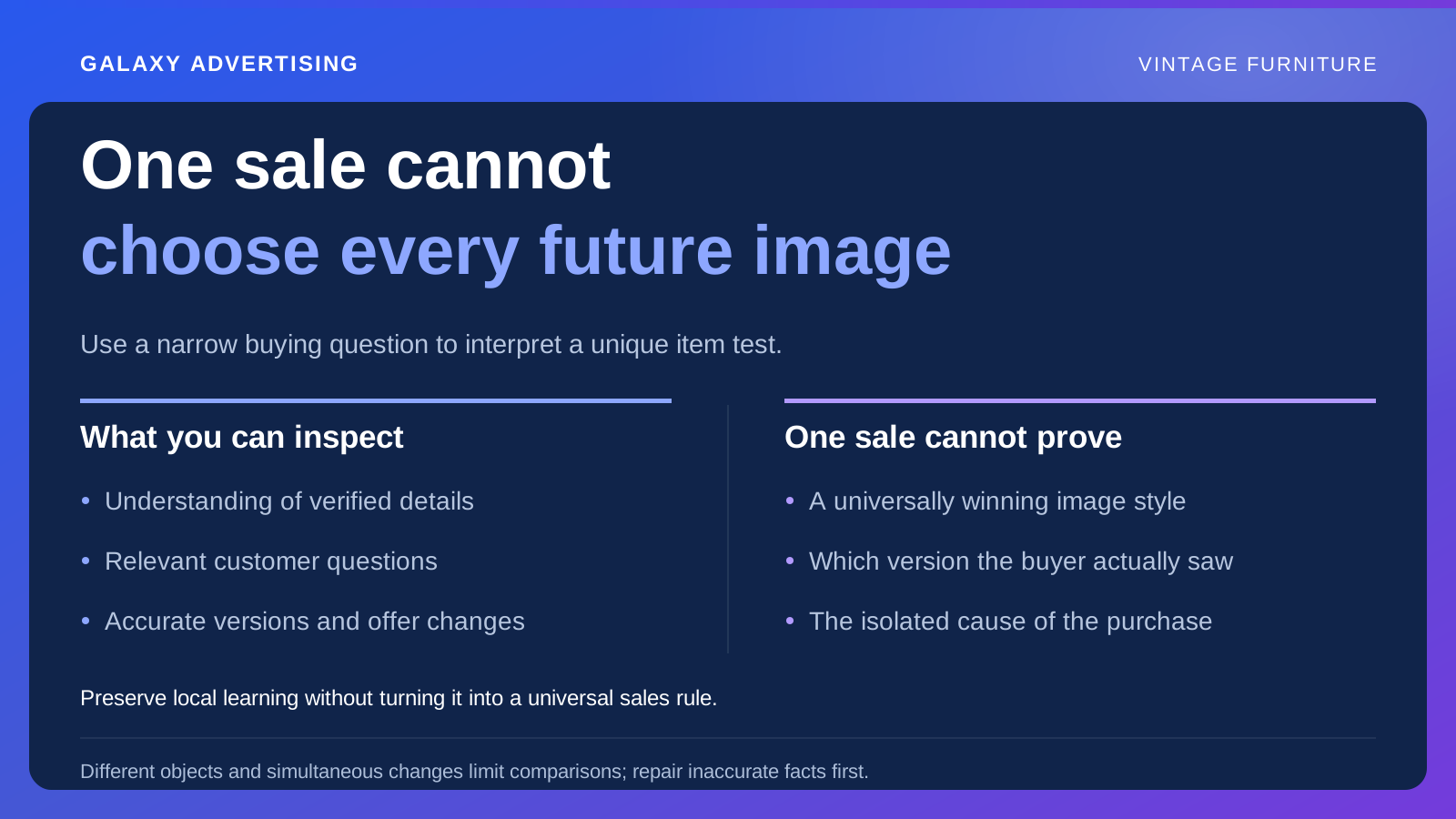
Keep the finding tied to the current version. A condition note added after review could resolve an issue while creating another question. You need to know which presentation produced the original finding before you can verify the correction reliably. Retain that context with the audit.
Check claims and observable information separately
What does the listing say about maker, period, material and history? Identify the source behind each material statement, and check that the presentation preserves the uncertainty of that source. The copy shouldn't become more certain than the evidence it represents.
Then inspect observable information. A strong provenance account doesn't supply measurements or condition details. A complete gallery doesn't establish an unsupported attribution. These are different evidence needs. Having plenty of one doesn't remove a gap in the other.
Record where a customer could reasonably believe more than the evidence supports. The cause might be wording, an image association or a missing qualification. Capture the implication, rather than checking only whether each isolated sentence can be defended. The whole presentation is what the customer interprets.
Try to find each condition detail yourself
Follow the condition description into the images. Can a new reader identify the area and connect it with the whole piece? A detail being somewhere in the gallery isn't enough if its location remains unclear.
A close view without context may be hard to place. A room image may make the surface impossible to inspect. A labelled view or clearer description could be the right correction, rather than more images of an attractive angle that still doesn't answer the question.
Don't demand that the listing eliminate every uncertainty reasonably requiring inspection or an individual enquiry. It should distinguish what's documented from what the business can help establish next. Clarity about the evidence and its limits is the objective. Pretending the page knows everything wouldn't achieve that.
Recreate a practical question about use
Choose a plausible task linked to the object's role. For a hypothetical desk, someone may need to understand working surface or internal storage, rather than only overall footprint. The audit should test whether the information supports the decision that person actually needs to make.
Check that relevant measurements are present and accurately labelled. If one is missing, name who can verify it. Don't fill the audit report with an estimate just to complete a field. A recorded gap with a route to an answer is more useful than an invented specification.
Follow the enquiry route and inspect the context it retains. The receiving team should know which piece and question the customer means. Losing the item reference turns a simple clarification into a repeated conversation, with another opportunity for inconsistent information along the way.
Inspect the complete purchase conditions
Establish what the price includes and how relevant delivery or collection works. Can the customer understand the current service route before committing? The listing needs to explain the actual purchase, including the arrangements attached to this piece rather than a vague general service promise.
Where delivery requires an individual answer, examine how you obtain and confirm it. Clarification can be a sensible part of selling unique stock. It still needs an owner and usable response process. A necessary question should have a dependable place to go.
Check ordinary website functions too. A detailed, truthful listing needs working links and understandable controls on a phone. Separate a demonstrated technical failure from an information problem, so the correction reaches the person able to make it.
Name the kind of work each finding needs
Classify verified factual errors, missing item evidence, operating constraints and presentation hypotheses. They may feel similar to a visitor but call for different responses. Your audit should make that distinction useful to the people responsible for fixing the route.
A wrong dimension needs correction. An undocumented historical claim needs evidence review. Unresolved service needs an operating decision. Two accurate image arrangements might suit a focused comparison. Don't send all four to a designer as an undifferentiated request to improve the page.
For every material issue, retain the item reference, observed obstacle and acceptance condition. Explain what should become possible for the customer after the fix. That gives implementation a clearer purpose than a collection of cosmetic instructions whose effect nobody can verify.
Use one review to follow a condition enquiry through to staff. If the item reference or intended detail image is missing, a better handover may matter more than persuasion. Record the missing context and verify that the fix reaches whoever answers the next request.
Repeat the task to verify the repair
Run the original review again after the change. Ask someone unfamiliar with the piece to explain its identity, condition and relevant purchase route from the revised information. That checks what the update makes understandable, beyond whether the edit was published.
If a correction changes a material promise, inspect related advertising. Old images can remain compelling after their context changes. The listing and the message introducing it need to tell the same offer.
An accurately assessable piece and a clear record of completed work don't guarantee a sale or prove remaining visitors unsuitable. They give you firmer ground to investigate demand and commercial value, without continuing to buy attention for a preventable information gap.