It's easy to see a vintage chair sell after changing its opening photograph and decide you've found the winning image style. Detail photography beats room imagery. Job done. Except the buyer may already have been researching the chair, and the listing also received a clearer condition description.
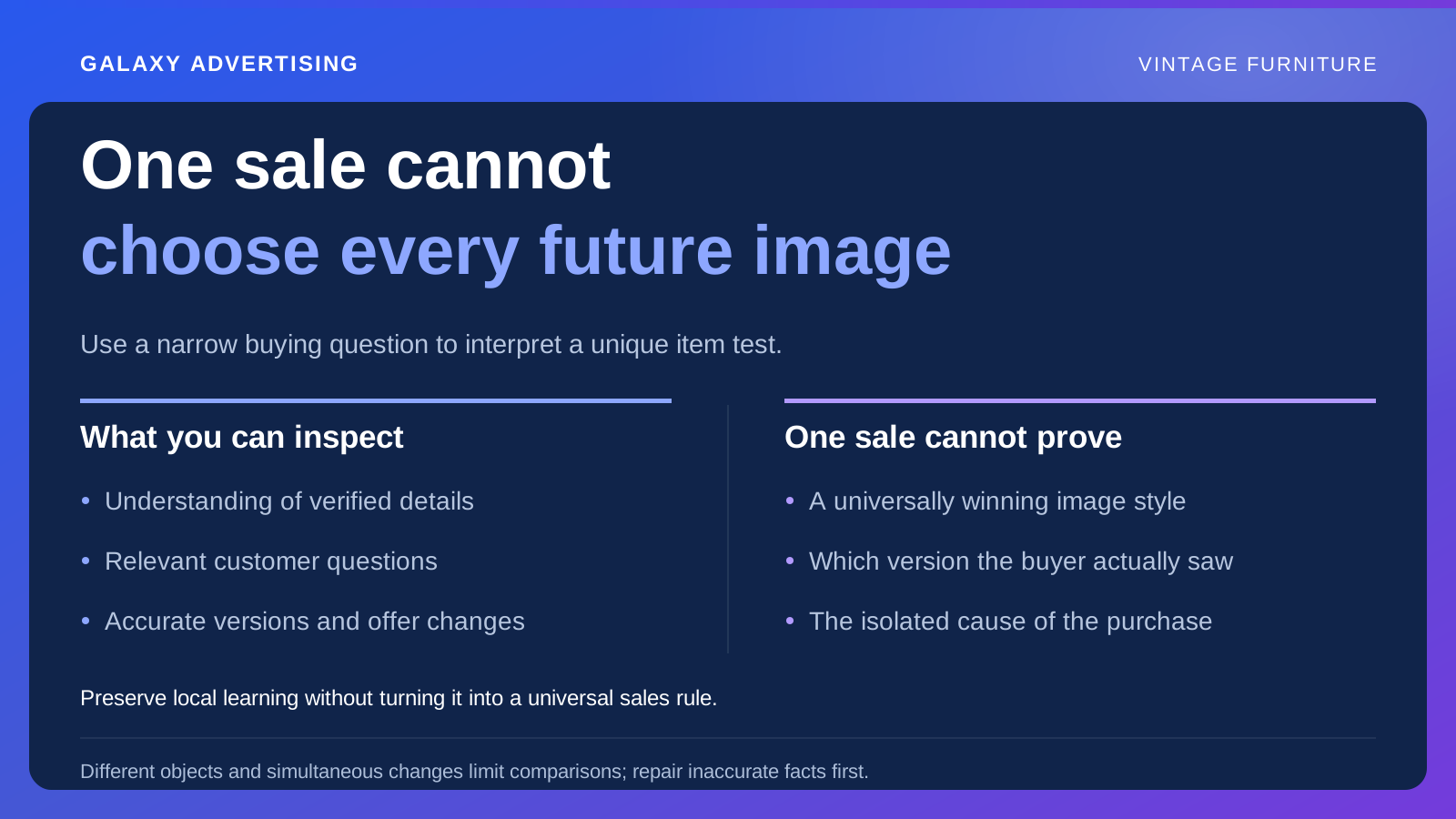
The transaction matters. It doesn't establish a rule for every future object. Unique stock calls for narrower questions and explicit limits. You can learn about understanding, enquiry quality and operating accuracy without making one sale prove more than its record supports.
Name the question you can realistically investigate
Start with a specific uncertainty. Perhaps customers cannot understand the cabinet's internal arrangement from its current photographs. A different image set could address that information problem. That's a question the available evidence may help you answer, rather than an ambition so broad you cannot assess it.
Keep it separate from predicting that new imagery will sell all similar objects faster. Unique pieces differ in condition, dimensions, price and appeal. One item cannot provide the evidence needed for such a wide claim, however encouraging its outcome feels.
Write down competing explanations. A weak response could concern missing information, unsuitable attention or an offer needing commercial review. Putting those alternatives on record helps prevent the eventual sale from validating whichever idea the team preferred before any evidence arrived. You want learning, rather than a story that always agrees with you.
Repair inaccurate information before you test presentation
Correct an incorrect measurement, outdated status or misleading attribution. Don't knowingly leave an inaccurate version live to see whether truthfulness changes performance. The need for a dependable offer comes before the desire to finish an experiment.
Testing makes more sense when two accurate presentations could serve the buying task differently. You might compare how clearly customers understand two legitimate ways of labelling the same verified detail. Both versions should remain honest about the object being sold.
Have the item owner review the proposals. A more attractive photograph or shorter phrase can accidentally remove a meaningful distinction. Simplicity gained by concealing relevant facts isn't an acceptable version to set against an accurate one. Check the offer on both sides before drawing up the comparison.
Choose observations that fit the buying task
If you're investigating internal storage, inspect whether the new presentation makes it understandable. Relevant enquiries and an unfamiliar reviewer's ability to identify the compartments can provide useful observations. Match the evidence to the uncertainty you chose, rather than reaching first for whichever interaction count is easiest to report.
More interaction isn't automatically improvement. Additional image views could reflect helpful investigation or continuing confusion. Interpret them through the customer task and surrounding evidence. A higher count alone doesn't tell you which experience the customer had.
Keep the sale in view, with its limits. Your record may not show which version the buyer saw or what finally decided the purchase. Distinguish those unknowns from the transaction itself. You can value the order without claiming to know precisely why it happened.
Keep other material changes in the record
Note changes to price, condition information, availability and promotional distribution. If several things change together, acknowledge that you cannot cleanly assign the result to one creative adjustment. A useful test record should make that complication visible rather than explain it away.
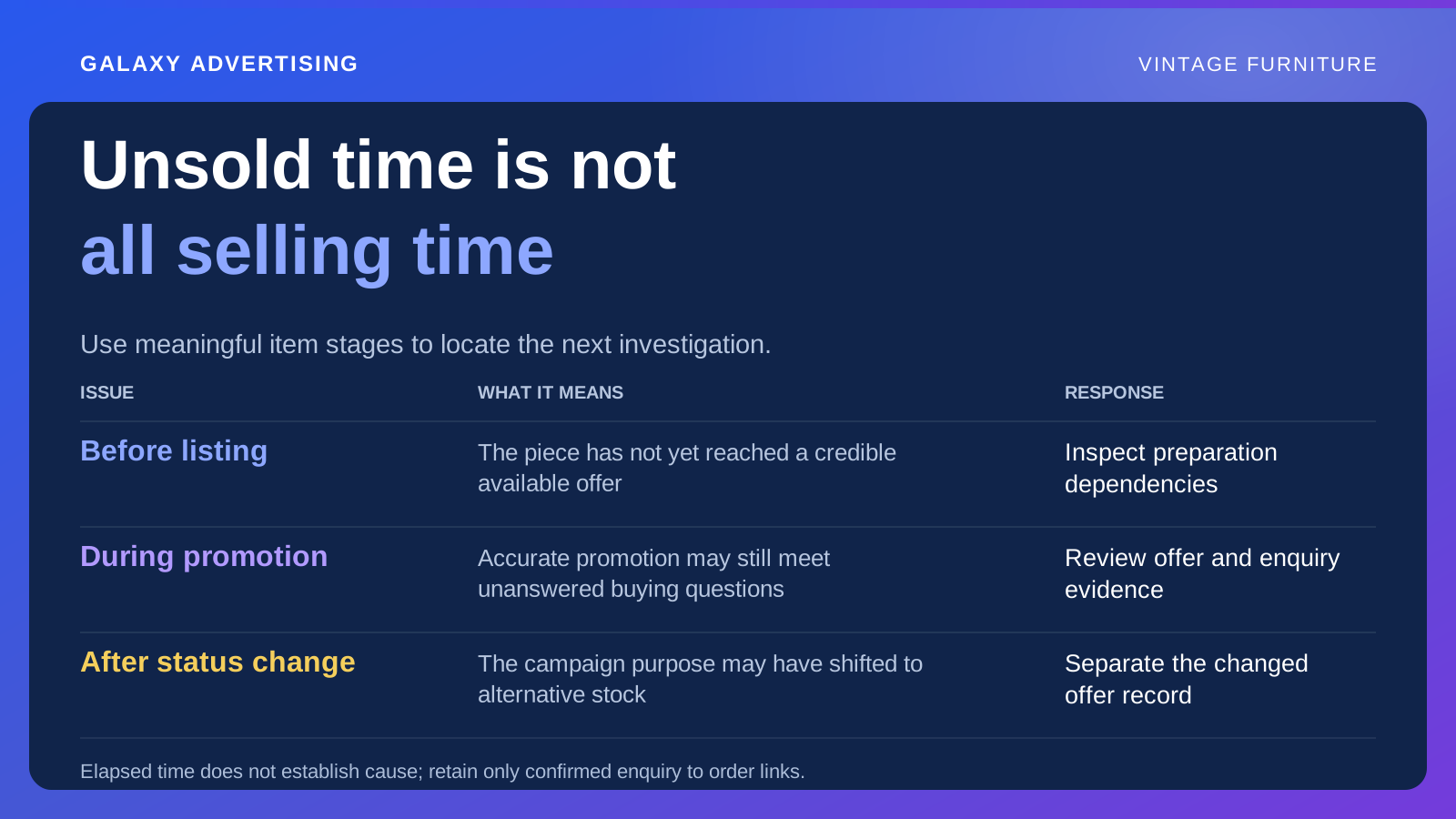
Stock status can change during a test too. Once a piece is reserved or sold under your process, the promise and next step may differ. Respond to that change instead of continuing an obsolete comparison for the sake of the original plan.
Agree who can stop or revise activity if the offer becomes inaccurate. The customer's understanding and your operating obligations take priority over finishing the experiment exactly as planned. Make the authority clear before a change puts that judgement under pressure.
Compare recurring questions across different pieces
Across several objects, you may see recurring needs such as condition detail or measurement labelling. Compare how you handled the question while retaining differences between the objects. You don't have to claim the pieces are identical to learn something useful from the way information was supplied.
Avoid grouping solely by broad period or material. The meaningful comparison may concern purchase complexity, preparation records or information type. Choose the relationship that helps you interpret the buying question, rather than assume a catalogue label establishes comparability.
Use patterns to improve listing preparation, without guaranteeing a sales effect. A consistent requirement for condition photography can be operationally sensible even if the exact revenue contribution of each image is difficult to isolate. Practical improvement doesn't require an inflated claim about causation.
Separate the argument from how the image expresses it
An image may communicate a useful proposition poorly through framing, lighting or missing context. Another can be beautifully executed but address something the customer doesn't consider important. These are different diagnoses and can require different next moves. Review them separately.
If compact cabinet depth is the argument, ask whether the asset makes it clear and whether the destination supplies the measurement. Changing the background alone may not investigate that proposition at all. The work needs a connection with the buying question, beyond looking different.
Keep the production record with the hypothesis. The next photographer needs to understand which evidence you wanted and what you learned, rather than receive an unexplained instruction that a particular style always works. Preserve the reasoning alongside the creative direction.
Save the actual versions examined too. A written recollection isn't enough to inspect what changed when another piece arrives. Keeping the evidence helps prevent a useful local observation becoming an unsupported general rule about design. The difference can disappear surprisingly easily in a handover.
Let the conclusion fit what you found
Your review might justify a clearer default image sequence, another condition view or a more focused question next time. It might also show that the evidence cannot distinguish the proposed explanations. Record that honestly and decide whether further investigation is worth its cost.
You still need to act when uncertainty remains. The aim is an honest basis for judgement, not a confident story fitted to whichever unique object sold last. A better preparation and decision process is learning you can carry into the next arrival, even when the sale itself cannot supply a universal answer.