You're ready to approve the seasonal dining creative, and the vintage table at the centre of it has already sold. Availability of the matching chairs has changed too. The seasonal idea still makes sense. The original product promise doesn't.
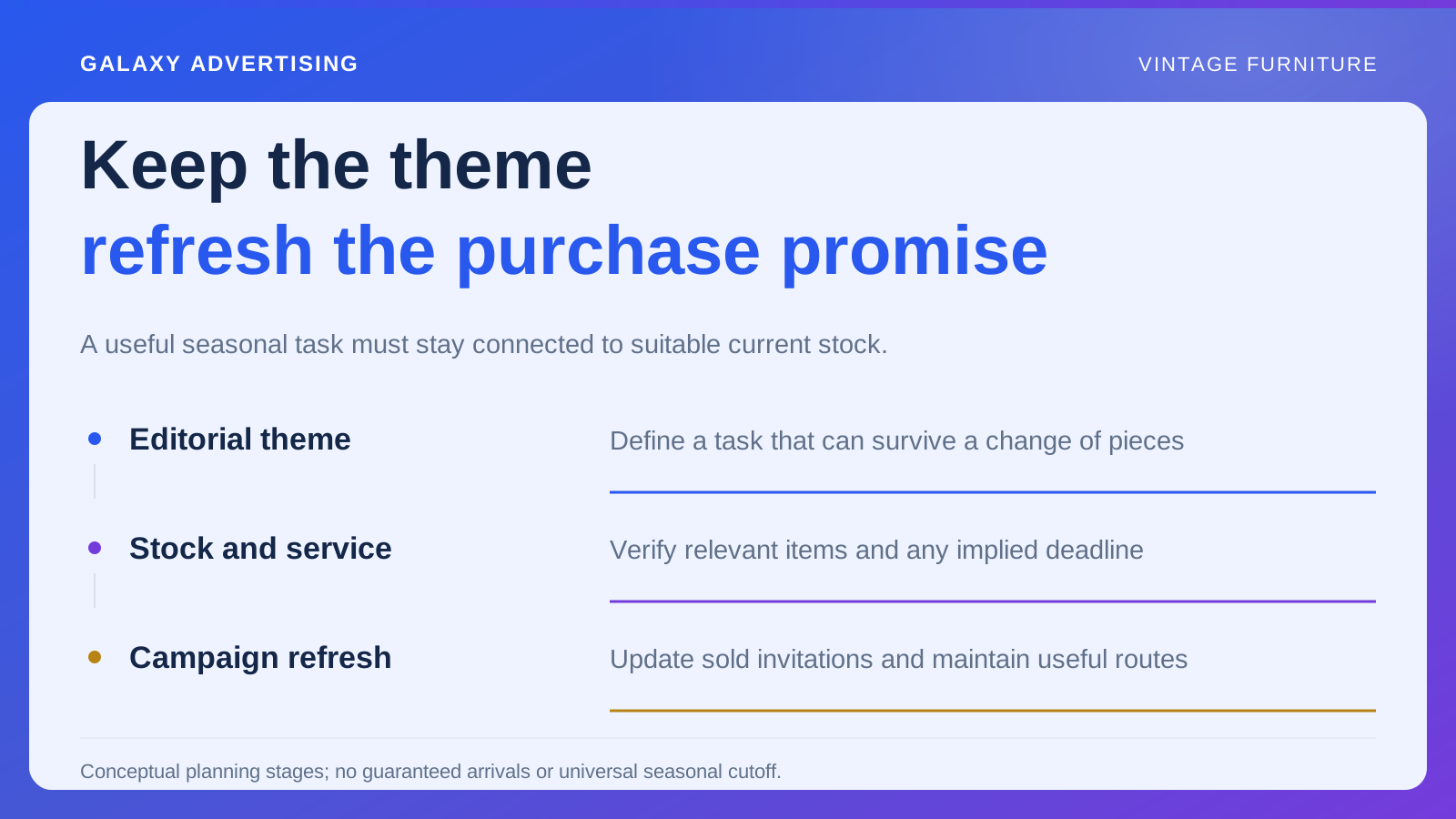
Separate the editorial theme from the individual pieces illustrating it. That lets the idea remain useful as stock changes, provided you maintain the connection honestly. Swapping product images beneath the same headline isn't enough if nobody checks what the page now offers. Your theme needs a reason to last beyond one object, and the purchase promise needs to stay current.
Pick the seasonal question you're helping someone answer
Choose a practical or aesthetic task. Perhaps it's arranging a dining space for visitors, finding compact storage or bringing an individual piece into an existing room. Start there, so the campaign has something more specific to offer than a seasonal label on your inventory.
Keep the task wide enough to apply to more than one unique piece, but focused enough to guide selection. Saying vintage brings character leaves the merchandising team little help deciding which arrivals belong. A useful theme should inform an actual stock choice.
Draw on real customer questions. Those observations can support a relevant direction without proving all seasonal shoppers want the same thing. Leave room for different tastes, dimensions and intended uses. You're choosing a helpful editorial task, rather than claiming complete knowledge of the season's customers.
Keep the theme and today's purchase offer distinct
The theme explains why someone might explore the selection. The item listing describes the particular object currently available to buy. Make those roles clear in headings, links and imagery. The reader shouldn't need to work out which kind of promise each part makes.
Label a historical object used to illustrate an idea as a reference. Don't present it as current stock or make someone click through several attractive examples before discovering none is available. The guidance can remain interesting without a misleading purchase invitation attached.
A theme page can still be commercially useful as exact pieces change. Its value relies on an accurate selection and a clear connection between current objects and the customer's task. It doesn't need to promise the return of an identical assortment. With unique stock, that promise wouldn't fit the reality.
Choose available stock using explicit criteria
Identify which pieces support the theme and explain why. Check their status, listing readiness and relevant purchase conditions before including them. A suitable visual doesn't establish that the current offer is ready to join the campaign. Verify the underlying item too.
Don't force unrelated arrivals into the page merely to maintain a large selection. A smaller coherent set is easier to understand than an assortment linked only by a seasonal banner. The theme should help somebody choose what to inspect, rather than disguise the absence of relevant stock.
Give the updater usable criteria. If compact dimensions matter, a replacement must serve that purpose or the explanation must change. Maintaining a similar visual style alone doesn't preserve relevance. Keep the customer's task attached to the selection as it moves.
Check whether the service supports the timing
If you mention an occasion or practical deadline, verify fulfilment conditions for the promoted pieces. Unique objects may need different handling or delivery arrangements. The campaign's timing needs to rest on the actual service route, rather than an assumption that all stock travels alike.
Don't invent a universal seasonal cutoff your business cannot support. If an individual answer is needed, make the route clear and identify who confirms the current position. It's better to offer a dependable clarification than make a simple deadline promise that doesn't hold across the range.
Apply the same check to late arrivals. A piece can fit the theme and still fail to support the timing implied by the original message. Review relevance and service together before treating it as a straightforward replacement. The campaign promise includes both.
Give sold stock a refresh process
Assign someone to check status and update the campaign route. Set timing around your real stock process and the promotion's visibility. Relying on someone happening to notice an old advert isn't a dependable way to maintain a seasonal offer.
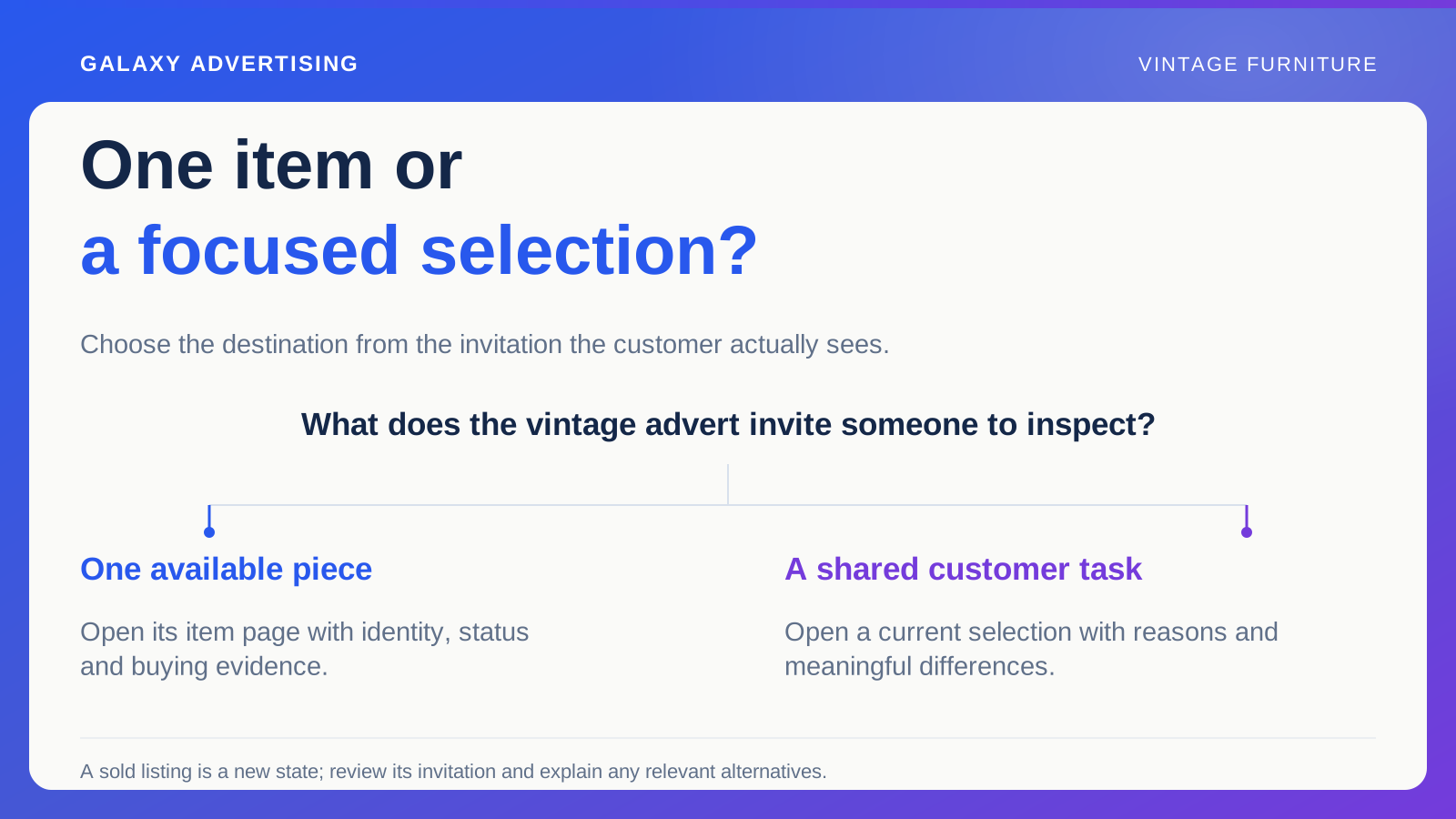
When something sells, decide whether to remove its purchase invitation, keep it as a clearly labelled reference or introduce a relevant alternative. Those are different editorial decisions. Each may require a changed caption or link, rather than the same automatic treatment.
Keep the item identity with creative assets so affected material can be found. A seasonal folder full of vaguely named room images makes it harder to establish which live message belongs to the sold piece. That connection needs to survive production and approval.
Keep the changing route useful to the customer
Explain present availability and offer a focused next step. Someone seeking a compact dining table shouldn't automatically land among every large storage piece simply because those remain in stock. Current stock still has to relate to the interest that brought them there.
If no suitable object is available, say so. If you offer future stock notifications or enquiries, explain the actual service without promising an identical arrival. A clear limit can be more credible than a loose recommendation that doesn't meet the need.
Keep useful guidance accessible where relevant. Advice on measurements or condition details may still help after the original illustration sells. Editorial usefulness and immediate availability are related responsibilities, but they aren't identical. One can remain valid while the other changes.
Plan for a depleted selection. The responsible person should know whether to narrow the message, pause promotion or change the theme. Automatically filling gaps with stock that no longer serves the stated purpose would keep the page busy while making the idea less useful.
Read the season against the stock you could supply
Assess results beside actual availability, item changes and relevant fulfilment conditions. A weaker response may reflect depleted stock rather than a tired seasonal idea. Check which offer customers could encounter before deciding the theme has run out of value.
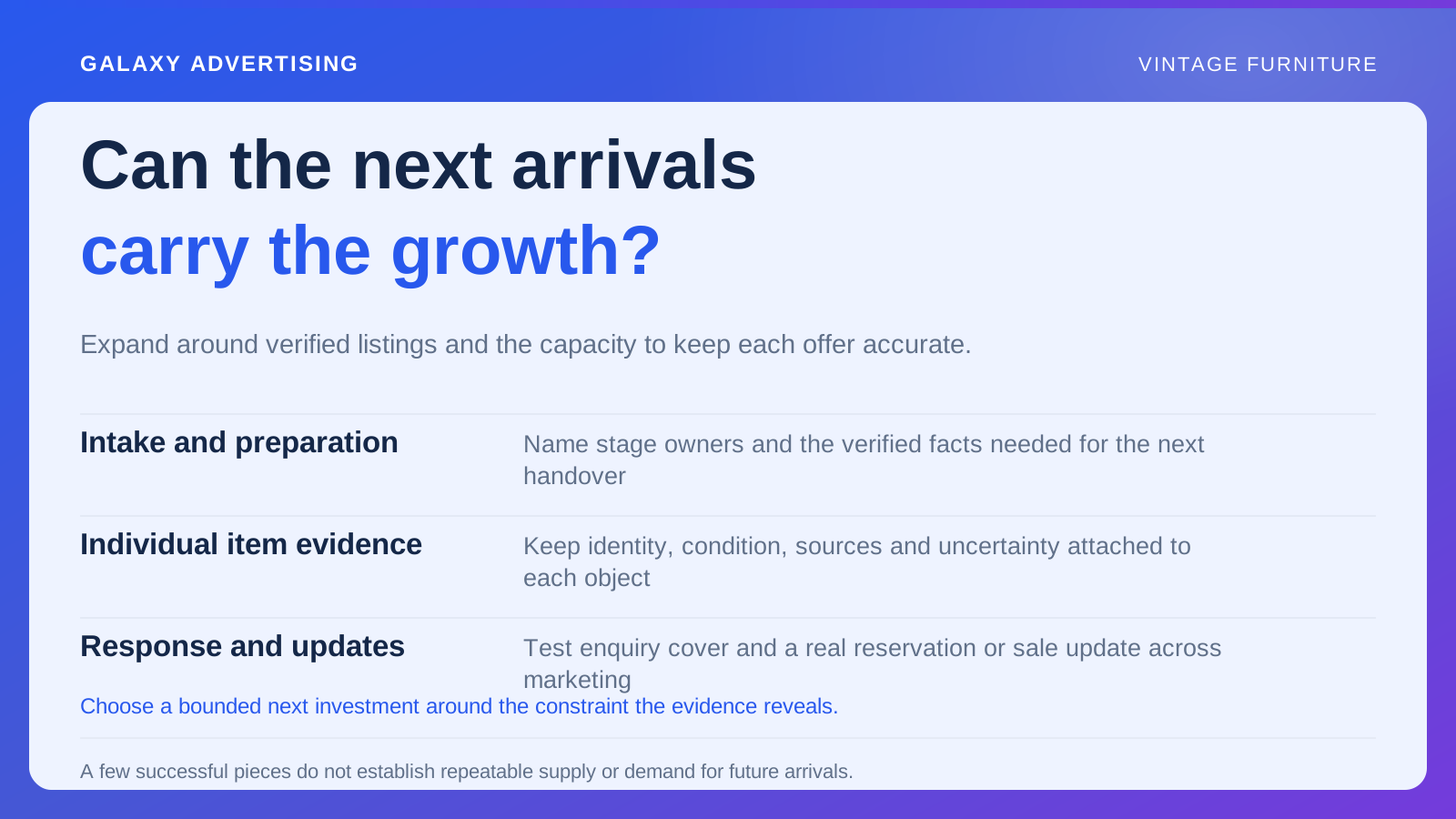
Look for specific preparation and maintenance lessons. Lost production references or replacements drifting from the intended task can guide the next plan more precisely than simply telling everyone to launch earlier. A seasonal theme lasts while it remains useful. Its purchase promise needs to change whenever the available offer changes.