What would we do differently after paying for another AI visibility report? If your best product guide still describes an obsolete package and nobody owns its correction, that's a useful question to ask before buying more observations.
Watching mentions fluctuate can feel like progress. It doesn't fix the information problem you already know customers can encounter.
Monitoring has a role when it serves a decision. Compare the value of another observation with repairing a known information or access problem. The present constraint should guide the budget. More tracking and more publishing each need a reason to be the next expense.
Name the question the money should resolve
Ask what you cannot decide today. Is important content accessible? Is a product fact accurate? Do identifiable visitors reach a useful destination? These uncertainties point to different jobs, rather than interchangeable items in an AI visibility proposal.
A technical investigation, product reference review and analytics check have different purposes. Keep those purposes visible when deciding which can make the most useful difference now. A shared label doesn't make the work equivalent.
Require a specific observation behind the recommendation. A new article needs a customer question to answer. More monitoring needs a decision that a larger or different sample could change. Saying the subject matters isn't enough to rank competing uses of the money. You need to know what the proposed expense helps you establish.
Fix demonstrated barriers before expanding guesses
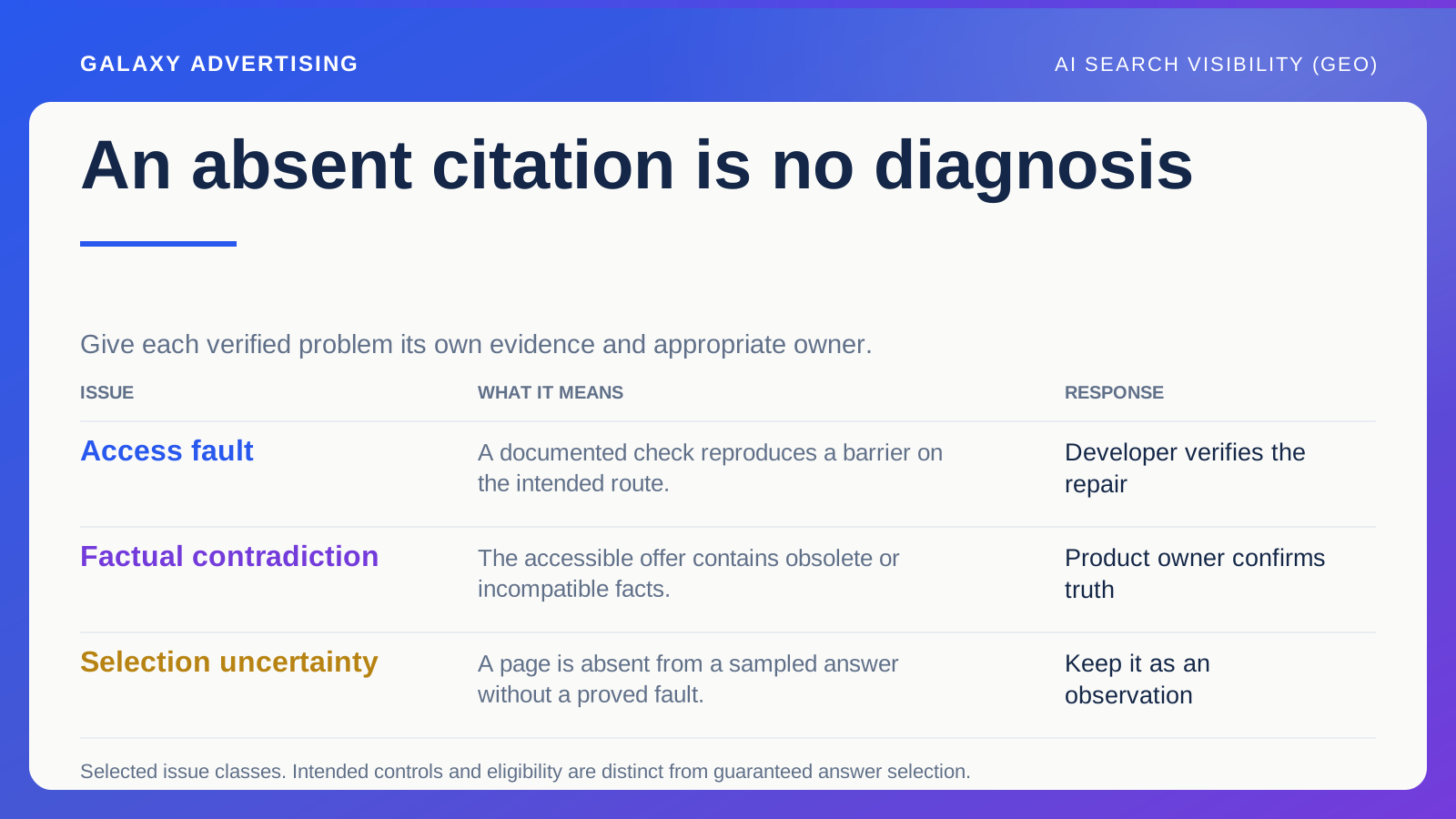
A verified access or functionality fault can stop the intended route working. Ask the responsible specialist to describe the fault, its scope and the check that will establish the correction. That gives the budget something concrete to fund.
Don't infer a fault from every absent citation. A page can be accessible without being selected for a particular response. The technical claim needs evidence of its own, rather than an unfavourable screenshot standing in for a diagnosis.
If a genuine fault affects several useful pages, repairing the shared cause can deserve priority over more content on the same blocked route. Include that common consequence in the discussion. Otherwise one underlying barrier can be mistaken for several independent requests to write new pages, none of which resolves it.
Treat dependable product facts as useful infrastructure
A verified product source can support pages, diagrams, advertising and customer service. Correcting it may have wider usefulness than a standalone article repeating an uncertain claim. Keep that shared role visible when comparing options.
List the information that changes buying decisions and what obtaining it properly costs. You may need product team time, manufacturer clarification or an organised reference pack before a responsible explanation can be written. Those are part of the work, rather than free inputs assumed to exist.
Bound the scope. Perfecting every catalogue record can become as vague as dominating AI search. Begin with important facts and routes, then expand according to demonstrated need and maintenance capacity. Reliability matters, but it still needs a practical initial commitment somebody can complete and sustain.
Compare a new page with improving the right existing one
Check whether the question already has a natural home. A clearer option label or configuration diagram might resolve it more efficiently than a new guide. Choose the place that fits the customer's task, rather than treating publication as the default correction.
A separate page needs a distinct job and useful onward route. Another URL containing a commercially attractive phrase isn't enough reason for it to exist. Explain what the customer gains that current pages don't provide well.
Count maintenance as well as production. New articles create continuing responsibility for examples, facts and links. Improving a maintained source may be easier to keep accurate. The cheapest initial publication isn't automatically the most efficient long term investment in information. Compare what each option asks of the business after release.
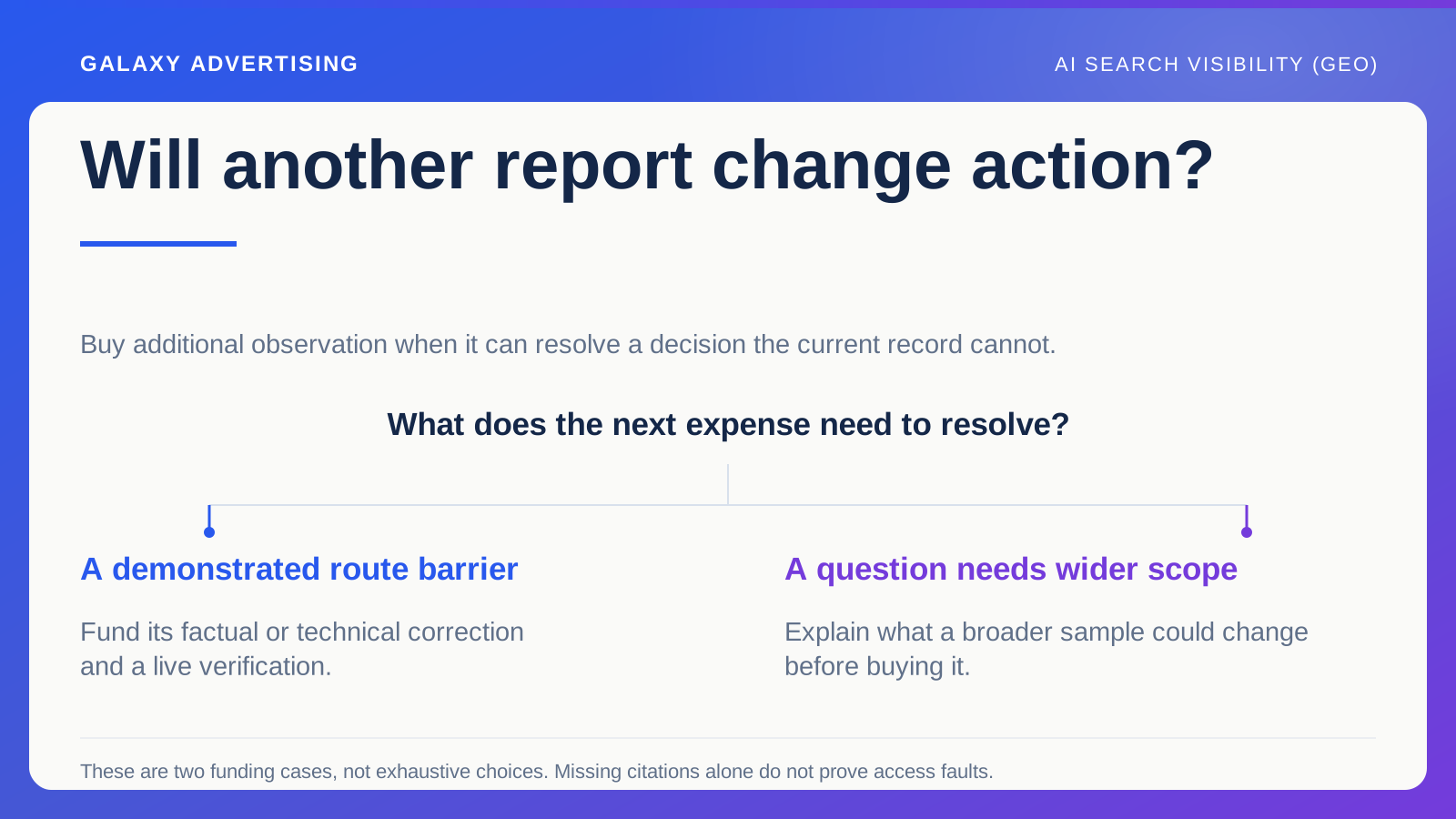
Buy deeper monitoring when the answer could change action
A small, thoughtfully defined sample can reveal important misdescription or a useful gap. A broader tool or dataset may add value where it offers different scope or answers a decision the smaller method cannot. More coverage can have a purpose, provided you can explain it.
Ask what you'd do differently with the extra information. If every possible result leads to publishing more, the monitoring may not justify its cost. The review needs a meaningful alternative outcome.
Keep proprietary scores within their definitions and limits. They can help under a stable method. Paying for a more sophisticated number doesn't automatically make the commercial conclusion more dependable. The budget owner should understand what the score measures before being asked to fund decisions based on it.
Include the people who complete and check the work
Analysis can identify useful work that stays unfinished because implementation wasn't funded. Include the relevant writer, developer, product owner and reviewer. The budget needs enough capacity to resolve the problem it identifies.
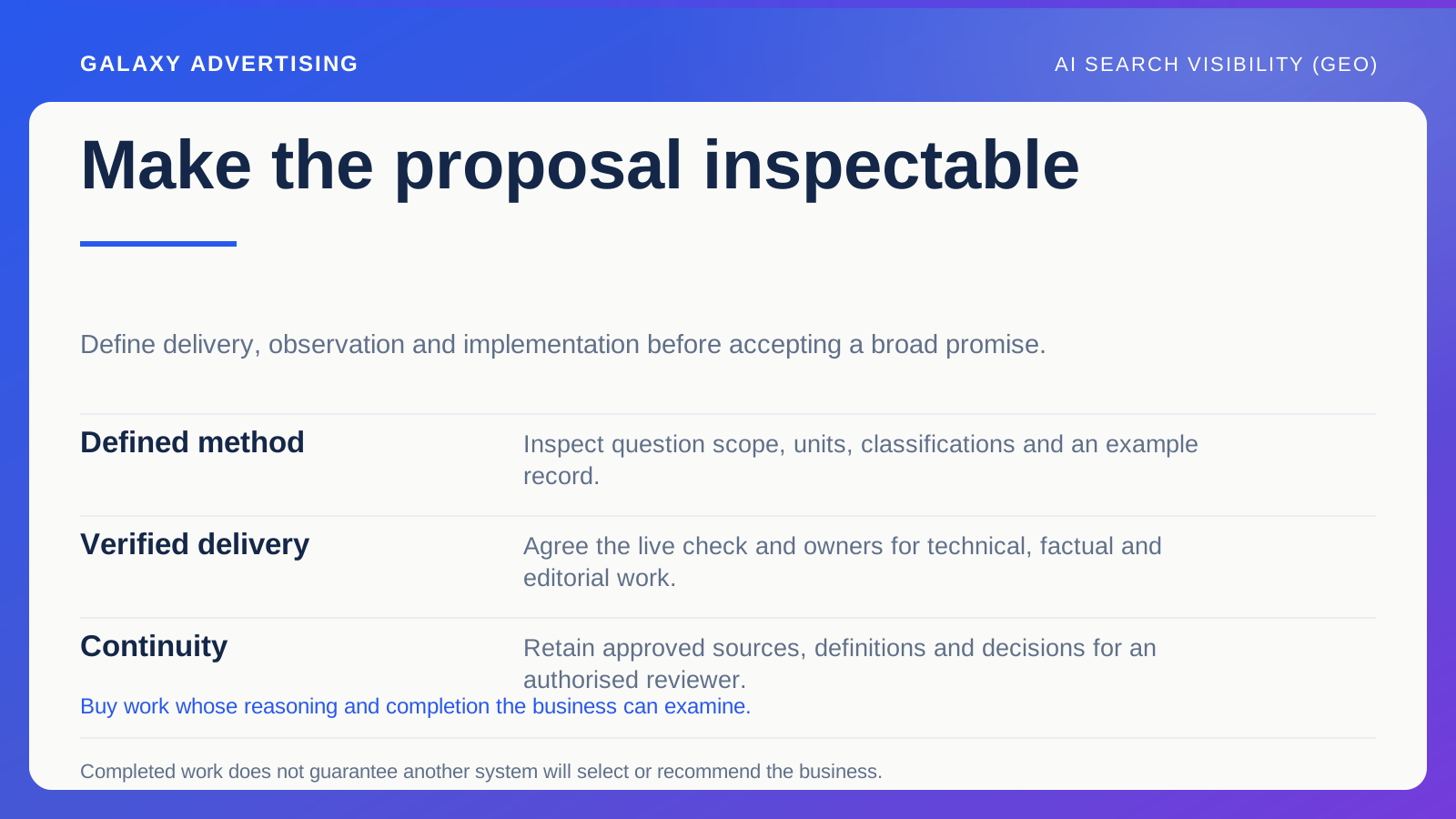
Define completion in the live customer route. Verify the intended information and links there. A delivered document or closed task isn't enough when the website still presents the original problem. Check the result, rather than only the handover.
Sequence dependencies. If a comparison diagram needs unconfirmed dimensions, fund factual review before a finished design brief. If the facts are clear but the explanation remains unusable, design may be the appropriate next expense. Starting everything together can create rework where later work depends on unresolved facts. This is a choice about the current obstacle, rather than a rule giving technical, editorial or visual work permanent priority.
Review what uncertainty the budget removed
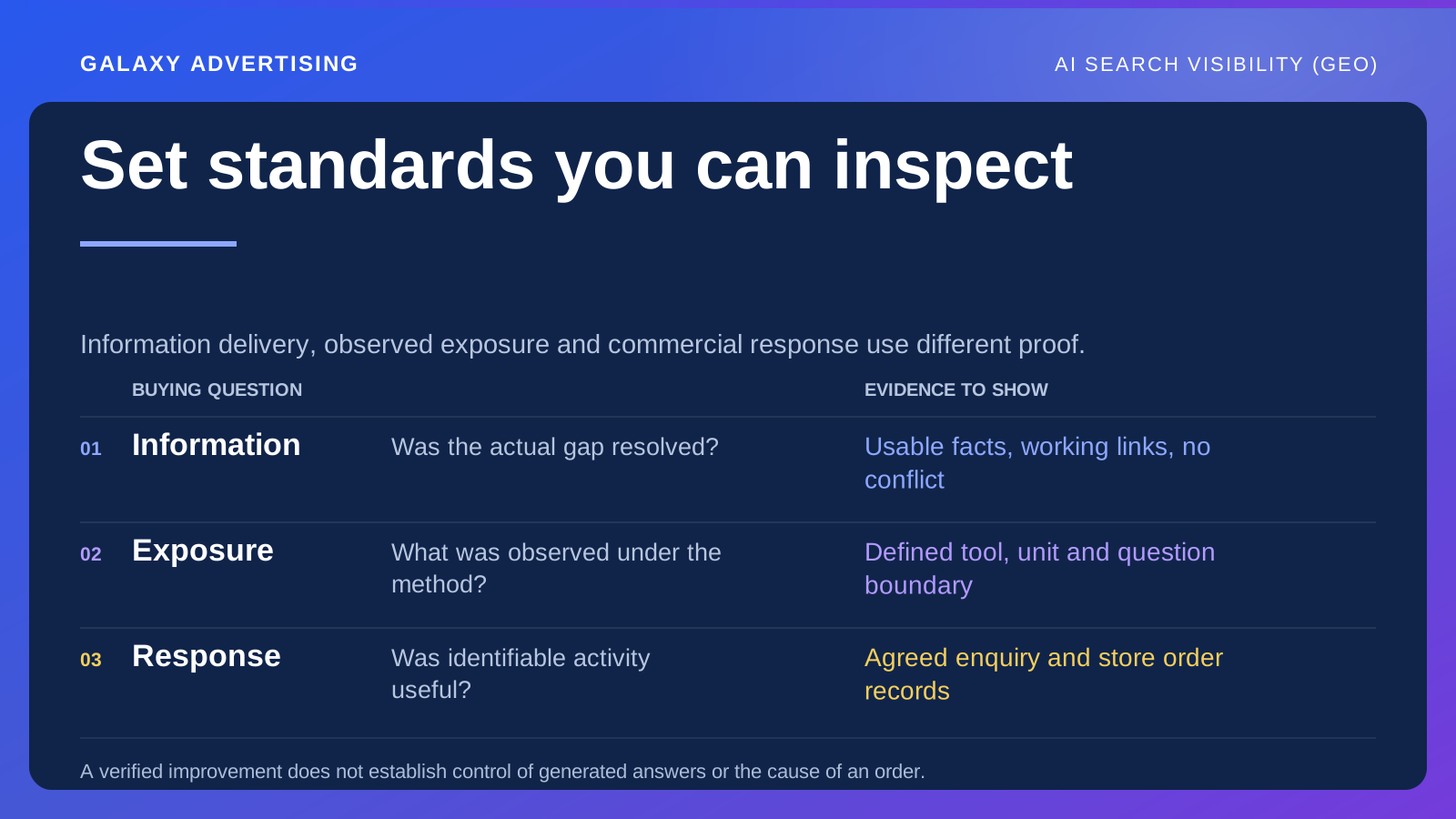
Ask which decisions are clearer and which work remains useful to customers. Keep delivery, observed visibility and commercial response distinct. Don't force every expense into a revenue calculation the evidence cannot support.
Choose whether the next commitment belongs in observation, another information improvement or a different acquisition priority. The answer can change as early constraints are resolved.
A dependable information route and interpretable evidence give the budget a purpose. You don't need every monitoring product, or a promise to ignore change. You need to explain why this next expense serves a real customer route or investment decision better than its alternatives.