 ChatGPT Ads
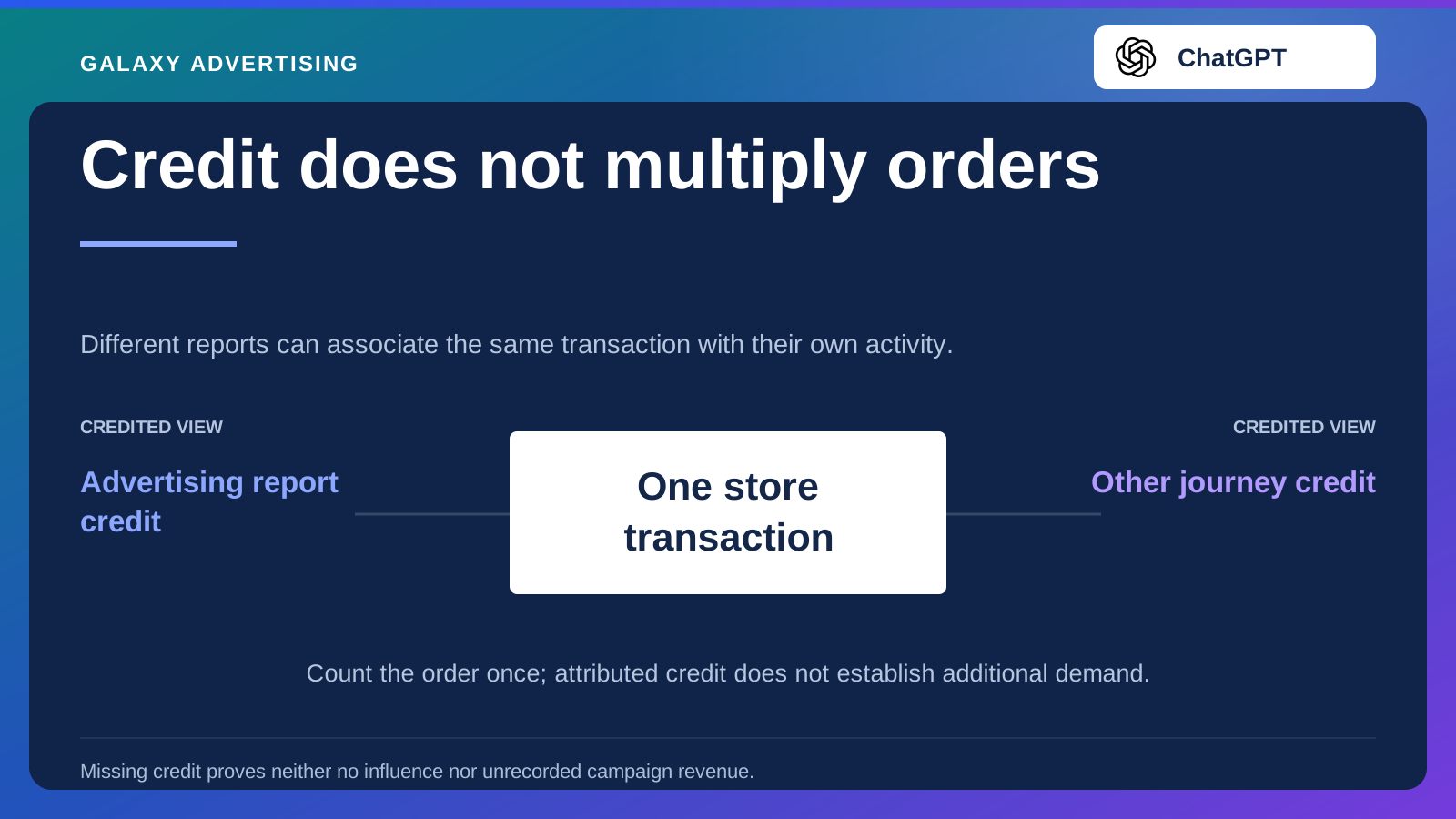
We can make the same order look like several sales by adding up the reports that claim credit for it. An advert, a product comparison, an email and a direct return visit may all belong to the journey before a customer buys.
More than one report can associate that eventual order with its own activity. Adding their claims doesn't create more transactions.
Attribution, the rules used to assign credit to observed interactions, can help you organise evidence. It doesn't automatically establish what would have happened without an advert. Keep that distinction visible without throwing away the campaign evidence you can actually observe.
Start with the order in your store
Count the actual store order once, on the business's agreed basis. Establish how cancellations, returns and material order changes affect that commercial record. Everyone reviewing the result needs to begin with the same transaction.
Then inspect the available advertising and analytics claims associated with it. Different reports may use different observation periods, interactions or rules. A difference doesn't necessarily mean a report is broken, although an implementation fault remains a possibility worth checking.
Keep the transaction reference and reporting definitions accessible to the review team. You need to discuss the same order without confusing a store total with a sum of platform claims. That's basic reconciliation, bringing the records onto an understandable basis. It isn't a demand to know everything a customer did.
What does the credit rule actually say?
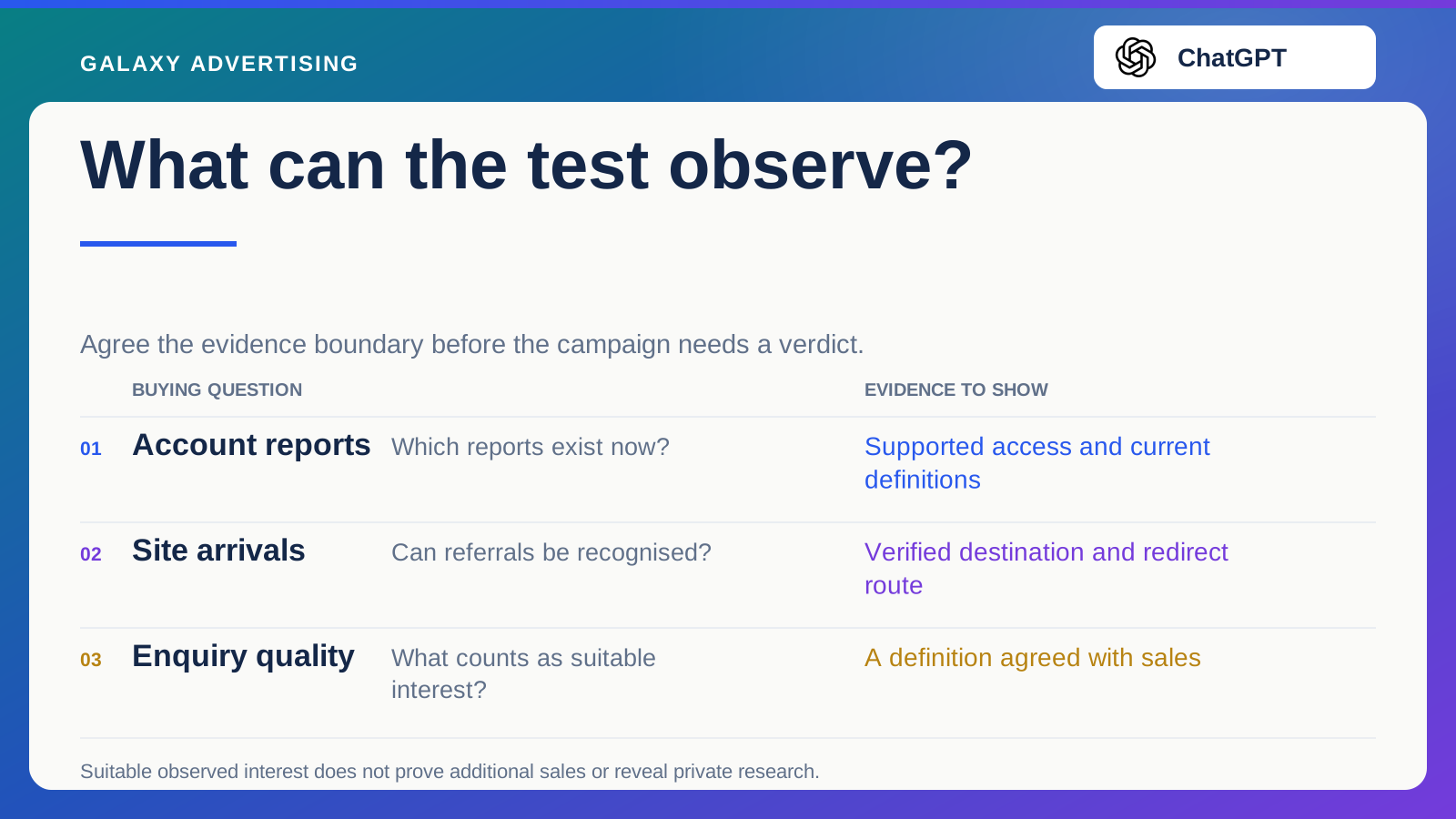
Use reporting documentation and the current account setup to establish which interactions can receive credit. Don't assume a rule familiar from another advertising platform applies unchanged here. Verify the basis your report actually uses.
Describe that boundary in ordinary language for the budget owner. Does the figure mean campaign attributed purchases, identifiable website referrals or another defined observation? Calling everything sales is too broad when the figures have different meanings.
Keep those definitions stable between reports. An apparent improvement can come from changing the reporting basis rather than changing customer behaviour. When a definition must change, explain it and preserve enough context to compare earlier observations sensibly. Otherwise the team can end up discussing a movement that exists mainly in the reporting.
Missing evidence isn't a result you can invent
Some influence won't be identifiable in your records. Customers can remember a brand, return another way or discuss a purchase with someone else. Those possibilities limit what a straightforward reading of observed referrals can tell you.
They don't entitle you to assign unexplained revenue to the campaign. Unobserved influence is uncertainty. It isn't an asset the report can value at whatever amount makes the investment look attractive.
Be equally careful with negative conclusions. An order without campaign credit doesn't prove the advert played no role. Distinguish what is recorded, what is plausible and what the available evidence cannot establish. That discipline applies whether you're making the case for the campaign or questioning it. A gap shouldn't conveniently mean whichever answer you prefer.
A useful route and extra demand are different questions
Visitors who explore the relevant product and ask informed questions provide evidence about the quality of the observed route. That alone doesn't tell you how many would have found the retailer anyway.
Look at the customers and products involved. Existing brand demand, returning shoppers and unfamiliar buyers can play different commercial roles. Your records may support some distinctions more confidently than others. Be explicit about where the evidence is weaker.
Use that detail to sharpen the next question. A campaign apparently concentrated on existing demand needs a different evaluation from one associated with new product discovery. A single average return can't explain every role equally well. Keep the differences that could change the decision in view.
Stronger claims need an appropriate test
If you need stronger evidence of additional demand, discuss an experimental approach with qualified analysts and the account team. Its design must reflect available platform capabilities, scale and operational constraints. A method has to fit what the business can actually implement.
Comparing this period with the previous one doesn't automatically create a causal experiment. Seasonality, stock, price and other promotion can all change at the same time. A clean chart doesn't remove those explanations.
Keep the question proportionate. A bounded experiment may inform one product or market decision without proving a permanent effect across the whole business. Report uncertainty and practical limitations. One exercise shouldn't become a universal claim about the channel simply because the team wants a decisive conclusion.
You can still decide with imperfect evidence
You don't need perfect evidence of incrementality, the demand added by the activity, before making any decision. You do need a commitment reflecting the confidence and risk your business can reasonably accept.
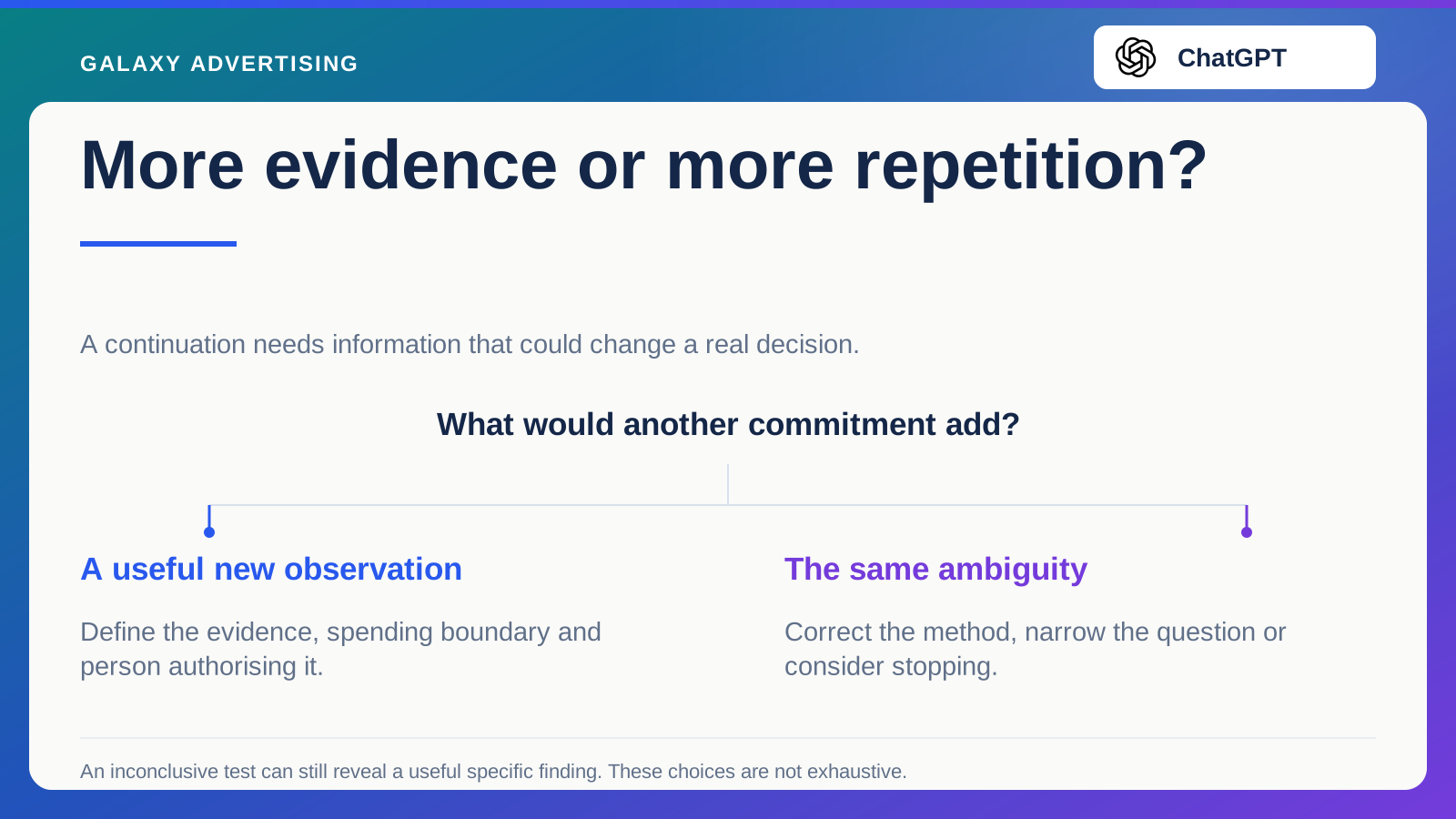
Combine consistently defined campaign evidence with actual orders, contribution assumptions and operational observations. Contribution is the money remaining after the costs included in your calculation. Where uncertainty remains, a smaller continuation with a clearer question may be more defensible than immediate expansion.
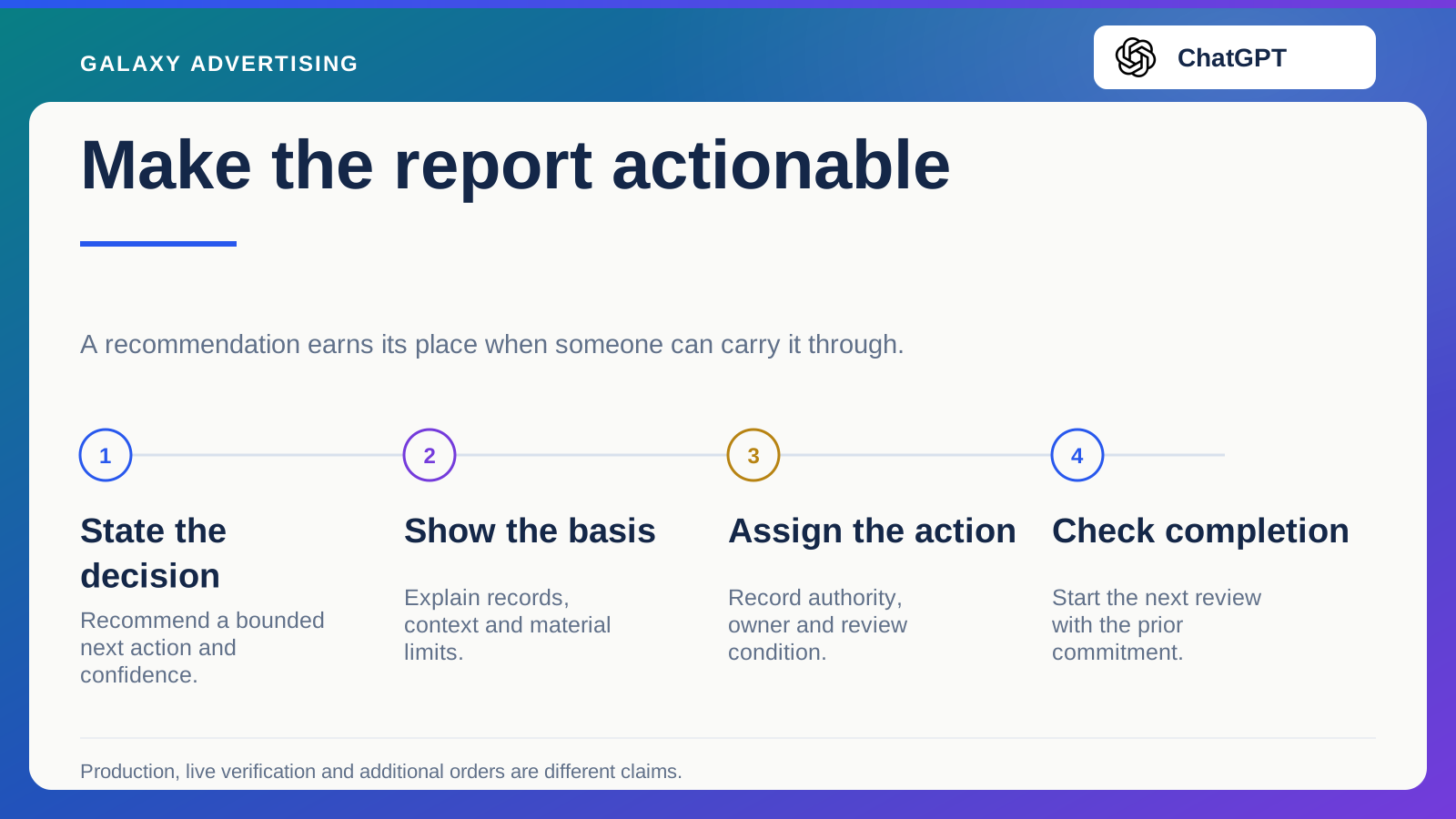
Say what would change the recommendation. Better transaction reconciliation, another customer mix or a suitable experiment could strengthen or weaken the case. The original plan doesn't have to be defended regardless of what you learn.
Keep a small decision record separating results from assumptions. A report can credit an order while the budget model assumes some demand would have arrived anyway. Both statements can stand. Don't blend them into an unexplained adjusted number. Show what you observed and what reflects your chosen judgement about uncertainty.
Use the language the evidence earns
Say the campaign received credit for a defined number of purchases when that's what reporting establishes. Say the store recorded a transaction when that's the fact. Reserve additional sales claims for evidence capable of supporting them.
Keep limitations beside the result. A qualification buried elsewhere won't repair an exaggerated headline. Your budget owner shouldn't need to translate the conclusion into something more cautious.
Attribution helps when it organises evidence for a decision. It misleads when credit becomes complete knowledge of cause. You can recognise worthwhile observed activity and still leave the larger question open: how much demand did the advertising actually add?