 ChatGPT Ads
The launch proposal is open, the product team is waiting for a brief, and nobody has agreed what would make this ChatGPT Ads test worth continuing. Getting a campaign live can feel like progress. It can also leave you paying to answer a question you never quite wrote down.
Start with the test brief. Establish what your account can actually run, which offer you can support and how you'll tell an interesting visit from a commercially useful outcome. Features and availability can change. Knowing another advertising platform well doesn't establish that the same controls exist here.
Check what your account can actually do
Confirm the account, billing entity, intended markets and features available through your current advertiser access. Use OpenAI's advertiser information and the account itself as your reference. A format mentioned in platform commentary is not a sound basis for a launch promise.
Write down what is confirmed and what still needs access or approval. If the test requires something unavailable, change its scope before commissioning creative. That is a much easier conversation before people have made the assets.
Keep another distinction clear: eligibility is not suitability. Permission to advertise tells you nothing, by itself, about whether this product, budget or buying journey makes a sensible first experiment.
Paid placement and organic visibility need different briefs
OpenAI states that ads are separate from generated answers and do not influence them. Buying a placement should therefore never be sold as buying a recommendation inside an answer.
That matters when you explain the service and when you measure it. Your paid campaign needs an objective, a media budget and reporting grounded in what the placement and destination can reveal. Organic visibility work concerns the underlying information and how it gets discovered or cited.
You can investigate both. Just don't bundle their results into a vague promise of “being recommended by AI”. Make the deliverables and the limits of each service explicit, so everyone knows what they are paying for.
Give the first test one coherent offer
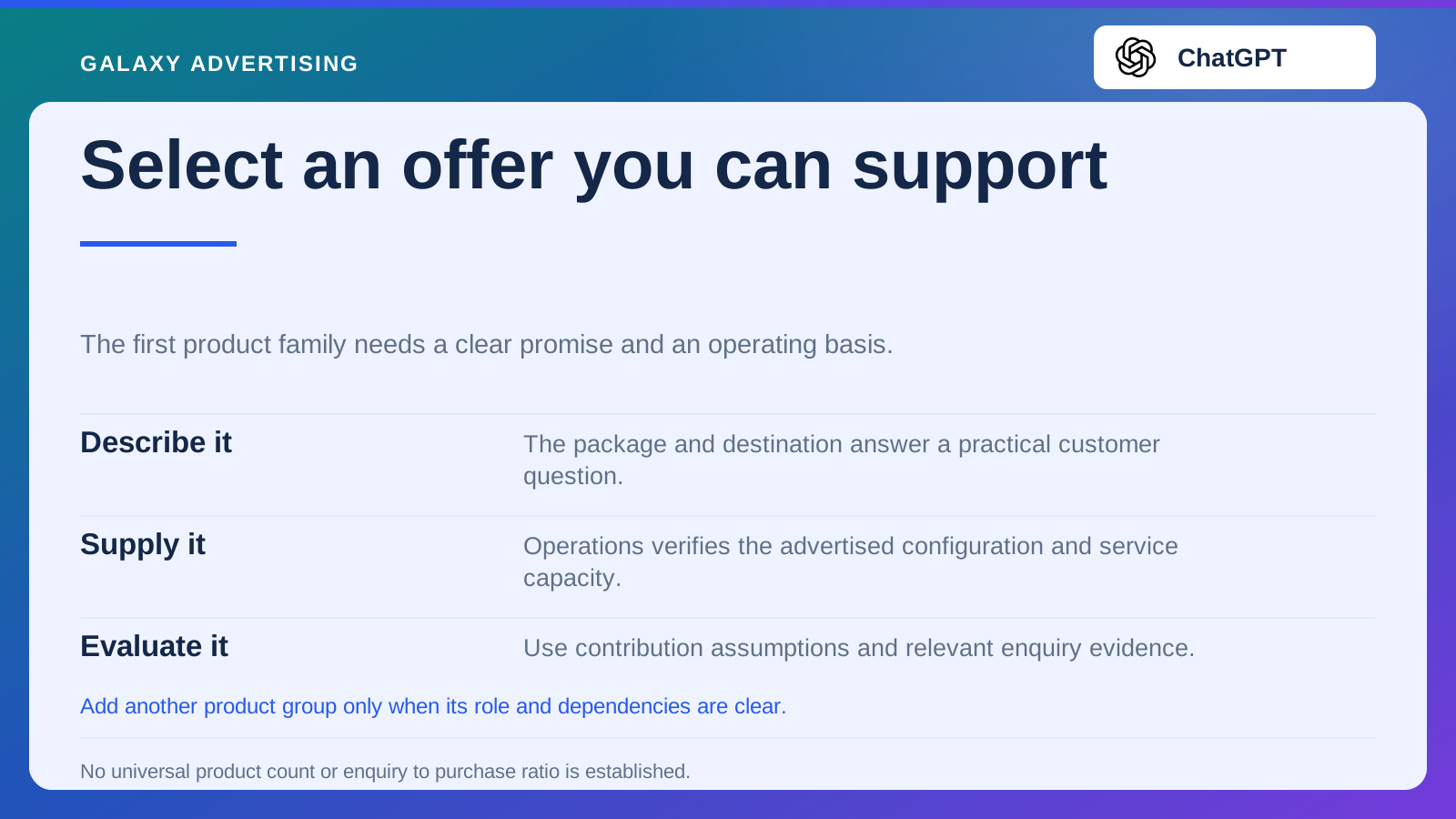
Choose a product family you can describe, supply and support accurately. Several unrelated products, a fresh promotion and multiple page changes make a first test harder to interpret. Too much changes at once.
Take a hypothetical premium coffee machine retailer. A manageable brief could focus on one model family and a clear intended use. Its destination would explain specifications, included equipment and the differences between configurations, meaning the available arrangements or options.
That illustrates a manageable brief. It says nothing about proven ChatGPT campaign performance.
Check availability before launch, too. Agree how stock changes will reach whoever manages the campaign. A developing advertising channel still sends people to a real retailer with real fulfilment responsibilities.
Help the researching customer finish the thought
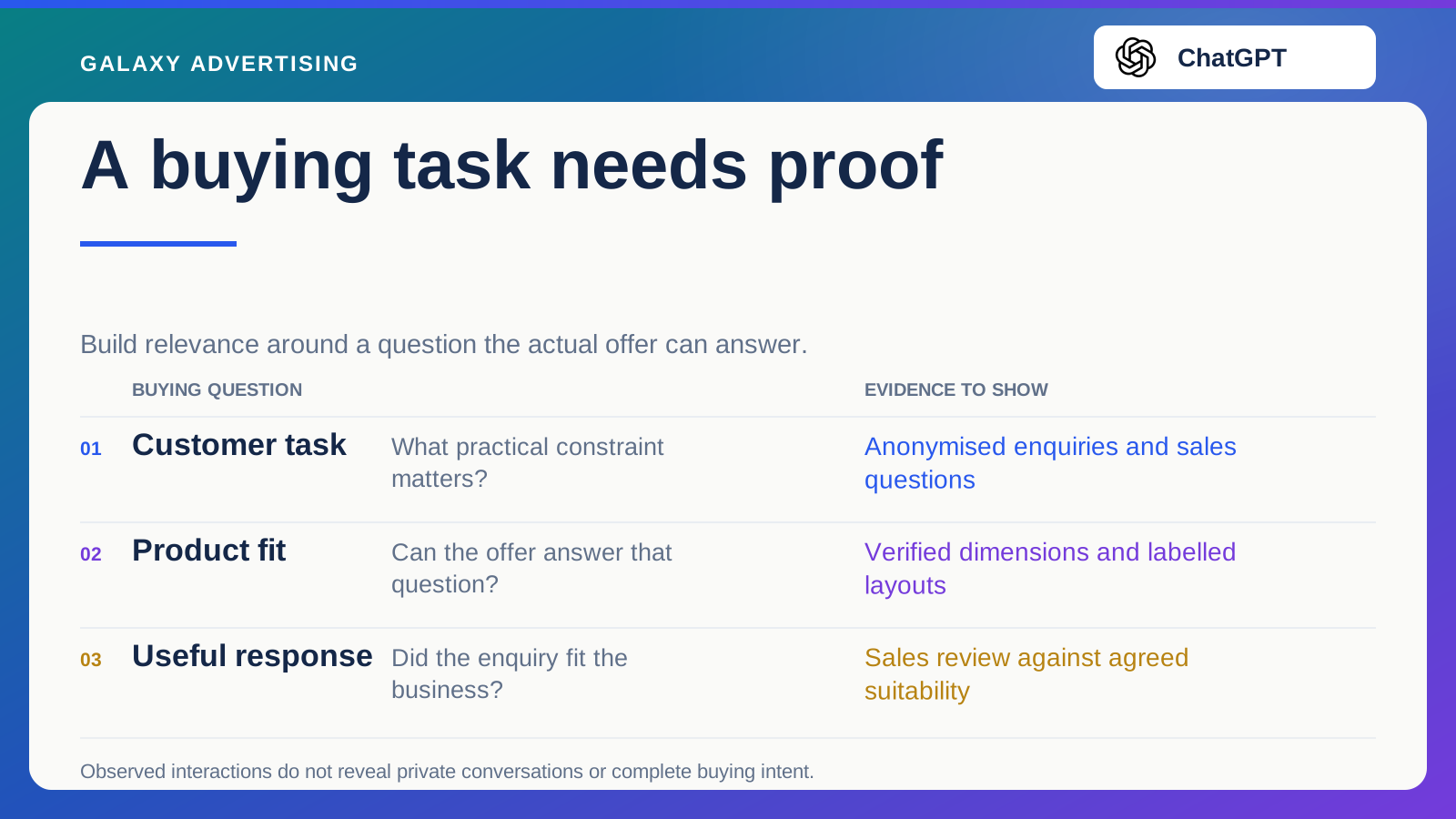
What will someone reasonably need to know after seeing your offer? For the coffee machine, think dimensions, compatible supplies, cleaning, setup and the equipment included with the purchase.
Give them a clear route to those answers. Conversational context doesn't remove the need for a useful product page. The customer still needs to understand your offer and decide whether it suits them.
Then check the promise against the page. If the asset presents one configuration and the page opens on another, part of your test is a preventable mismatch. Fix it before trying to judge the channel's commercial potential. Otherwise, you'll be asking the result to explain a problem you already knew how to remove.
Be clear about what the evidence can tell you
List the reporting actually available to your account, alongside the website actions you can record reliably. Work out how you'll recognise campaign referrals and check completed orders against store records.
Don't promise attribution or customer detail you haven't verified. Attribution is how a recorded outcome gets assigned to an interaction. Missing data doesn't prove there was no influence, but it doesn't give you permission to credit the test with an unexplained sales increase either.
Write down the main outcome and the supporting observations. Depending on your offer, these might include attributed orders, relevant enquiries or the quality of product exploration. For each, say why it helps and where it stops short of proving commercial impact.
Can the proposal answer these three questions?
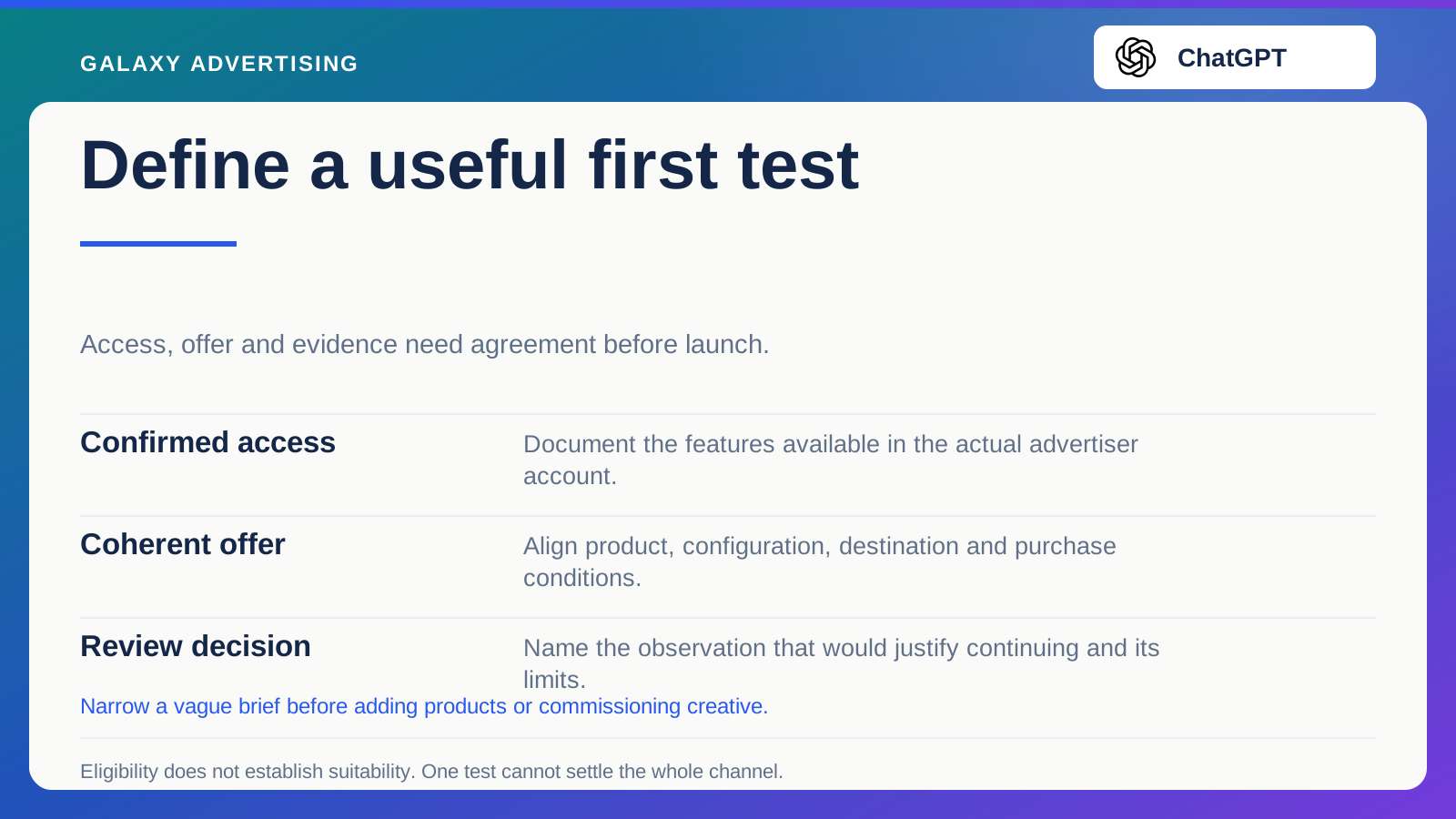
First, what is confirmed in your actual account? Separate available features from assumptions about the platform. Nobody should have to guess which is which while approving the spend.
Second, what exactly are you offering the customer? The product, configuration, destination and purchase conditions need to make sense together. An attractive asset cannot make a disconnected offer coherent.
Third, what decision will the evidence support? Name the observation that would justify continuing, and the limits that could stop you reaching a confident conclusion. If the answers are vague, narrow the test before adding products or creative.
A written brief helps when responsibilities sit with different people. You may own the product facts, a developer the destination, and an agency the campaign. Each needs to know which dependency must be resolved before launch.
This won't remove uncertainty about a new channel. It will stop uncertainty about the work itself being mistaken for uncertainty about the opportunity. Those are different problems, with different remedies.
Agree how you'll finish before you start
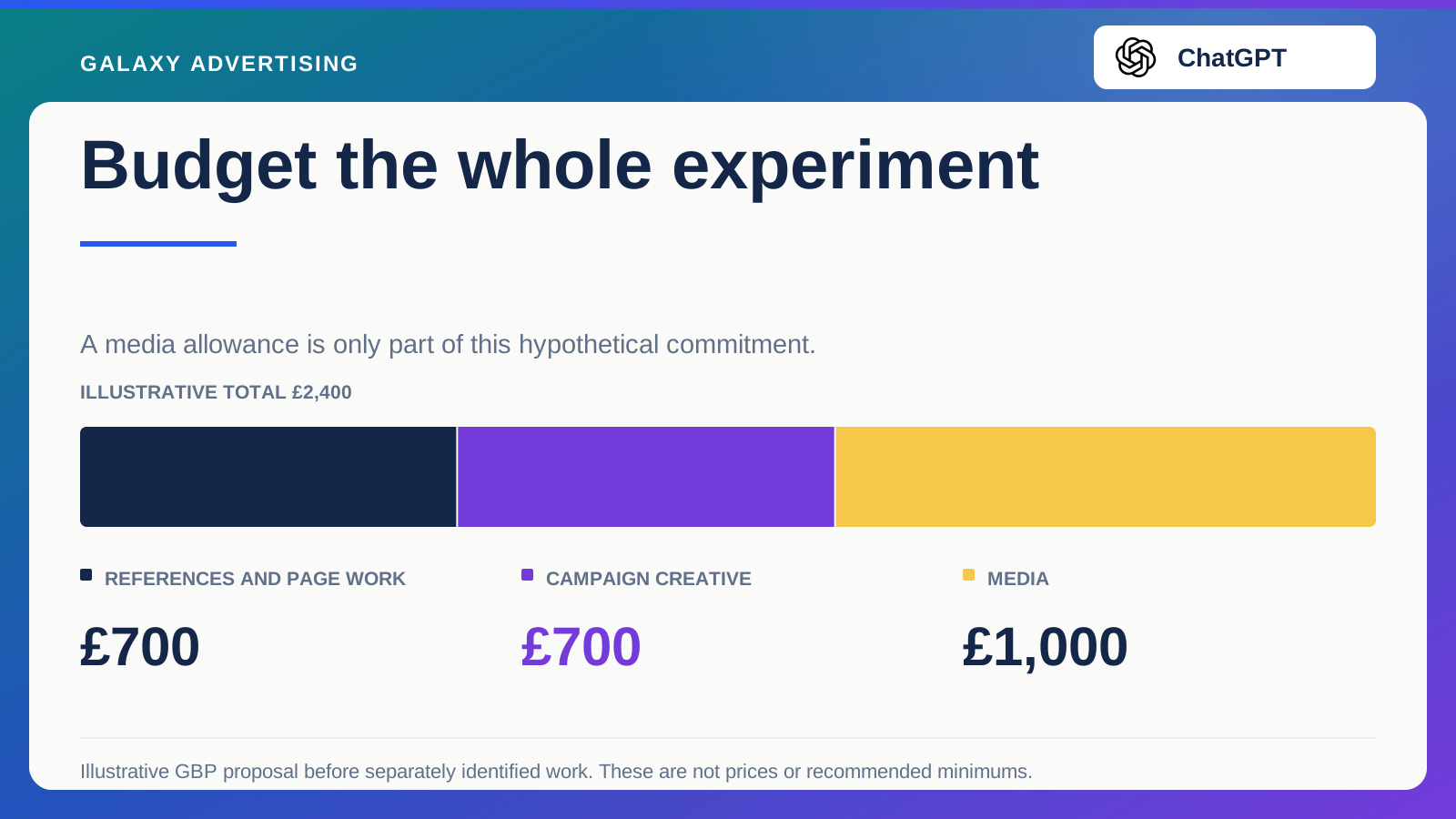
Set the operating scope, approved spend, responsibilities and review conditions. There is no sensible universal budget for every product and advertiser. Your scope needs to reflect the cost of useful evidence and your willingness to fund uncertainty.
Name the conditions requiring prompt action, such as an unavailable product or broken destination. Keep those separate from the evidence needed to judge the wider experiment.
At review, choose a bounded continuation, a specific adjustment or a stop. Explain what you learned. A single test doesn't establish that an entire channel works or fails for every comparable retailer.
Early access can feel like an advantage before the commercial case exists. A responsible brief gives you a way to investigate that opportunity while keeping paid visibility, attributed activity and genuinely additional sales as distinct questions. You can fund an unknown without pretending it is already an answer.