 ChatGPT Ads
A media allowance is not a complete test budget. Approve it without the creative, destination corrections and implementation, and you can find yourself buying a different experiment from the one you thought you authorised. Put every possible preparation task upfront, though, and an early dependency can leave you with little room to change course.
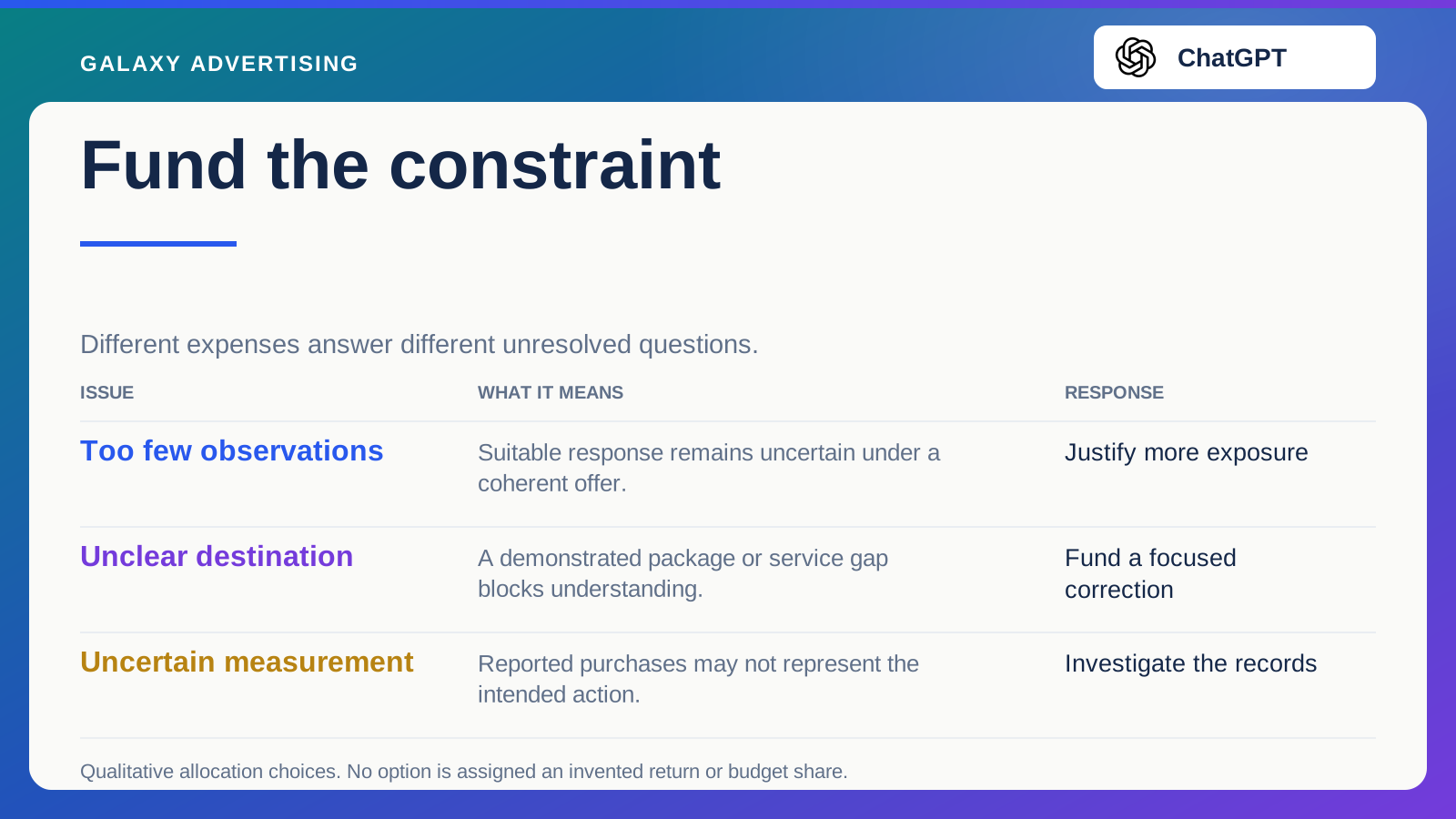
Your target at this stage is an affordable, coherent commitment. You need to know what you're approving, what can wait and what remains useful if you stop. That's a funding decision under uncertainty. It is different from setting an acquisition allowance for a mature campaign.
What decision are you paying to improve?
Name the uncertainty the experiment should reduce. A hypothetical specialist coffee retailer might want to know whether a clearly defined machine offer attracts relevant investigation through its confirmed advertiser access.
Keep the ambition within the evidence you can realistically obtain. The first commitment could help you judge the buying route without establishing a dependable long term return. The budget owner needs to accept that distinction before approving the work.
Put the alternatives beside the proposal. You could improve an established product route, resolve a supply constraint or keep the money. Calling a new channel strategically important doesn't automatically make it the better investment. It still needs to earn that choice.
What would you have left if you stopped?
List preparation, production, implementation, media and review. For each, identify when you commit to the cost and what useful work remains if the experiment doesn't go ahead.
A verified product reference might serve several channels. A particular campaign adaptation could have a narrower use. Media exposure already purchased cannot be recovered because you decide the test was inconclusive. Those differences should shape the order in which you release money.
Reusable work isn't free. You still pay for it, and its wider usefulness needs a plausible route, rather than an optimistic label in a proposal. Equally, useful product corrections don't become worthless just because you stop the media experiment.
Show the whole commitment in one place
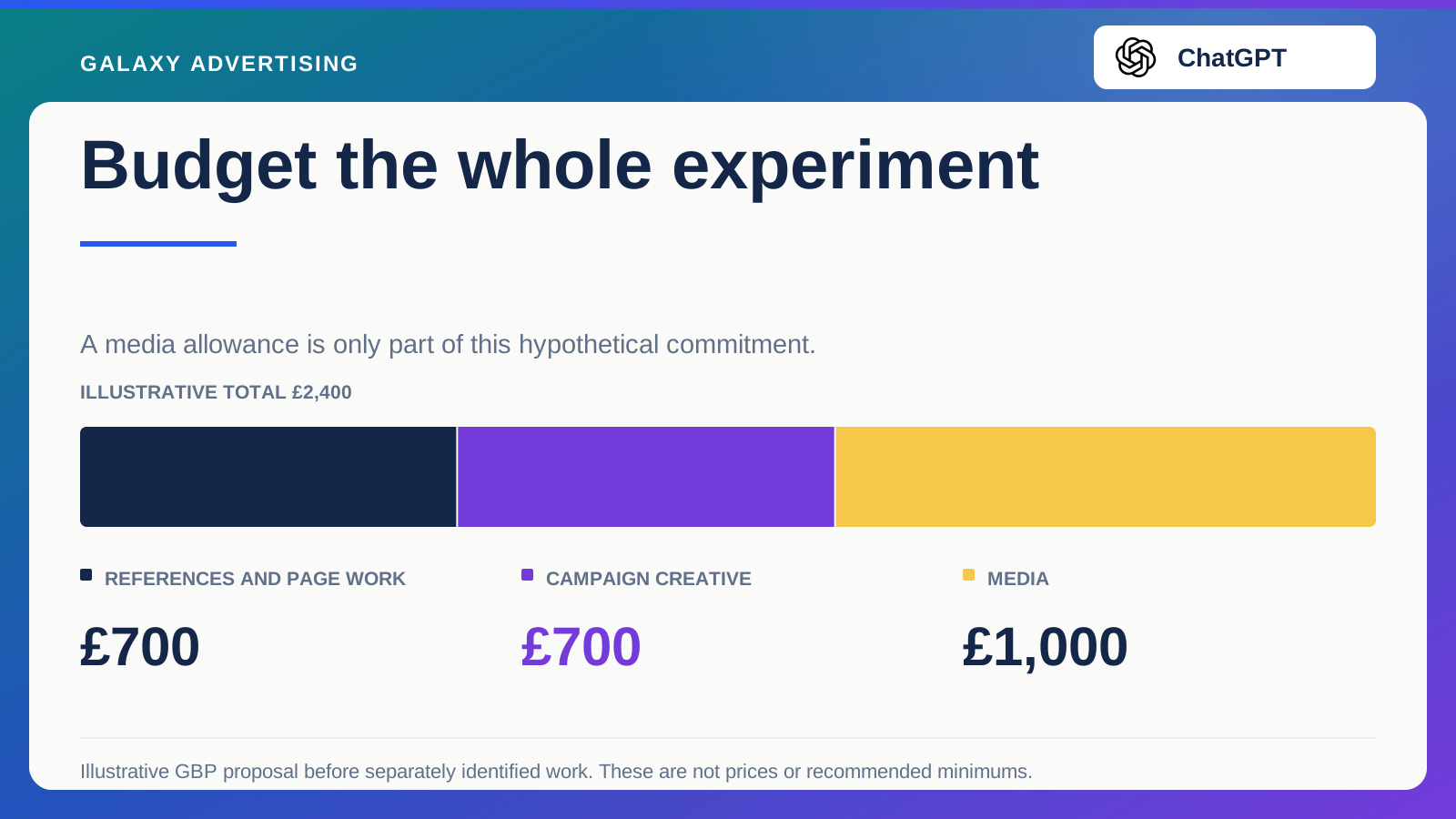
Consider this hypothetical proposal: £700 for verified references and destination work, £700 for campaign creative and £1,000 for media. That gives a total planned commitment of £2,400 before any separately identified work. The figures are illustrative, not recommended prices or minimums.
Explain what each part buys and what must be confirmed before it starts. If the supported advertiser setup or the offer is unresolved, you might hold back the full creative package. That is a choice you can make while the money is still available to redirect.
Keep enough scope to answer the question. Cutting essential verification or review to hit an attractive total can leave you with a cheaper experiment that teaches you little. Compare complete commitments. Headline prices with different omissions aren't a useful basis for choosing.
Which costs should wait for a confirmed fact?
Mark the dependencies. Asset production might need an agreed package definition. Releasing the campaign might need a functioning destination and an accepted measurement brief. Say which fact releases which work.
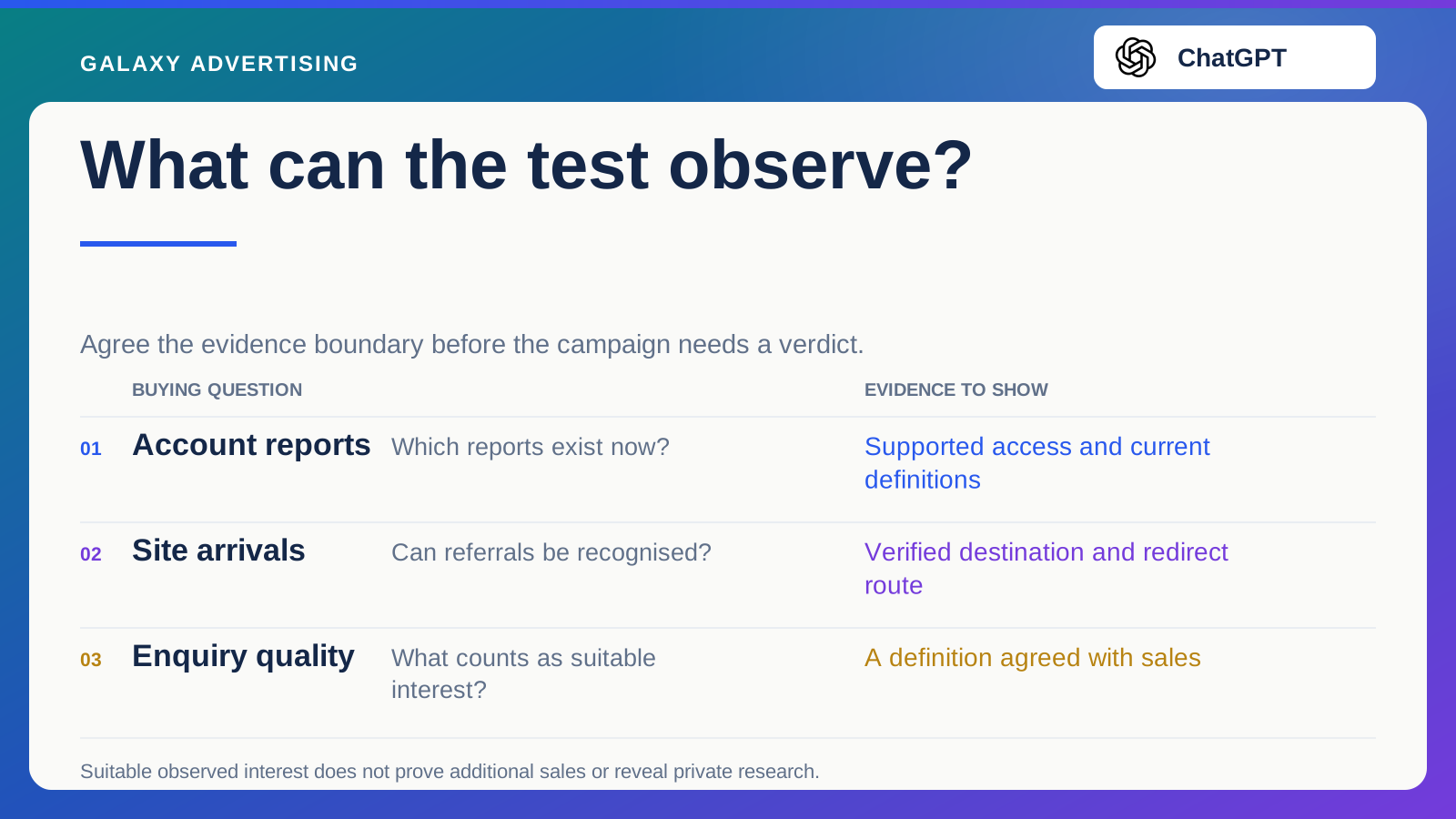
Make those conditions observable. “Ready to launch” leaves plenty of room for disagreement. Confirming that the promoted configuration is available, the package is approved and agreed arrival recognition has been verified gives the responsible people something they can inspect.
Don't turn every dependency into a reason to delay indefinitely. The owner needs a choice: resolve it, narrow the experiment or stop before the next commitment. Staged funding helps when it preserves a real option. An endless approval queue doesn't do that job simply by being cautious.
Work out what an inconclusive result would cost
What will you have spent if the first observations don't settle the main question? Include the work needed to interpret the result, as well as the media that produced it. The review is part of the experiment you are funding.
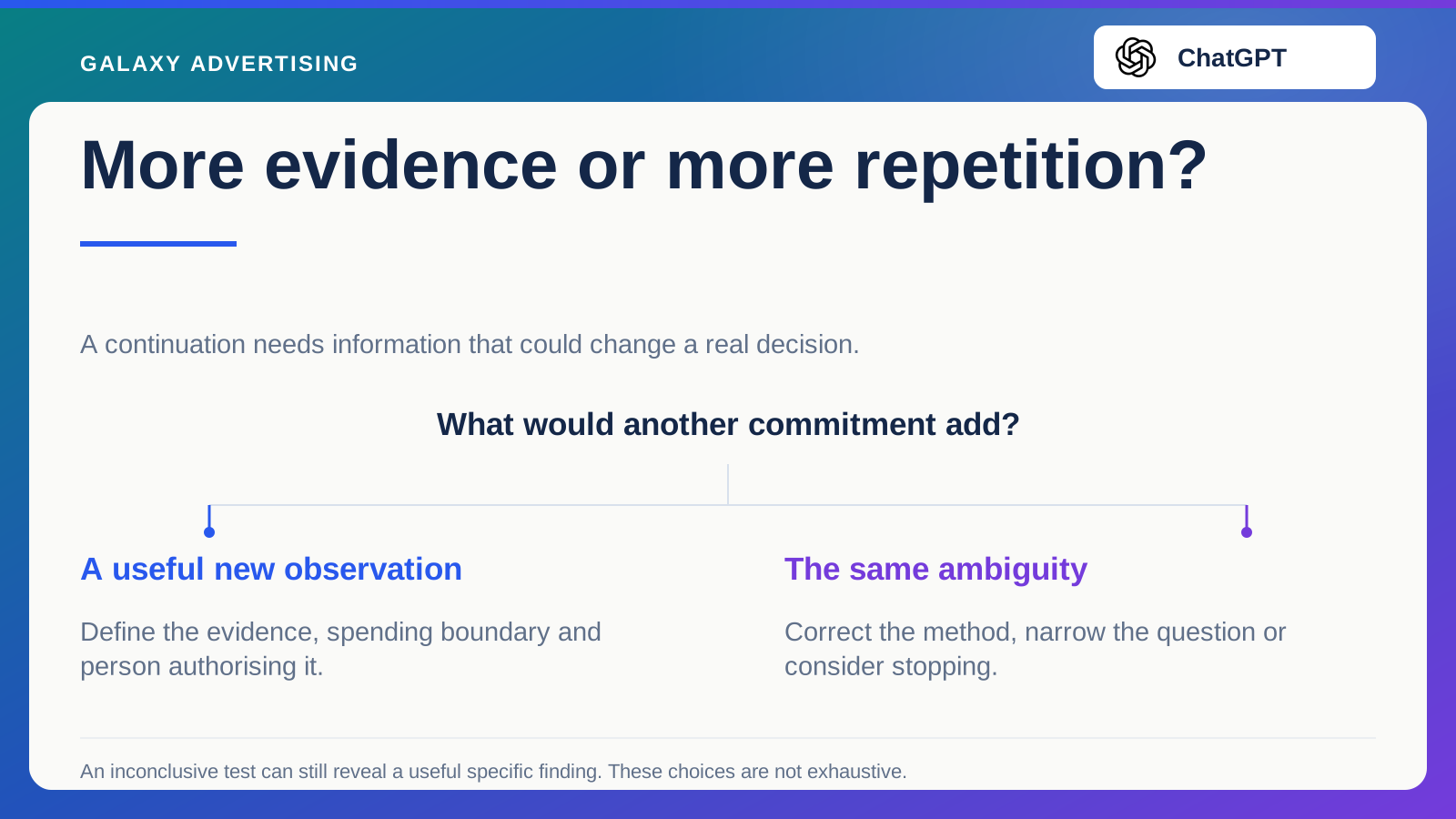
Then ask what another round would add. Would it produce a materially different observation? Correct an identified ambiguity? Or would it repeat the same conditions for longer? Feeling uncomfortable about ending without certainty isn't, by itself, a reason to continue.
Earlier expenditure should not become the main argument for more. Your next decision concerns the next commitment and the useful information it could provide. Money already committed explains how you got here. It doesn't establish that a further expense is justified.
Keep an unspent allocation separate from a committed supplier cost. If a dependency blocks launch, you need to know what can still be redirected and what work has already been authorised under the existing arrangement. A budget total alone won't tell you that.
Put the stop and handover arrangements in the approval
Agree who can withdraw a material promise, pause activity and retain useful assets or findings. The commercial owner should understand existing supplier arrangements covering unfinished work and outputs already accepted. Sort this out while it is an ordinary planning question.
The customer route still needs an owner when the test ends. A temporary offer or misleading destination mustn't sit unattended because the media has stopped. Assign responsibility before somebody urgently needs to act.
Keep a short handover record: approved references, released commitments, work actually obtained and unresolved questions. A later manager can then pick up something usable, rather than inheriting an incomplete experiment described vaguely as proof that the channel worked or failed.
Make the next commitment stand on its own reasoning
At review, compare actual expenditure and usable learning with your original funding case. Keep what was delivered, what was observed and what remains uncertain distinct. They are related, but they don't answer the same question.
Recommend a bounded continuation, a particular correction or a stop. State the additional commitment and the evidence that could change the following decision. You shouldn't need an invented return forecast to make that recommendation understandable.
General order economics still matter. They don't need reteaching inside every new channel proposal. Before this experiment has earned a dependable acquisition forecast, the useful commercial target is knowing how much uncertainty you can afford to buy, when the costs become irreversible and what you keep if you choose another direction.