 ChatGPT Ads
Your garden furniture advert goes live as the weather improves, but the configuration a customer wants cannot arrive before their planned gathering. The campaign has caught the season. It has missed that purchase.
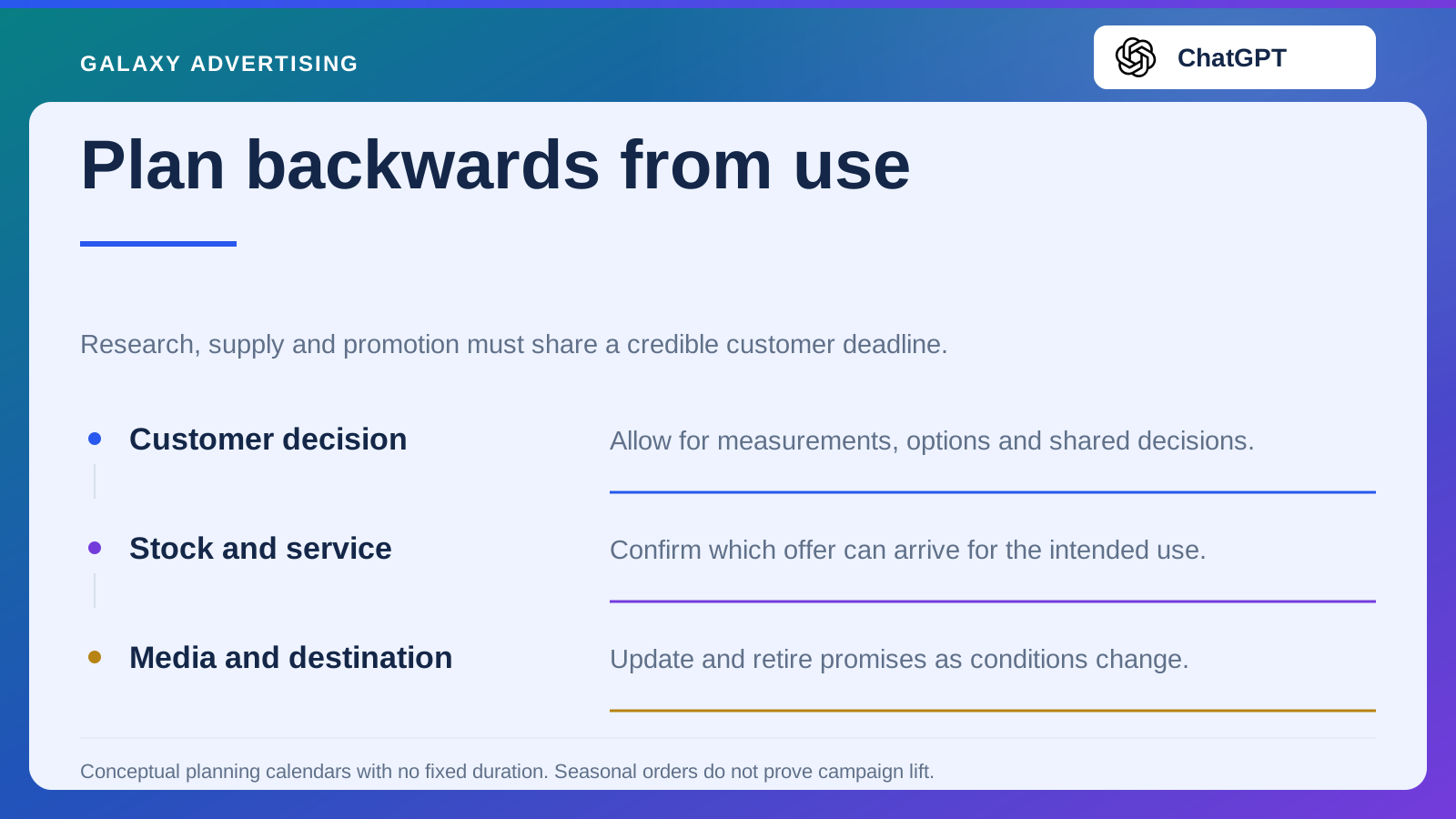
For a considered product, the calendar includes research, household decisions, stock and delivery. A launch date on its own doesn't tell you whether the offer fits the customer's timing.
Plan the demand and your ability to fulfil it together. That matters especially while you're still learning how a new advertising route contributes to demand. A well timed advert needs a promise the rest of the business can keep.
Start with when the product will be used
Identify the occasion or period that makes the range relevant. A hypothetical outdoor dining range could be considered for family gatherings. A desk range might attract interest before a household changes its working arrangements.
Customers won't all share one deadline. Use the enquiries and order patterns available to your business to understand plausible timing. Treat the seasonal idea as a planning hypothesis, rather than evidence that everybody follows the same buying cycle.
List what people need to establish before ordering. Measurements, configuration, household agreement and service questions take time. Help with those tasks on the advertising destination. An urgent purchase message doesn't help much if it ignores the practical decisions still standing between the customer and an order.
Put stock and service beside the media plan
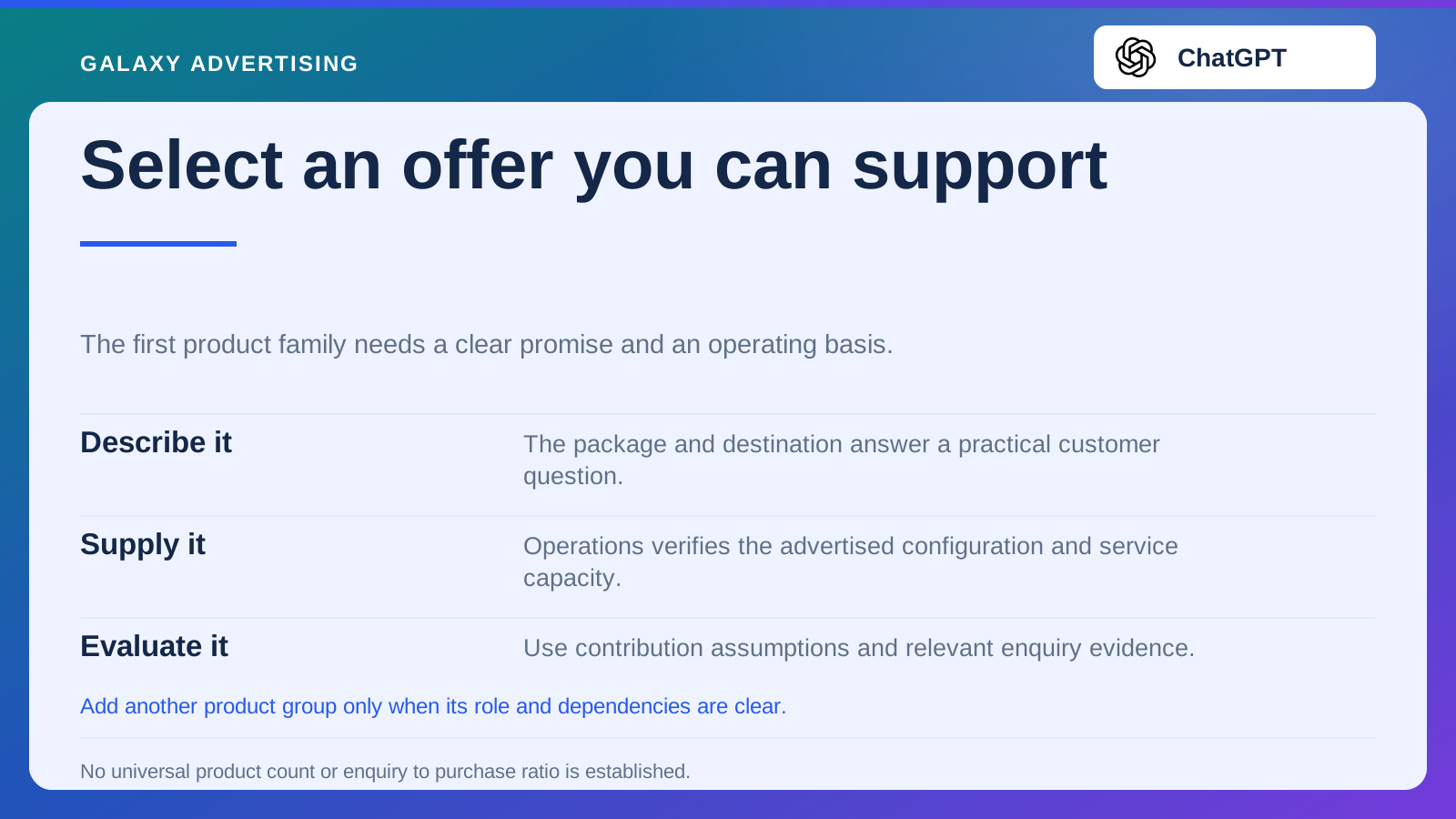
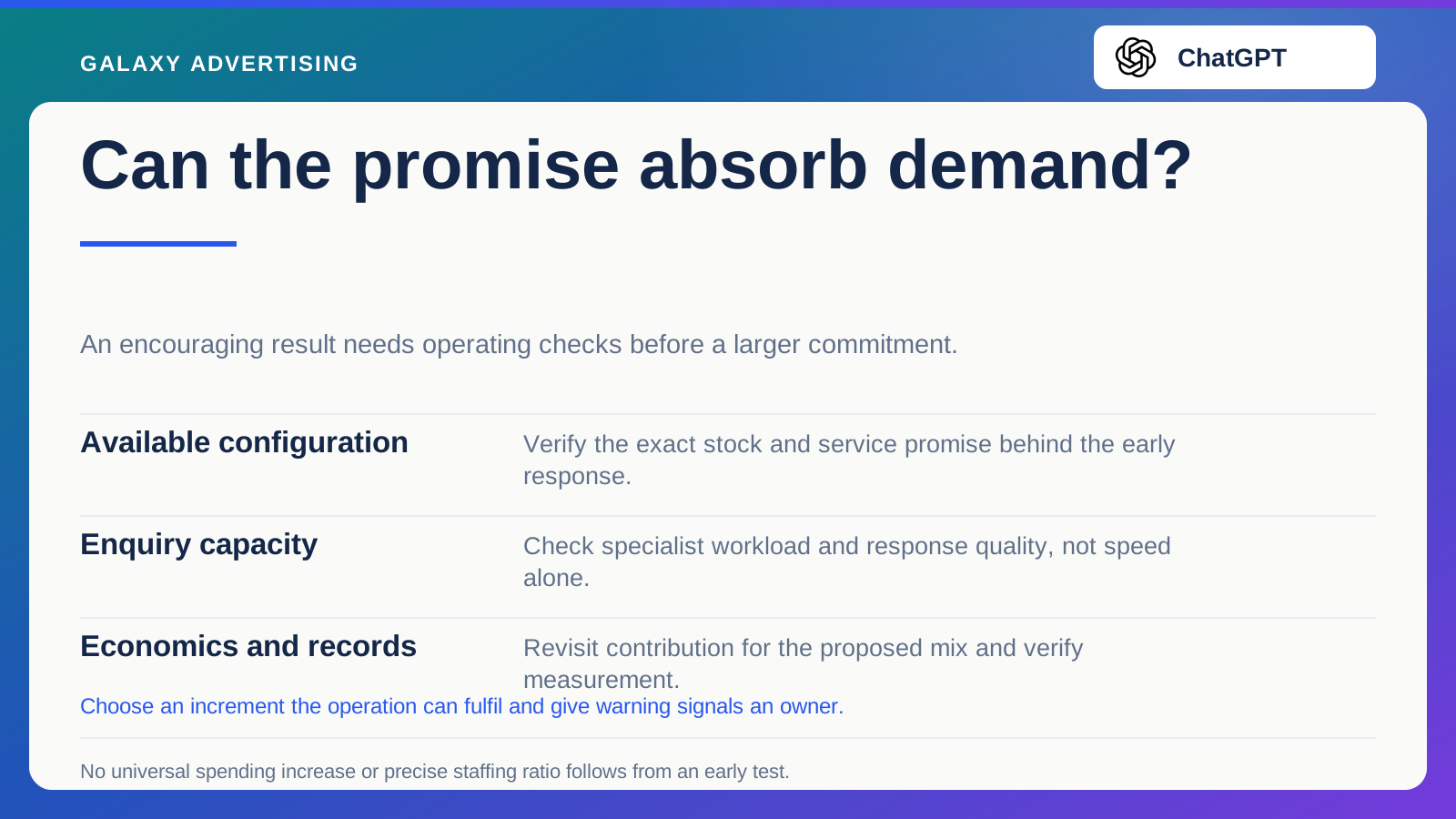
Ask merchandising and operations which configurations they can supply under the proposed promise. Separate confirmed stock from expected replenishment. If a forecast remains uncertain, keep that uncertainty visible to the people planning promotion.
Build the promoted range around what you can actually support. A visually appealing product with an unresolved delivery position can be a poor seasonal lead, even if it normally sells well. Past popularity doesn't settle whether it belongs in this particular offer.
Name who updates the account team when conditions change. Creative can become inaccurate quickly if it still describes an earlier stock or service position. Your review process needs to work during the campaign, as well as before the first asset receives approval.
Help with research before reaching for urgency
Earlier in the decision period, people might need help comparing size, materials or configuration. Near a genuine deadline, accurate availability and service information may become more important. Let the proposition reflect those practical tasks.
These are possible needs, rather than a claim that an advertiser can identify every person's stage from a private conversation. Build coherent offers around buying tasks you understand. Use campaign capabilities only after they've been verified in the account.
Don't manufacture urgency to disguise a late launch. A deadline needs a real basis and clear conditions. If you cannot meet the customer's intended timing, an honest alternative or later use case is more useful than a countdown concealing a fulfilment problem. Pressure doesn't create delivery capacity.
Make the seasonal page easy to maintain
Give the current seasonal offer a clear destination. Keep product facts and service details maintained by the people who own them. The page shouldn't become another version of the catalogue that everyone eventually forgets to update.
Decide how price, availability and deadline information will be revised or retired. Stopping a campaign doesn't remove the destination from saved links or other routes. Include the page in the retirement plan, alongside the advertising.
For the hypothetical dining range, agree what happens when the promoted configuration can no longer be supplied for the intended period. An accurate status and relevant alternatives may be appropriate. A customer shouldn't reach an enquiry or checkout before discovering that the promise has changed.
Leave time to use what you learn
Allow time to inspect whether the message and destination make sense before you depend heavily on the campaign. There isn't a universal number of weeks to copy. Product, supply position and the evidence you need determine the useful preparation period.
A small early observation might reveal a confusing package or missing measurement. Fixing that before the main demand period is useful work. It isn't the same as proving the channel's entire long term economics in advance.
Decide what early learning would change. If nobody has capacity to revise creative or stock selection, observations can arrive too late to affect the plan. Resource the response as well as the launch. Otherwise an early test simply tells you sooner about something you still cannot act on.
Don't give the channel credit for the season
Keep demand, stock, pricing and other promotion visible when reviewing the campaign. More orders during a naturally stronger period don't establish that the new advertising route caused the entire increase.
Compare available evidence on a consistent basis. Explain material differences in operating conditions. A previous season with another range or delivery arrangement can provide context without serving as a clean control.
Keep customer questions in view too. If more enquiries concern timing rather than materials, the destination may need a clearer service explanation. You can make that practical improvement without claiming to know every reason demand changed. The question customers are asking can guide a correction even when the larger causal picture remains uncertain.
Keep the learning you'll need next season
Record propositions, supply conditions and required corrections. Separate work completed from commercial impact observed. Then identify which decision should happen earlier next time: product references, a firmer stock commitment or a clearer route for communicating service changes.
That's more useful than simply telling everyone to start earlier next year. You need to explain what customers can purchase, when they can use it and how they can check the relevant conditions. Timely media cannot make an unsupported delivery promise reliable.
Keep the customer deadline separate from the media deadline in the record. A campaign can stop on schedule while saved links keep bringing people to its old offer. Note whether the destination accurately explained the changed service position. That operational lesson is worth preserving even when you cannot assign a precise number of additional orders to the advertising.