A bunk bed, a midsleeper and a bed with integrated furniture can all be described as versatile and space saving. That gives your comparison page three positive descriptions, but leaves a parent struggling to understand the actual choice.
Organising the range is useful. Helping someone judge the differences takes more. Start with the adult buyer's questions, identify exact arrangements and keep manufacturer guidance attached, without turning category labels into universal recommendations for a child or room.
Agree which decision the comparison is helping
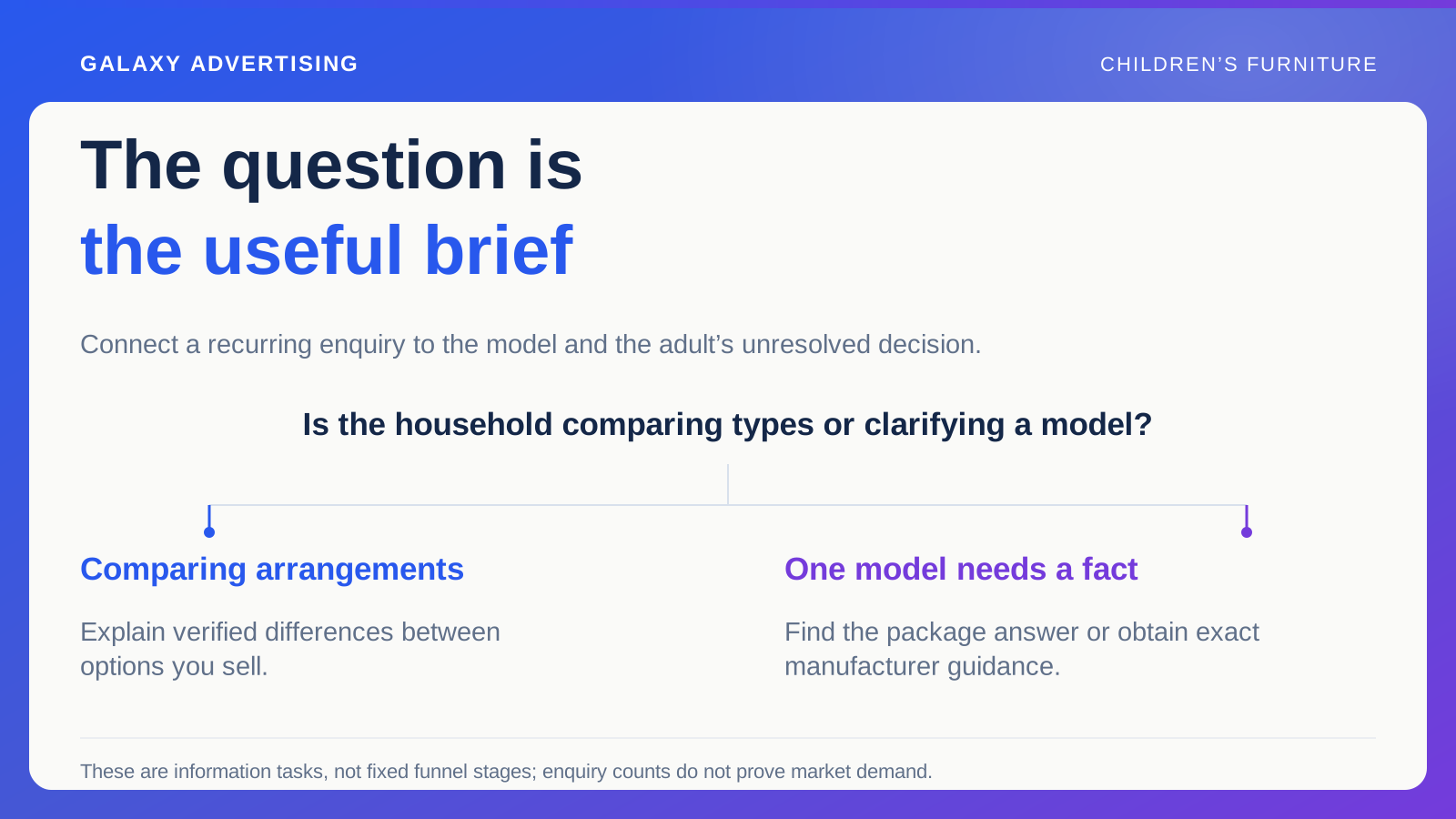
Is someone choosing a general arrangement, comparing two exact models or finding out what a package contains? Each task needs a different level of detail. Trying to answer all of them indistinctly can leave every answer vague.
A broad overview can explain how you organise the range. It cannot pretend every item within a category shares dimensions or instructions. An exact model comparison can offer more specific facts where dependable sources support them.
Put the question in the page introduction. Tell readers what the comparison can establish and where they still need to check. The purpose is informed selection, rather than declaring one furniture category better for everybody.
Make each entry an identifiable offer
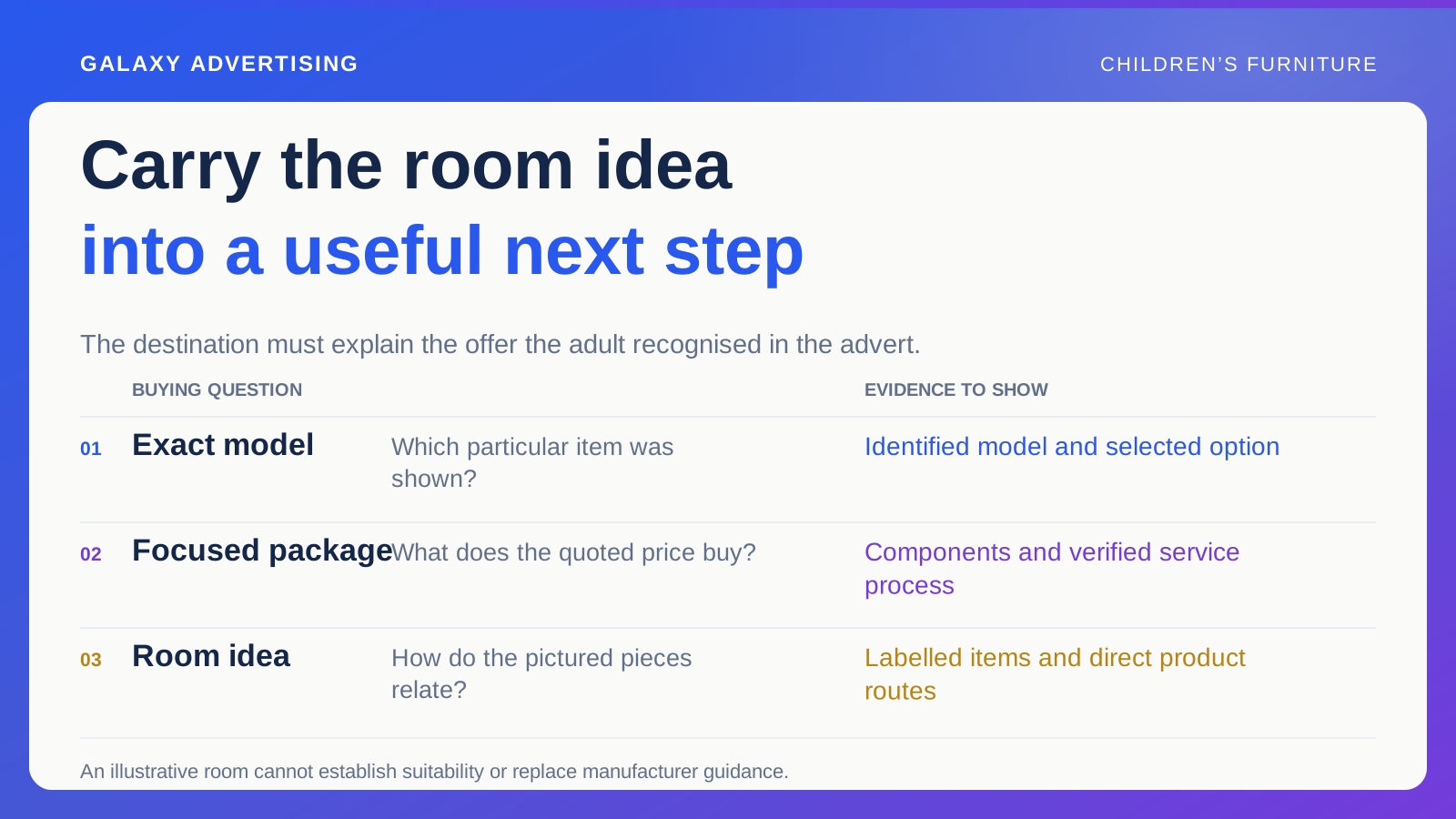
Use exact product and configuration references, with configuration meaning the selected arrangement. Photos, dimensions and contents need to describe that same offer. Don't let different versions of a family creep into one entry because they look broadly alike.
Explain optional storage or other items appearing in photographs. Comparing a basic frame price with an image of a complete room package can make the choice unfair before anyone reads the details.
Provide direct routes to the relevant product records. People should be able to inspect the source information without searching the catalogue again. Stable identity also helps your own team maintain the comparison when a model or package changes.
Explain a difference that changes the choice
Useful distinctions might concern included furniture, available arrangements, documented dimensions or retail package contents. Go beyond listing features. Explain what the difference means for the decision someone is trying to make.
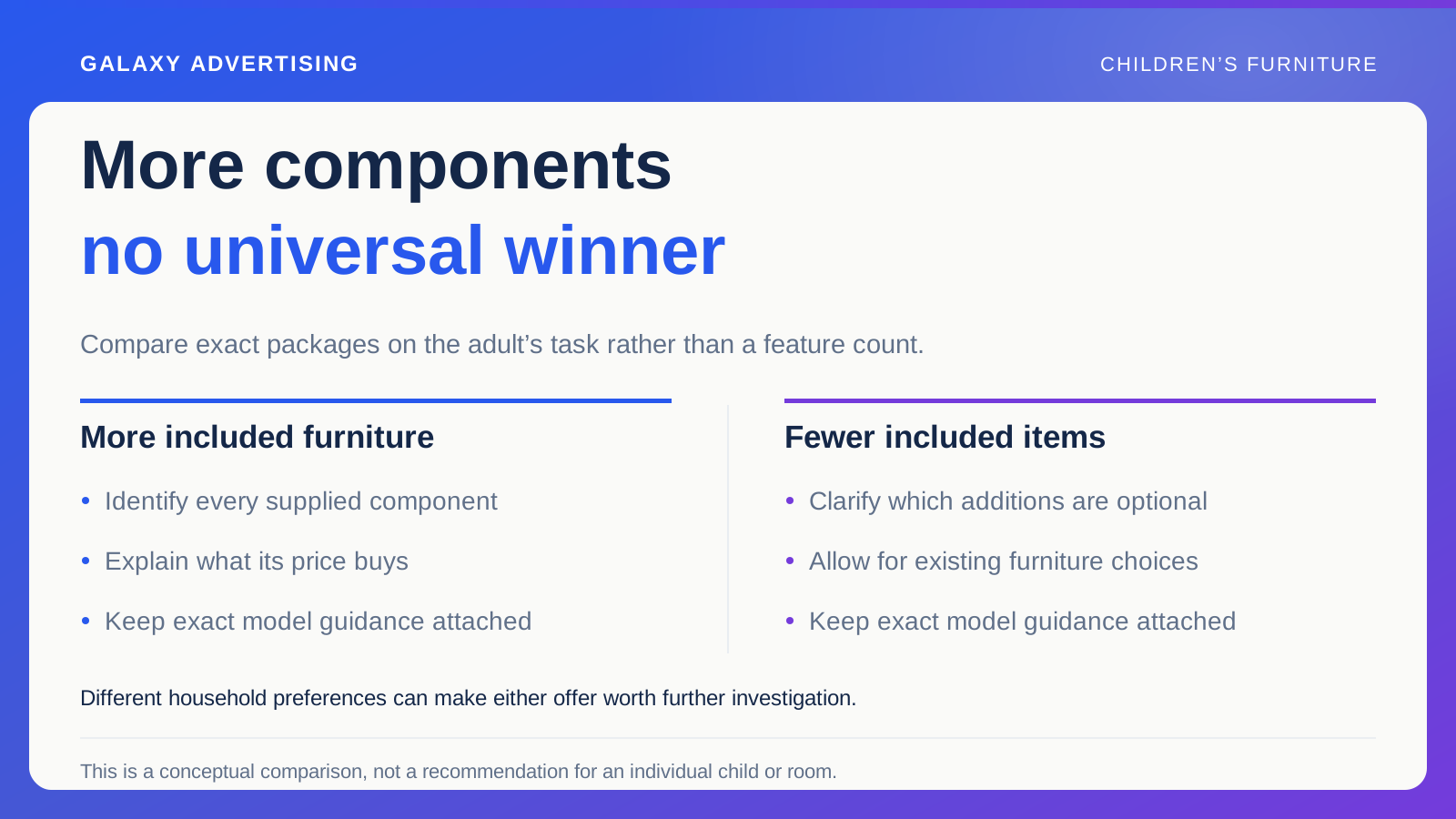
In a hypothetical comparison, one package could include separate storage while another offers it as an option. What would the household receive, and what would they need to assess? That matters more than which description collects the most positive adjectives.
An extra component isn't automatically an advantage. People may not need it, may own an alternative already or prefer a different arrangement. A fair comparison makes those compromises visible, instead of assuming the largest package must be the strongest offer.
Keep the right guidance with the right model
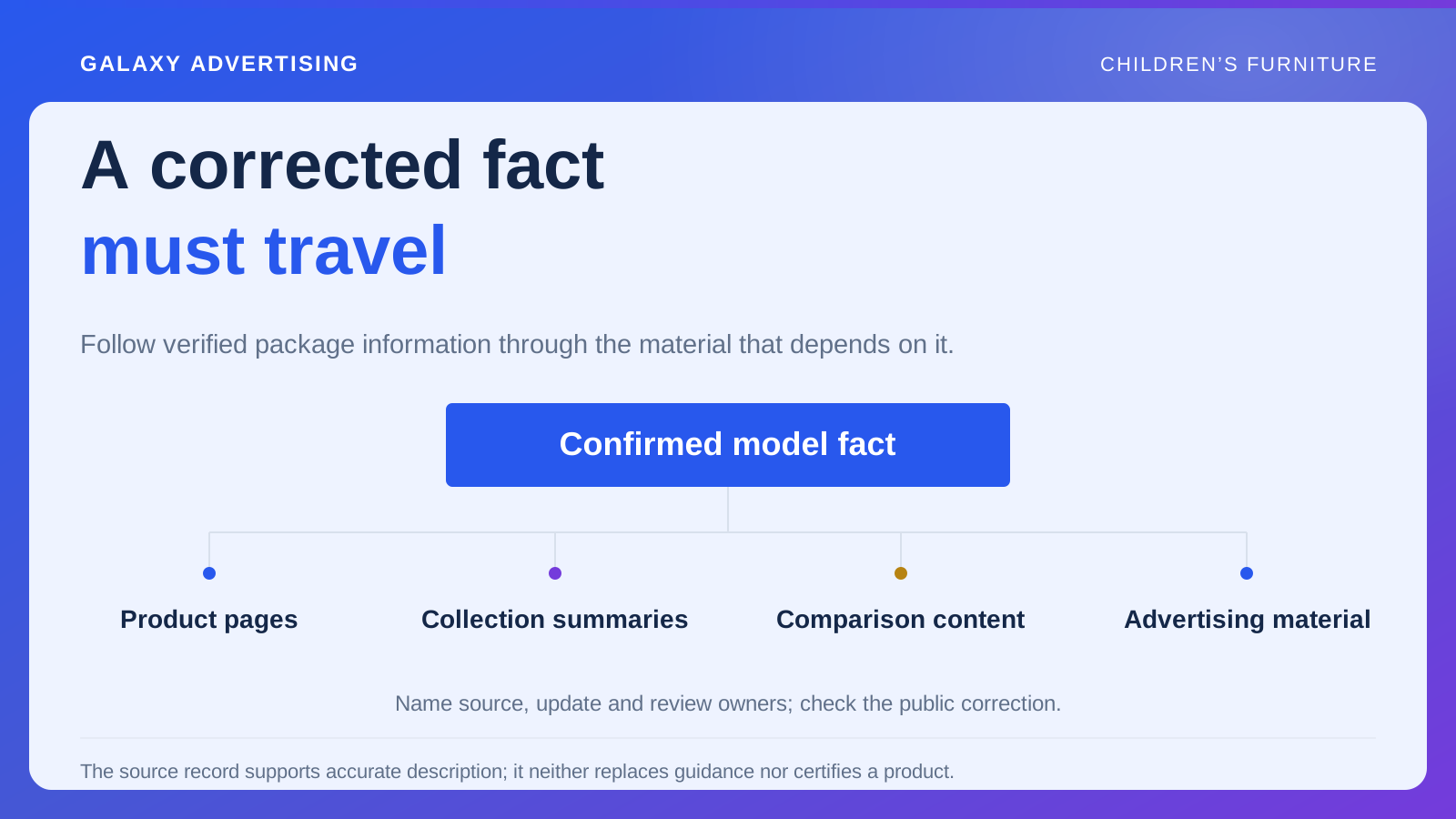
Questions about intended use, restrictions, mattresses or other aspects of suitability need the relevant manufacturer guidance for the exact model. A familiar category name is not enough to derive a recommendation.
If you cannot establish that a statement applies to the version being compared, get clarification from the appropriate source before publication. Reassuring marketing language cannot settle technical uncertainty, however helpful the intention behind it.
Make that boundary useful. Say which information someone should inspect and how to get a reliable answer to a remaining question. You can support the adult's decision without claiming to offer personalised product advice or technical certification.
Keep pictures and prices on comparable terms
Choose views that make the arrangements understandable. Don't give one product an artificial advantage through misleading scale or styling. If contents are the point of comparison, make those contents easy to distinguish visually.
For every price, identify what it buys and keep the information current. Relevant delivery or service differences should stay visible where they change the offer. Otherwise a straightforward looking price comparison can conceal different purchases.
And don't force accuracy into a neat table if it doesn't fit. Some differences deserve a short explanation rather than a tick or cross. A concise qualification helps more than a simple score implying equivalence between products serving different tasks.
Ask someone unfamiliar to explain the choice
Give the page to a reviewer who doesn't know the range. Ask for one reason a household might investigate each option further. Their answer tells you whether practical differences are clear or the page has merely nominated a winner.
Listen for unintended assumptions. Do they think an optional component is included? Have they read a broad category as a guarantee of suitability? Where the presentation creates those impressions, revise it.
This is a focused comprehension check before the page becomes a campaign destination or commonly used support reference. It doesn't establish how every customer will respond, so keep the conclusion within that useful but limited scope.
Make room for the smaller package
Ask that reviewer why a household might investigate an offer containing fewer items. They may already have suitable separate furniture or want another room arrangement. Your page should make that choice understandable without prescribing suitability for an individual child.
This exposes an easy commercial bias: counting each additional component as an improvement. More included furniture can support a premium offer, while still being the wrong starting point for somebody else's preferences.
A fair comparison lets both thoughts stand. The useful outcome is an informed next question, rather than a universal winner that quietly assumes every household wants the most complete package.
Treat the comparison as catalogue information
Assign owners for the selected products, contents and dependent links. When an arrangement changes or becomes unavailable, revisit the comparison. An apparently evergreen page can still describe yesterday's offer.
Record which facts support each entry and retain source versions where practical. A future editor should be able to establish why an arrangement was described that way, instead of having to reconstruct the original reasoning.
The best buying aid leaves adults with clearer questions and dependable routes to the answers. Keep real differences visible, and category names, photographs and feature counts can do their proper jobs. None needs to carry a promise that the underlying information cannot support.