A confusing product page can generate plenty of parent enquiries without proving strong demand for that furniture category. If you're planning the next advert around message volume alone, that distinction matters.
One person asks whether a mattress is included, another how the desk arrangement works, another how much space the photographed configuration takes. “Parents shopping for children's furniture” describes the market, but gives a writer little direction. Start with the household's decision instead. Those questions can sharpen the creative and destination together, including where both need to point to current manufacturer information rather than offer broad reassurance.
Keep the question connected to the product
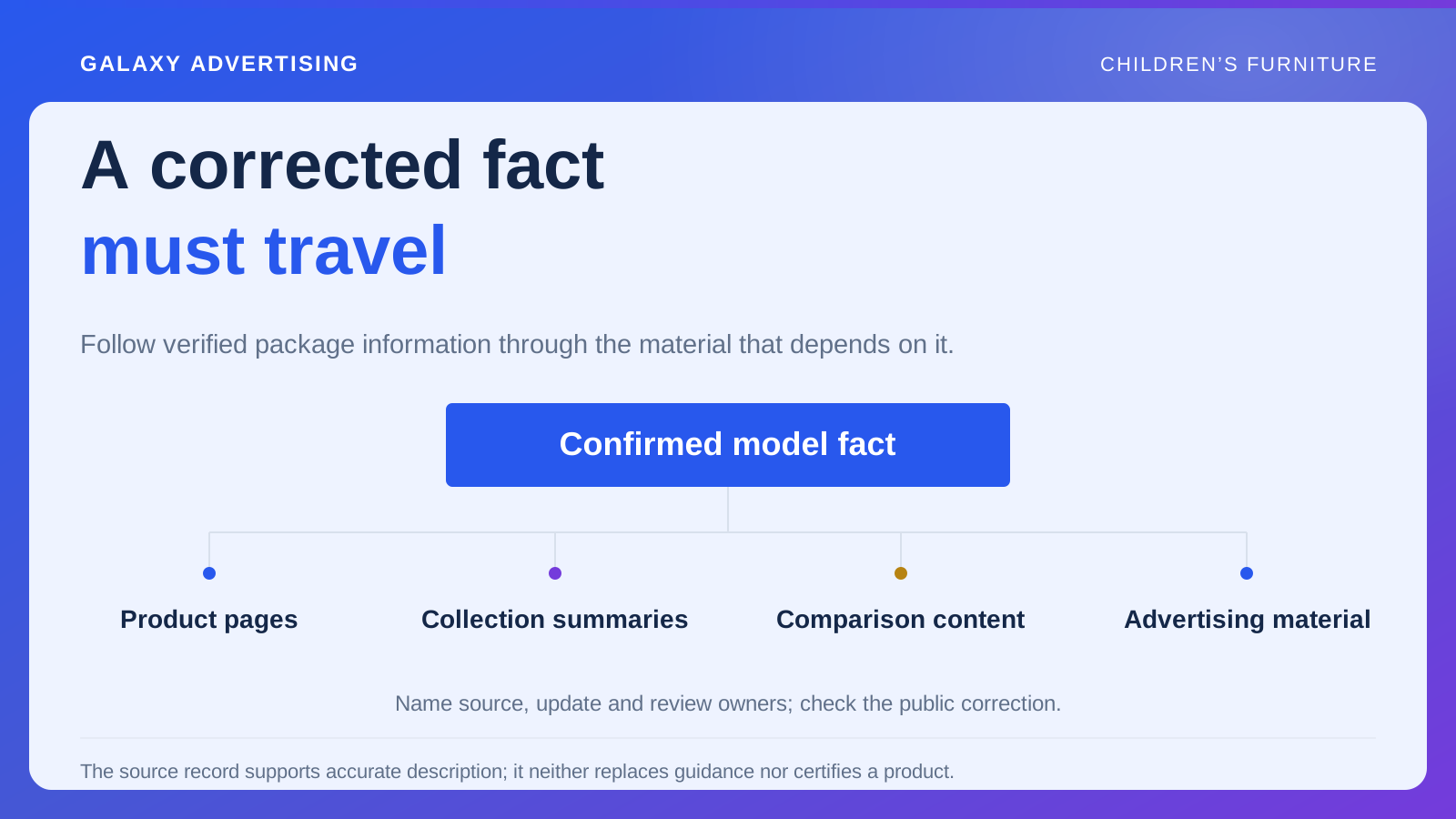
Record the model and configuration with the enquiry. A question about an included desk means something different for a combined package than for a bed photographed beside separately sold furniture. Without that context, a useful question can become an ambiguous theme in the brief.
Remove unnecessary personal detail when summarising for marketing. The useful pattern concerns the offer and information gap. You don't need the family's identity or private circumstances to investigate what the page needs to explain. Keep the context that serves the task, rather than everything the conversation contained.
Don't treat message counts as precise market demand. Poor labelling can create repeated questions because customers are confused. Frequency can identify a task worth investigating. It doesn't prove that one category is your biggest commercial opportunity. Look at what people are trying to establish before deciding what the volume means.
Distinguish choosing a type from clarifying a model
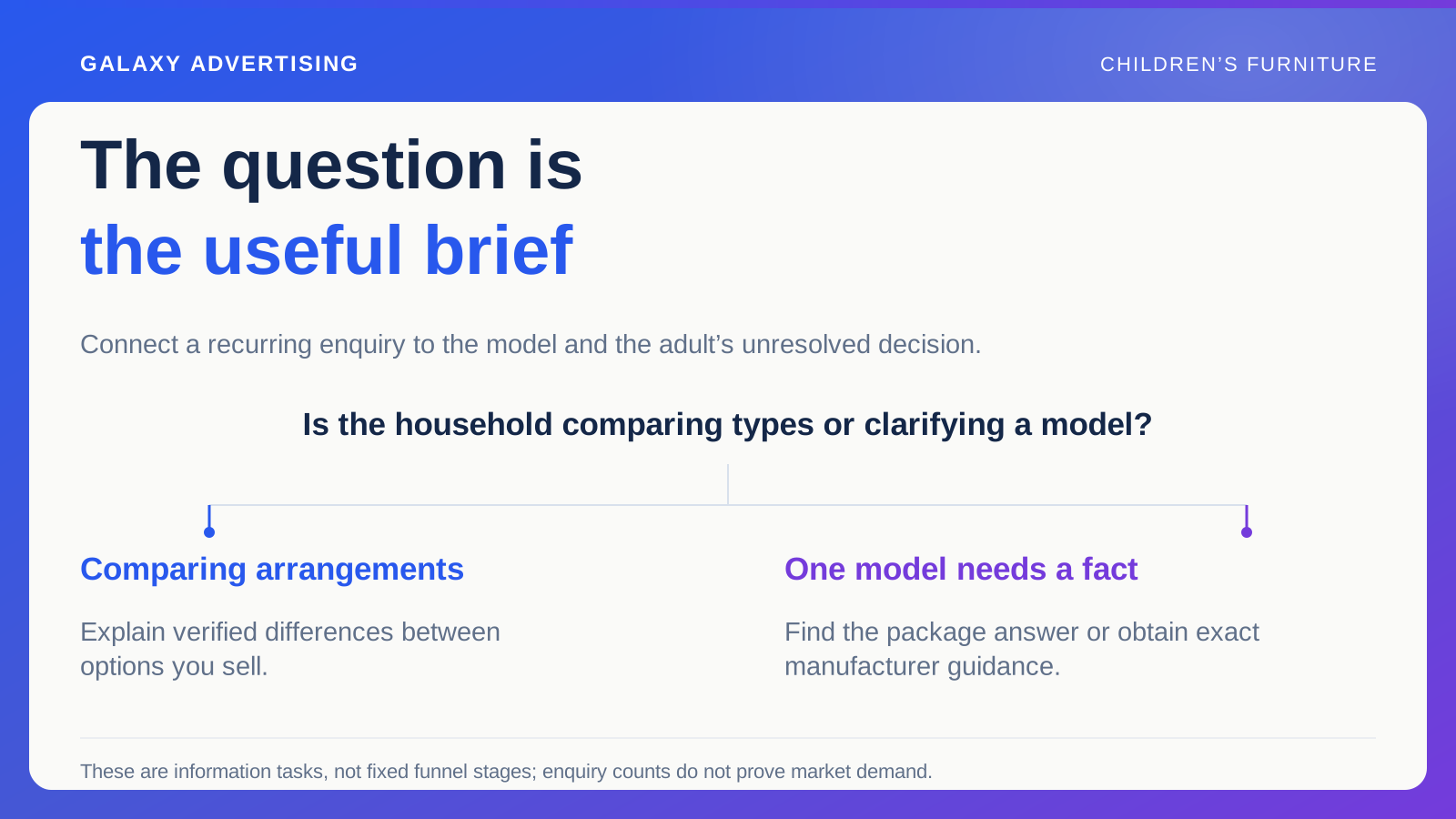
Some households compare furniture types. Others have picked a model and need one missing fact. They need different information. A useful plan recognises that distinction when it helps you make the right answer easier to find, rather than merely giving each person a marketing label.
A comparison route could explain verified differences between configurations you actually sell. A clarification route could identify one package's supplied components or point to relevant documentation. Choose the information around the unresolved decision instead of directing every enquiry into the same general explanation.
Don't force households into rigid funnel stages, meaning fixed steps towards purchase. Another person joining the decision can bring earlier questions back. Use the distinction where it improves the experience. The family's thinking doesn't have to follow an orderly diagram to deserve a clear response.
Know when the manufacturer needs to answer
Permitted use, compatibility and assembly questions need current manufacturer information for the exact model. Provide a clear route to that source. General category knowledge isn't enough to improvise a model specific answer, even when the question sounds familiar to the team.
Record who verifies anything unresolved. A campaign's need for a concise answer doesn't authorise the content team to turn an assumption into a confident public claim. The question needs a route to someone who can establish the fact before copy simplifies it.
That doesn't require every page to become a technical manual. Distinguish your useful summary from authoritative instructions and keep the detail accessible. Clear navigation can help more than a broad assurance asking customers to trust something unsupported. The summary should make the source usable, rather than replace it.
Make a recurring question into a concrete brief
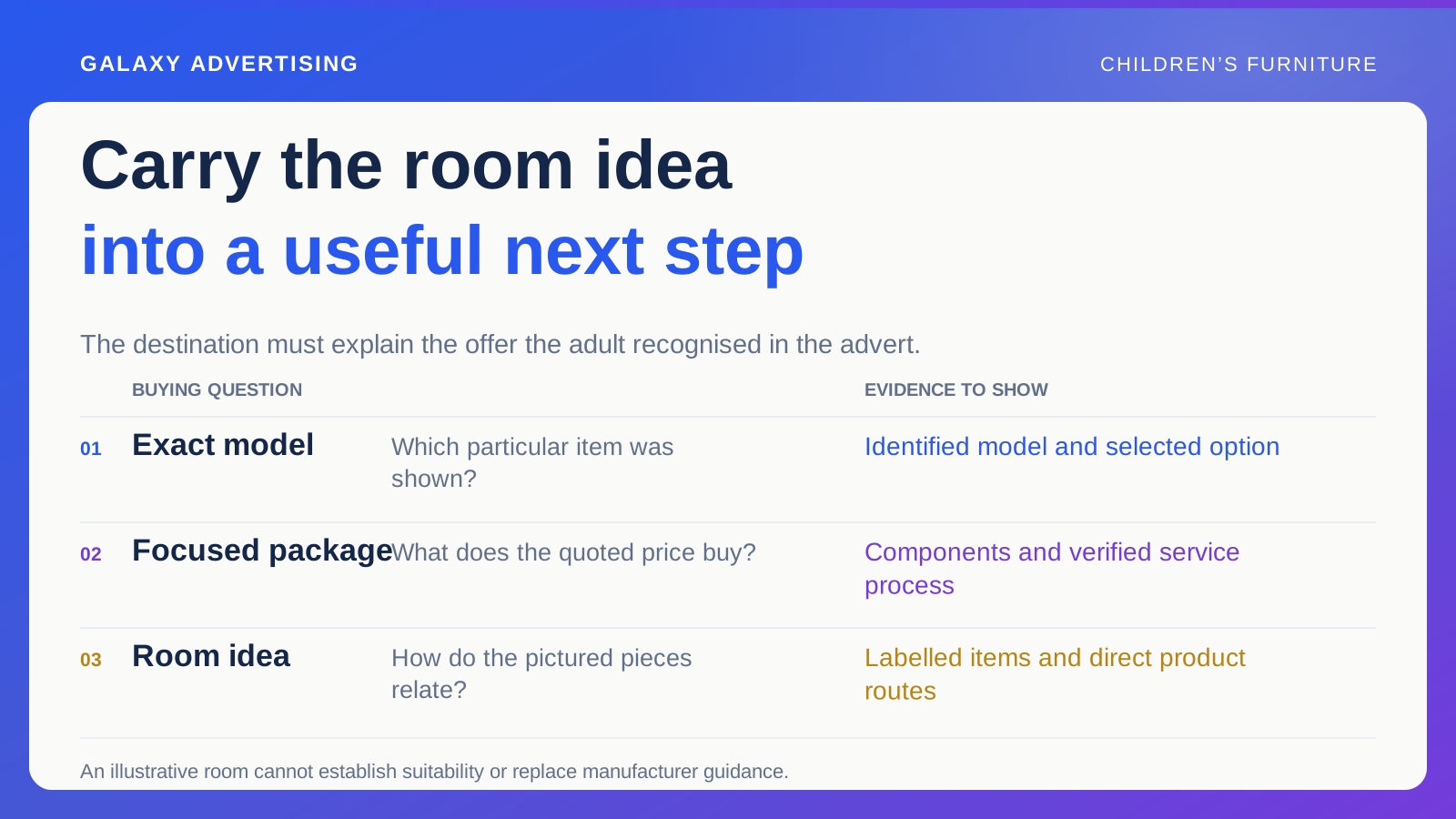
Suppose several enquiries ask what's included in one bed arrangement. An asset could identify the exact supplied components with accurate images and labels, then link to that package. The viewer should leave with a clearer understanding of the actual offer, rather than only a feeling of reassurance.
That's more actionable than requesting a video that makes parents feel confident. It defines the information to communicate and the product records the producer needs before filming or editing. It also gives the reviewer a practical question to ask of the finished material.
Choose one principal question for the asset. Explaining every model, package and document in a short advert can make the result hard to follow. Let the destination handle wider information while the creative makes one accurate, useful point. Focus shouldn't mean removing a relevant qualification.
Follow the route to the same answer
Check the advertised path on a phone. Can someone recognise the configuration, identify included items and find relevant manufacturer documents? Inspect actual labels, rather than relying on the team's familiarity with the range to fill gaps a new shopper wouldn't understand.
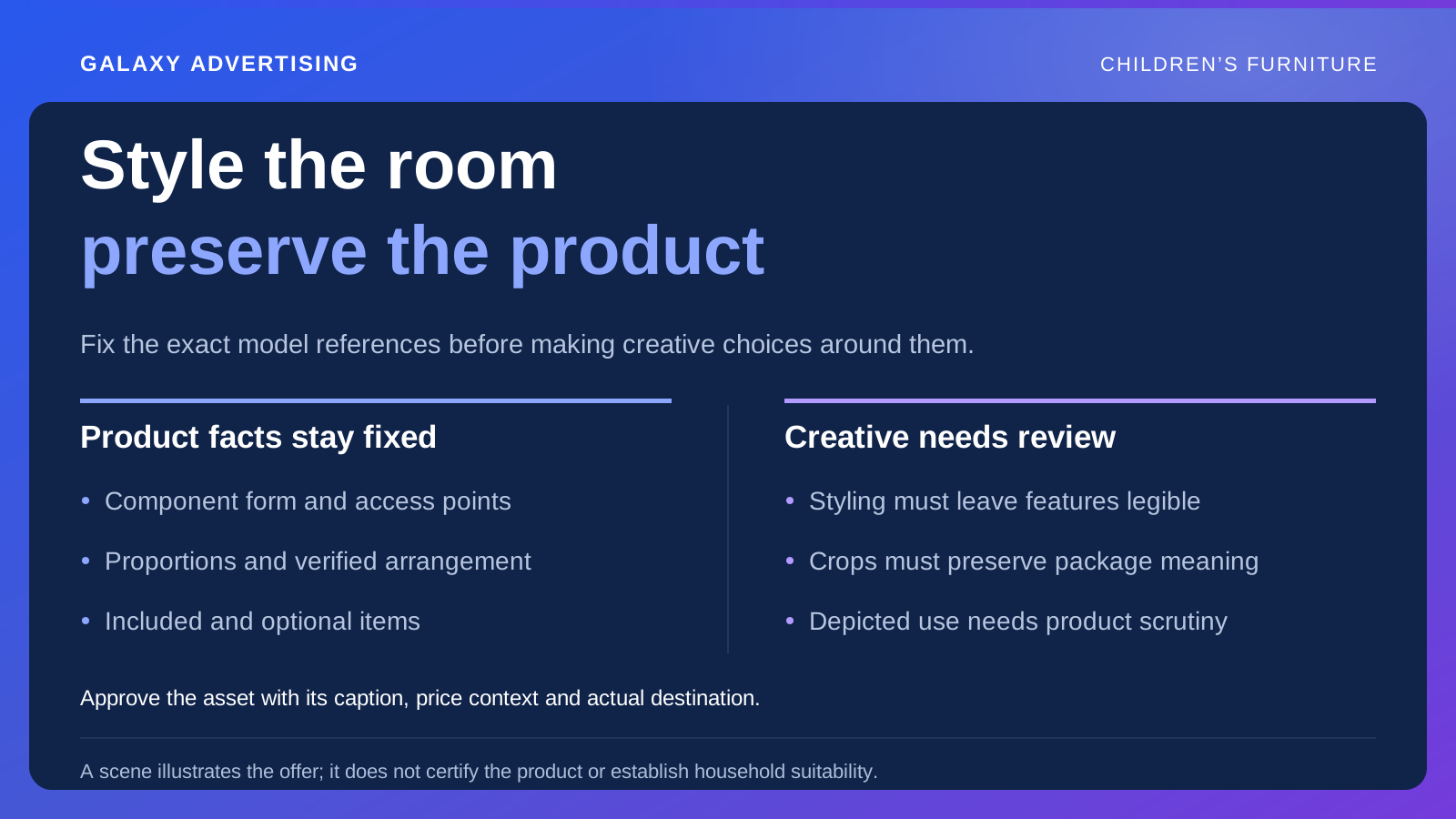
If photographs show different arrangements, explain their relationship. Inclusion questions can persist when base offer, options and styling appear together without distinction. The answer may exist in the page's files while the presentation still makes the package difficult to identify.
Give customer service a route to flag repeated gaps. If a question returns after revision, review the actual journey again. Information can technically be present but hard to discover or interpret where needed. Publishing the answer isn't the same as making it understandable at that point.
Use ordinary household language without inventing a persona
Keep helpful wording such as what arrives in the package or how to identify the arrangement shown. Don't turn a small sample into an imaginary personality with assumed income, interests and motivations. A practical task can be described without pretending you know a family's private circumstances or that every household experiences it alike.
Review copy with product and customer service owners. Does it accurately answer the original question? Did editing remove a relevant condition? A concise version is useful only while it preserves the offer's meaning. Check the simplification as carefully as the source facts.
Include a question your team initially considers obvious. They may know a room photograph contains separately sold items while a new shopper reasonably sees one package. Ask which exact visual or label explains the difference. If the answer requires prior catalogue knowledge, you've found a communication gap, not an uninformed customer. Improve the image or caption accordingly.
Look at the quality of the next conversation
After improvements, examine available enquiries and purchase observations. Are questions more specific? Can staff point to a coherent package? Is the same component still misunderstood? These observations help assess whether the communication task is complete. They don't guarantee a sales effect.
Keep learning with the model and question. Another arrangement can need another explanation despite sharing the category. The useful audience insight leaves a household better able to identify its offer, inspect relevant information and ask a better informed next question.