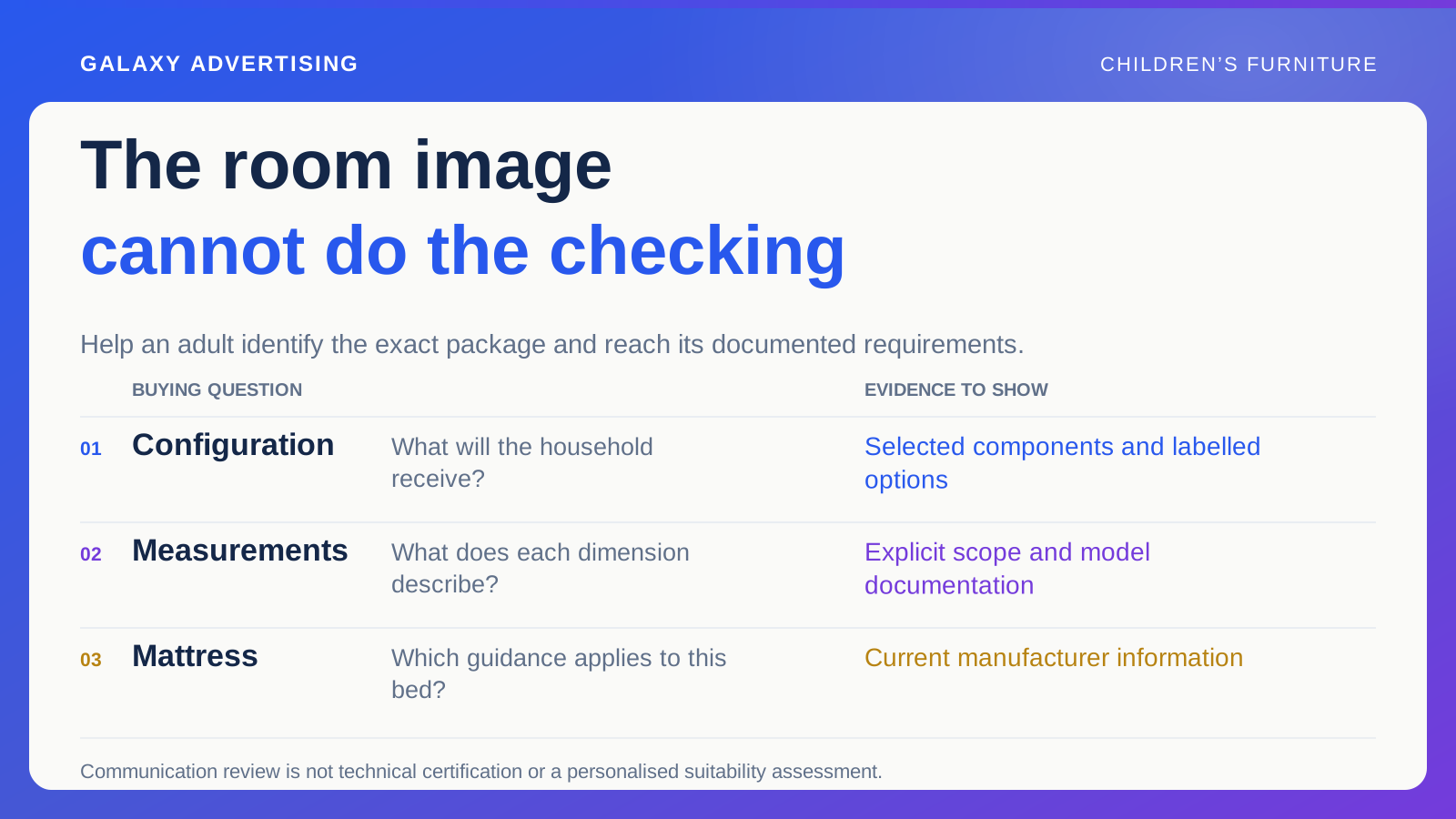
A lovely midsleeper photograph doesn't tell a parent which mattress fits or where the ladder sits. The room may look spacious, the storage neatly arranged and the colour exactly right. They still need to establish the space it uses and which pictured accessories they'll actually receive.
Your page should make those checks possible while preserving the manufacturer's guidance. A writer or image shouldn't imply suitability that hasn't been established. The job is an informed adult purchase. A convincing room scene can support it, but cannot do the checking on the customer's behalf.
Identify the configuration you're actually showing
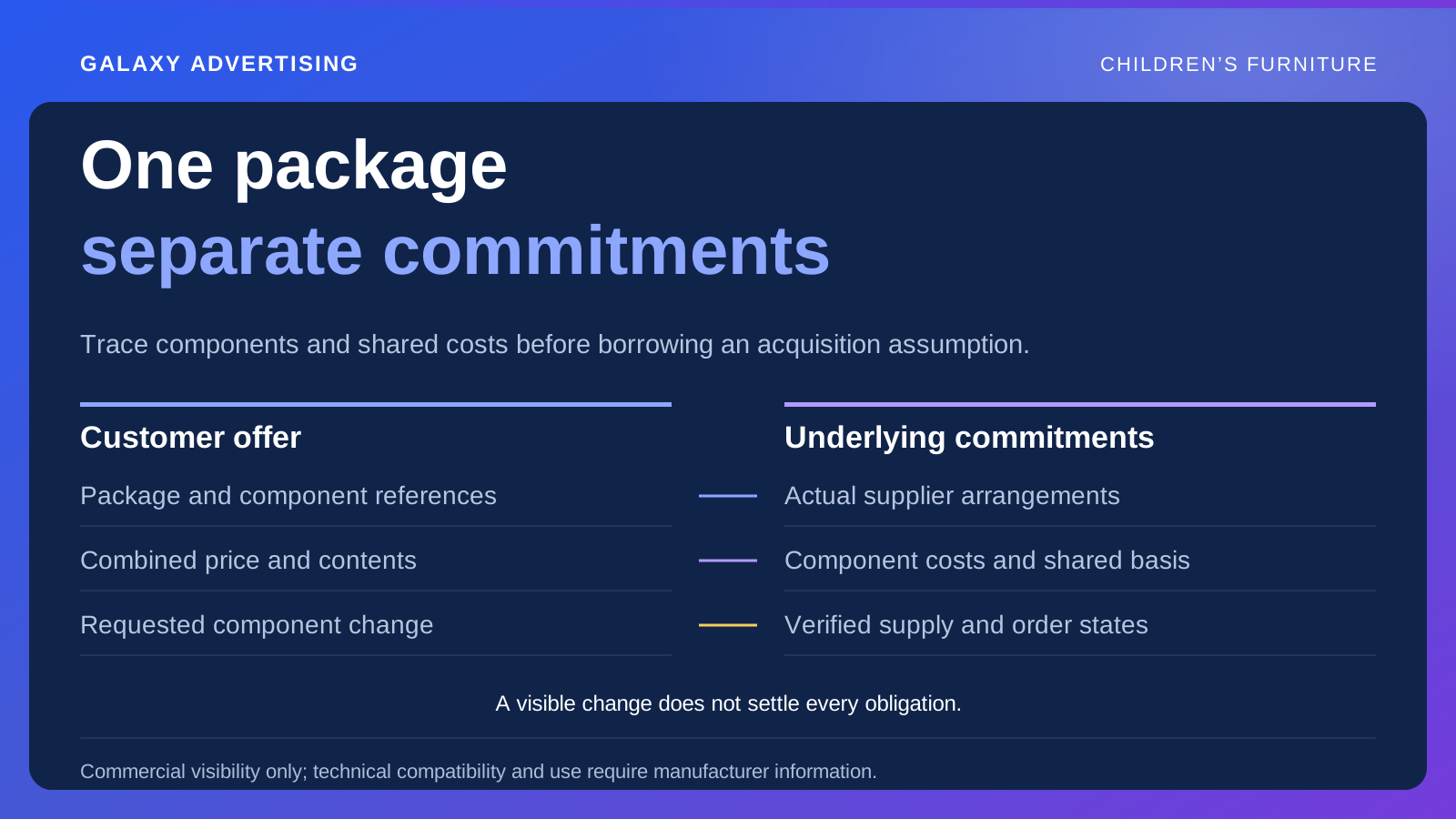
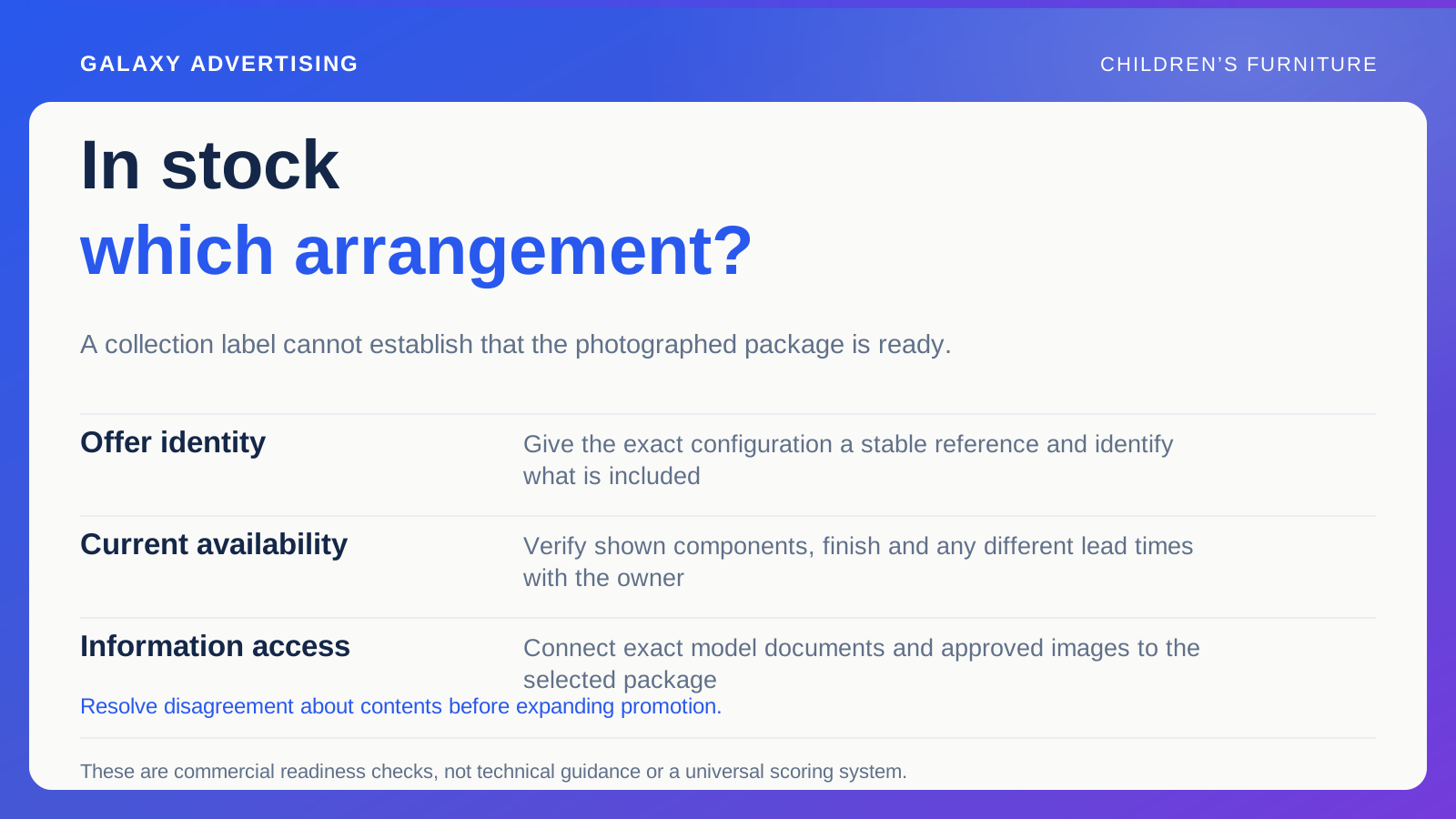
A children's range can combine the frame, storage, desk and optional accessories. State which elements the displayed offer includes and which are room styling. The customer needs a dependable account of the package, rather than having to infer it from a photograph arranged to look complete.
Where alternative layouts exist, explain how the selected configuration changes dimensions or key component placement. A ladder shown on one side doesn't establish where it sits on every version. Keep the information tied to the option the customer is considering.
Make option labels understandable without supplier knowledge. Parents shouldn't need to know internal range names to distinguish a frame from a package with additional furniture. Clear labels help them compare the actual choices instead of guessing what each name includes.
Explain what each measurement describes
Supply accurate measurements with explicit labels. Overall footprint, mattress size, usable storage and packaged dimensions describe different things. Keeping those distinctions visible helps the buyer find the figure relevant to their question, rather than treat a familiar measurement as an answer to everything.
Help them identify space around the intended configuration. If clearances or restrictions depend on manufacturer instructions, direct them there. Don't invent a universal recommendation to make the explanation feel complete. The product's documented requirements remain the authority.
A room photograph communicates style, not proof of fit in another room. Don't alter product proportions or use a viewpoint that makes a compact arrangement look substantially more spacious. The visual impression needs the same care as the written measurements. Both shape what the household expects.
Keep mattress guidance with the selected bed
Show relevant manufacturer guidance and state whether a mattress is included. If you offer options, connect the guidance to the selected bed. A generic mattress category shouldn't appear to imply that every item within it is compatible with this model.
Don't infer compatibility from a familiar size label alone. The required information can involve more than nominal length and width. Keep actual product documentation accessible before purchase, so the adult buyer can inspect the guidance that applies to the bed they're choosing.
Resolve an uncertain requirement with the supplier. Copy such as “suitable for all standard mattresses” shouldn't fill the gap unless you can substantiate it for that model. A convenient reassurance can create a wider promise than the documentation supports. Get the answer rather than improve the adjective.
Preserve the manufacturer's intended use information
Represent age suitability, use restrictions and other product instructions accurately. A broad safety assurance can't replace the detail relevant to the exact model. Keep the guidance connected to the configuration and product information the buyer is actually reviewing.
Have the content team check that important information is accessible and consistent across the page, imagery and downloads. That's a communication review, not technical product certification. Don't present the review as establishing something beyond what the team has checked.
Make the route for remaining questions clear. A parent making a significant purchase should know where to obtain a reliable answer. They shouldn't have to interpret an unsupported advertising claim because the page doesn't show who can clarify the actual requirement.
Explain what delivery and assembly involve
Describe what arrives and what assembly entails using supported information. If assembly service exists, state its scope and relevant limits. If it doesn't, room imagery shouldn't imply that delivery includes it. Make the practical purchase understandable before the household plans around it.
Explain delivery and how missing or damaged components are handled. Receiving several packages can matter to the decision as much as appearance. The customer needs to understand that experience, rather than encounter the details only after the order is placed.
You don't need a dramatic promise of effortless setup. Give accurate information so the household can plan and decide whether additional help is required. That's a more useful purpose for the page than making the practical work disappear through reassuring copy.
Give the creative a practical buying question
Assets can explain layout, storage access or the relationship between the bed and included furniture. Help the adult understand the arrangement while directing them to exact specifications and guidance. The image can show a useful relationship without claiming to replace the product documentation.
Use real references for room scenes. Generated imagery mustn't invent storage, alter barriers, relocate an access point or change proportions. A pleasing scene isn't a reason to present different construction. Check captions against supplier information too: words can mislead even when the product image is accurate.
Verify a complete package before repeating the structure
Choose a representative bed package and compare its live page with approved documentation. Identify frame, mattress option, storage and shown accessories. Check dimension labels and the route to manufacturer's instructions. Follow configuration controls to see whether changing the package updates the information needed to understand it.
Record exceptions before extending the presentation across the range. A shared template is efficient only if it represents differences accurately. Give supplier or product teams a clear route to approve factual corrections. Writers shouldn't decide uncertain requirements from images. Reuse the structure where appropriate, retaining each model's exact information and instructions rather than transferring reassuring language between unrelated products.
Let actual enquiries guide the next correction
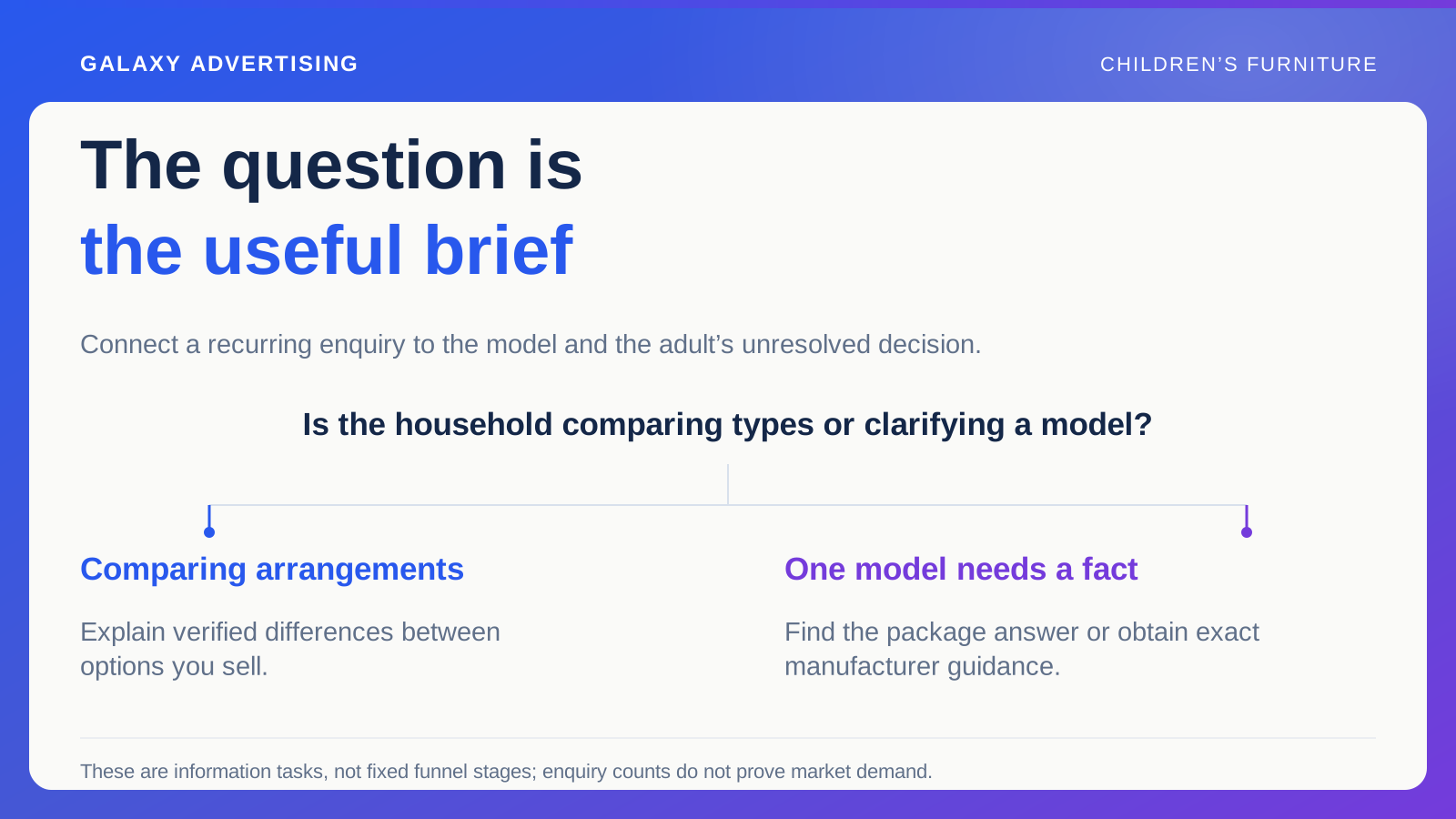
Group questions around dimensions, contents, compatibility, instructions and fulfilment. Which answers exist but are hard to find? Which need verification? For each correction, name the missing fact, its source and where the buyer needs to see it.
That gives a better work list than “make it more persuasive”. Accurate description and reliable guidance help the adult assess the purchase with less guesswork, while reducing avoidable confusion before an order. Good presentation supports that responsibility. It doesn't replace the facts the household needs.