What if the bed in your advert is available, but the arrangement everyone thinks they are buying isn't? A collection can be marked in stock while the finish, storage or other component in the photograph tells a different story.
That leaves shoppers asking which version they can actually order. Your product priorities need to start with a supportable offer, rather than an attractive family name that hides several quite different arrangements.
Decide exactly what you are promoting
Is this campaign about one configuration, meaning a particular arrangement, a defined package or a genuine comparison across a range? Give that choice a stable reference. Creative and merchandising need to be discussing the same thing before either team gets busy.
A broad collection page can work well when it helps people compare relevant options. The trouble starts when one striking photograph suggests a particular package, then leaves the visitor unable to identify it after clicking.
Write down what someone should recognise. Can they find the arrangement, understand it and order it under the conditions your campaign describes? If that takes a colleague explaining what everyone here already knows, you haven't finished the preparation.
Look inside that in stock label
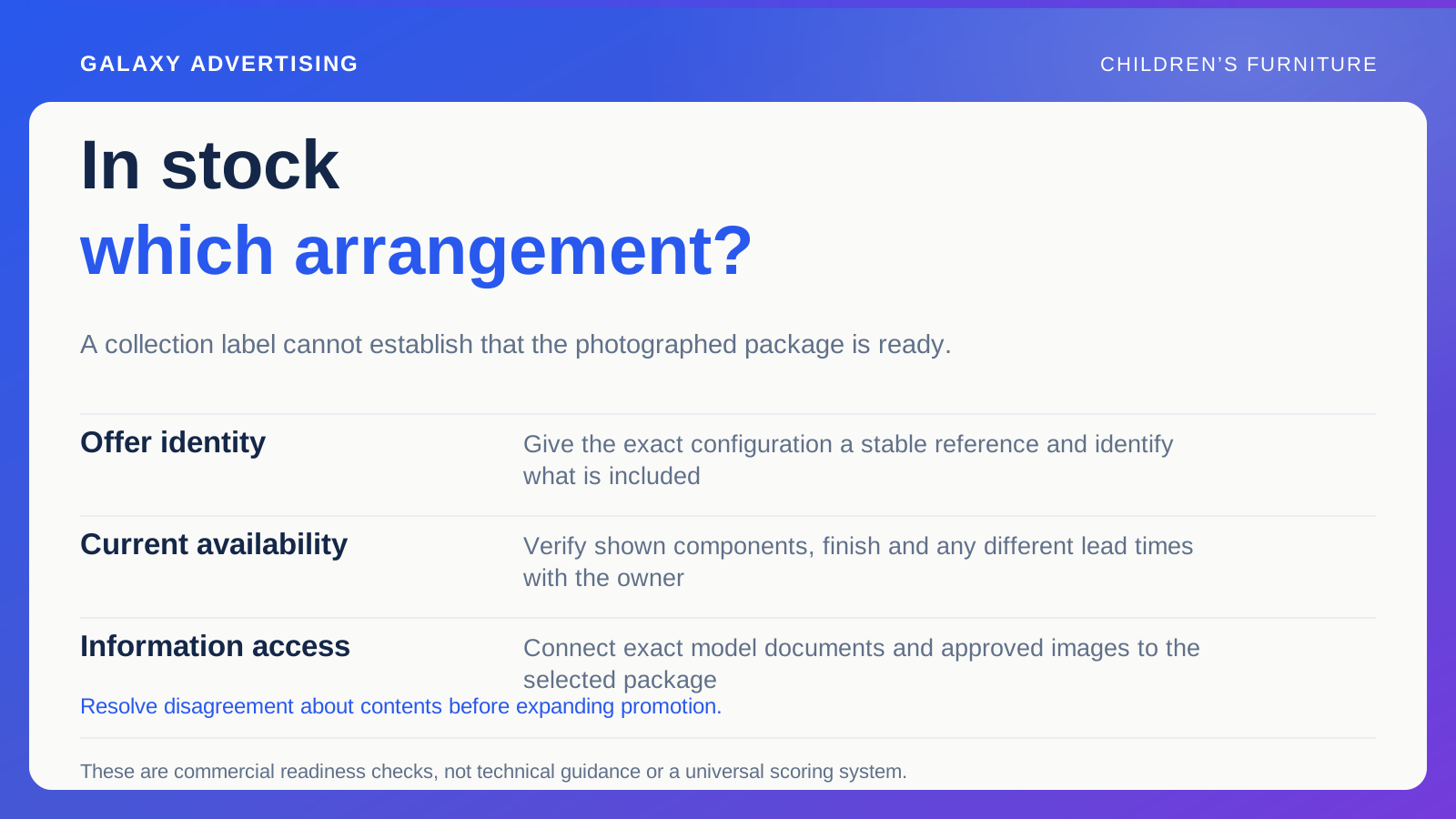
Check the components and options in the arrangement you are showing. The family might be available while one finish has gone, a component is missing or an important addition has a different lead time. The family label cannot answer those questions for you.
Find out who owns the availability record and how changes reach advertising. A manual message can be perfectly reasonable for a small range. What matters is that somebody reliably sends it and everybody understands the responsibility.
Keep that context beside earlier results. If the available package has changed materially, weaker performance does not establish that the buying argument has failed. You might need to change the product emphasis or explain an alternative, rather than commission another creative concept.
Give shoppers information they can use
Review the contents, relevant dimensions and access to current manufacturer information for the exact model. Your team should be able to say which documents belong to the arrangement being promoted, without an expedition through assorted brochures.
Category generalisations cannot replace product specific instructions or compatibility information. Where a fact is unresolved, name the person who can verify it. Until then, keep the assumption out of the promise.
You are checking readiness here, not writing technical guidance of your own. The commercial test is whether a suitable shopper can inspect what they need to decide, and whether staff can answer their questions from the same dependable records.
Make the photograph answer to the package
Go through the visible items. Which are included, which are optional and which are there to style the room? Compare the image with the actual package record before approving the advert.
Edited and generated scenes need precisely the same scrutiny. A convincing image can add a drawer, change the arrangement or alter proportions. Looking polished is not the same as being accurate.
Keep approved references with the asset so the next editor doesn't have to guess from an older promotion. A small, organised source pack makes later production easier and reduces the chance of substituting something that only looks right.
Past sales are a reason to look, not automatic approval
Earlier sales can justify investigating a product. They don't establish that its current configuration deserves the next advertising commitment. The offer and its information still need checking today.
Compare the factors that affect your actual decision: what is available, relevant contribution, meaning the money left after the costs included in your calculation, the clarity of the buying route and the evidence needed for creative. Weight them around your constraints. There is no universal score that can do that thinking for you.
Enquiry volume needs interpretation too. Lots of questions can mean interest, confusion or both. Read the questions and look at eventual orders before treating the count as permission to promote more widely. You want appropriate interest that becomes worthwhile supplied orders.
Have an alternative that really serves the same need
When a configuration becomes unavailable, ask whether another arrangement genuinely does the same buying job. A convenient replacement in your catalogue is not automatically a suitable alternative for the customer.
Explain meaningful differences in contents, dimensions and conditions. If the destination now concerns another package, don't keep the original photograph simply to preserve the campaign's appearance.
Where there is no appropriate substitute, revising or pausing the message can be clearer than sending everyone to the general catalogue. Keeping the offer coherent matters more than keeping every advert active.
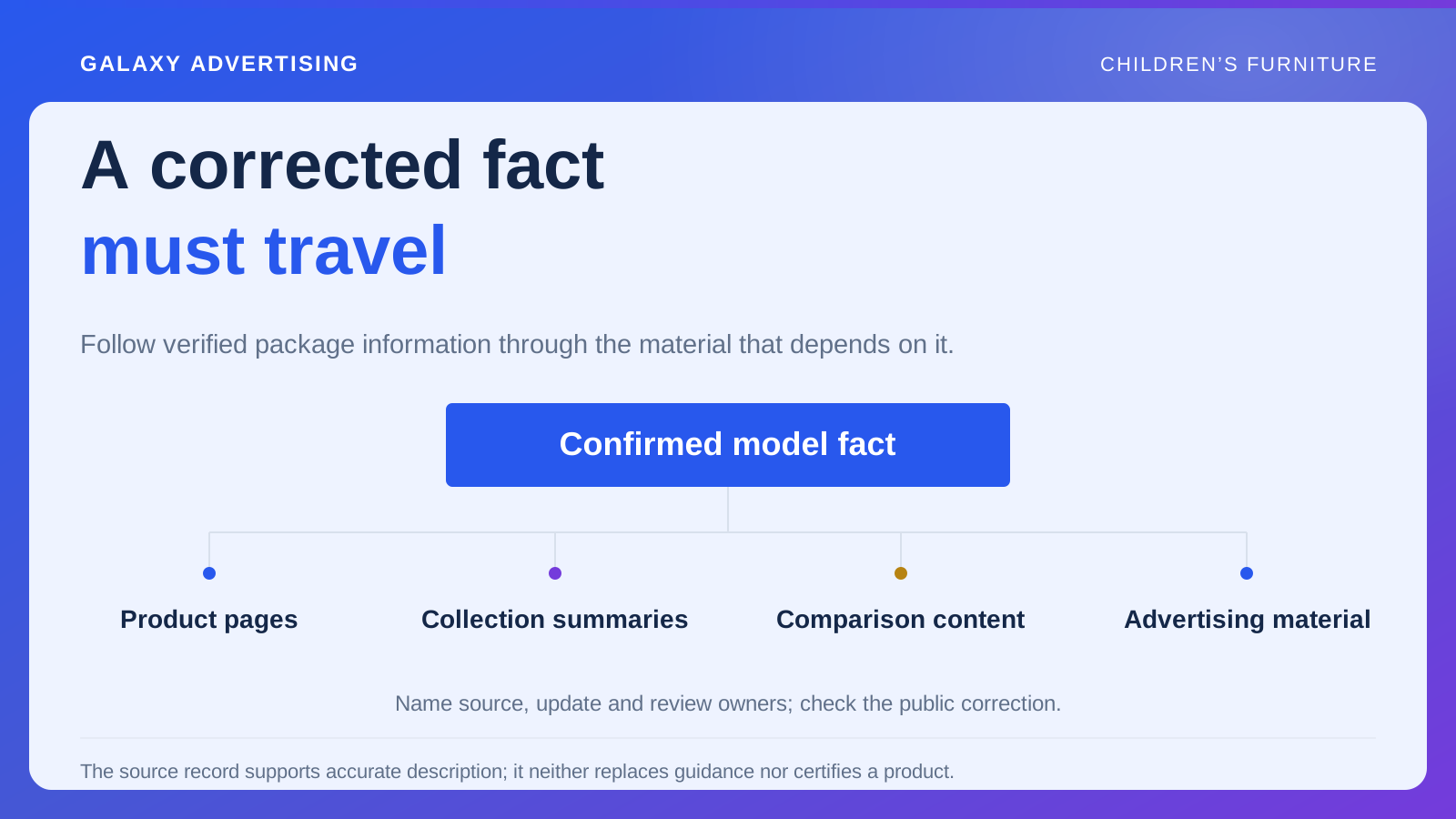
Before labelling the wider range ready, walk through one representative arrangement. Ask merchandising to identify its contents, customer service to find its documents and advertising to follow the destination. Compare the answers without helping anyone from memory.
A disagreement about what is included needs resolving before promotion expands. Once the route makes sense, decide which checks your source records can maintain and which require exception reviews. That keeps the work proportionate while stopping a general collection status from concealing differences between real offers.
Keep a small record people will actually maintain
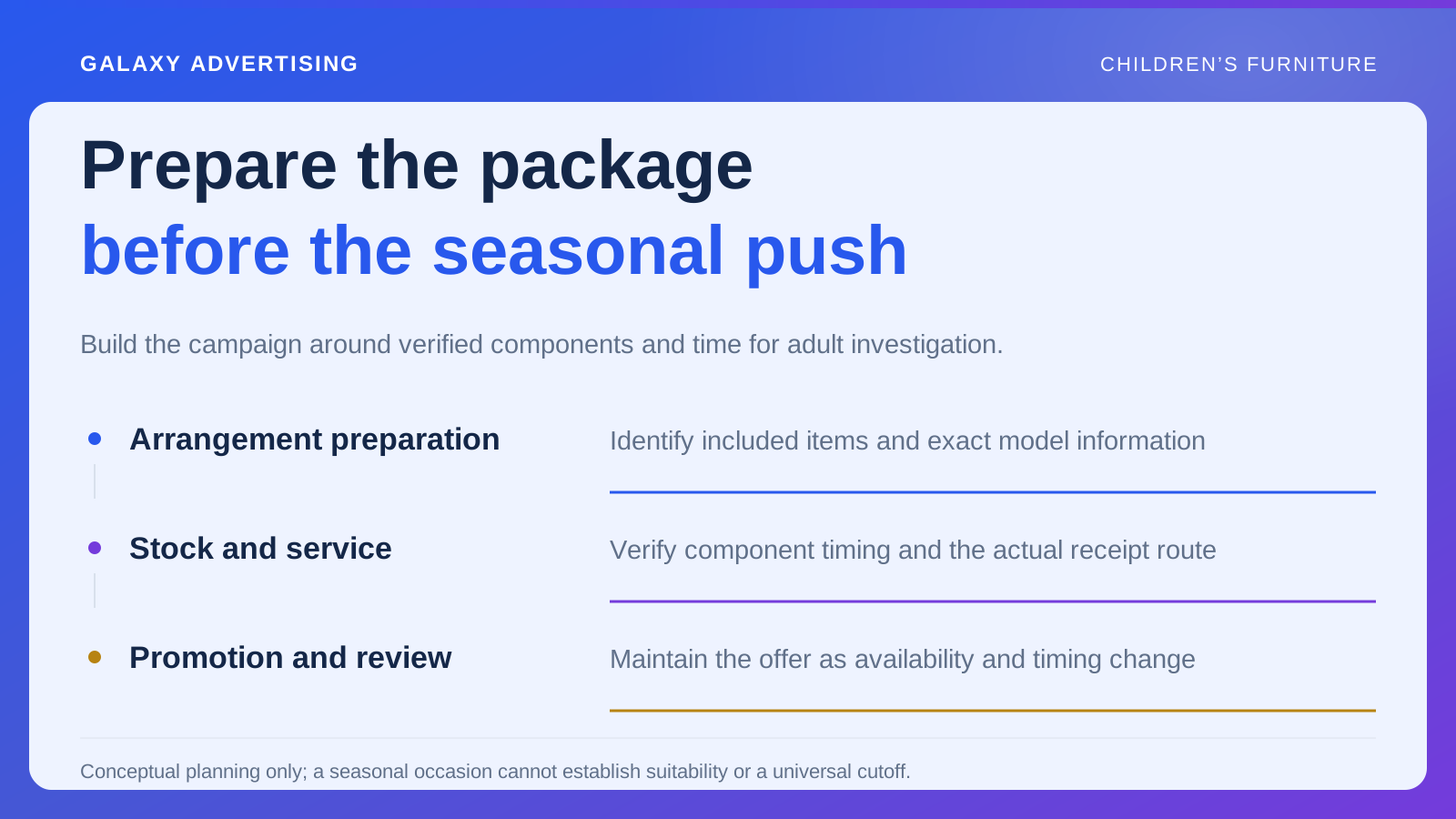
For each priority configuration, keep its reference, represented contents, reliable information sources, availability owner and important exceptions. Include why it deserves emphasis now, so the next person sees the commercial reasoning as well as the product details.
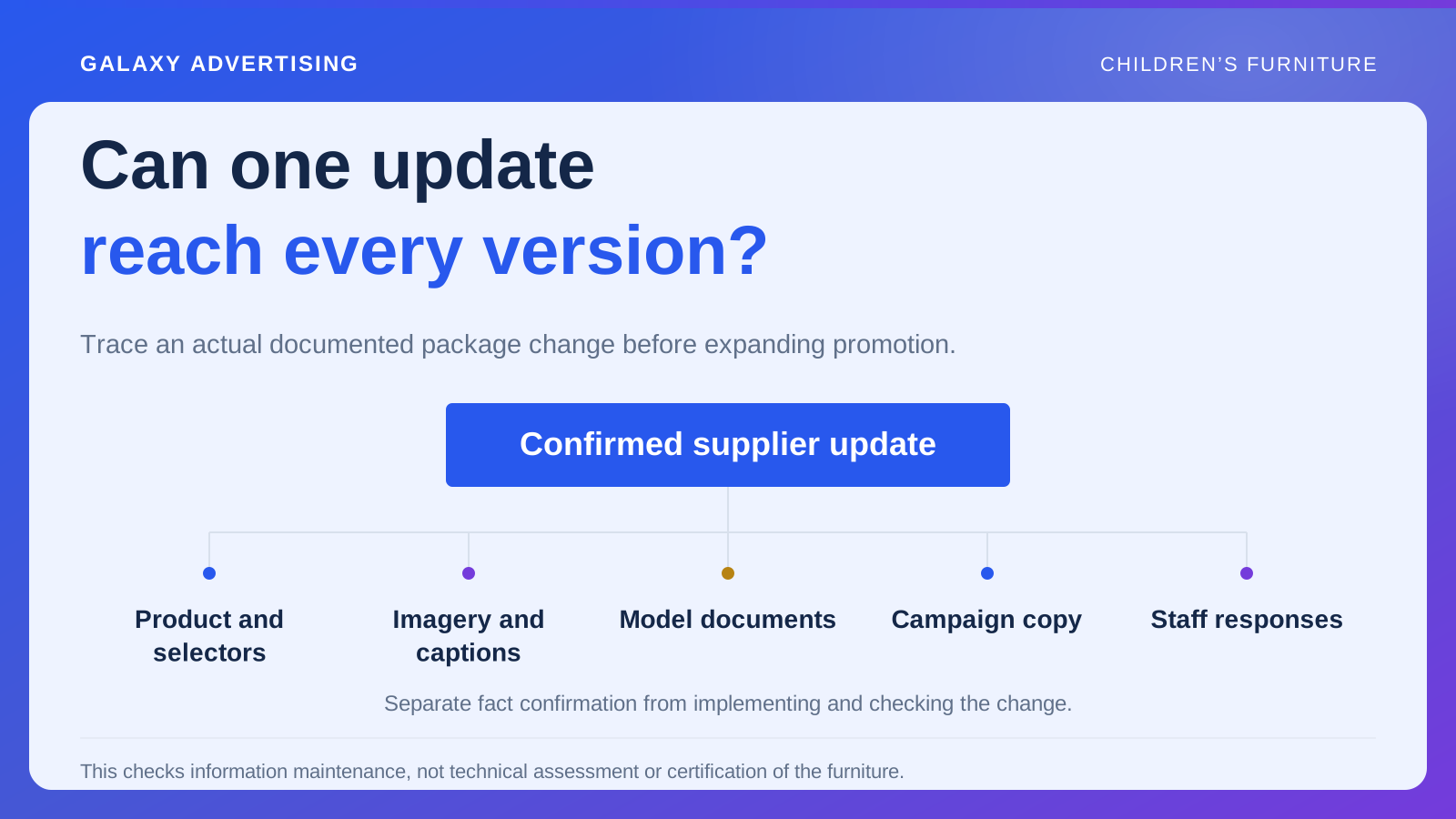
Revisit that record when the package changes or the campaign exposes a recurring question. The aim is to improve the offer and its explanation, rather than leave customer service answering the same avoidable ambiguity indefinitely.
An appealing collection gives you something to show. An identifiable, explainable and available configuration gives you something dependable to sell. Your creative and performance reviews become much more useful when everyone can point to the same actual purchase.