A parent is looking at your bed page, trying to work out whether the storage in the picture comes with it. The copy promises complete peace of mind and calls it perfect for every growing family. Neither sentence answers the question.
Warmth has its place. But reassurance earns its keep when it helps someone inspect the offer, rather than implying something your records cannot support. A verifiable reason to choose is more useful than another comforting adjective.
Find a difference you can explain plainly
Start with a product or service distinction that matters to the buying task and exists in the actual offer. Perhaps it is a documented storage arrangement, clearly defined package contents or straightforward access to information for the exact model.
Don't manufacture technical superiority because the headline needs more sparkle. If you sell an identical model available elsewhere, you cannot turn it into uniquely better construction through enthusiastic wording.
Explain the difference in ordinary language before writing the promotion. What does the customer receive or get to assess? If the team struggles to answer, you may have an aspiration rather than a supportable proposition. Better to discover that around the table than after the advert is approved.
Drawers in a picture prove less than you think
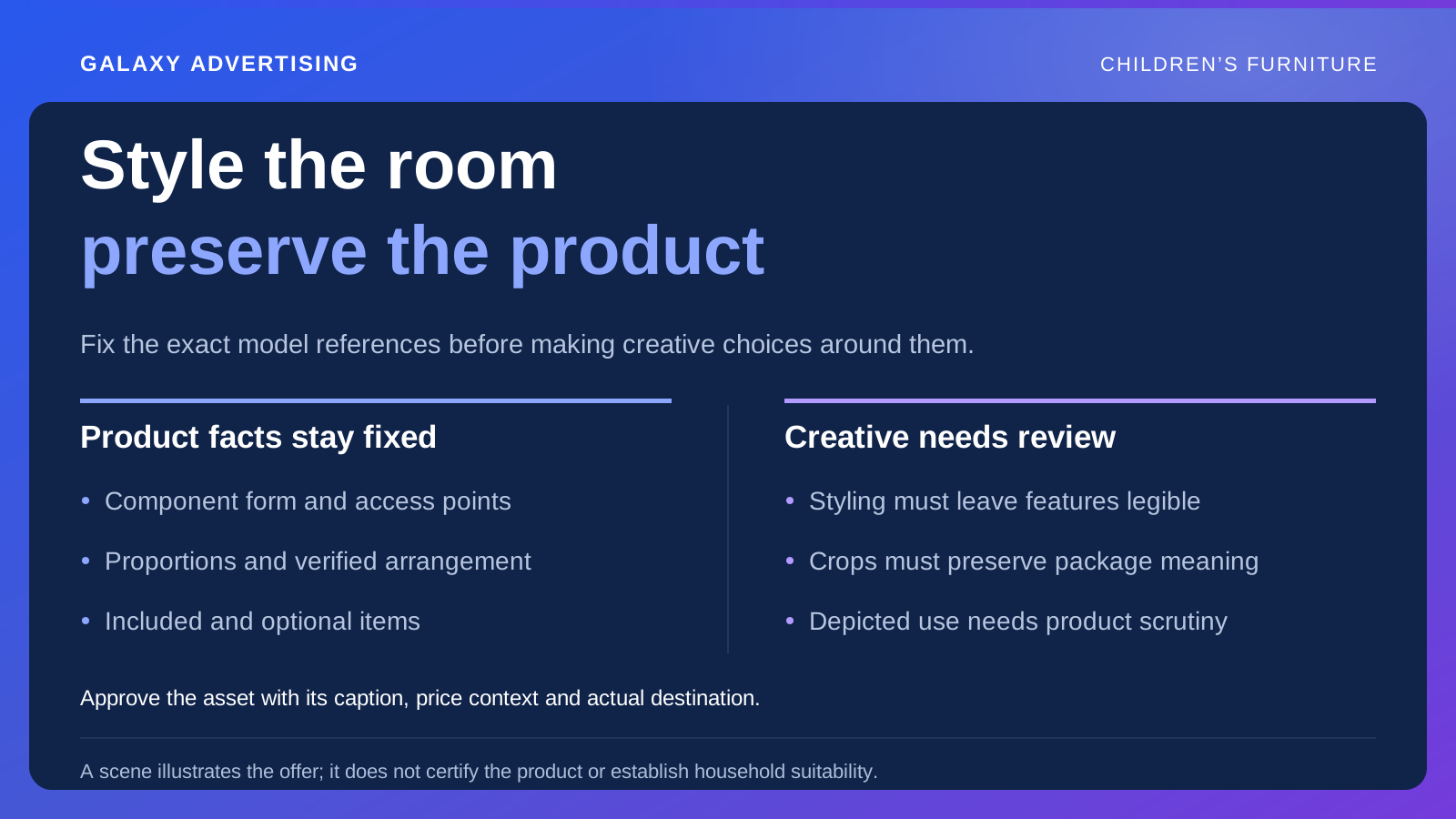
An accurate image can show that an arrangement includes drawers. It cannot establish that the furniture suits every child, room or use. Keep the visible feature separate from that much broader conclusion.
Use current manufacturer information for guidance about the specific model, and make it easy to find. Your summary should help people reach the relevant conditions and instructions, rather than quietly replace them.
Ask the product owner to review what the language implies as well as what it literally says. Would a reasonable shopper take away an assurance that the supporting record does not establish? That is the useful editing question. A technically careful sentence can still leave an overly broad impression.
Put the right evidence beside the claim
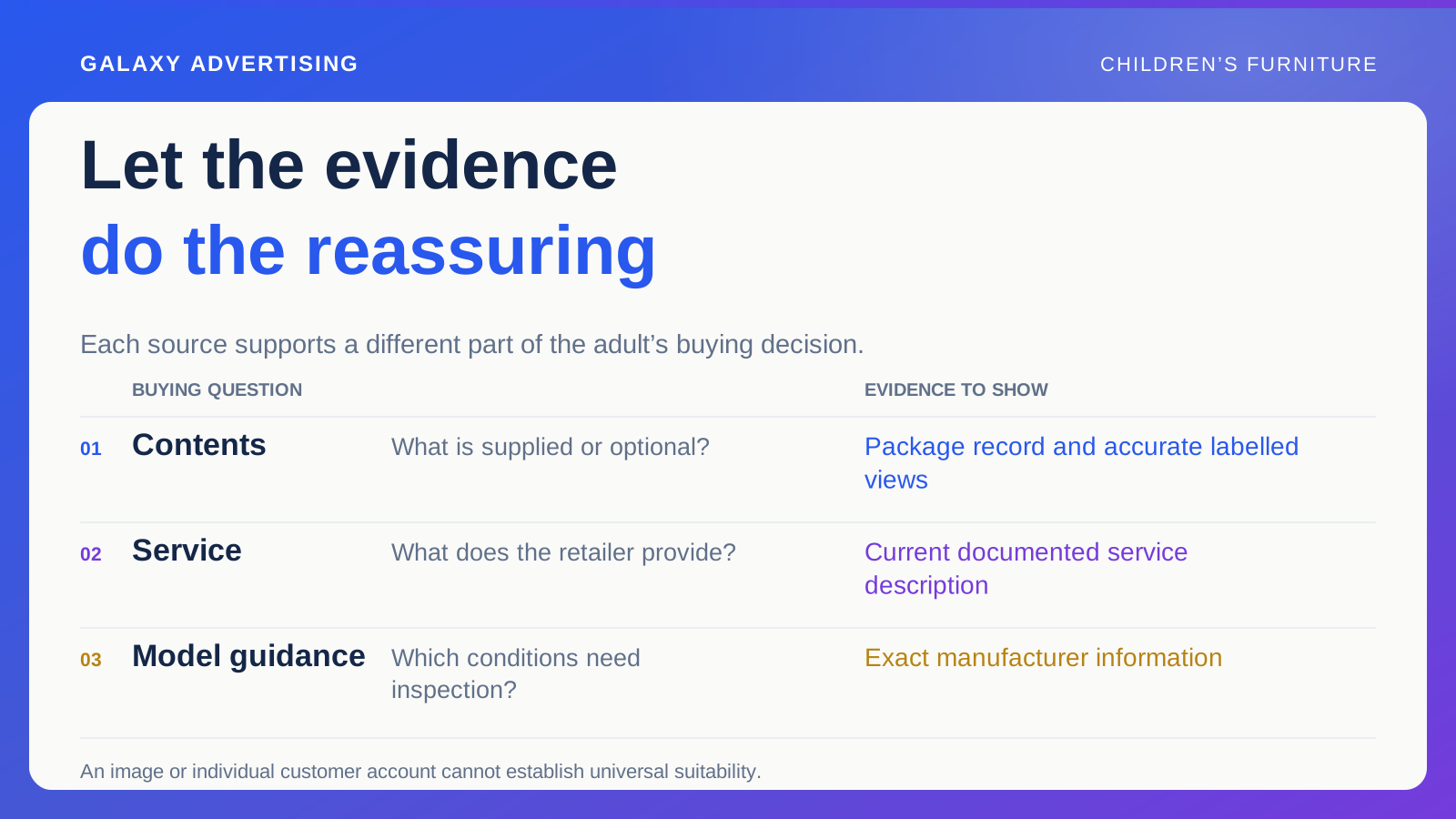
If you are explaining included storage, show accurate views identifying the components. If the proposition is a package, label what is supplied and what is optional. If it concerns service, describe the documented service instead of asking a pleasant room photograph to do the explaining.
People should understand the evidence where the claim appears. A broad promise followed by a hunt for essential qualifications makes the buying decision harder, even if the information exists somewhere.
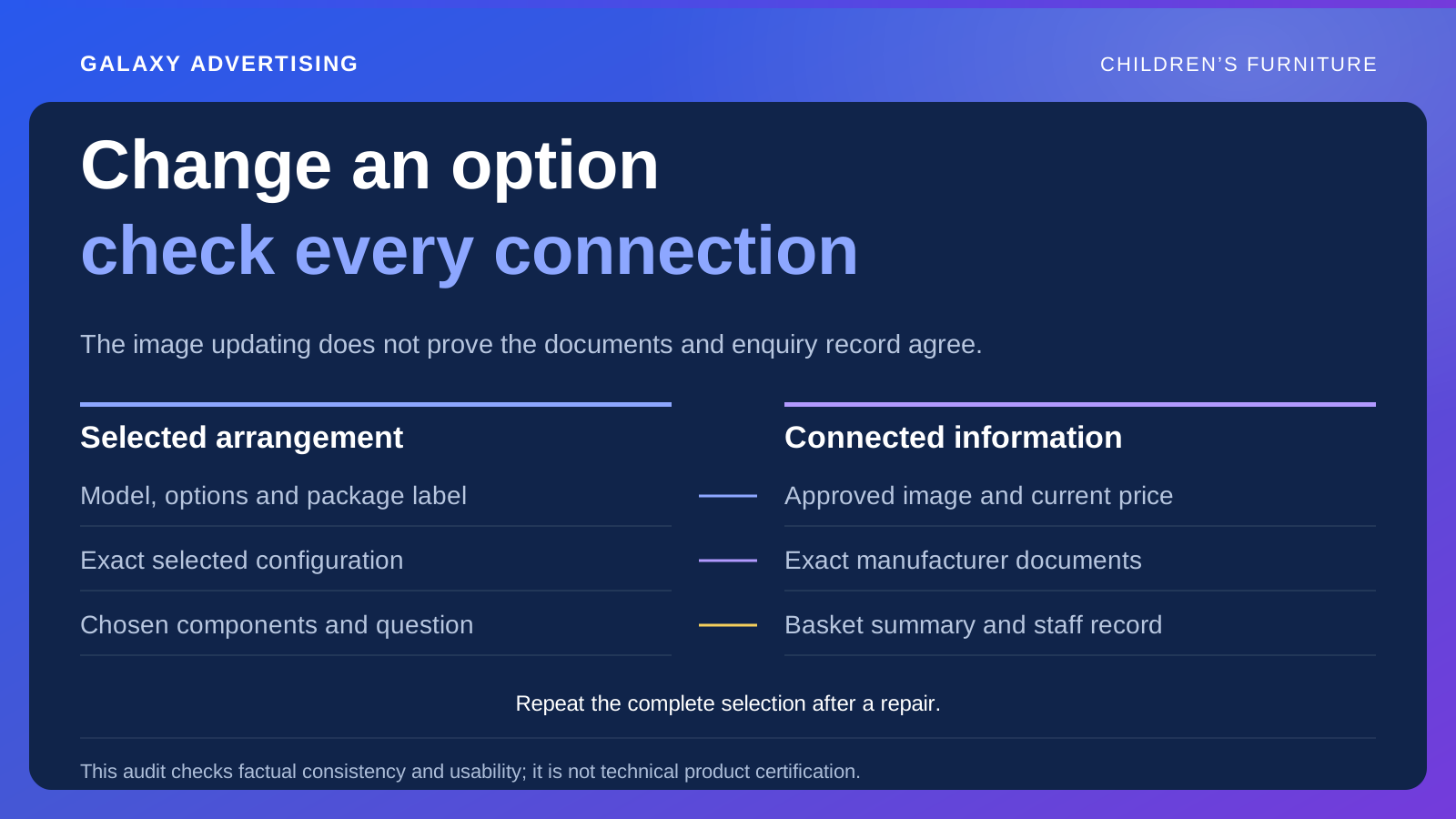
Keep production references organised. When an edit introduces another image or arrangement, check that the words still have support. Approval of a general theme is not approval of every later version. The offer may have changed while the wording stayed put.
A higher price isn't an explanation
Price might reflect components, finish, availability or service. On its own, it does not prove an unspecified product advantage. Name the relevant difference rather than letting the shopper infer whatever premium happens to mean to them.
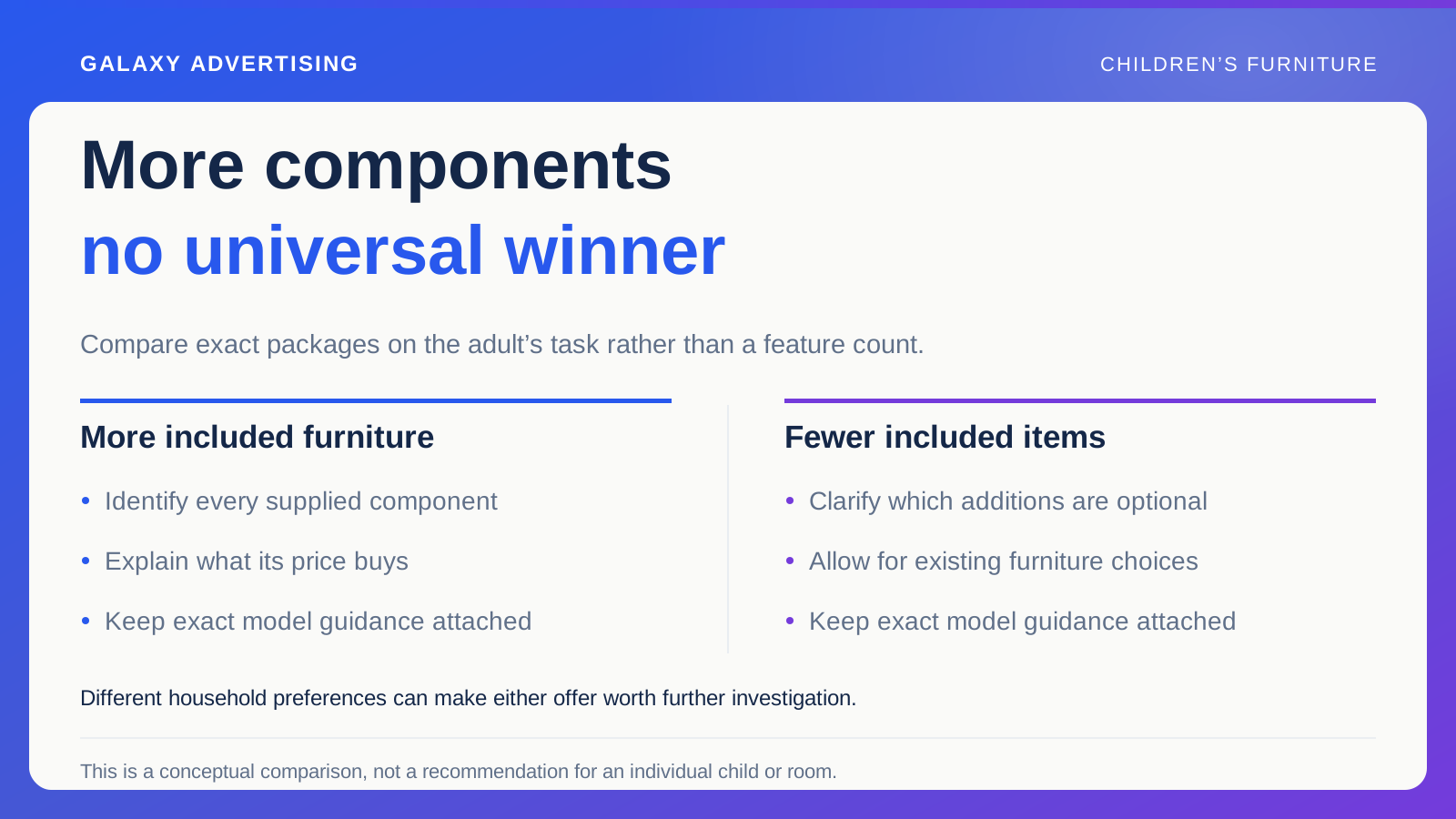
Where comparison helps, compare equivalent packages. A base bed and an arrangement containing extra furniture are not the same purchase with different attitudes to discounting.
In a hypothetical package discussion, you could separate the furniture price, optional additions and delivery service. That makes the choice understandable. It does not establish that the most expensive combination is the right choice for every household. Your job is to clarify the decision, rather than make the largest total sound automatically wiser.
Let the destination help people inspect the offer
Send the advertising argument to the exact model or a focused comparison serving the same task. Label contents, relevant measurements and source documents clearly enough for someone who has never seen the range before.
Try the route on a phone with that person's knowledge. Your team may instantly recognise several similar arrangements. A visitor has a photograph and whatever you have told them.
Make enquiries specific enough to identify the package and question. An easy way to ask about one arrangement can be more useful than a general contact invitation. Give customer service the context they need to answer from reliable records, without making the customer reconstruct their search in a message.
Let customer accounts say what they actually establish
A customer's account describes their own purchase and the offer they received. Preserve that context. It should not turn into a universal promise about every model or order because the wording sounds persuasive.
Check that its accompanying image shows the same arrangement. Attaching praise to another configuration can suggest something the original account never supported.
Use feedback to find practical questions for your product page and creative brief. A positive individual experience matters, but it does not replace manufacturer documentation or establish every property you want to communicate. Evidence becomes useful when you let each source answer the question it can actually answer.
Before release, ask the approver to identify the support for each important phrase. It could be a package record, an accurate view or a current service description. If nobody can locate support, remove or narrow the assurance. Confidence in the writing is not evidence.
Keep that brief review with the approved version. The next editor can then see the boundaries, and the business can reuse verified facts without repeatedly debating what the original promise was meant to mean.
Check whether people can now find an answer
Ask an unfamiliar reviewer what they can verify from the revised page. Can they identify the package, find the relevant information and understand the service? You need concrete observations, rather than a verdict that the tone feels reassuring.
Then look at recurring enquiries. If people still ask what is included, changing the adjectives has not resolved the problem. Repair the information route rather than turning the reassurance up another notch.
Trust has a practical side. Give the household a supported difference they can see, conditions they can find and evidence used within its proper scope. That offers firmer ground than a promise so broad that every shopper hears something different.