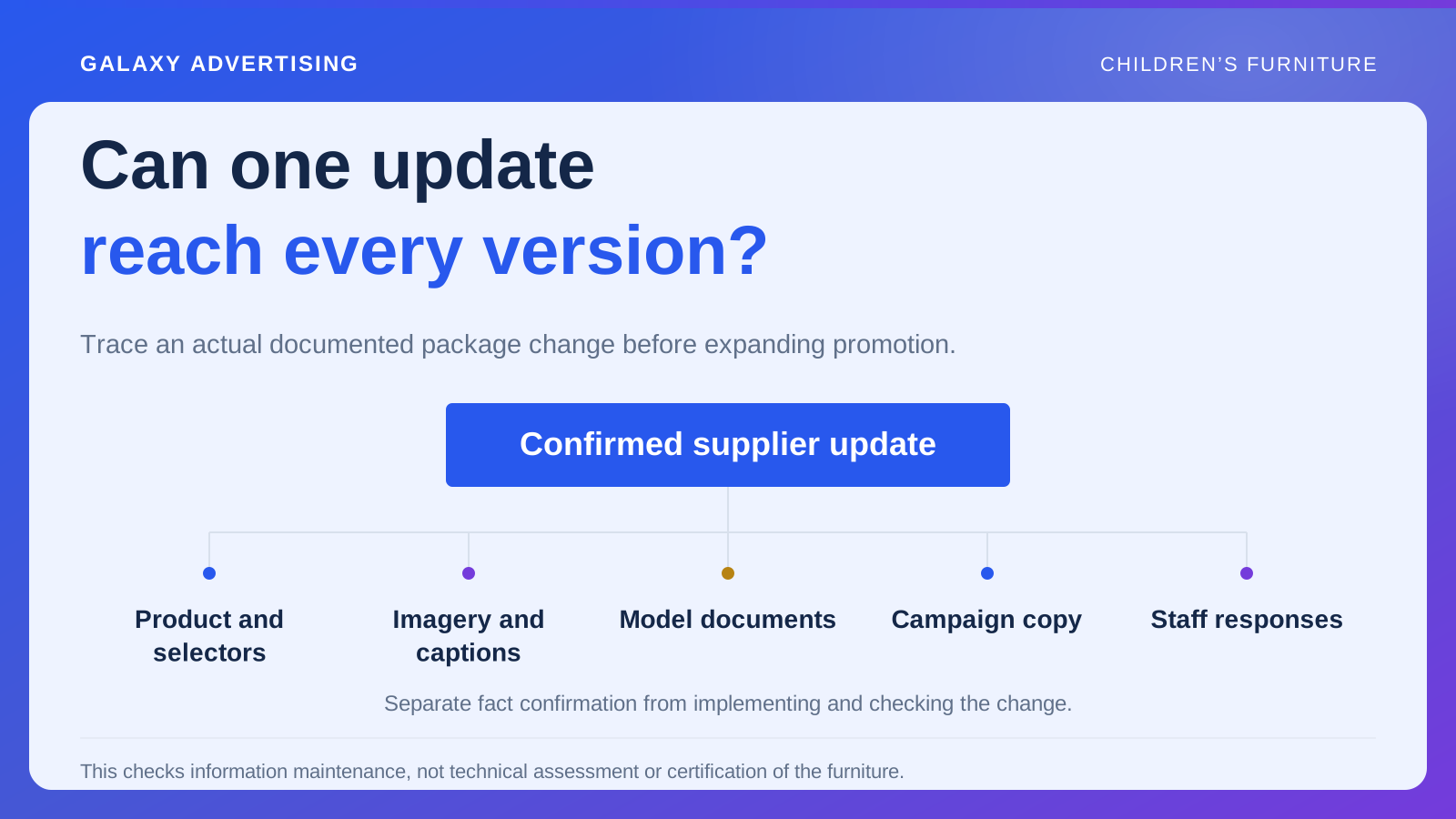
If a supplier changed a bed package today, would every customer see the same updated offer?
You could correct the description while an older storage arrangement stays in the room image and a saved enquiry reply still links to the previous document. More promotion then brings more adults into several versions of the same purchase.
Before expanding, follow a representative change through the business. You're checking whether information stays dependable, rather than technically assessing or certifying the furniture. Growth would multiply an unresolved maintenance problem.
Choose a change that matters to the purchase
Use a documented update you actually need to communicate: revised contents, an option name or information linked to a configuration. Identify the exact model and source establishing the change. You need a real requirement, rather than one invented for the exercise.
Ask the supplier relationship owner to confirm current facts and which materials they replace. That gives everyone an agreed starting point instead of several plausible interpretations of the latest file.
Record the consequence for the customer. A changed included component matters differently from a decorative image adjustment. Explain that difference so people can identify affected routes. A general instruction to “update the product” leaves each team deciding what you meant.
Find where the same fact appears
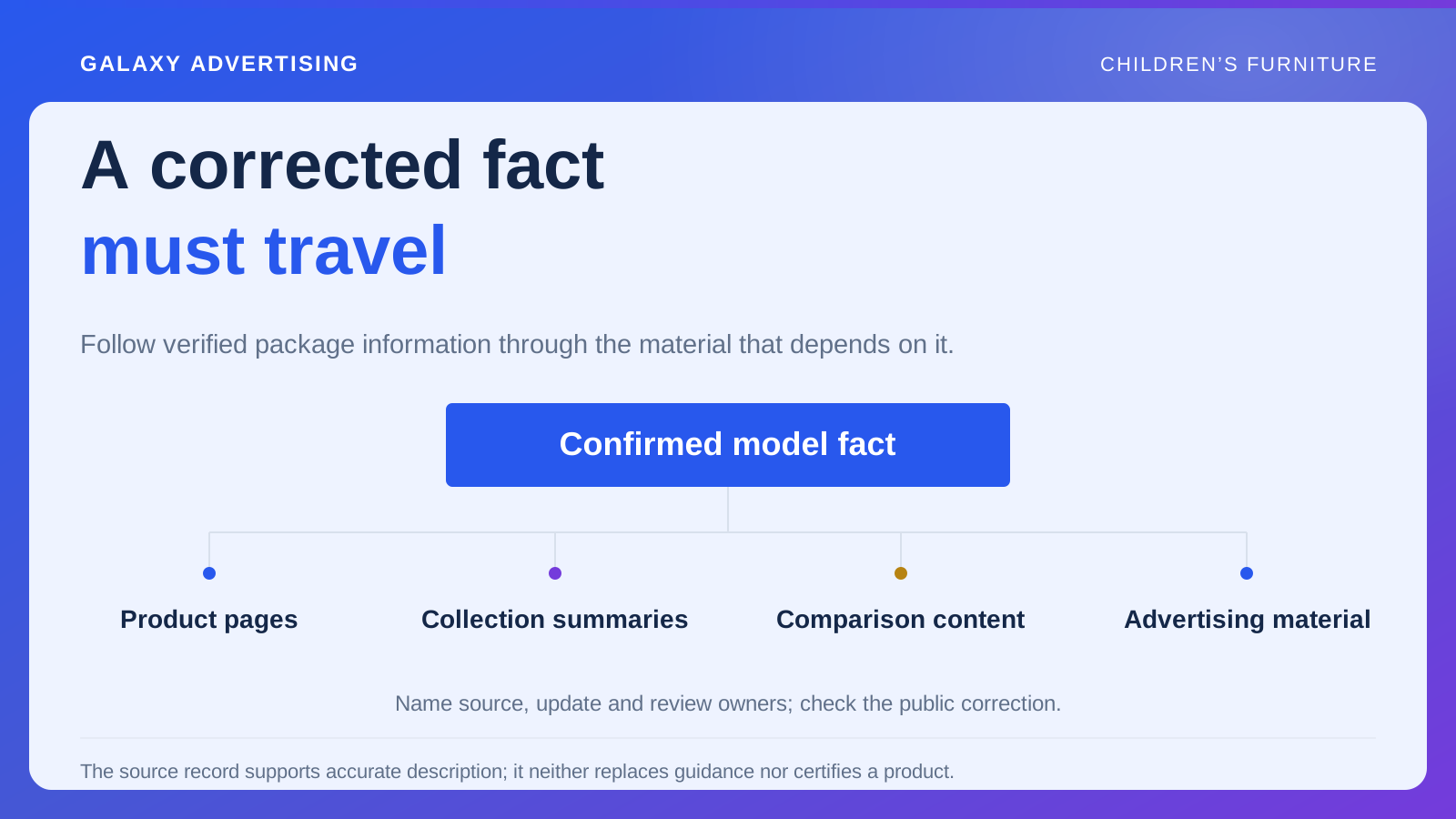
Inspect the product page, package selectors, imagery, downloads, campaign copy and relevant staff responses. Include other routes where your business genuinely uses that detail.
Separate authoritative sources from summaries. Where does the verified fact originate, and which presentations depend on it? Without that distinction, independently edited versions can each start looking like the current record.
Keep the map practical. You don't need every incidental collection mention. Focus on places where the change could alter an adult's understanding of the exact purchase or the information used to investigate it. That makes the review manageable while retaining the connections that matter.
Separate confirming the fact from changing the wording
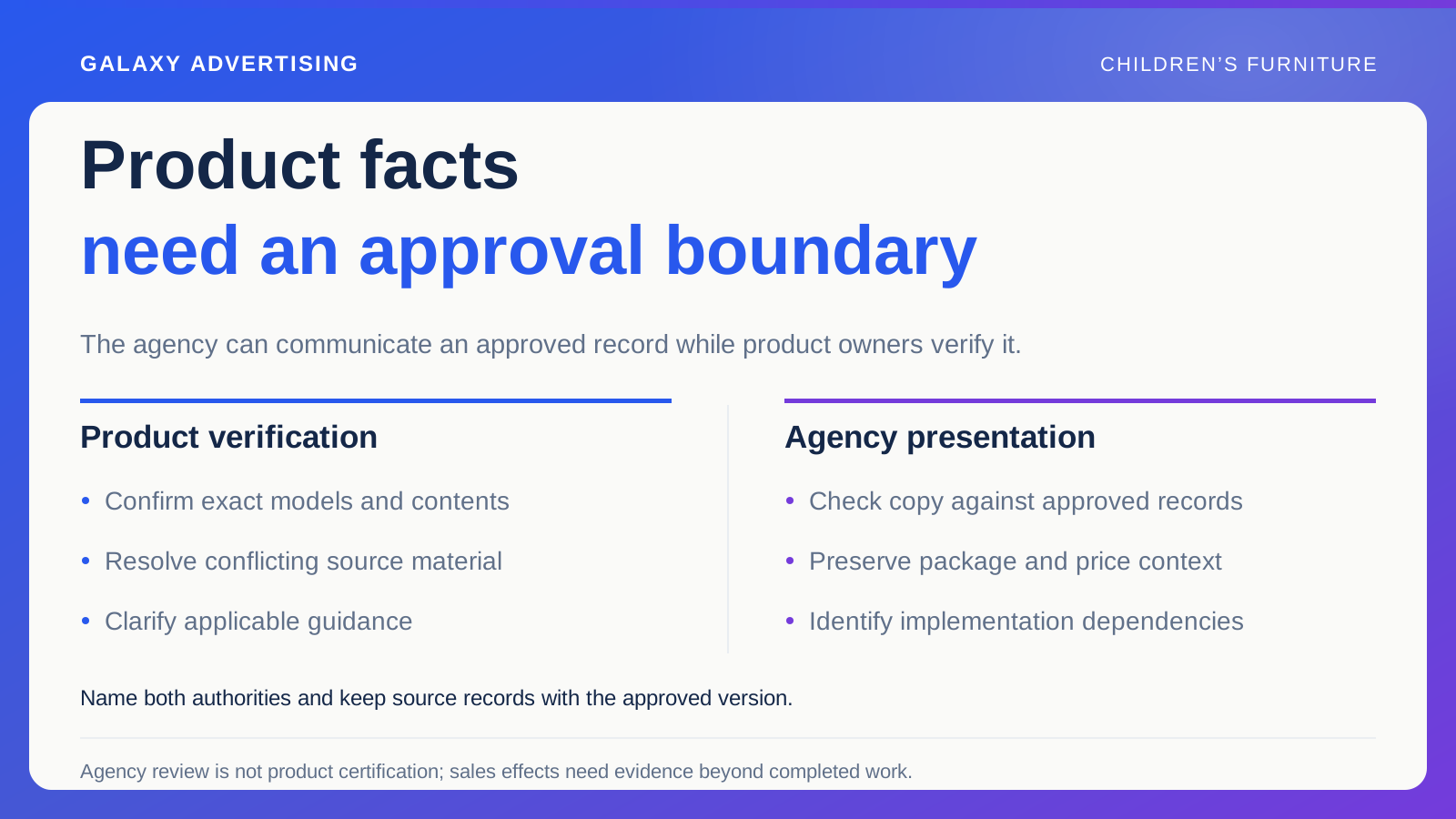
Name who verifies the information and who changes its different presentations. A writer or campaign manager can implement approved wording without being qualified to establish an uncertain product requirement.
Give unresolved questions an escalation route. If supplier documents conflict, don't ask marketing to pick whichever version makes the clearest sales message. Obtain a verified answer from the responsible source. Clear prose can't settle a disagreement between product records.
Keep approval records usable: model, change, source and person confirming it. A large sign off document isn't valuable if ordinary updates encourage people to work around it. The process needs to survive the work it is supposed to support.
Try the update through an actual configuration
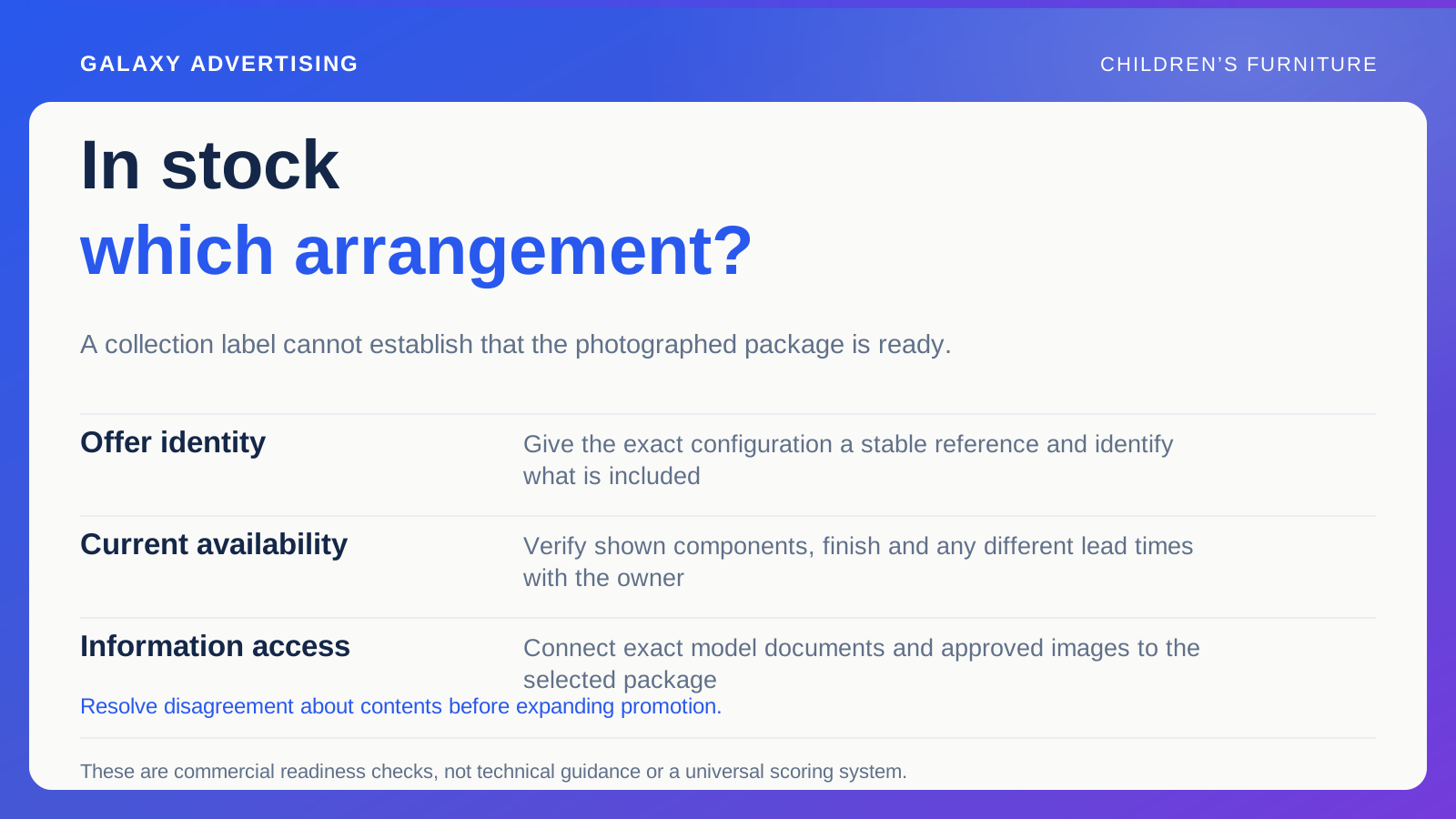
Use customer controls to select the affected package. Inspect images, component labels, relevant price and documentation attached to that choice. Check what an adult really encounters while comparing the offer.
Don't stop at the first page load. One state can be correct while another option still presents the earlier arrangement. The ordinary choices customers make belong in verification, rather than being treated as exceptions to an otherwise approved page.
Follow a representative enquiry or authorised test record far enough to see what the receiving team gets. An accurate display can still send an outdated package name into the operating system. Staff then have to resolve confusion when confirming an order or answering a later question.
Agree what happens before an uncertain fact is settled
Decide how to promote an offer whose material details aren't yet confirmed. The response should reflect the uncertainty. A scheduled campaign isn't a reason to keep presenting a confident purchase promise.
Identify who makes the commercial decision and who implements it. Pausing an asset, narrowing a featured package and delaying a listing can have different consequences. Give the team a route for the actual situation, rather than a universal response that ignores it.
Keep access to accurate information central. You don't need to eliminate every possible question before trading. You do need to avoid presenting an unresolved fact as settled while asking a suitable customer to rely on it. That distinction makes the decision proportionate without hiding the gap.
Understand the maintenance before adding more packages
Use the exercise to see the effort involved in keeping one offer coherent. Count the sources, handovers and presentations, rather than only the time needed to upload another image.
Look for a specific improvement that reduces repetition: a maintained product reference, reliable document mapping or inventory of active campaign assets. These can support dependable updates without turning every colleague into a product specialist.
Don't replace the work with a generic description copied across the range. Packages can differ meaningfully. A consistent process should preserve those differences, rather than erase them to improve the publishing count.
Record shared components too. A change can affect several packages even when the supplier update names one reference. Establish how the team finds connected offers before declaring the correction complete. Otherwise, one accurate page can sit beside another still relying on the same outdated detail.
Expand on a process the team can maintain
Choose the next range or campaign scope around available information and staff capacity. A promising product could need preparation before promotion. Another could already have a dependable route. Treat readiness as part of the choice, rather than assume every listing is equally prepared.
Agree the evidence for reviewing expansion. Include material corrections, recurring package questions and the commercial result, with relevant stock and service context. More products listed or more money spent doesn't independently establish a stronger programme.
A useful change exercise shows where verified information lives, how it reaches customers and who handles uncertainty. Those connections need to keep working after launch. A product page being checked once is a record of one moment, not a promise that every future version will stay accurate on its own.