Website access is not enough to produce a useful conversion audit. A specialist can inspect the interface without knowing which delivery promise is current, which product fields are unreliable or which changes need supplier approval.
Handing over the theme with a request to improve sales leaves those operating facts missing. A polished audit can then become a collection of plausible ideas resting on assumptions nobody has checked.
Give the specialist enough context to separate a functional fault, an information gap and a commercial constraint. Explain who can act too. A shared understanding of the offer turns inspection into recommendations your business can implement and maintain.
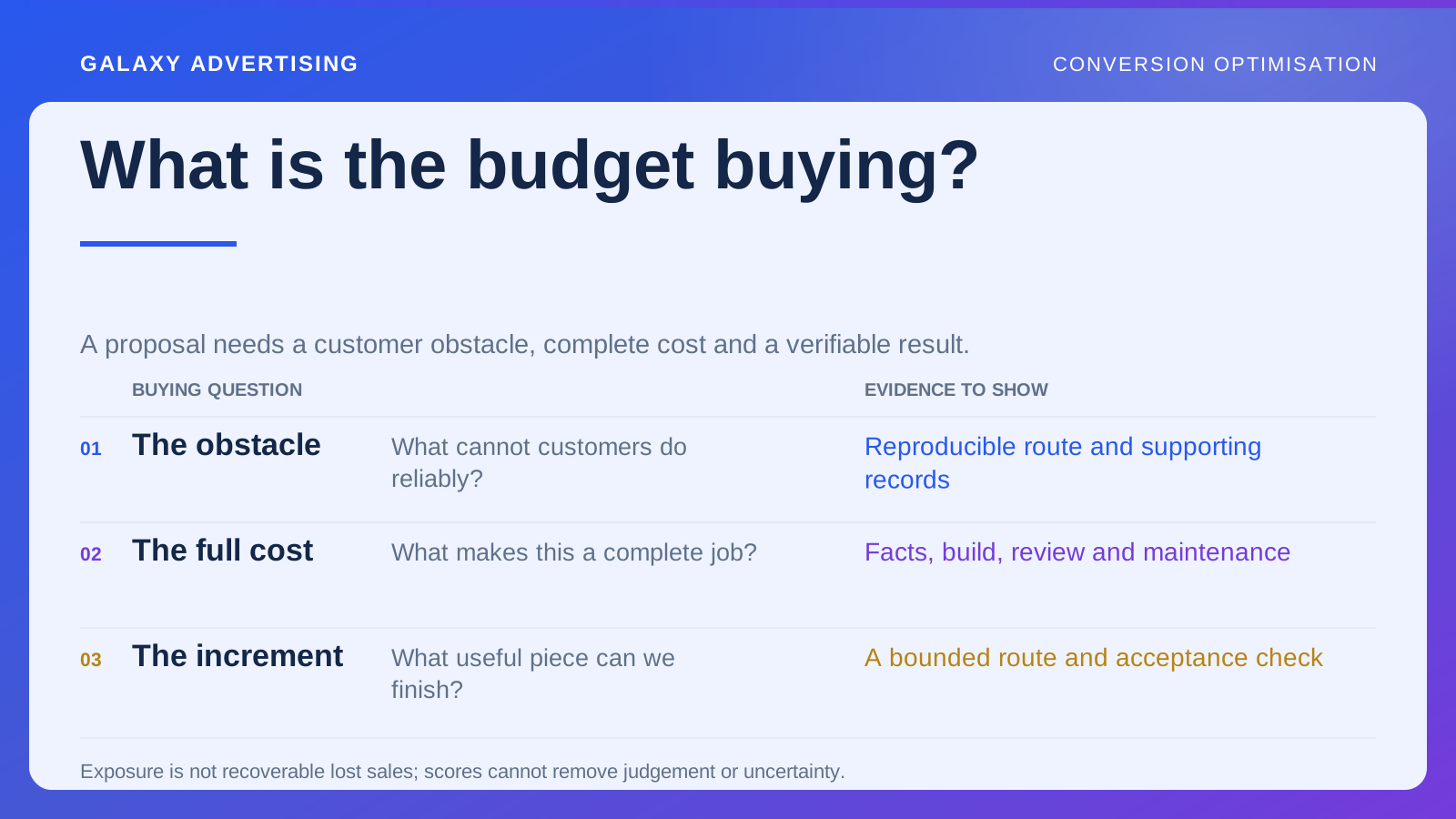
Start with a customer problem you can describe
Choose a specific route or recurring question. Perhaps people regularly ask what a bed package contains, or struggle to select a configuration on a phone.
Provide the observations without prescribing their explanation. “Customers ask whether the mattress is included” identifies something to investigate. “The page lacks trust” jumps to a much broader diagnosis before the specialist has examined the question.
Explain the commercial objective. More suitable orders, fewer avoidable enquiries and fewer corrections after purchase can overlap, yet suggest different priorities. State which outcome this work should support. The specialist needs to understand what your business is trying to improve, alongside what customers are struggling to establish or complete.
Identify which facts define the real offer
Name the sources for specifications, contents, prices, availability and services. Include the people able to resolve differences between those sources and the live page.
The website is not automatically authoritative just because it is what the specialist can see. An audit can reveal contradictory statements. Deciding which represents the actual offer requires someone who knows the underlying product or operation.
Flag exceptions early. One family might have a different delivery promise, a configuration might depend on supplier lead time, and an accessory might be optional. These distinctions prevent a universal summary making pages look clearer while becoming less accurate. The brief should make them available before recommendations are built around the wrong assumption.
Explain what your evidence can and cannot establish
Supply relevant reports and define the important measures. Include known event changes, missing records and reporting differences that could alter interpretation.
Share customer questions and support observations appropriately. Say whether they come from a systematic record, selected sample or a few remembered examples. All can reveal useful uncertainties, but they carry different limits. The specialist should not have to infer how the evidence was collected.
Leave out unnecessary personal information. The task is to understand the customer problem and commercial consequence, rather than unrelated details about individual shoppers. Where sensitive operational records are genuinely needed, ask the responsible people to agree an appropriate sharing approach. Give the investigation the relevant context without filling the brief with information it does not need.
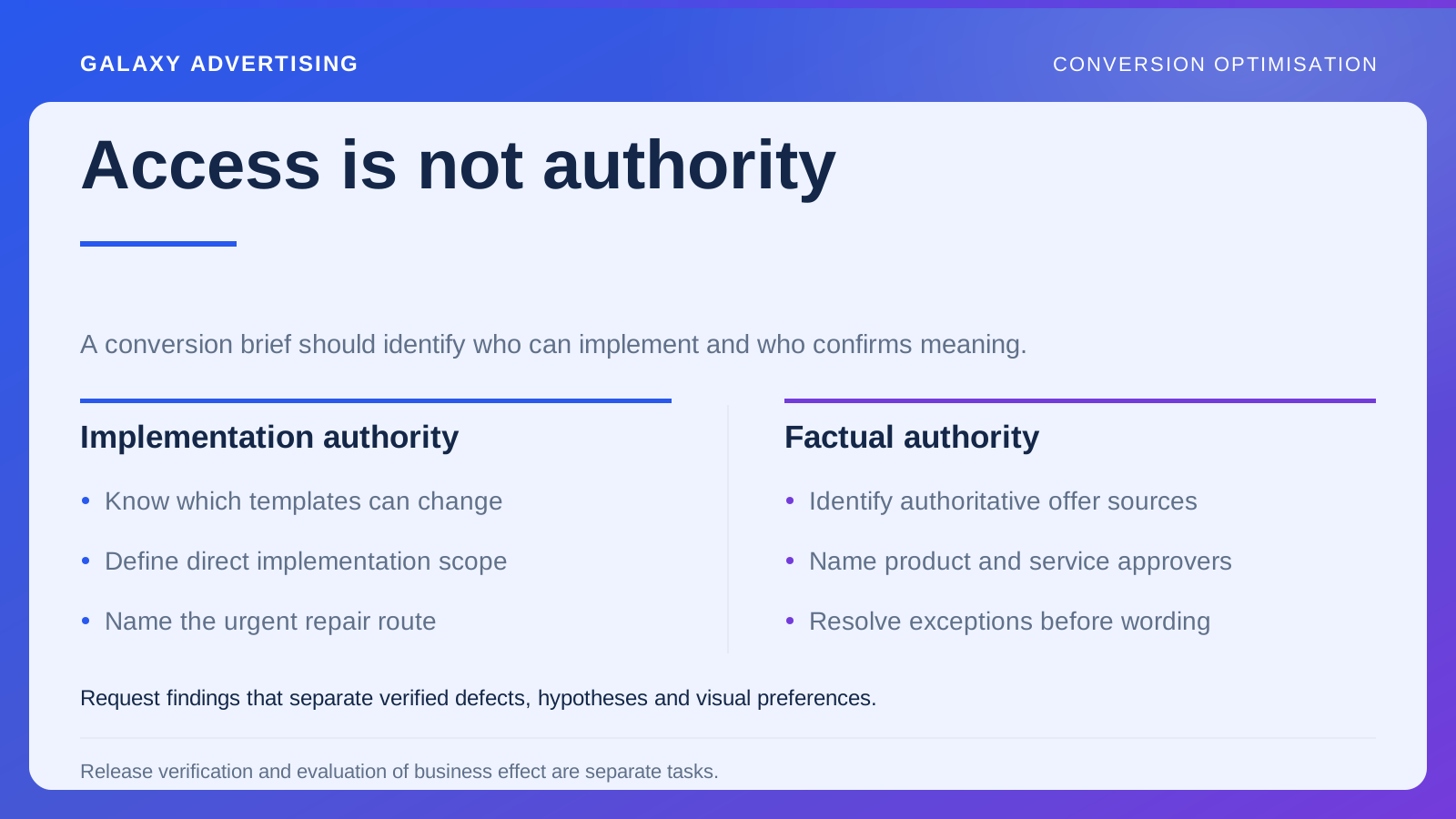
Agree what access allows the specialist to change
List who can alter templates, product data, service wording, pricing and measurement. Having technical access does not confer authority over every part of the offer.
Specify what the specialist may implement directly and what requires another team's approval. Development can move a delivery statement while operations verifies its meaning. A writer can clarify the package while merchandising establishes its components.
Include an urgent route for factual and functional faults. If the wrong configuration appears or an ordering control fails, the specialist should know whom to contact. Agree that route before an incident creates pressure to improvise. Clear responsibility helps the people doing the work know which decisions they can make and which need an authoritative answer.
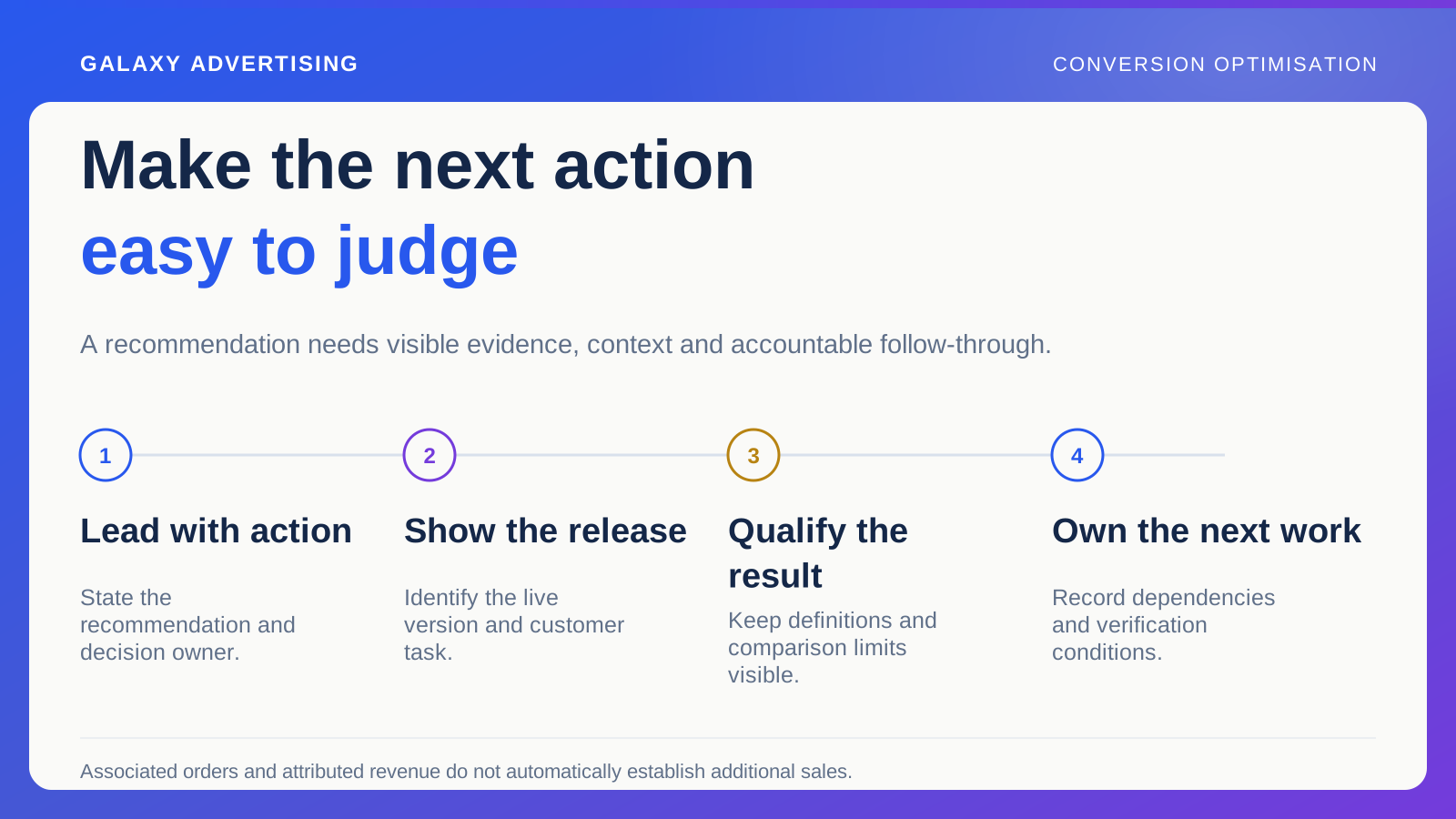
Ask the findings to show their level of certainty
A useful finding names the page, observed condition, likely customer consequence and supporting evidence. It distinguishes a verified defect from a hypothesis and a visual preference.
A reproducible selector error calls for a repair. Earlier delivery information could need a testable explanation. A preference for another colour is not proof of lost revenue. Keep those reasons for action visible in the audit.
Request dependencies and the people needed to resolve them. “Clarify assembly” becomes actionable when it names the uncertain package, missing fact and operational owner. Without that detail, a comprehensive audit can simply leave you with a larger backlog that is no easier to use. The value lies in what the business can do with each finding.
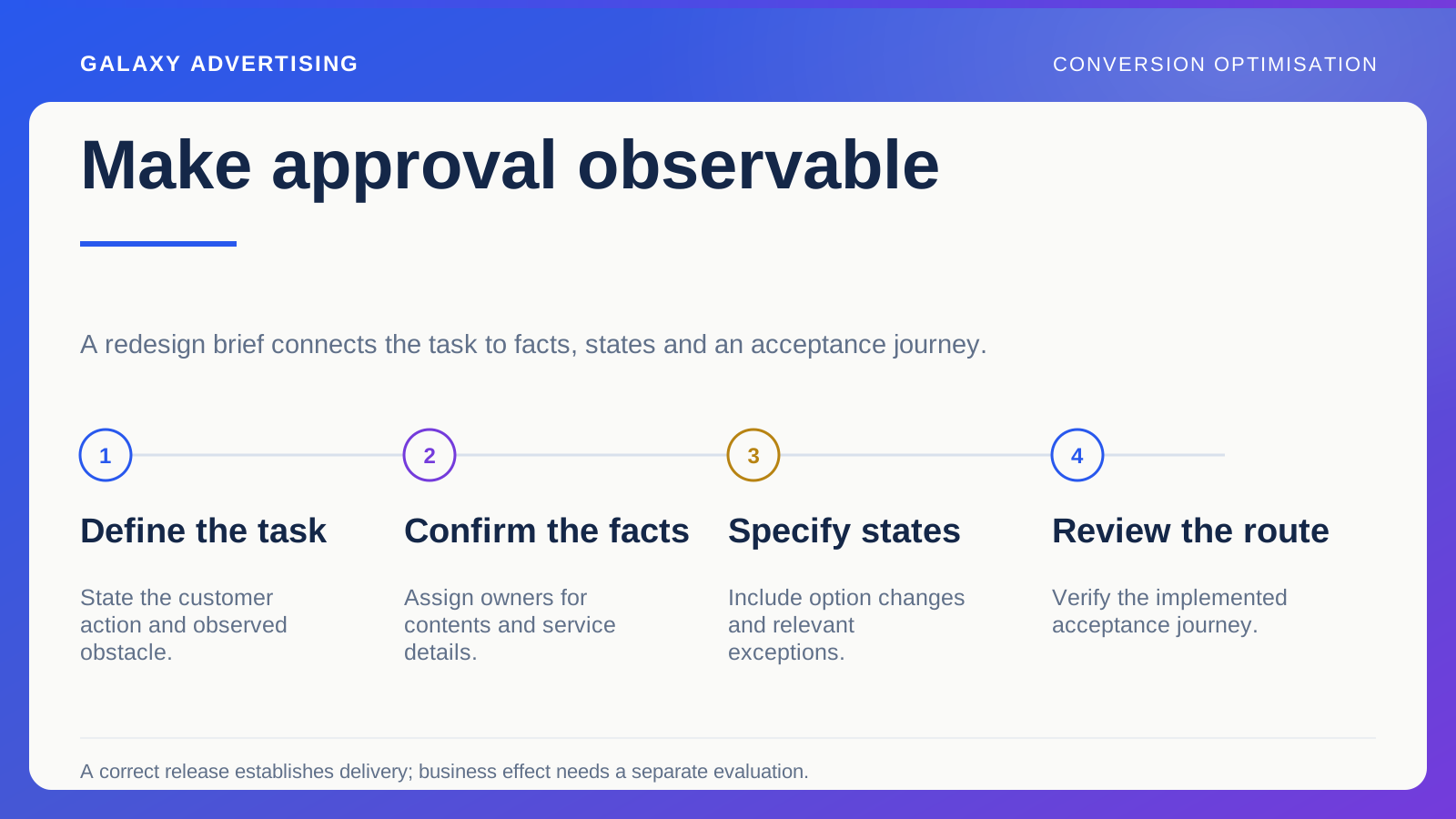
Define what a completed improvement includes
Agree an implementation and verification package. It might include approved facts, final wording, working controls, relevant device checks and a record of the customer route tested.
A preferred screenshot should not be the sole acceptance criterion. Information and interactions must remain coherent across relevant variants, meaning selected sizes, colours or configurations, and ordinary error states. The finished appearance cannot establish all of that on its own.
Separate release verification from business evaluation. Checking that the change works is one task. Establishing whether it changes suitable orders or support workload is another. Identify evidence and review conditions for both without promising a universal uplift. This gives the team an honest definition of completion and a separate plan for understanding the effect.
Review one finding before commissioning the full format
Ask for a sample finding before the complete audit is produced. Does it distinguish facts, hypotheses and preferences clearly enough for your internal team to act?
Reviewing one example can align the engagement early and save substantial interpretation work at handover. It gives both sides something concrete to improve before the same unclear format is repeated throughout a long report.
Keep the reasoning connected to the work
Require a concise handover covering completed changes, source responsibilities, outstanding exceptions and reasons behind important design choices. The next maintainer should understand why an explanation or control exists.
Connect that record to the relevant product and template. A large presentation stored separately from the working backlog can be difficult to use when a later change touches one field or component.
A good brief leaves room for professional judgement. It supplies the operating facts and authority boundaries needed to exercise it. The worthwhile result is work your business can implement, verify and maintain, with recommendations grounded in an offer somebody has taken responsibility for explaining.