It is easy to celebrate a higher conversion rate before asking what those extra orders leave behind. That is the mistake worth catching before the next improvement gets approved.
Picture a retailer adding a prominent discount. More visitors buy, but the orders shift towards discounted bulky products and away from full price accessories. Delivery subsidies and support effort rise too. The dashboard looks stronger. The contribution available to run the business has not necessarily improved.
Conversion rate describes a defined population and action. Keep it, but agree which orders you want more of and how you will assess their value before funding the change.
Decide which transaction you want more of
Choose the relevant outcome and explain why it matters. Perhaps you want more suitable first orders, better conversion for a particular product family or fewer purchases needing correction later.
Tie that outcome to the offer. An inexpensive accessory and a configurable furniture package both count as an order, yet their acquisition and fulfilment implications can differ considerably.
The overall conversion measure still belongs in the review. Use it alongside the distinctions needed for this decision. Replacing it with a more sophisticated sounding average will not help if that new label hides the same product and customer differences. The point is to make the business easier to manage, rather than make the dashboard more impressive.
Make sure revenue means the same thing
Agree how the evaluation handles tax, delivery income, discounts, cancellations and refunds. If the page report and commercial target use different definitions without explanation, the comparison becomes difficult to interpret.
Say whether values represent placed orders, fulfilled orders or another stage. A product with a long fulfilment route could need a later review before you understand its final commercial result.
Keep those definitions with the project. A later analyst should not have to guess what revenue meant by studying a chart. Consistent language lets you distinguish a real trading change from a reporting difference, without reopening the same argument whenever somebody new joins the review.
See what an incentive takes out of an order
Before setting an allowance, list the variable costs that change with the order on your agreed cost basis. Depending on the offer, these could include product cost, payment processing, delivery subsidies and expected returns.
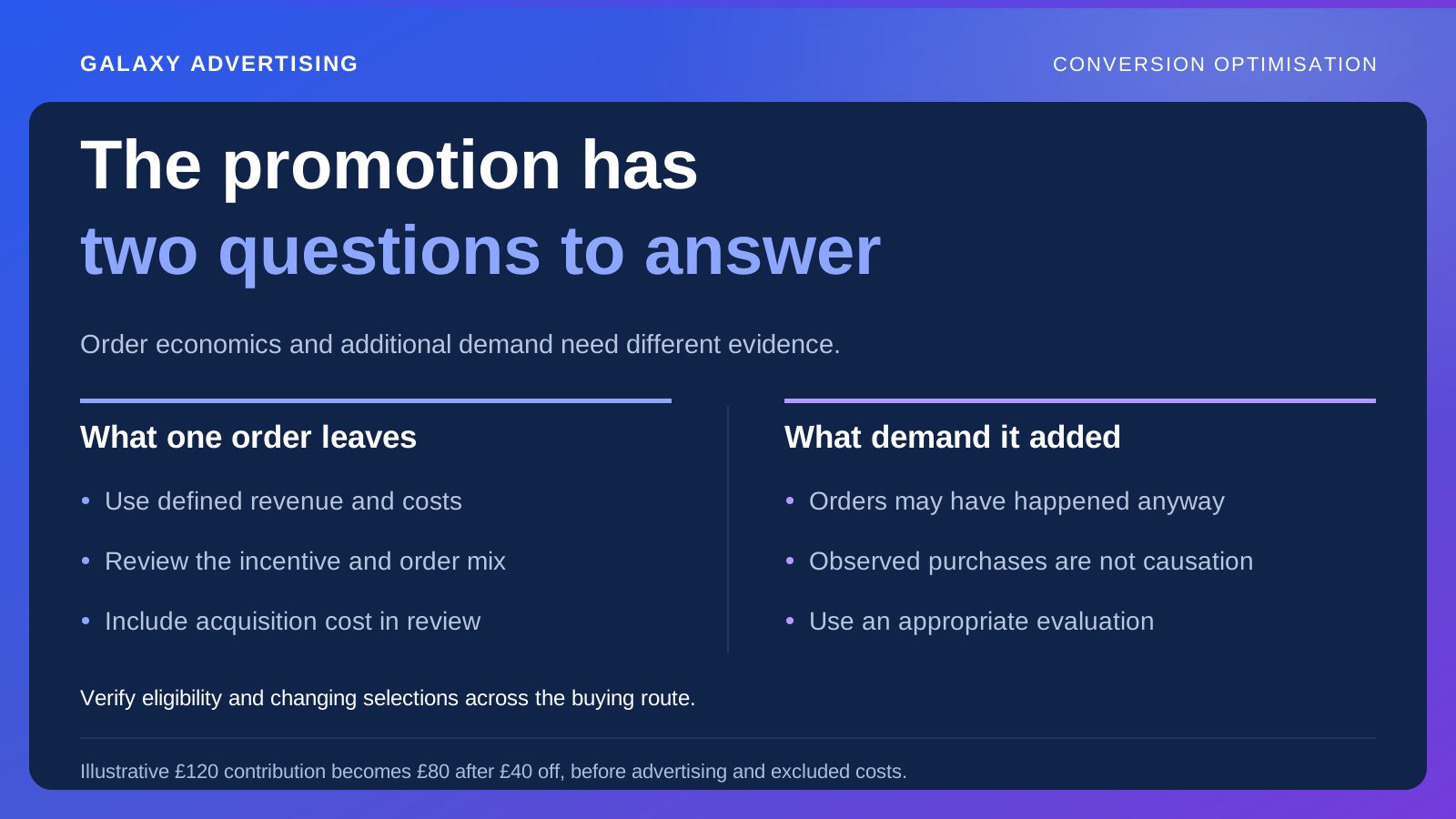
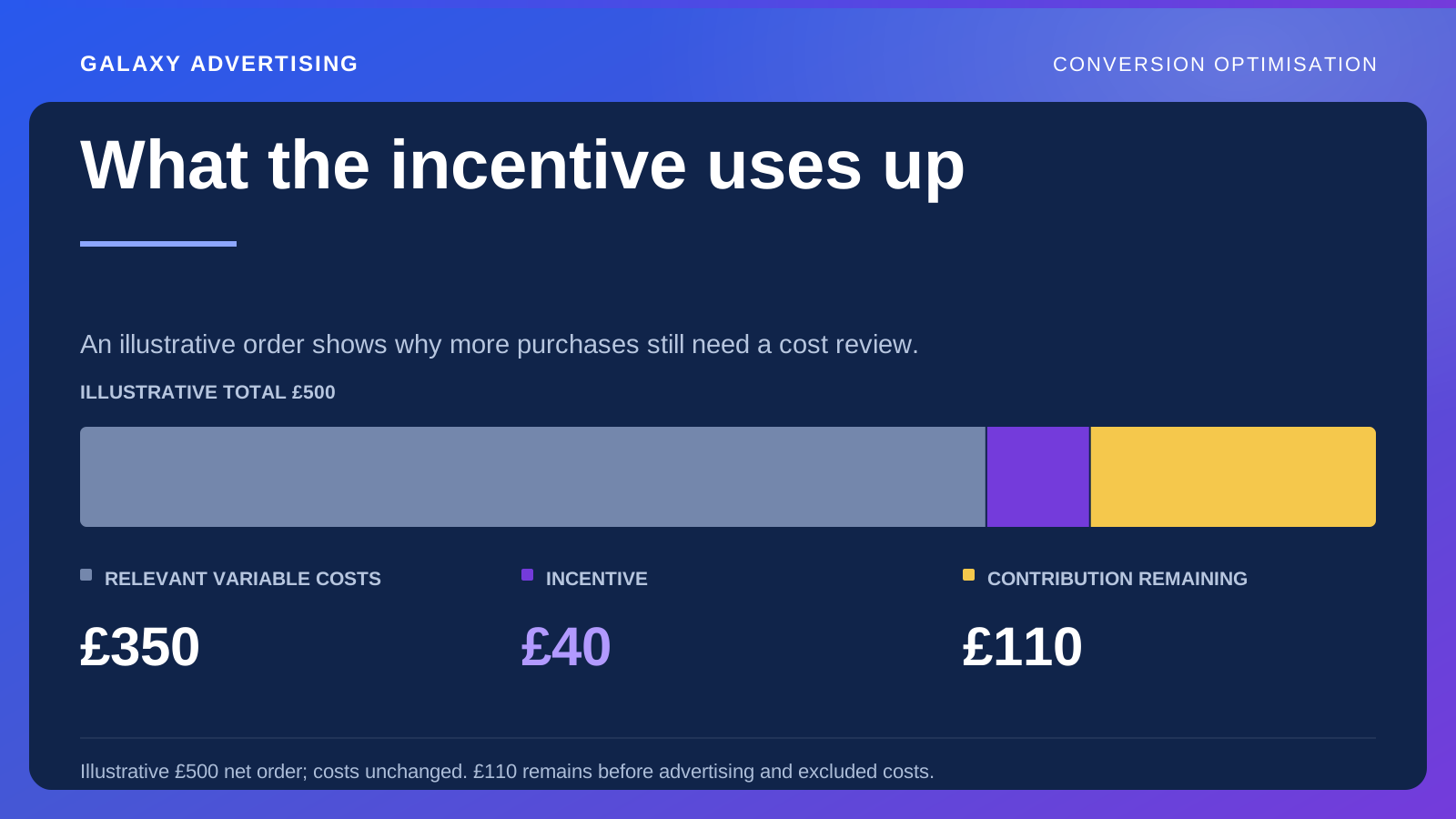
Take a hypothetical £500 net order with £350 of relevant variable costs. It leaves £150 before advertising and any costs excluded from the calculation. Now reduce revenue by £40 through an incentive. With the other assumptions unchanged, the available contribution becomes £110.
Contribution here is the money remaining after the costs included in that calculation. These figures are illustrative, not a recommended margin or target. Use your own records and retain uncertainty where costs are estimates. The example simply shows why a higher order count still needs a cost review.
Look inside the change in order mix
Check which products, configurations and customer routes changed. A better overall conversion rate could reflect more sales of products that are easier to buy, rather than improvement across every important range.
That shift could be welcome, unwelcome or simply context. Judge it against contribution, strategic priorities and your ability to fulfil the resulting orders.
Keep the grouping manageable. Separate groups where the difference could change your action. Too much detail creates false precision from sparse observations; one blended average can conceal a material problem. Let the commercial question determine how far you need to split the report, so the distinctions remain useful to the people making the decision.
Follow the order beyond checkout
Review order corrections, cancellations, relevant support work and fulfilment problems alongside purchases. Removing important information can make selection look simpler while creating more incorrect configurations later.
Identify what you can measure reliably. Where you need an estimated allowance or a qualitative review, say so. Imperfect cost data is no reason to ignore an obvious operational problem, but it does limit the precision of your conclusion.
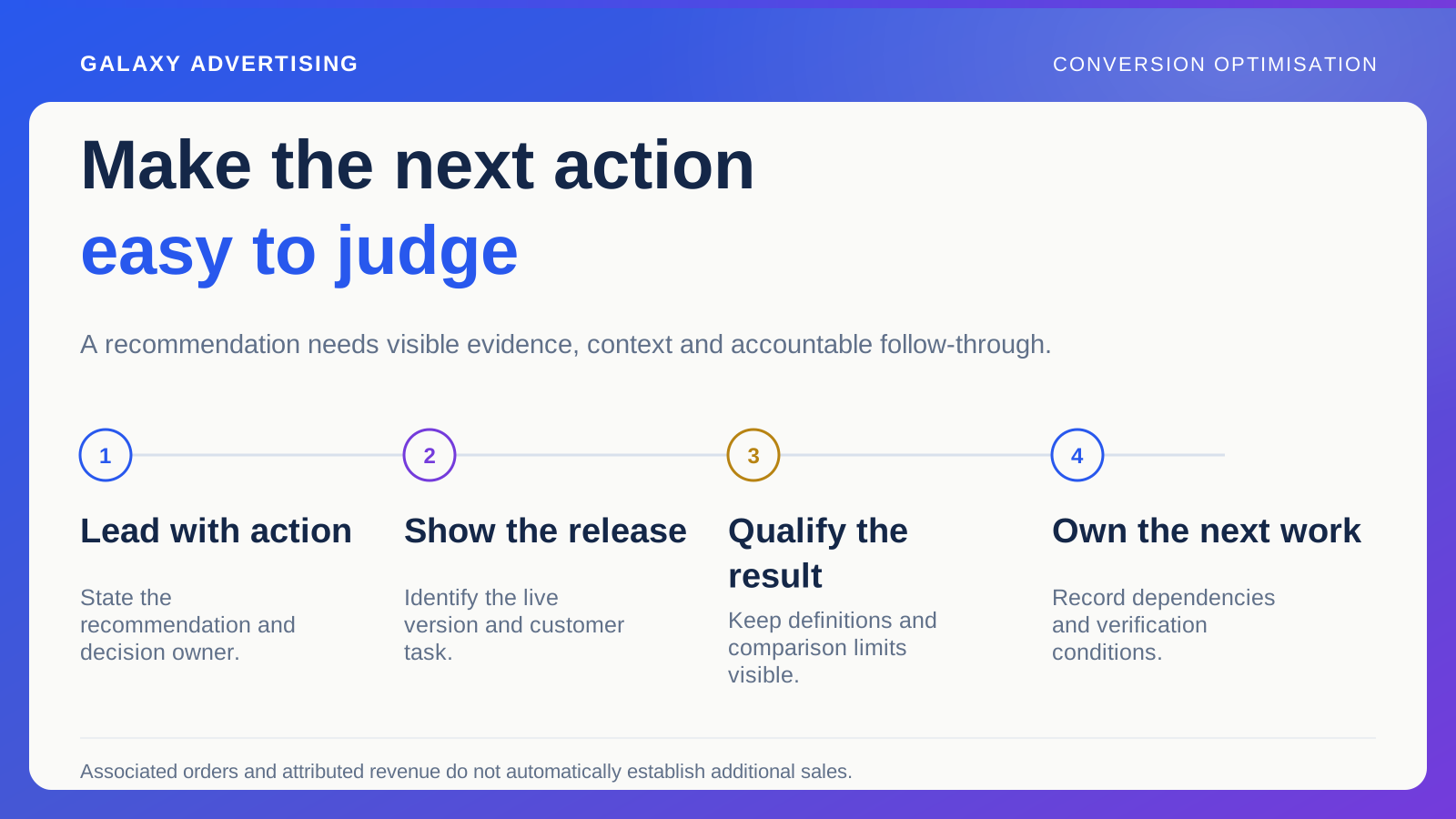
If consequences appear after fulfilment, give the later review an owner. Explain how its findings will return to the team deciding whether to retain the change. A project that looks finished at checkout can still have important consequences waiting to arrive.
Ask whether demand increased or moved around
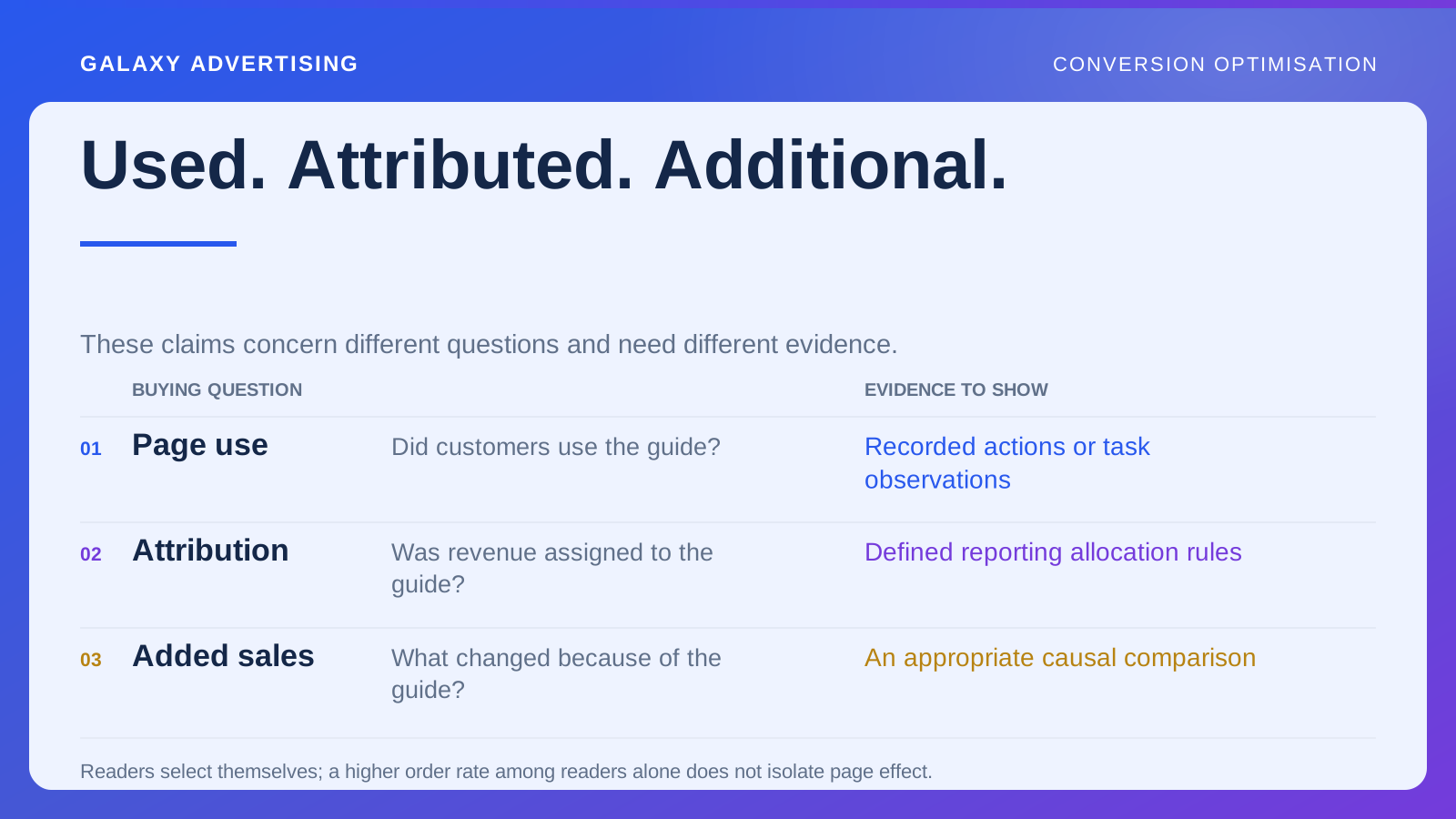
A promotion or layout change can alter when and what people buy without creating entirely new demand. Orders arriving after release are not automatically additional orders caused by it.
If a causal estimate matters, consider whether you can design an appropriate comparison. If you cannot, state the narrower conclusions the evidence supports.
A factual clarification can still deserve to stay because it resolves a documented misunderstanding. You do not need to invent revenue attribution to justify it. Commercial judgement can recognise a useful change while being honest about what the evaluation has not isolated. Keep that distinction clear when deciding what success means.
Check a few apparently successful orders
Ask the commercial team to walk through a small illustrative sample and explain what remains after relevant costs. Include an ordinary full price purchase and an order using the proposed incentive. Keep actual records separate from hypothetical planning figures.
If a delivery adjustment or later correction changes the apparent result, record the assumption missing from your initial target. The exercise checks whether the summary describes orders you want to repeat. It is not intended to become a permanent manual audit of every sale.
Once the assumptions are clear, use a maintainable reporting approach and investigate exceptions in detail. A useful target survives that reconciliation. If an attractive ratio cannot be connected to worthwhile orders, change its definition before letting it control the project.
Set a target you can defend afterwards
Before release, write down the principal outcome, relevant cost basis, supporting observations and important safeguards. Explain what would make a nominal conversion increase unacceptable.
You might want more suitable orders while avoiding more costly configuration corrections. That gives the team a clearer brief than demanding a percentage uplift regardless of what people buy or what you must deliver.
A worthwhile conversion target connects customer understanding with worthwhile trade. It gives you reason to welcome more purchases when they strengthen the offer's economics, and reason to question a lovely looking chart when they do not. A purchase is only the beginning of what your business has agreed to deliver.