Can your customer tell which dimensions, contents and delivery information apply to the option they have selected? Having all the right facts somewhere on the page does not necessarily make that easy.
A furniture page can contain accurate material details, measurements, package contents and service information in one long run of equally styled paragraphs. Someone could read every word and still struggle to connect the details to their chosen configuration.
Information hierarchy means deciding which question each element answers and when the answer becomes useful. It is a way to organise a considered purchase, rather than a decision about how much text to hide.
Establish what the customer is being offered
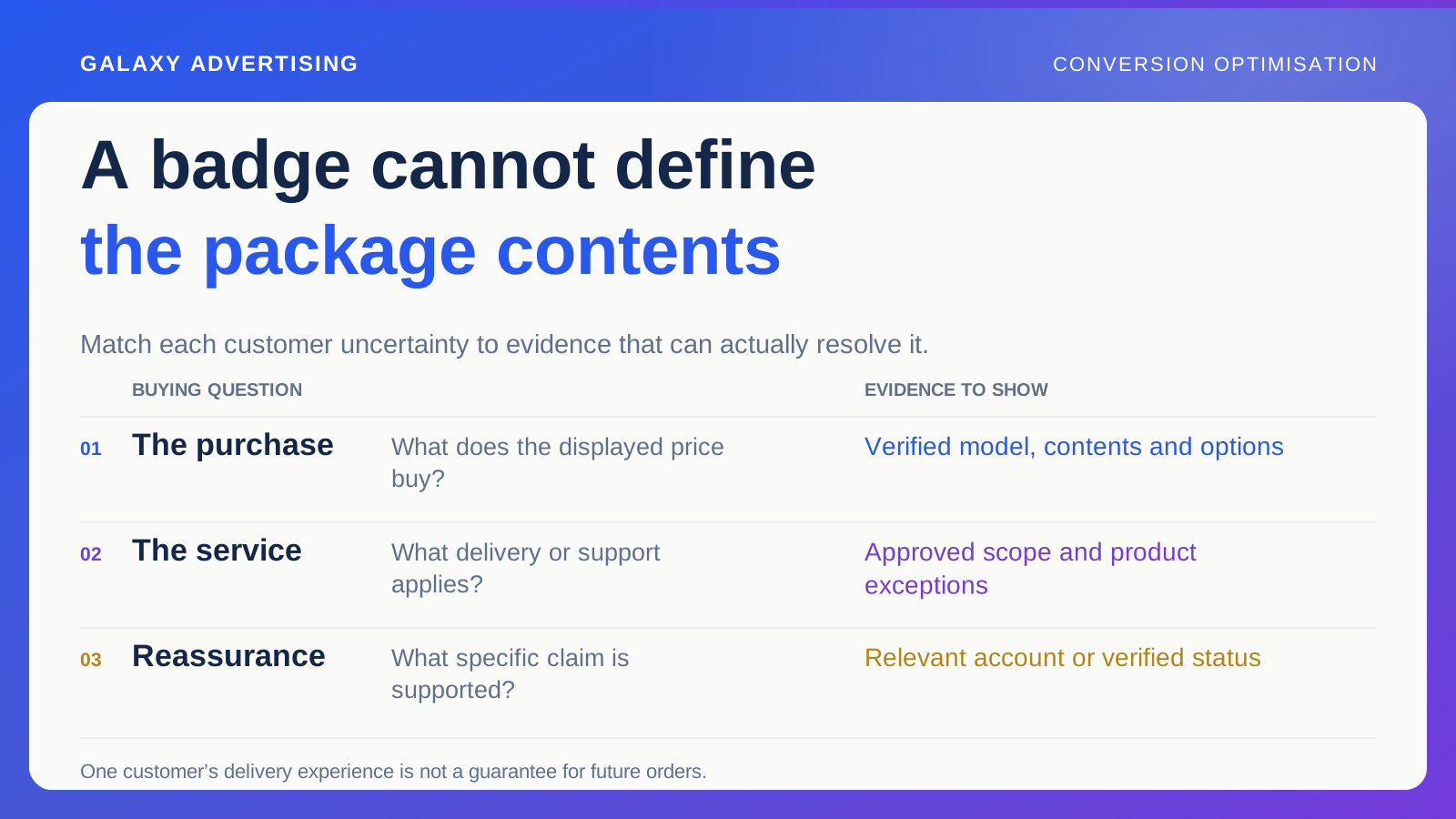
Start with the selected product, configuration, price and included components. These tell someone what they are being invited to buy before they move into deeper comparison.
Check that the opening presentation connects those facts. A price beside one image and a contents list describing another package can confuse people even when both statements are individually accurate. The relationship matters as much as the separate facts.
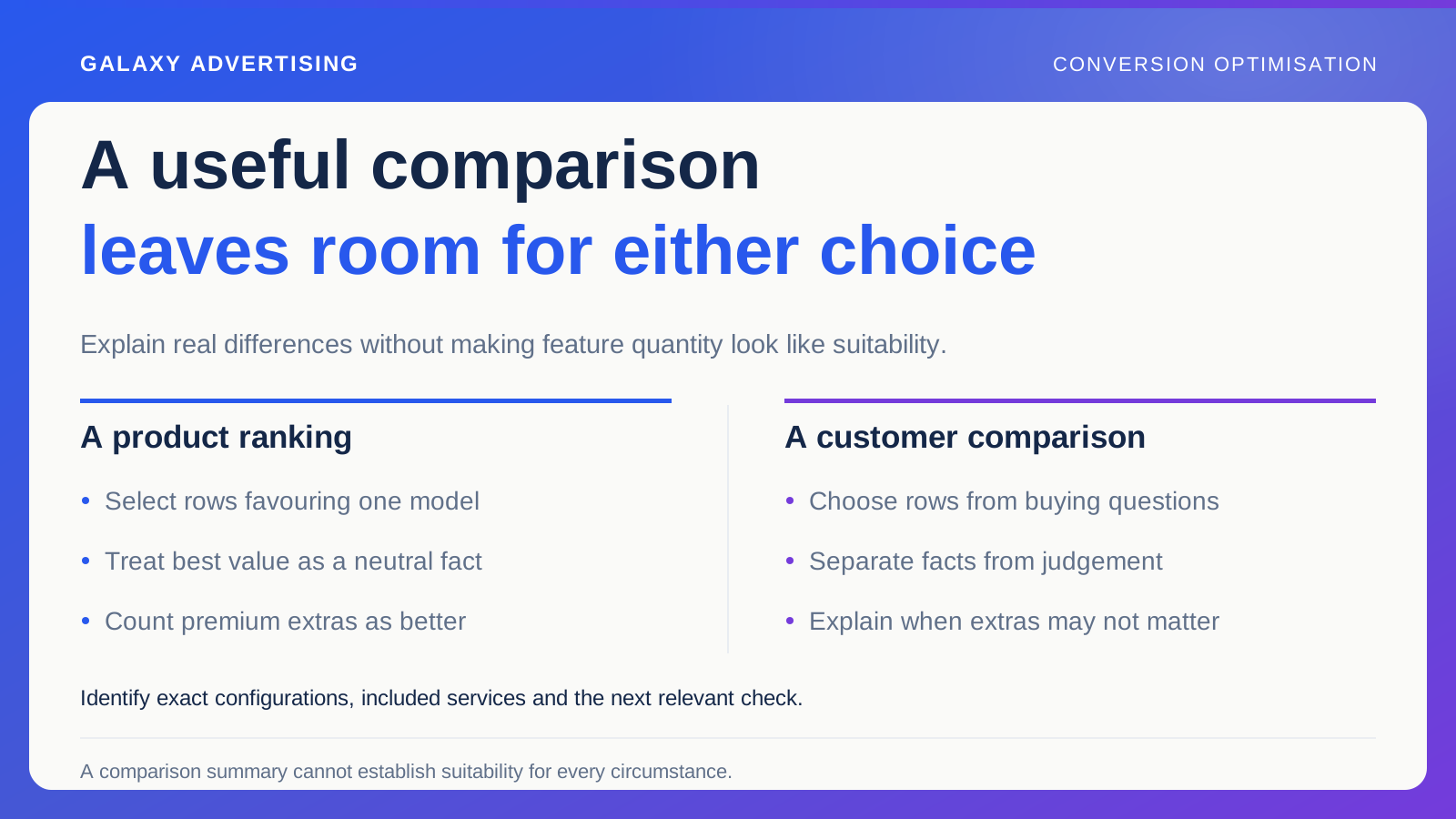
Do not give priority only to what looks attractive in the design. An essential service distinction may need prominence even if the material story makes a more appealing visual feature. Organise the page around the decision your customer needs to make, alongside the retailer's preferred order of persuasion.
Group details around recognisable questions
Separate dimensions, configuration choices, material information and service conditions into subjects shoppers recognise. Use their language for the labels, rather than names borrowed from internal departments.
Someone checking fit needs to distinguish overall dimensions from packaged measurements. Someone checking what is included should not have to work it out from the styling of a room photograph.
Keep related details connected. A short summary can sit beside the relevant choice while fuller information has a clear link or labelled section. The aim is less searching, with fewer scattered fragments that only your product team knows how to join together. The structure should explain the relationship rather than leave the customer to reconstruct it.
Keep the selected option visible throughout
When options change the price, image or package, check whether the information changes coherently too. An understandable default screen is not enough if a later selection leaves people unsure which details now apply.
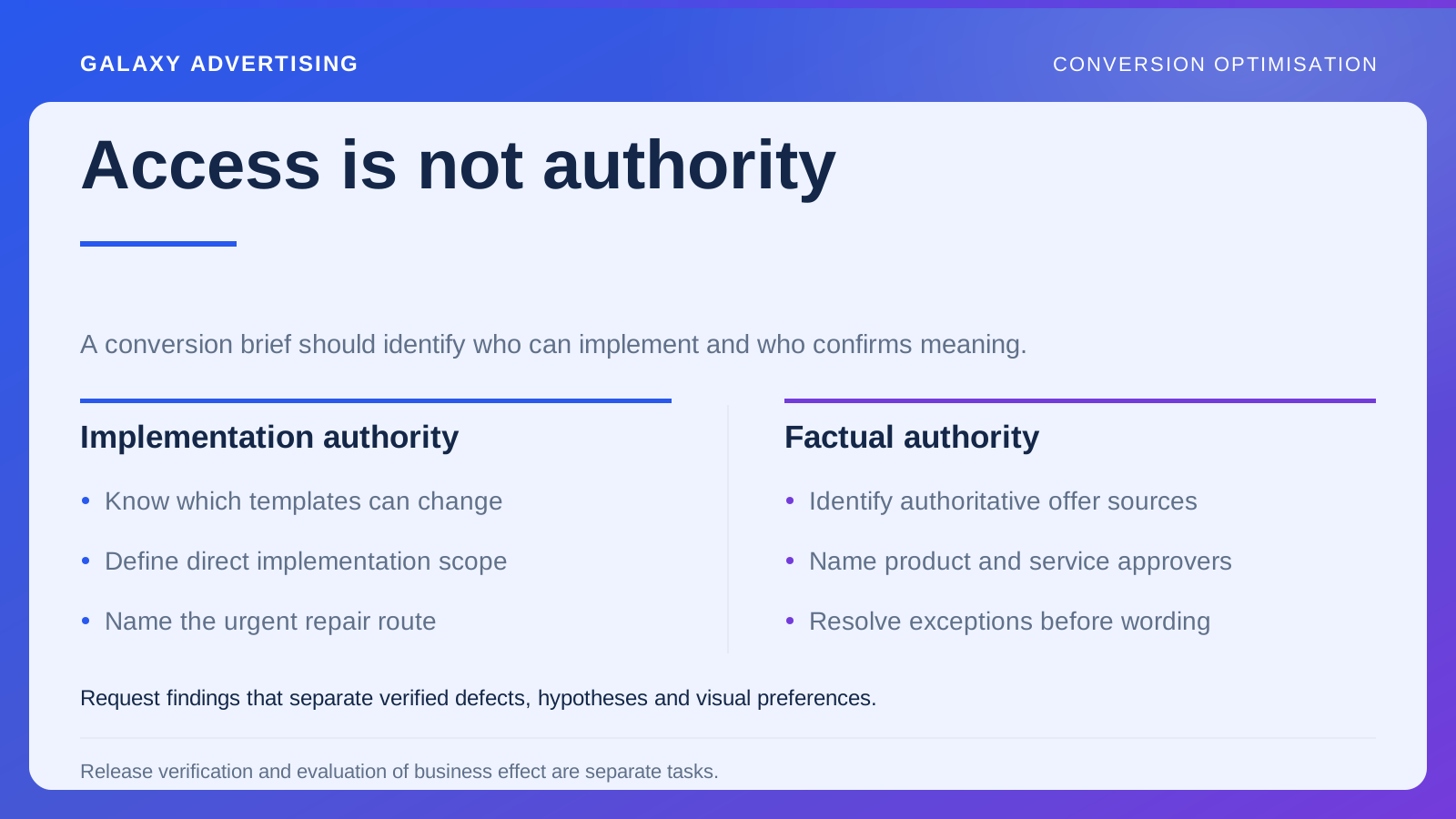
Identify the fields depending on the configuration and the source responsible for each. Development and merchandising can then distinguish a presentation problem from incomplete product data, instead of passing an ambiguous issue between teams.
Keep references consistent. If the selector uses one finish name and the description uses another, the customer has to reconcile them. Someone unfamiliar with the range should not need to solve that naming puzzle to understand an otherwise accurate offer.
Shorten the wording without losing its conditions
A concise summary still needs the qualifications that make it correct. Remove one and you can turn a useful explanation into a broader promise than the business supports.
Have the factual owner review shortened service and specification wording. A writer can make the language clearer without having independent authority to change what the offer means.
Retain the approved source behind important summaries. A future editor needs to inspect that meaning, rather than shorten an already shortened version again. Successive cosmetic edits can gradually lose the distinction that made the original statement accurate. Keeping the source connected gives the team something dependable to check when the wording changes.
Make the route to deeper detail predictable
Some shoppers need more than the opening summary. Give specifications, relevant documentation and support routes clear places to live, without crowding every answer into the purchase panel.
Use a link because it helps a decision. A related keyword elsewhere on the site is not enough. The destination should deliver the promised information and, where relevant, preserve the model or selected configuration context.
Some questions need manufacturer instructions or an individual qualified response. Make that route clear. The page can direct customers to the appropriate source without pretending general marketing copy can settle every technical or suitability question. A dependable next step is useful even when the paragraph itself cannot provide the answer.
Check finding the answer and understanding it
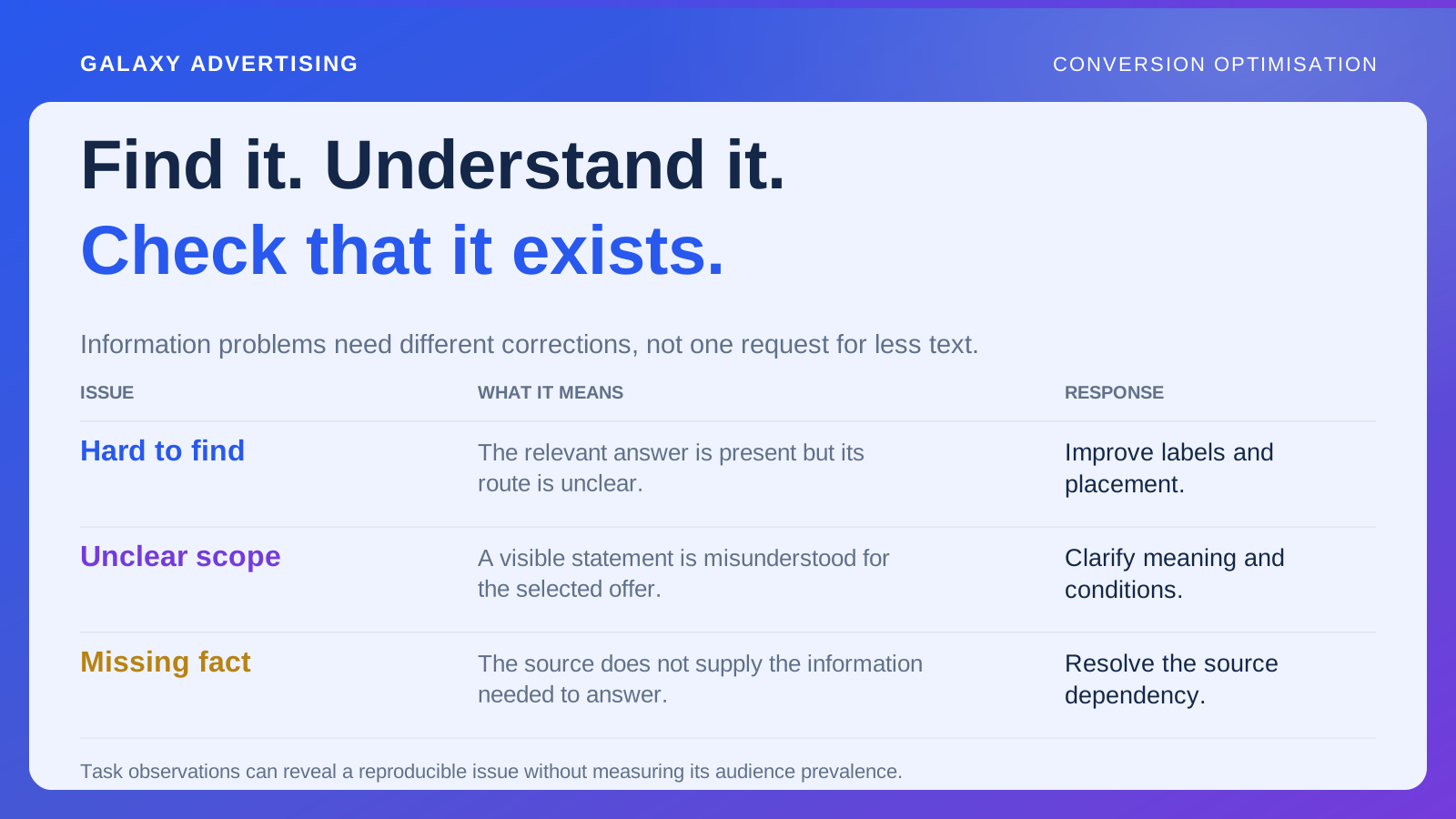
Give a reviewer a realistic task. First observe whether they can find the relevant answer. Then ask them to explain what it means for the selected offer.
Those checks expose different problems. A hidden section concerns findability. A visible statement with unclear scope concerns comprehension. A missing fact concerns source preparation. They should not all turn into a request to make the page shorter.
Keep your interpretation proportionate. A small review can identify a reproducible issue without telling you how frequently every visitor encounters it. Its value is a specific correction you can implement and verify, rather than a universal statement about customer behaviour.
Compare one short statement with its source
Take a concise summary and inspect the record behind it. Which conditions remain? Which details moved to a deeper route? Can a reader still establish when the statement applies?
A hypothetical delivery sentence could be correct for one product family but not for specialist configurations. If the summary loses that boundary, typography and positioning cannot make it reliable. Ask the source owner to verify the public wording and document the relationship.
Repeat the customer task with the selected configuration, including ordinary option changes. That ties content organisation to factual maintenance. It also prevents approval of a clean layout whose most prominent sentence quietly offers more than the business intended.
Keep the structure accurate as the range changes
Assign owners for source fields and the presentation rules depending on them. A new product family might need an exception or a different pattern rather than fitting the current structure unchanged.
Review package and service changes across summaries, detailed sections and dependent content. Updating the main description can leave an earlier short statement elsewhere on the page untouched.
A useful hierarchy supports quick orientation and careful assessment together. Customers can understand the actual offer first, then reach the level of detail their decision requires. Clarity comes from reliable meaning and organisation, with the facts still available when someone needs to make a considered choice.