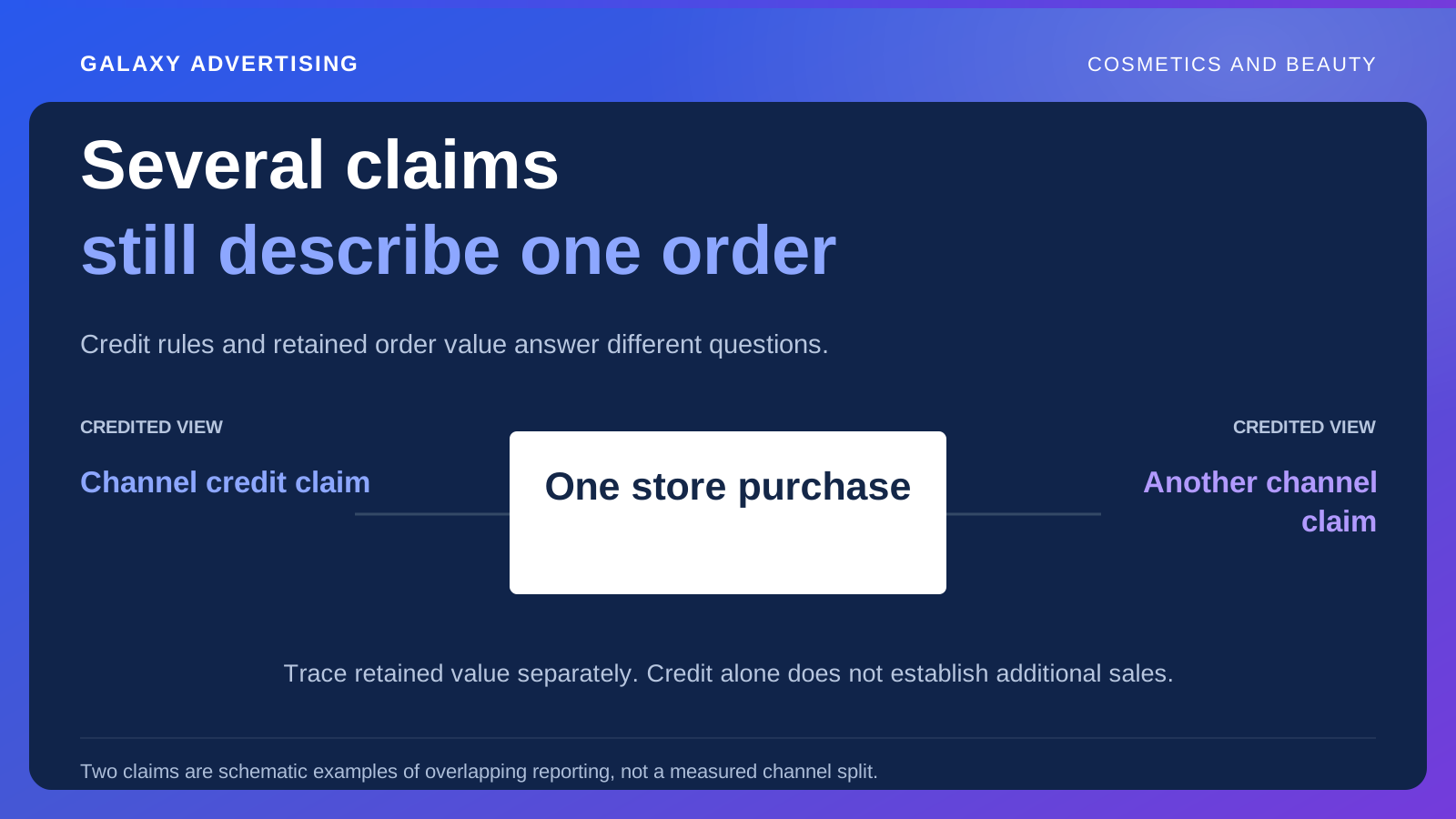
Adding every channel's claimed sales together doesn't tell you how much your beauty business has grown. A customer can discover a product in a video, search for your brand later and order through an email link. Several systems may associate themselves with that transaction. It's still the same purchase.
Attribution assigns credit using the observations and rules available to each system. Your commercial record answers what orders occurred and what value they retained. Put those views beside each other. Forcing them into artificial agreement won't give either one more meaning.
Find the actual order first
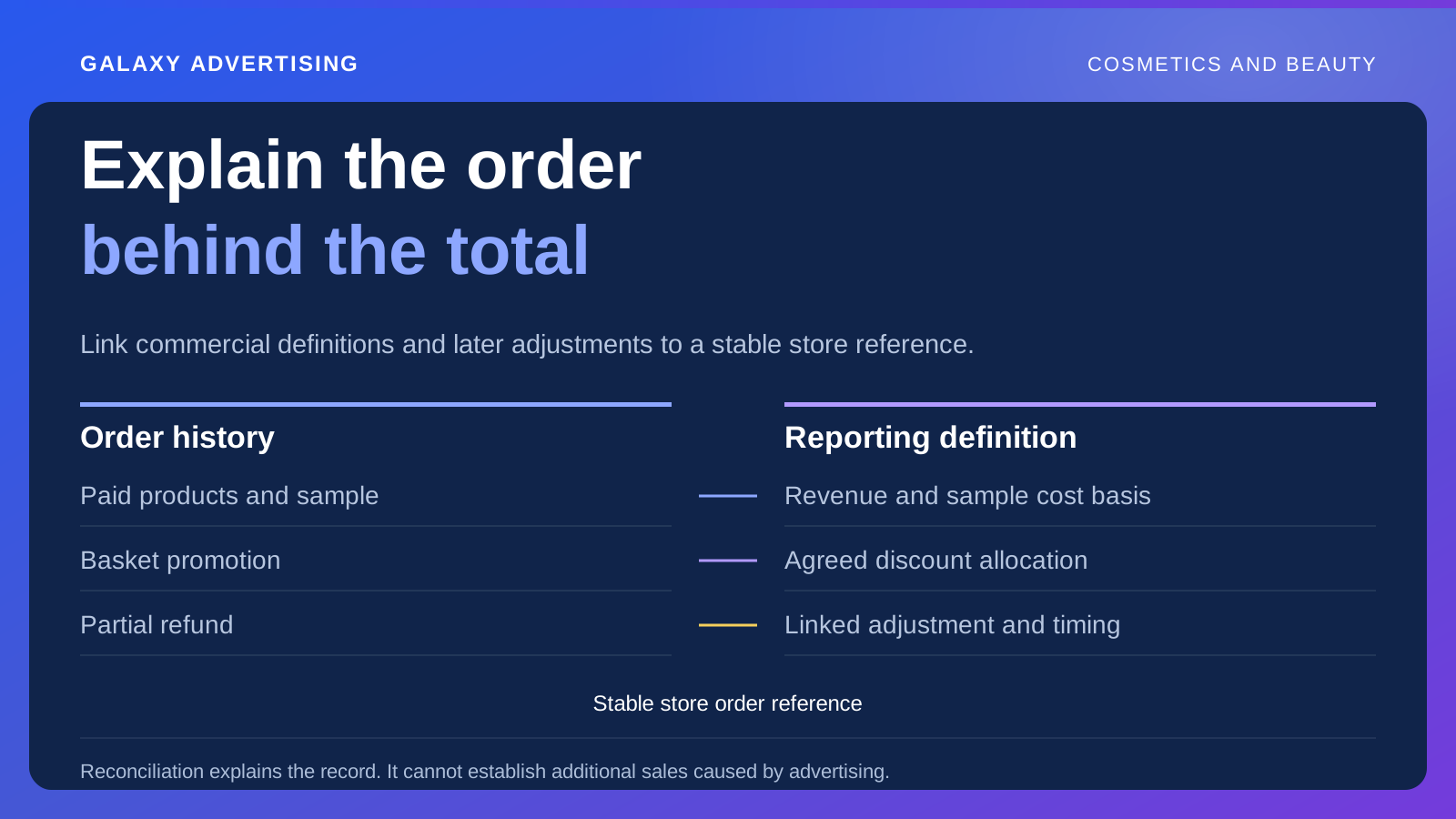
Start with a stable transaction reference and trace the purchase and its later history. Define the revenue basis and how you treat discounts, refunds and promotional additions. These facts give the discussion an anchor before anyone begins defending a channel's contribution.
If reports disagree on order value, investigate that definition first. One system might include an amount another excludes, or reflect a later adjustment. A difference in scope isn't automatically a technical failure. Arguing about the source of a sale won't resolve disagreement about what the sale was worth.
Choose a manageable sample of transactions that materially affect the summary. Include an ordinary order and a relevant exception. Trace how each report relates to an identifiable purchase. The point is to understand the connection, rather than leave the meeting with another total nobody can explain.
Ask what the reported figure actually means
Have the reporting owner explain the basis used by the platform or analytics configuration. Check current official documentation when interpreting technical settings. A familiar report name doesn't guarantee that different systems mean the same thing by it. The definition belongs in the discussion.
Distinguish observations involving a click from other recorded interactions, where the relevant system supports them. Seeing both in reports doesn't necessarily establish the same level of evidence about an additional purchase. Ask what was observed rather than assuming all credit claims have equal meaning.
Write the reporting basis beside the figure. Without it, a number invites comparisons it can't support. You don't need to reject platform reporting to recognise its limits. Use it for the questions its measurement route can reasonably address, with the explanation still attached.
Credit isn't the same as cause
An attributed order tells you that a system associated a transaction with recorded activity under its rules. That doesn't, by itself, show what would have happened without the activity. This is where an apparently straightforward performance conversation can get slippery.
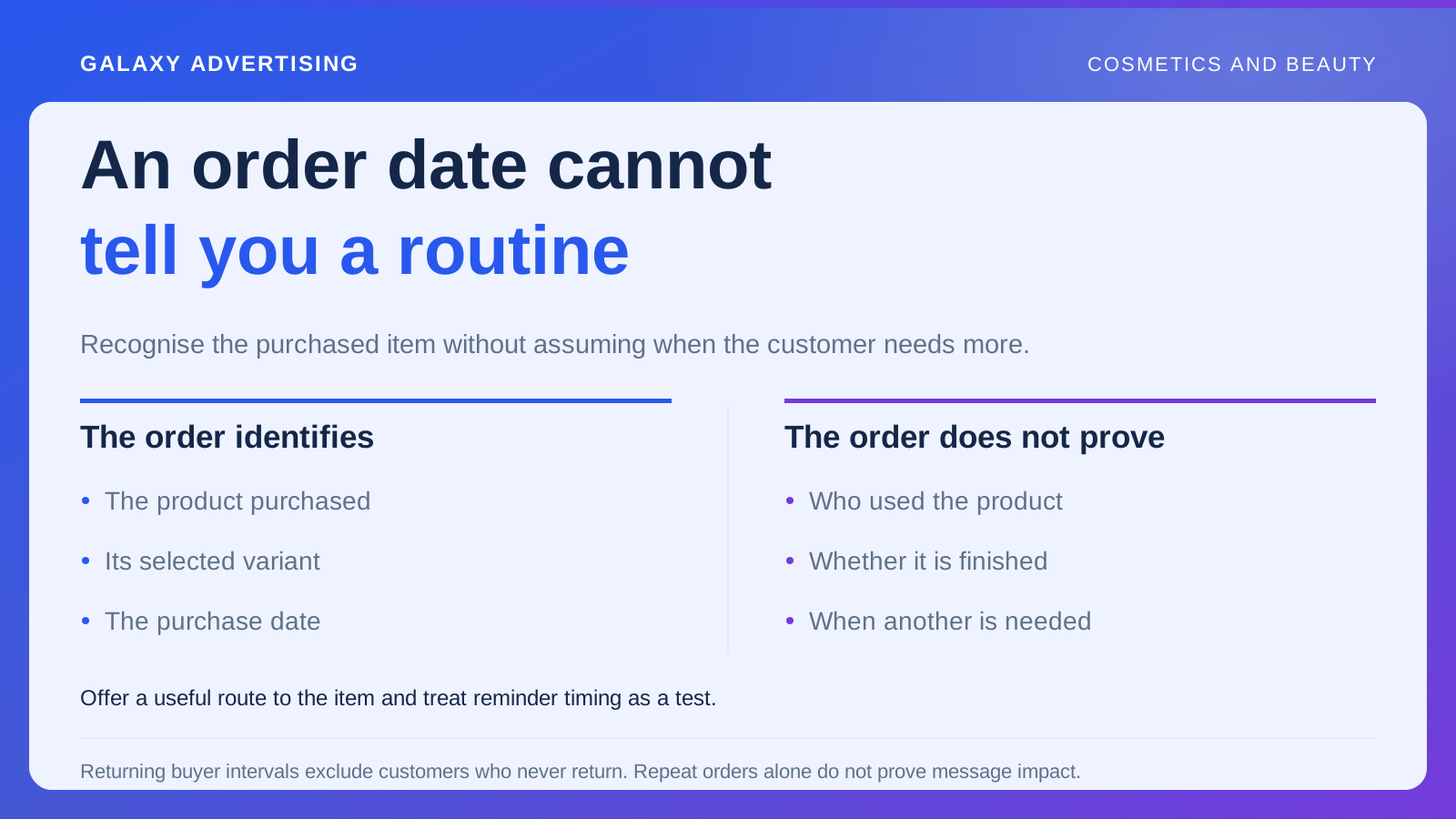
Think about a familiar beauty brand with repeat customers. A reminder could be useful while reaching people who already intended to reorder. The attributed total alone doesn't justify saying it caused every sale. It doesn't justify saying it caused none, either. Both conclusions go beyond that observation.
If you need evidence about additional effect, discuss an appropriate comparison and its limitations with the responsible specialist. Match the method to the question and operating conditions. Calling an ordinary before and after chart an experiment won't strengthen what it can establish. The method has to earn the claim.
Look at the product questions between channel labels
A beauty purchase can involve questions about shade, finish and package, with several pieces of content helping along the way. Review the pages and enquiries you can observe without claiming a complete psychological account of each customer. Useful observations don't have to explain everything.
Use them to improve the journey. An advert might introduce a shade, while a later product visit exposes unclear variant information. A variant is the selected shade, size or configuration. That mismatch is actionable even if you can't divide channel credit with confidence. You can fix understanding without settling every attribution argument.
Avoid assigning a fixed financial value to every supporting interaction without a defensible basis. A useful guide doesn't establish a particular amount of future revenue for each reader. You can recognise its strategic role while keeping the financial claim within what the evidence supports.
Check the conditions before comparing periods
Look at changes in spend, stock, pricing, promotions and returning customer mix. Reported efficiency can change because the offer or available demand changed, even with stable campaign settings. A channel label won't tell you which of those conditions moved.
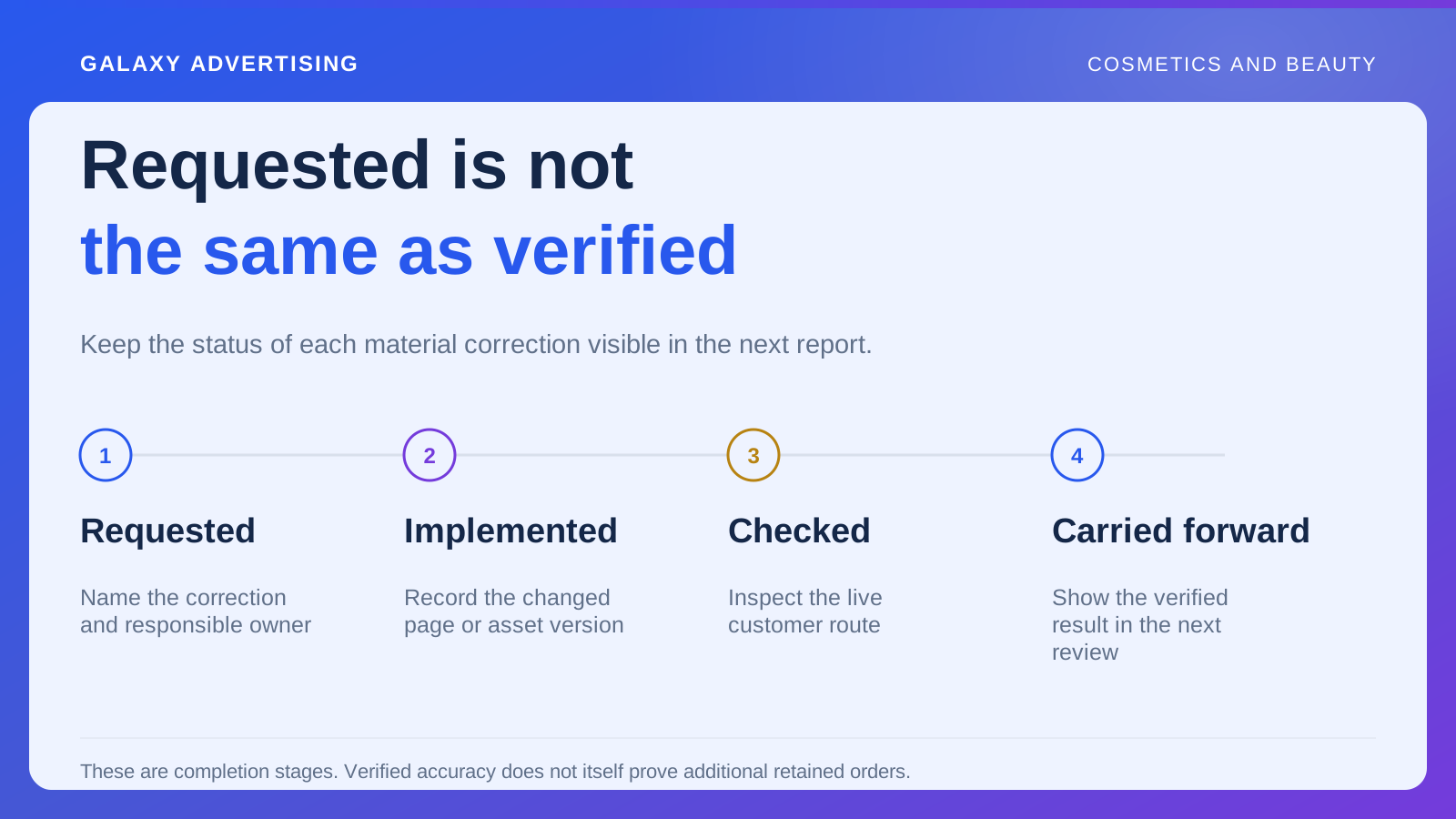
Check reporting configuration too. A new observation route or value definition can change the apparent result without changing actual orders. Record the change so a future comparison doesn't silently join figures built on different measurement bases. Otherwise, the chart may look continuous while its meaning isn't.
Uncertainty doesn't mean you must avoid decisions. Let it affect the size and confidence of the recommendation. A bounded continuation with explicit assumptions may be reasonable when you can't yet support a stronger causal conclusion. The commitment should fit the evidence you have.
Bring store orders and retained value to the table
Present actual store orders and consistently defined retained value alongside channel claims. Include relevant costs using your approved contribution basis, meaning the money remaining after the costs included in that calculation. That makes weak economics harder to hide behind a favourable attribution story.
A hypothetical campaign could report £5,000 of associated revenue while the store's total changes little. That raises questions about mix, timing and additional effect. It doesn't prove the campaign had no value. The example shows why you need to investigate both perspectives rather than let either settle the argument alone.
Ask what decision each view supports. Platform evidence can inform creative or account management. The commercial view informs affordability and product priorities. Each has a useful job without being made to answer the other's question.
Keep the reporting basis beside numbers in exported screenshots too. Charts lose qualifications when copied into presentations or messages. Retaining the definition helps stop an internal observation becoming a stronger external claim simply because its original context disappeared.
Make a recommendation with its limits attached
State the conclusion, supporting evidence and most important limitation. Say whether the next action is measurement repair, product information, campaign allocation or a better comparison. That gives the uncertainty somewhere practical to go.
Keep attribution definitions on record so staff changes don't erase the basis of earlier decisions. Revisit them when the business or systems change, rather than reproducing old charts without checking their meaning.
A reliable investment decision connects marketing observations with real transactions and keeps its confidence proportionate. Adding up every channel's claim may produce a bigger number. It doesn't produce another customer order.