What if your shopper opens the size chart and can't tell whether any of it applies to the shoes they're considering? A generic table shared across unrelated brands, followed by a confident “fits as expected”, can supply plenty of reassurance without a clear model reference.
Useful sizing content starts with reliable sources and honest labels. Separate documented model information, general conventions and individual observations. The aim is to help someone understand the available evidence, while keeping the limits of an online description of personal fit visible. Confidence in the wording isn't a substitute for knowing its source.
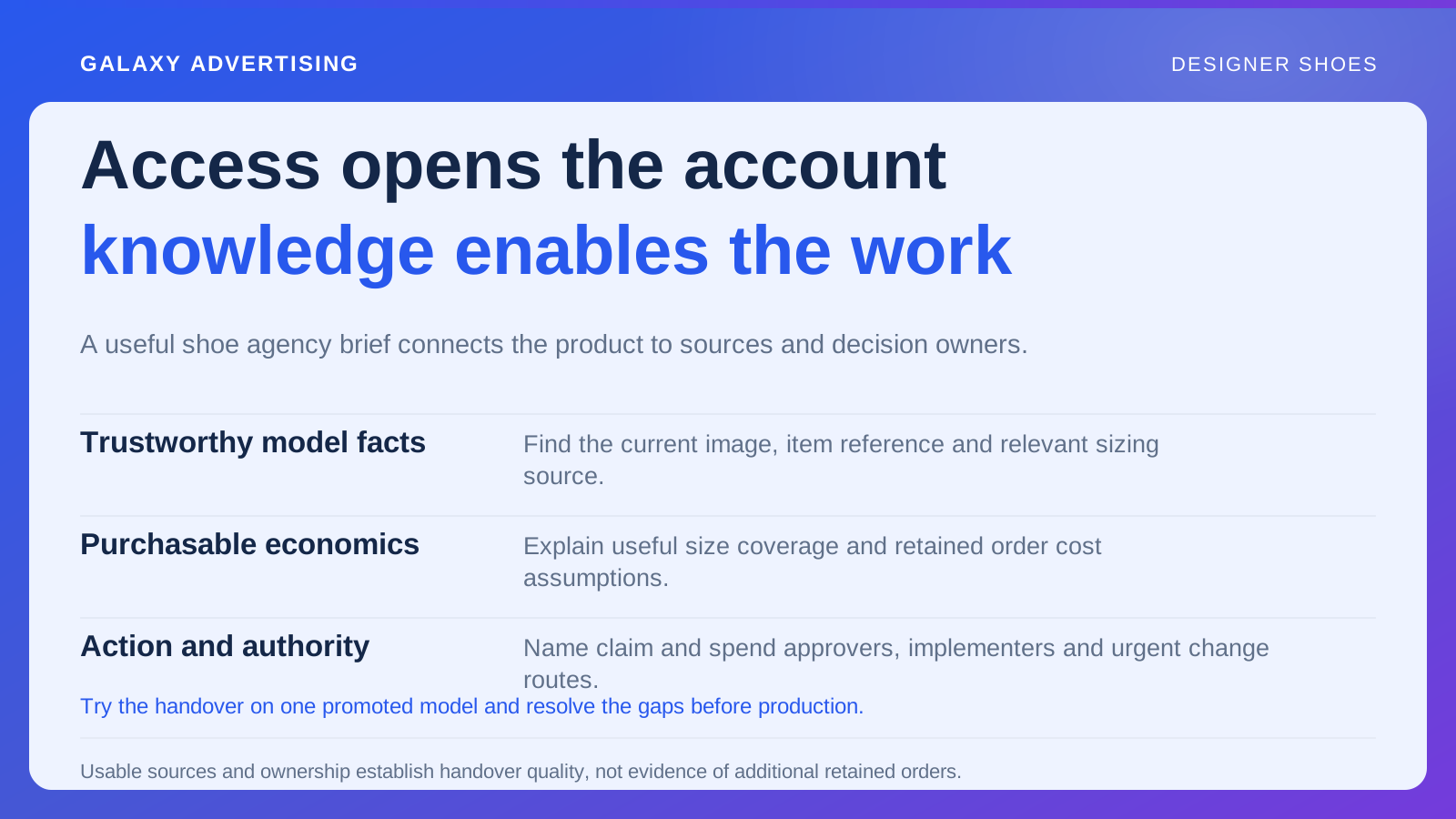
Find the source behind each statement
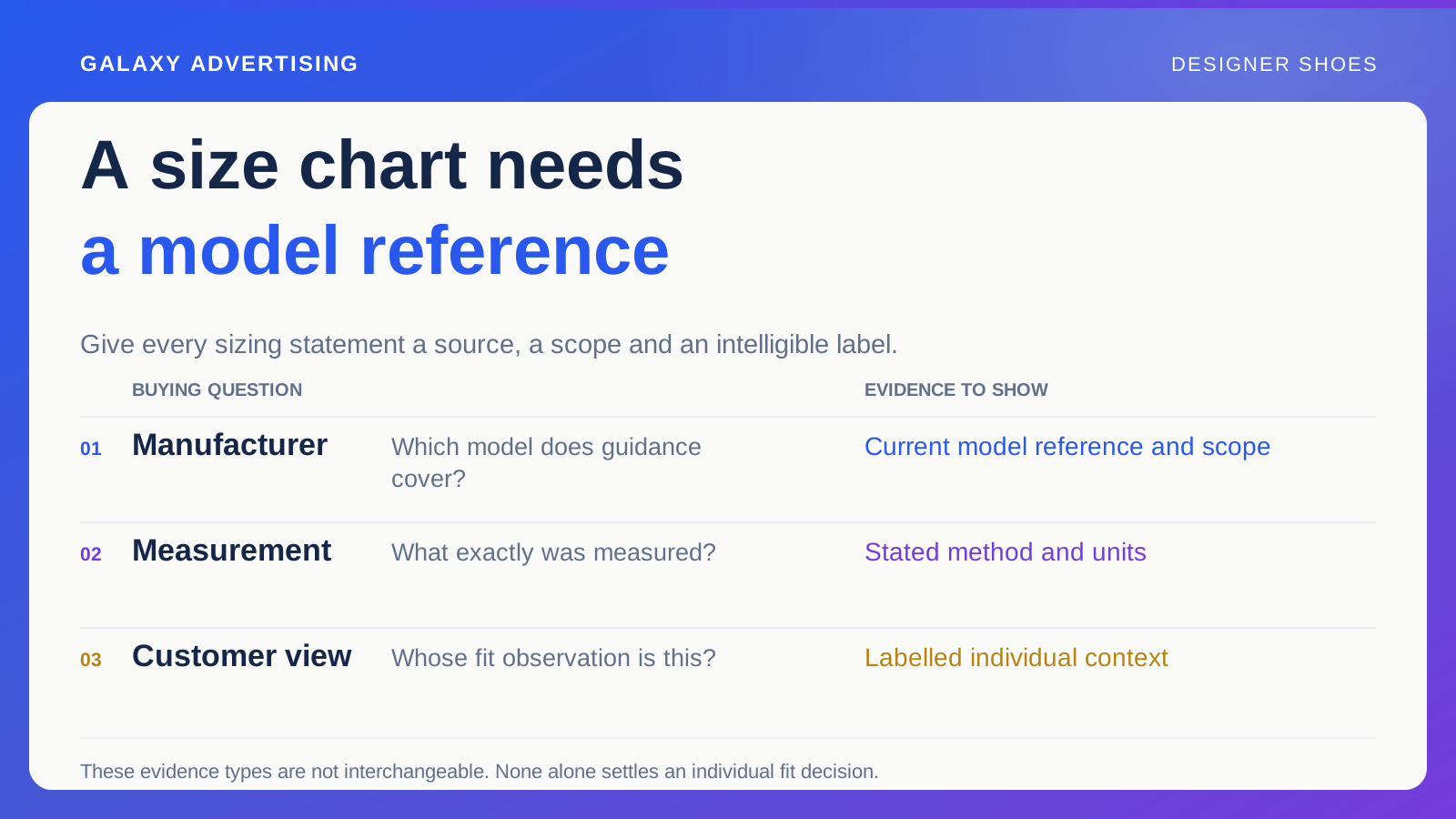
List the chart, model notes and descriptive claims currently displayed. Record whether each comes from the manufacturer, a retailer measurement process or customer observations. Those are different types of evidence. Treating them as interchangeable can make an apparently complete page hard to interpret responsibly.
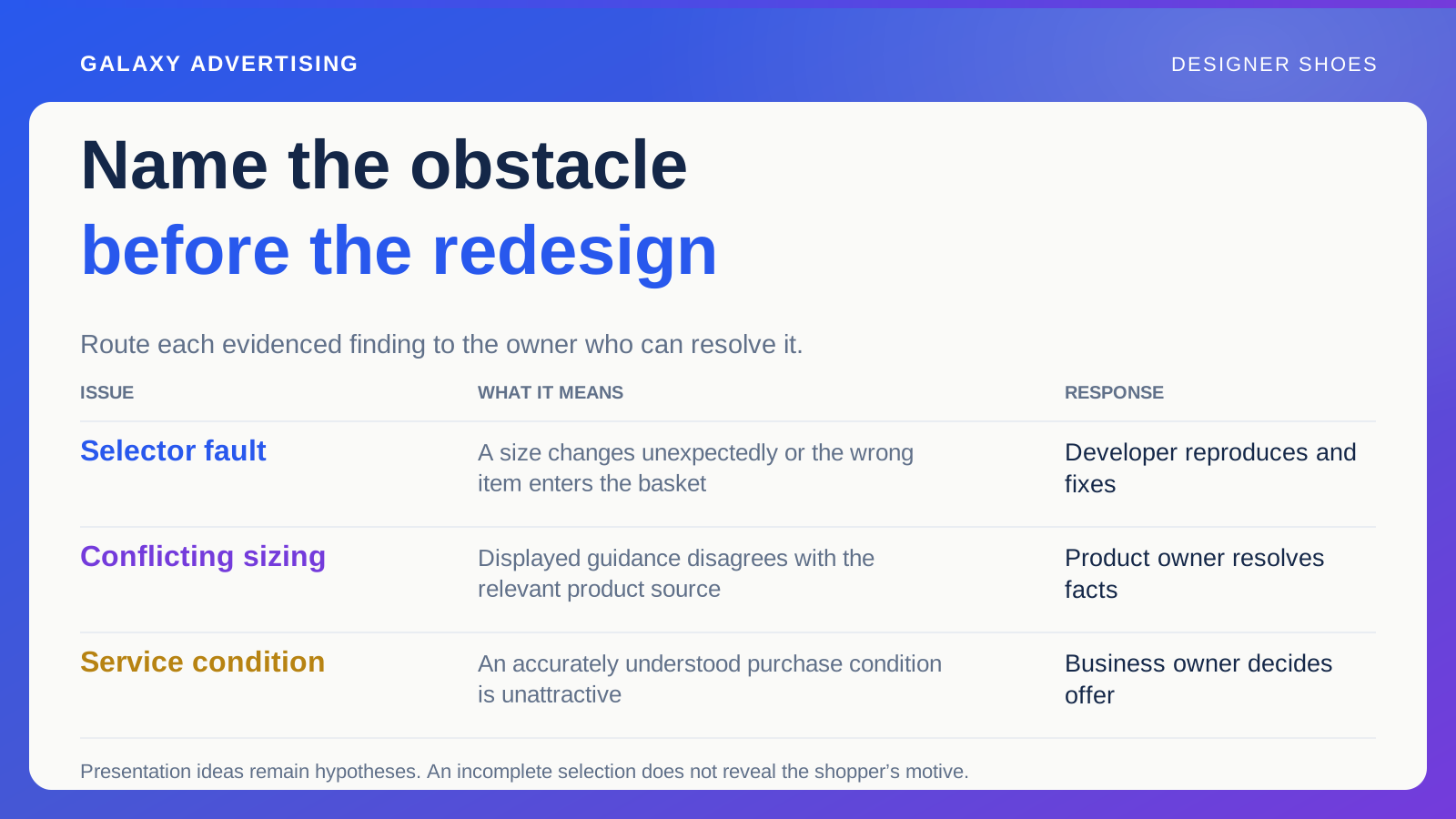
Ask the product owner to resolve conflicts. If a supplier's model reference disagrees with an older page note, repeating both without explanation doesn't offer useful choice. It leaves the customer to reconcile information your own team hasn't settled. The correction needs a responsible source.
Keep that source accessible to the people maintaining the page. A new writer shouldn't infer authority from a sentence's confident tone. Accuracy needs a reference the team can maintain, rather than depend on whoever remembers why the copy was entered in the first place.
Make conventions and units clear
Identify the size system the product uses and how your available options are presented. Verify conversions against the relevant source. Don't assume that a general table represents every model accurately just because it offers a convenient shared format. The reference needs to match the claim being made.
Use consistent labels across selector, guide and basket. Someone choosing in one convention shouldn't encounter an unexplained different label later. Where a distinction can't be avoided, explain it clearly rather than asking the shopper to guess whether they still have the intended item.
Review the chart on a phone. A wide table can become difficult to read or separate headings from the values they describe. Having a chart technically present doesn't establish that a person can use it while choosing a size. Check the reading experience as part of selection.
Keep the scope tied to the model
Where verified guidance applies to a particular model or version, say so. A shared template shouldn't silently spread one pair's sizing statement across the whole brand. The scope of the evidence needs to remain visible as the information moves between pages.
Separate measurement from interpretation. Report a factual measurement with its method and units. Whether that number suits an individual requires more context than the measurement itself provides. Clear presentation can help the assessment without pretending the figure settles the personal question.
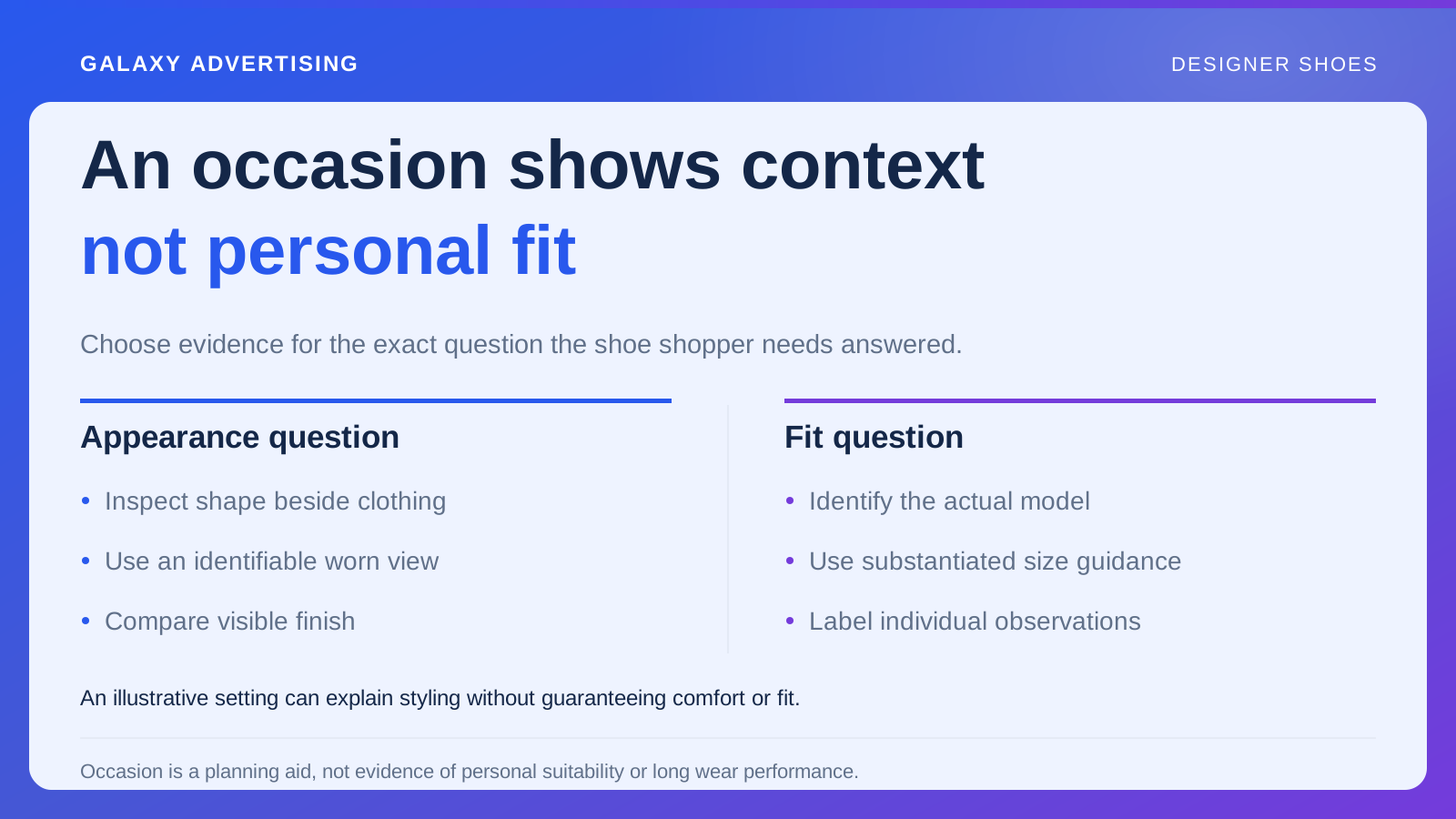
If customer comments are useful, label them as individual observations and retain relevant context. Enthusiasm doesn't turn a review into a universal fit guarantee. You can communicate uncertainty responsibly without leaving the shopper with a collection of vague statements. The helpful part is knowing what each statement can actually establish.
Put guidance beside the choice it supports
Give the size selector an intelligible route to the right guidance. People shouldn't have to search a general help centre, then decide which article concerns the model on screen. The information needs a connection to the task as well as a place on the website.
Use plain labels. A clear invitation to view model sizing is more useful than a decorative name whose purpose becomes obvious only after opening it. Make the next step recognisable before asking someone to take it.
Check the interaction after the guide closes or the shopper returns. Does the product remain identifiable? Losing the selected variant, meaning the chosen size, colour or configuration, or losing page position can make a useful guide feel like a detour. Follow the real interaction rather than merely confirming that the link exists.
Be honest when the required size isn't available
Show unavailability clearly and distinguish it from a selection fault. A shopper shouldn't need to attempt checkout to discover that their chosen size can't be purchased. The status belongs where they make the selection, not as an unpleasant surprise later in the route.
If you offer alternatives, explain meaningful model differences. Similar appearance doesn't establish identical fit or allow a personal sizing decision to transfer automatically. An alternative needs enough information for its own assessment, rather than borrowing certainty from the original pair.
Describe any unavailable size request process accurately. Don't promise future supply without confirmation. Recorded interest can inform merchandising, but it isn't a guaranteed future order. Keep that distinction in internal planning as well as the wording customers see.
Connect sizing with the purchase conditions
Make applicable delivery, return and exchange information accessible before commitment. Use current approved wording and relevant conditions. A casual summary shouldn't create a stronger promise than the business offers. The customer may quite reasonably want to inspect the process while fit remains uncertain.
That investigation is a legitimate part of choosing, rather than hesitation for product copy to eliminate through excessive reassurance. Give questions staff can't answer reliably a clear response route. They need to know where correct model information lives and when a personal recommendation goes beyond what the retailer can establish.
Keep page and customer service answers on the same factual foundation. Then test one identifiable model through the selector, guide and basket. Record any missing model label or change in convention. This doesn't establish personal fit. It checks whether you're presenting one coherent reference instead of asking the customer to reconcile unexplained systems during selection.
Maintain the reference as products change
Review the guidance when a model reference, supplier source or product version changes. Shared templates can retain obsolete wording long after its original evidence has disappeared. The convenience of a template doesn't make the information permanently current.
Keep a short correction record naming the model, statement and source used. Verify the selector, guide and basket where relevant. Updating a spreadsheet isn't enough if another output still shows the old convention.
A dependable sizing page gives shoppers evidence they can understand and a model they can identify. Its usefulness comes from that coherence, rather than a generic chart supported by a sentence more certain than its source.