You open the leather loafer page your campaign is promoting and look down the size selector. Several popular sizes are unavailable. Meanwhile, the creative team has been asked for better assets because visitors are looking at the options and leaving.
The loafer may be the strongest looking product in the collection. That doesn't make it equally purchasable for everyone who wants it. Footwear advertising needs a view of the actual sizes on offer, and of what happens after purchase. An order's commercial story can continue through an exchange or return.
Look at the sizes behind the stock label
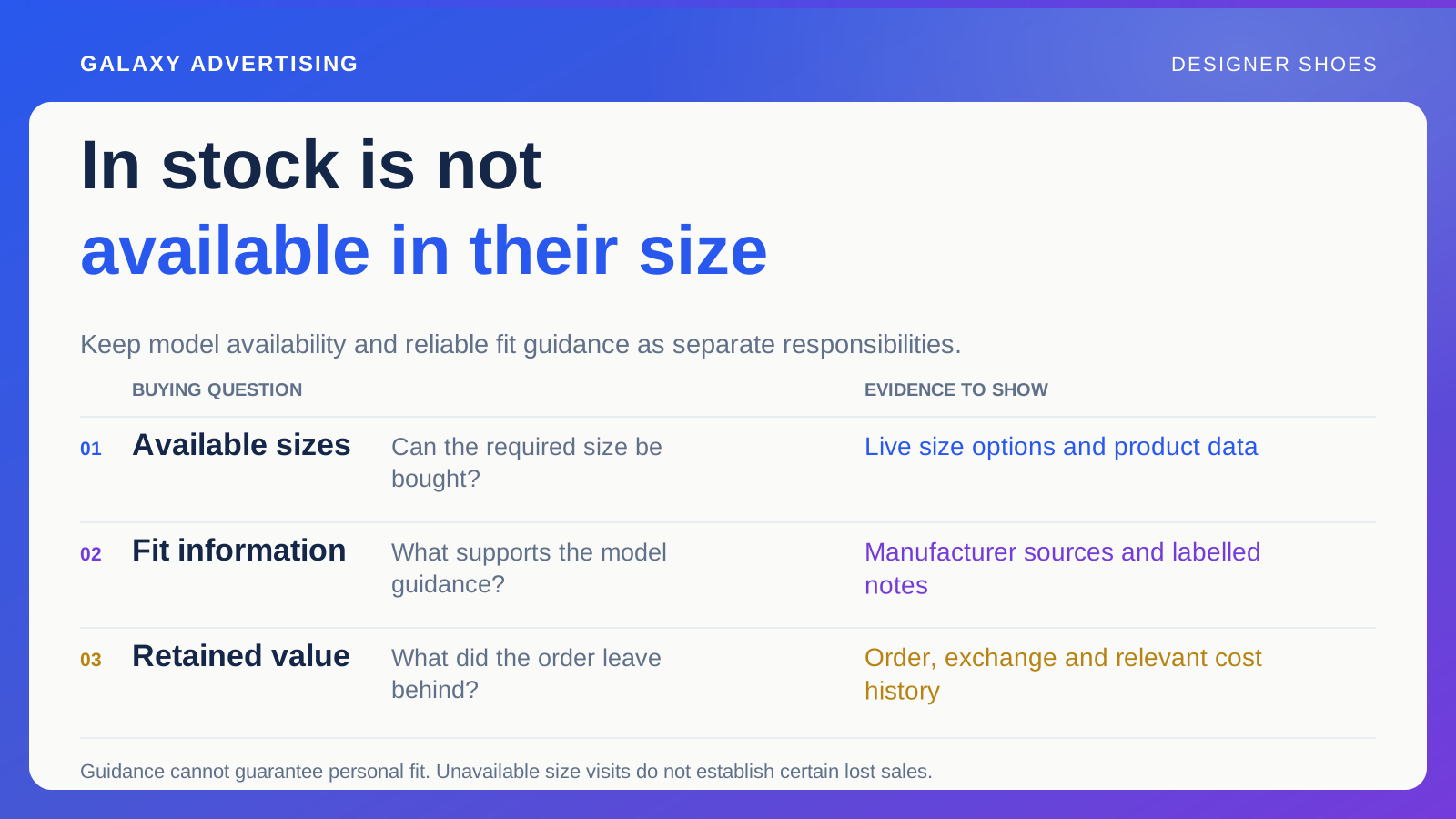
Start with the styles receiving promotional attention. Check available sizes on the product page and in connected product data. Keep a style being generally in stock separate from a useful size being available. Those statements can describe quite different opportunities for the person arriving from your advert.
The response depends on your range and the system's capabilities. You might choose a better stocked style, change promotional emphasis or improve the route to relevant alternatives. Verify the account and product setup before promising a particular control. A sensible commercial intention still needs a supported way to act on it.
Agree who tells marketing when availability changes. You don't have to wait until the whole style sells out for its promotion to become less useful. The practical offer can narrow while the campaign continues to look perfectly live.
Help people assess fit without guaranteeing it
Provide guidance you can substantiate for the actual model. Separate manufacturer information, measurements and subjective customer observations. “True to size” shouldn't become a universal guarantee that rules out every possibility of variation. Useful guidance can acknowledge its limits and still help someone decide.
Put it where customers select a size. An answer hidden in a general FAQ can be missed at exactly the point it would help. Check access as well as whether the information exists somewhere on the website.
Make units and sizing conventions clear. Where you show more than one system, verify the relationships. Don't assume a generic conversion chart accurately represents every model in the range. The reference needs to fit the product you're asking someone to buy.
Show the shoe people will wear
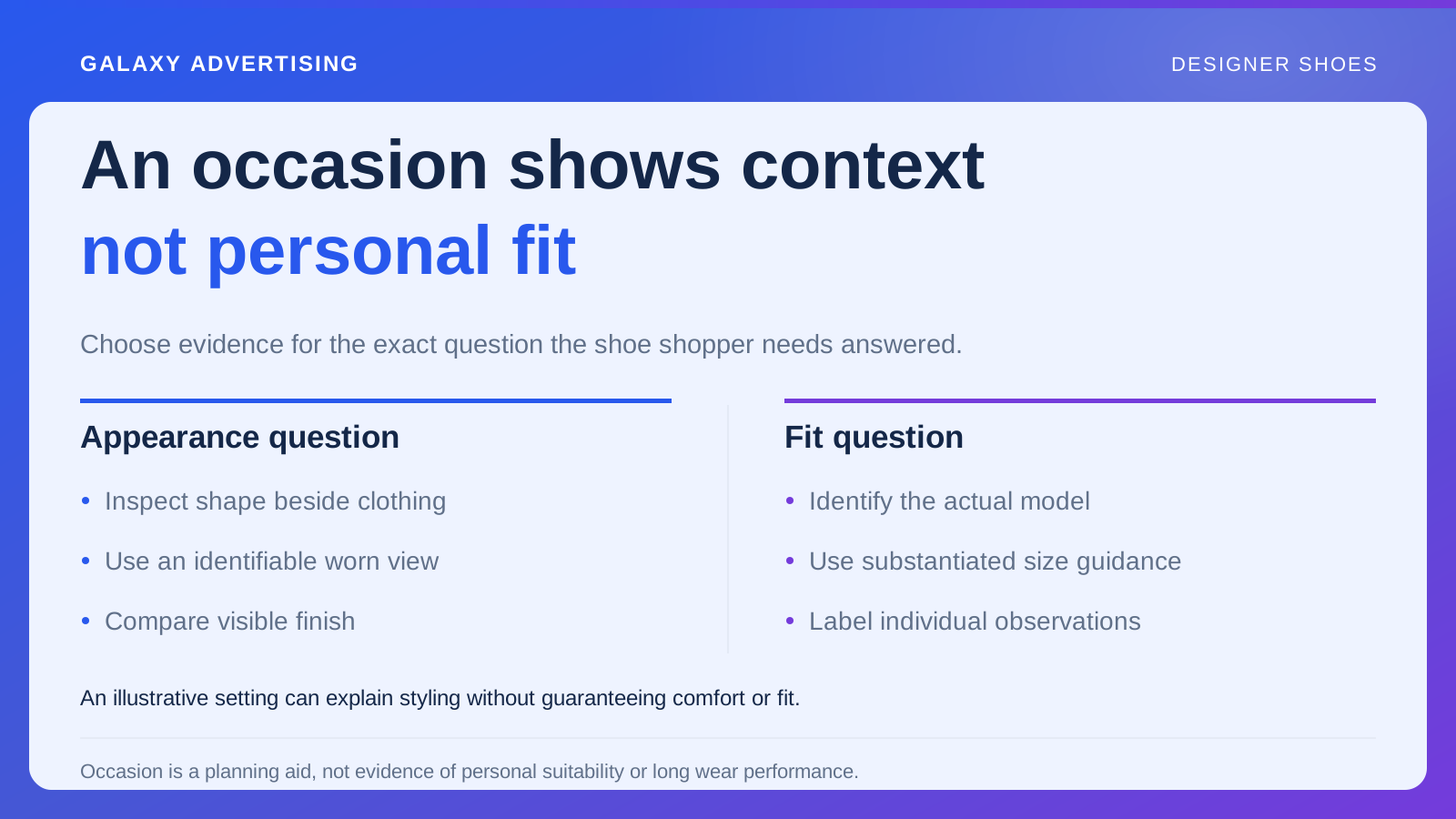
Photography can explain material, shape and detail. A relevant worn view helps a shopper judge proportion and styling. Keep the actual model and finish identifiable throughout, so the additional view clarifies the same offer rather than introducing uncertainty about which pair is shown.
Visual editing shouldn't materially change the toe shape, sole or material appearance from the product supplied. A premium presentation needs to make the shoe easier to understand. Making a more appealing version of it creates a different expectation altogether.
Choose distinct buying arguments. Construction detail, a styling use case and available fits are different ideas. Replacing the background in the same product shot doesn't test those differences. Decide what the asset should help someone understand before deciding how many versions to make.
Explain the conditions before the commitment
Someone unsure about fit may check delivery and your stated returns or exchange process before ordering. Make applicable information clear and consistent across the product page and checkout. It's part of assessing the purchase, rather than a detail to leave until afterwards.
Check what the business actually offers before calling a process free, effortless or unlimited. Conditions affecting cost or practicality shouldn't emerge only after the shopper has committed. Attractive shorthand isn't useful if it hides something material to their choice.
When questions recur, distinguish missing information from existing information people can't find. Both can weaken confidence. They need different corrections, though, so find which one you're dealing with before commissioning more explanation.
Follow the money after the first purchase record
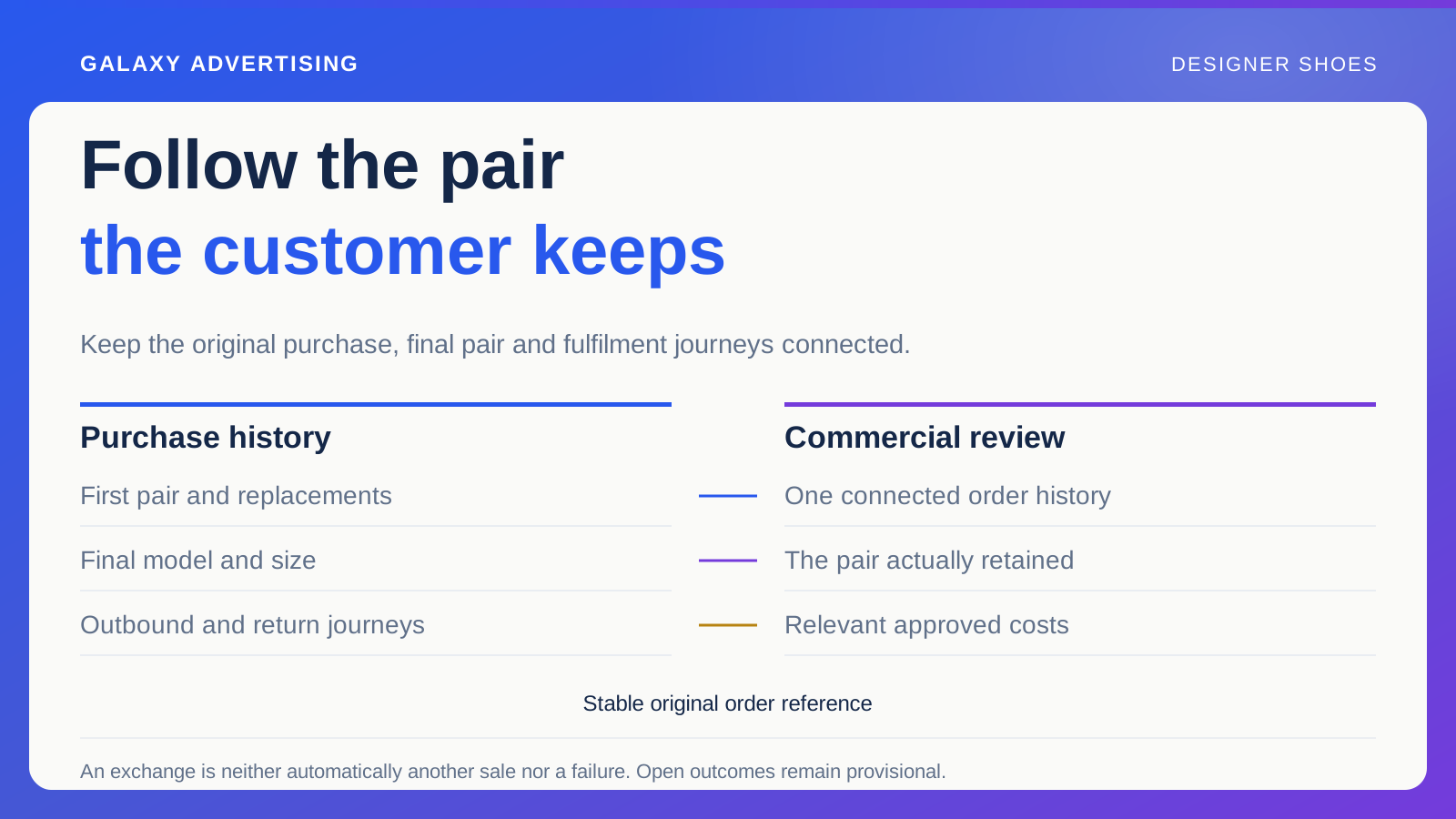
Advertising can record a sale before you know its final commercial consequence. Review available order history alongside exchanges, refunds and relevant fulfilment costs, using consistently defined periods. Initial revenue alone won't tell you whether every order was equally worth acquiring.
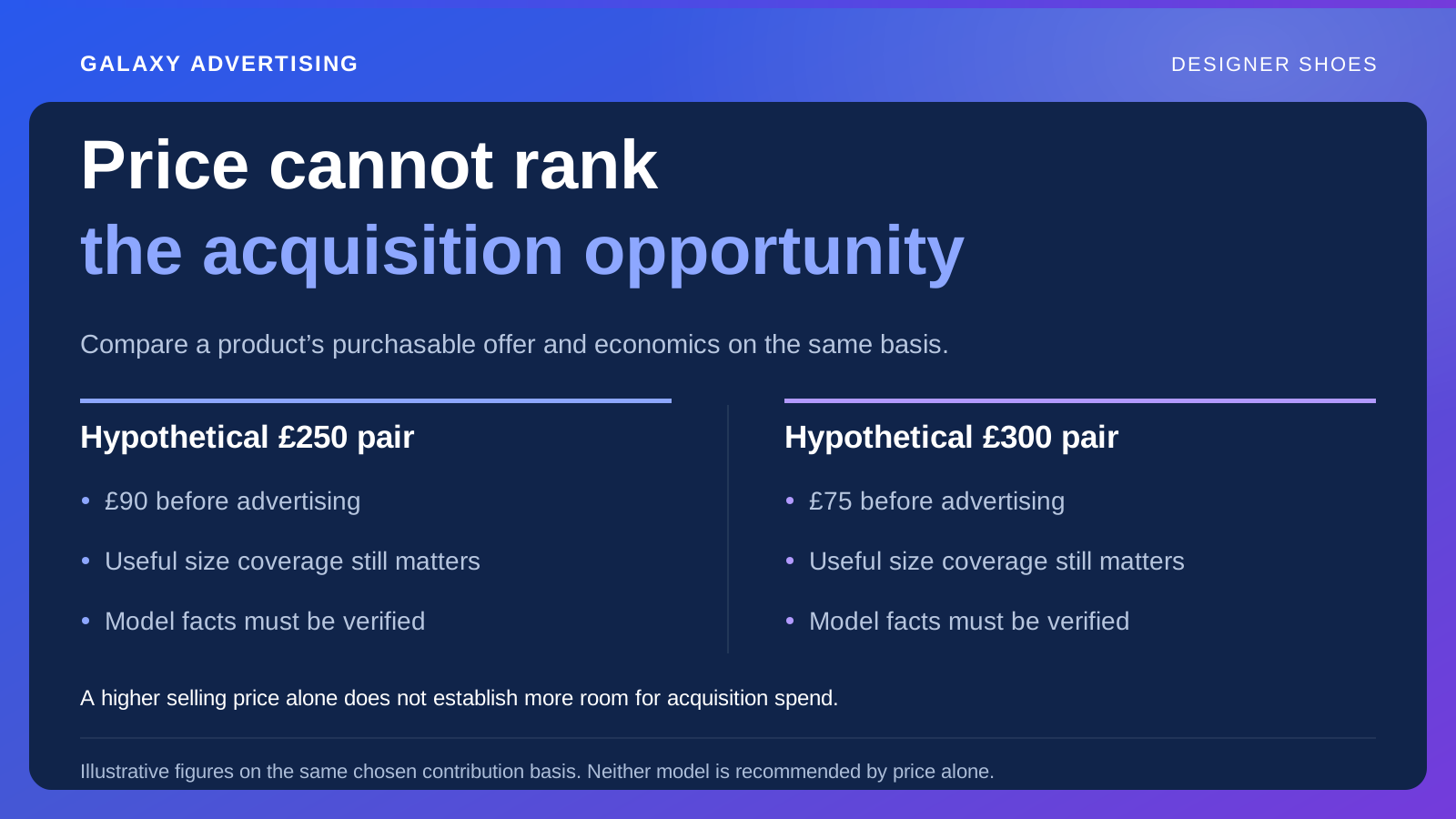
Take an illustrative pair sold for £240. On the business's chosen contribution basis, meaning the money remaining after the costs included in that calculation, it might leave £90 before acquisition. If advertising costs £45, £45 remains before costs excluded from the calculation. An additional exchange cost can reduce that remainder.
Those figures are hypothetical, not a footwear benchmark. The point is to include costs that matter to your retailer, rather than assign the same commercial value to every initial purchase. Keep the scope of the calculation visible beside the result.
Compare styles with the context attached
A style with slightly weaker initial acquisition efficiency can remain attractive if fit is better understood, useful sizes stay available and final contribution is stronger. Another can appear efficient until repeated exchange or fulfilment costs enter the picture. The first advertising result isn't necessarily the whole comparison.
Don't decide from a handful of unusual orders. Use a suitable sample and show its limits, including seasonality, promotional pricing and customer mix where relevant. Give merchandising, operations and advertising the same definitions so plausible reports don't point towards conflicting priorities.
Give stock and fit information their own owners
Keep a short record for promoted styles: available sizes, fit information source and the person who updates each. A variant is the selected size, colour or configuration. Stock and fit facts can change independently. Reliable guidance can coexist with depleted sizes; healthy stock can coexist with guidance that now needs correcting.
Make that handover explicit instead of asking advertising to diagnose both from a sales summary. When a style receives more attention, check readiness again, including relevant alternatives and whether their differences are described accurately.
Clear ownership doesn't guarantee stronger results. It does make the decisions more defensible and helps distinguish desire for a style from demand you could actually fulfil in the required sizes.
Keep the route useful when a size is missing
Show unavailable sizes honestly. Where relevant alternatives exist, explain meaningful differences without implying identical fit. An option sharing the intended style or occasion can preserve the shopper's progress. A random product row leaves them starting again.
Interest in unavailable sizes can inform a future merchandising question. Visits alone don't establish how many orders you would definitely have received.
Desire brings someone to the shoe. An accurate model, credible fit guidance and transparent purchase conditions help them assess ownership. Better creative matters, but it can't put an unavailable size into their basket.