What does “elegant and versatile” tell your customer who needs shoes for a formal event? It doesn't identify the materials, explain the available styles or give them reliable information for choosing a size. A beautiful collection can still leave the buying task unresolved.
Occasion gives advertising a useful context. It doesn't establish personal suitability. Connect the recognisable task with accurate product evidence and a clear next step. That helps someone inspect the offer without pretending a broad lifestyle label tells you everything about the person considering it.
Ask what the occasion changes for this shopper
Use actual enquiries to identify practical questions. Someone preparing for a dress code might compare appearance and finish. Another may want a style that works with clothes they already own. Someone else may need to replace a familiar model before an event. Those are different tasks within the same broad occasion.
They suggest different messages and destinations. Collapsing them into “affluent professionals” doesn't give a creator much direction about the evidence to show. An audience description needs to connect with a product question before it becomes useful production guidance.
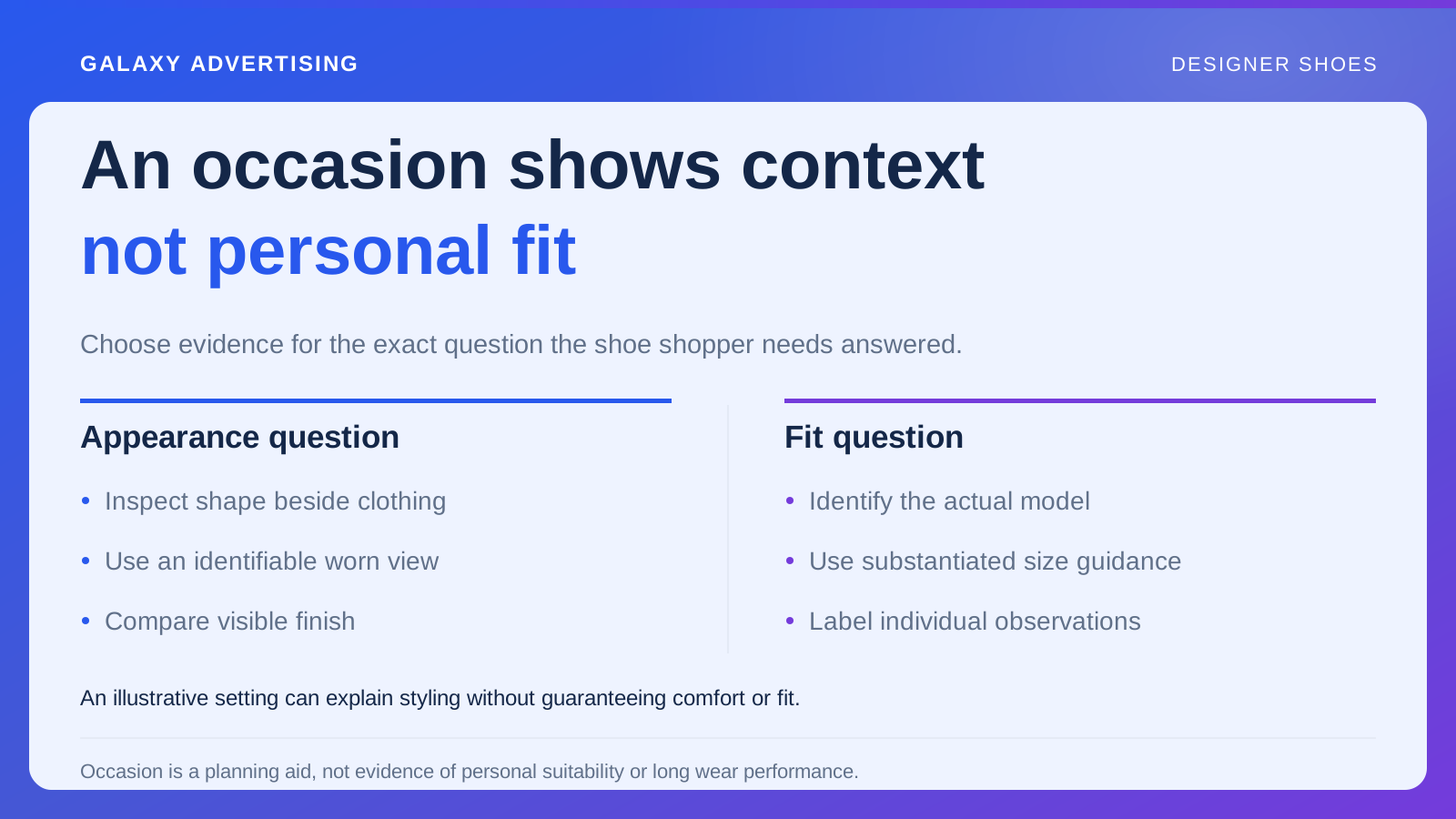
Treat occasion as a planning aid, rather than a guarantee. You can show a shoe styled in an illustrative setting without declaring it correct for everyone attending a similar event. The shopper's circumstances and preferences remain theirs. A recognisable situation needn't become a universal recommendation.
Keep appearance and fit questions distinct
A worn view can communicate proportion and styling. It can't establish that the model will fit a particular individual. Make that distinction clear in both the production brief and the destination, rather than letting an attractive demonstration carry a promise it can't support.
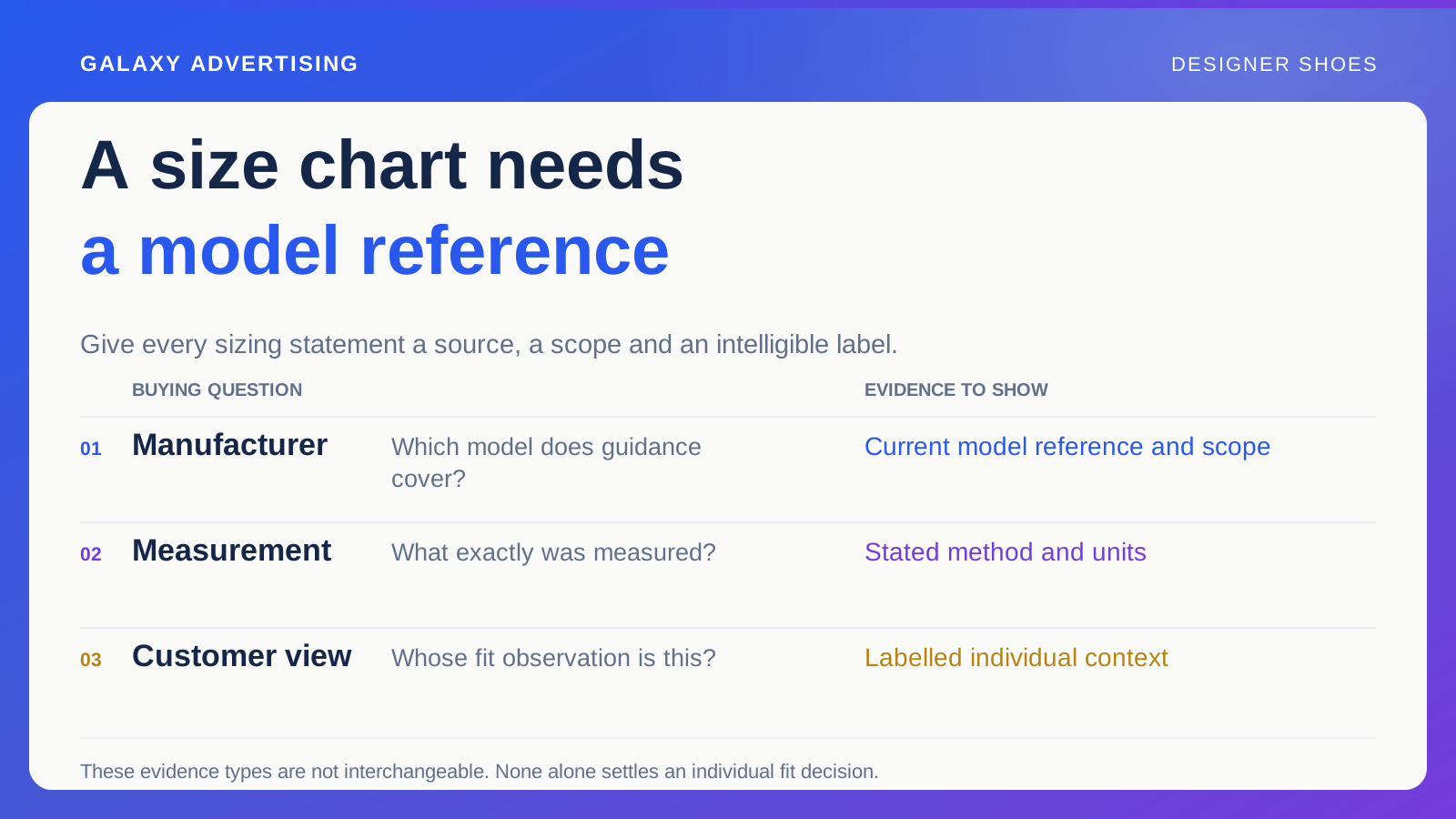
Use references you can substantiate for the actual model when discussing fit. Distinguish manufacturer guidance from subjective customer observations. Neither should quietly become a universal assurance. Helping someone assess a product is different from settling their personal fit in advance.
Classify a specific question before answering it. Seeing toe shape beside a trouser hem requires different evidence from understanding a sizing convention. That distinction can sharpen advertising and customer responses without inventing personal recommendations. The more precise the question, the clearer the useful answer becomes.
Settle the model before commissioning the scene
Choose the shoe, finish and available configuration you'll promote. Check for a useful purchasable range of sizes. A scene built around a depleted model may create attention you can't fulfil, however appropriate the styling feels. The commercial reference needs to come before the set dressing.
Give the creator approved references for shape, material appearance and relevant details. Don't let editing quietly slim the sole or make the finish more reflective than the product supplied. The scene is there to explain this shoe, rather than improve its physical characteristics.
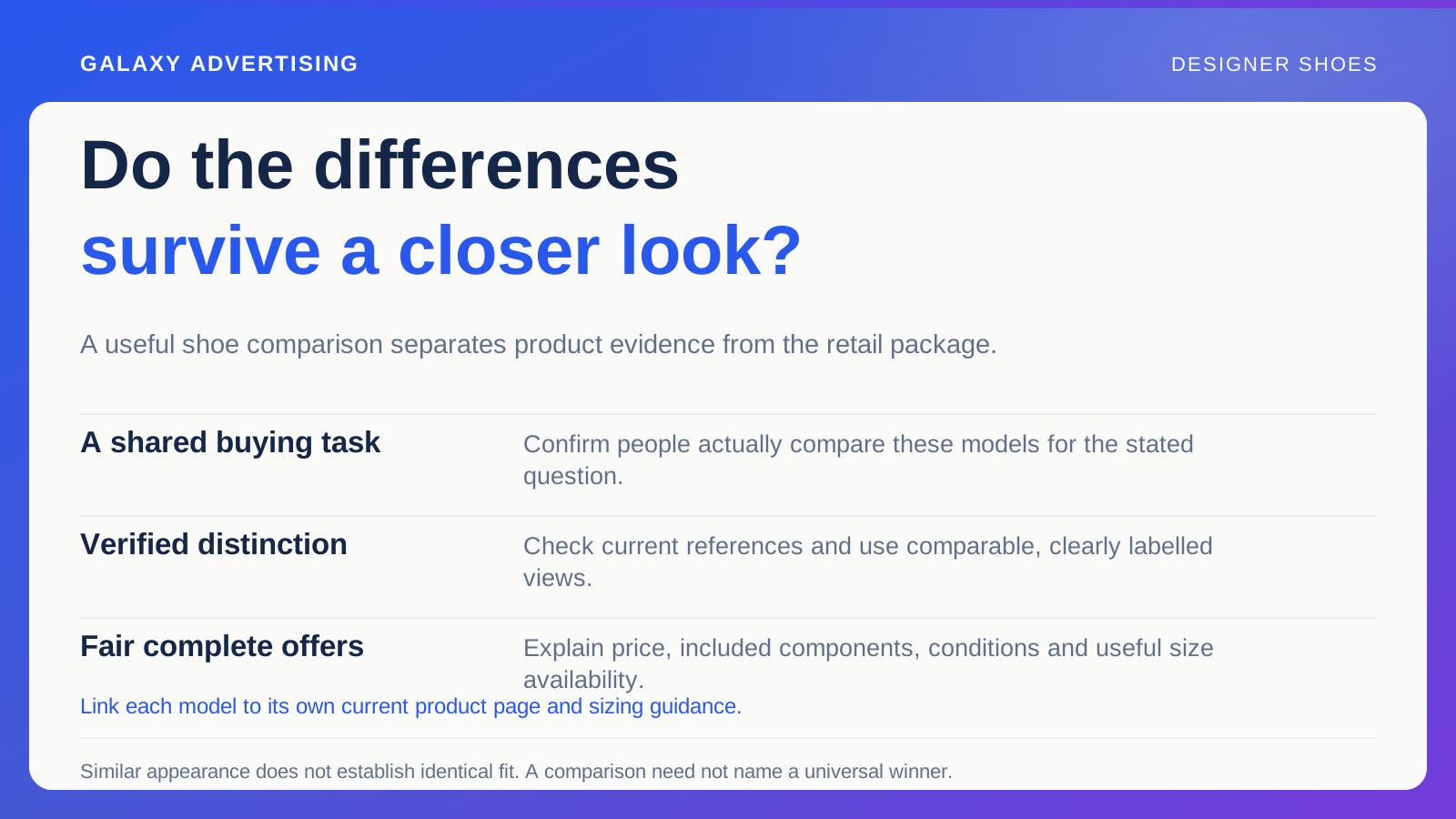
If several models appear, identify them clearly. A shopper shouldn't have to infer which pair belongs to the stated price or product link. An attractive assortment still needs a coherent commercial reference. Without it, the scene can create interest while making the next action unnecessarily uncertain.
Let the scene illustrate what it can actually show
A recognisable setting can explain intended styling. An illustrative formal outfit, for example, can make shape and finish easier to judge than a decorative slogan. Use that visual contribution properly; it can do useful work without making broader promises.
Avoid implying unsupported comfort, durability or performance. A person looking at ease in a short scene doesn't establish how every customer will experience the shoe over a long event. The setting can suggest a use context without proving that personal experience.
Ask what viewers can observe directly. Finish, proportions and the relationship to clothing may be visible. The same evidence doesn't establish personal comfort. Keeping those roles distinct makes the argument more credible without removing its emotional appeal. You can make a scene engaging and still be honest about its reach.
Carry the buying task onto the next page
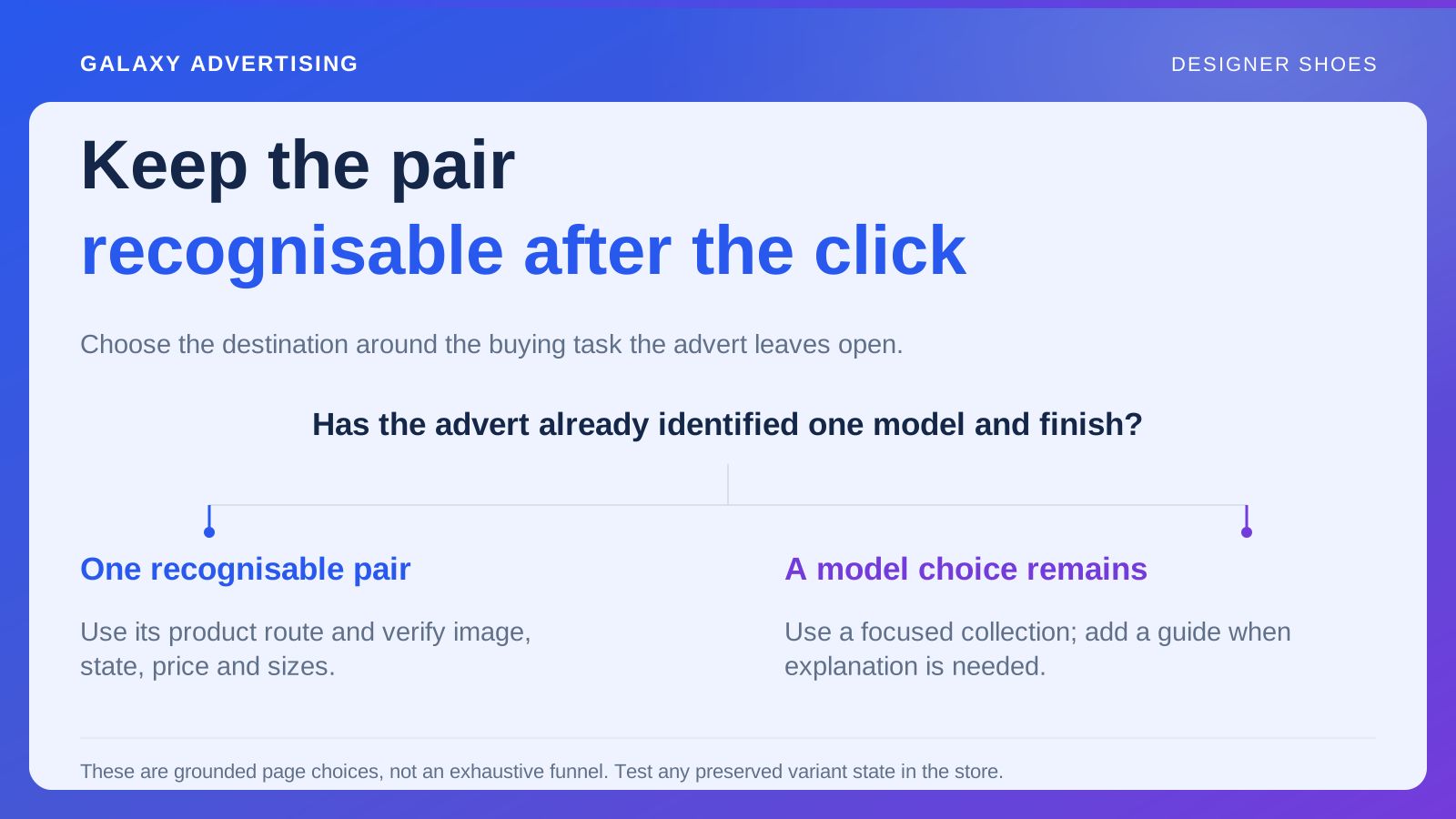
If the advert identifies one model, use a page where that model and finish remain recognisable. If it introduces a choice of styles, use a focused range explaining relevant distinctions and keeping useful sizes visible. Match the destination to the progress the shopper has already made.
Put reliable model information where people can find it during selection. A general brand description is unlikely to answer a question about the pictured pair. Label routes to size and purchase information plainly so the customer can reach the detail they actually need.
Verify availability and timing against the service you can provide. Someone buying for an event may care keenly about arrival, but don't borrow an optimistic delivery promise from another product or destination. Accurate conditions matter more than adding urgency to a decision already tied to an occasion.
Listen to the questions the campaign creates
Read enquiries and available product exploration alongside campaign reporting. Can people find the demonstrated model? Do their questions concern the intended styling decision, or does the creative repeatedly confuse what's included or available? The distinction points towards different corrections.
A few conversations aren't a complete account of every viewer. Use them to identify a specific correction or a question worth investigating more systematically. Keep commercial suitability in view too: plausible interest can still lead to weak retained contribution or repeated fulfilment problems. Contribution is the money remaining after the costs included in your calculation.
Consider someone who knows the model already and wants to see whether a particular finish works with an outfit. A general brand introduction may add little. An identifiable product route and clear worn reference address that person's actual question more directly.
Make the next production task concrete
The next asset might need a clearer worn view, better identification of the finish or a route to verified size information. Translate the observation into that specific task. “Make it feel more premium” doesn't explain which uncertainty the work should resolve.
Record the occasion, product evidence and customer question behind the concept. That memory helps prevent a succession of assets differing only in background.
Occasion earns its place when it makes an identifiable shoe easier to assess. A relevant illustration and practical access to facts give the customer something firmer than a lifestyle label to decide on.