Account access and a product feed are not a complete agency brief. They won't tell your new team which electronics bundles need specialist advice, which supplier records you distrust or which models keep your support team occupied.
Yet you might hand those over with a perfectly reasonable request: grow sales. The problem is that the exceptions can change what responsible growth looks like. Your brief needs to connect the commercial priorities, reliable product facts and people who can settle a question. It also needs to stay useful after somebody first writes it.
What decision are you paying the agency to improve?
Start with the immediate commercial purpose. Perhaps you want more contribution from demand you already receive, meaning the money left after the costs included in your calculation. Perhaps you want to introduce another model family carefully, or create a better route for customers who need technical advice before buying.
Those are different jobs. A list of advertising platforms doesn't tell your agency which job it has. The same channel could support several purposes, each needing its own product choices, destinations and evidence.
Share what you've tried and what you still don't know. Include the reasoning behind earlier decisions where you have it, especially tests that didn't support your original expectation. Your new team needs the business's useful memory, alongside the latest account structure and the favourable highlights.
Tell them where the catalogue needs explaining
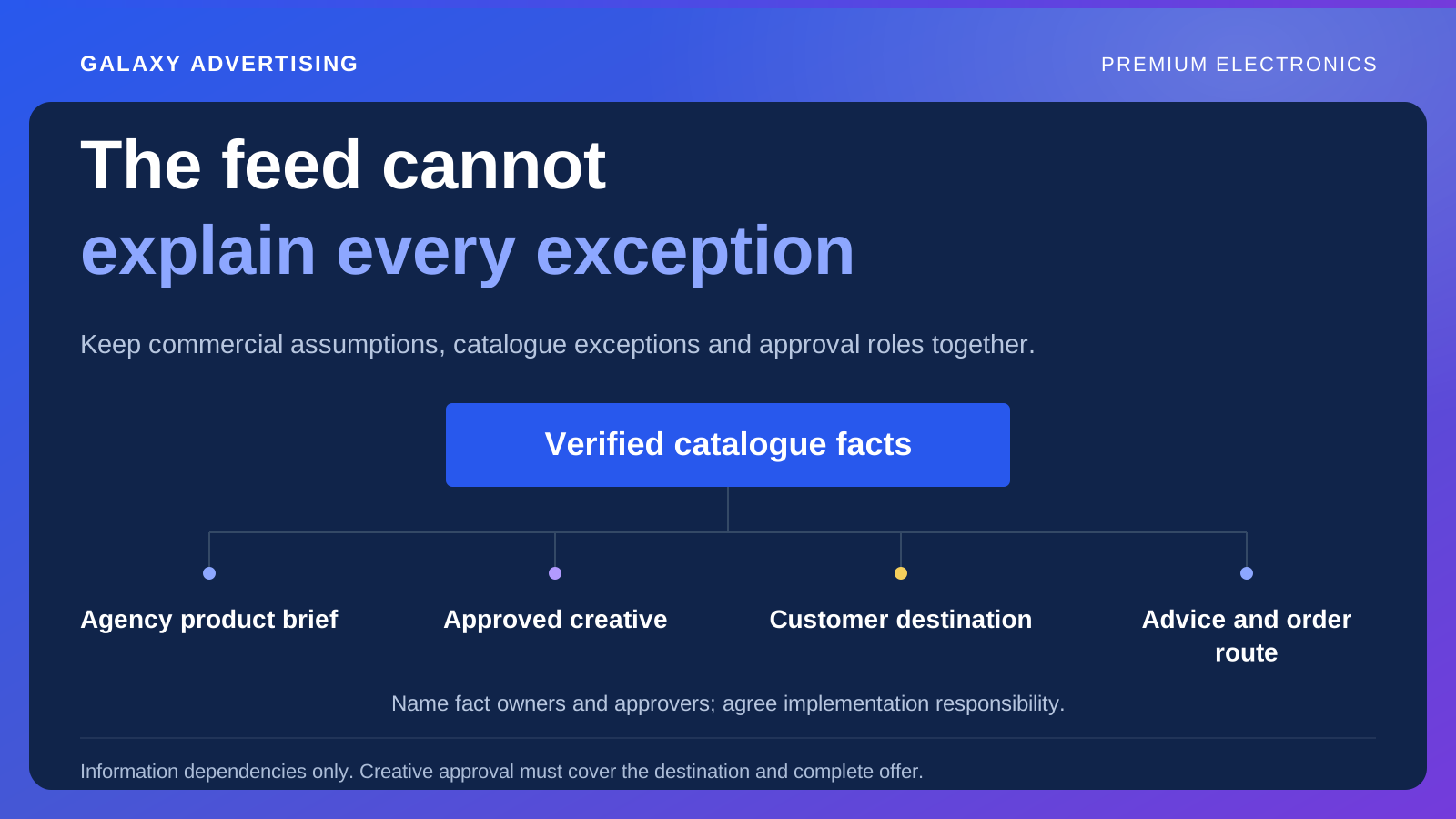
List the distinctions that ordinary product fields don't make obvious. Your retailer bundles, regional versions, special delivery arrangements and products needing an extra availability check all belong here where relevant.
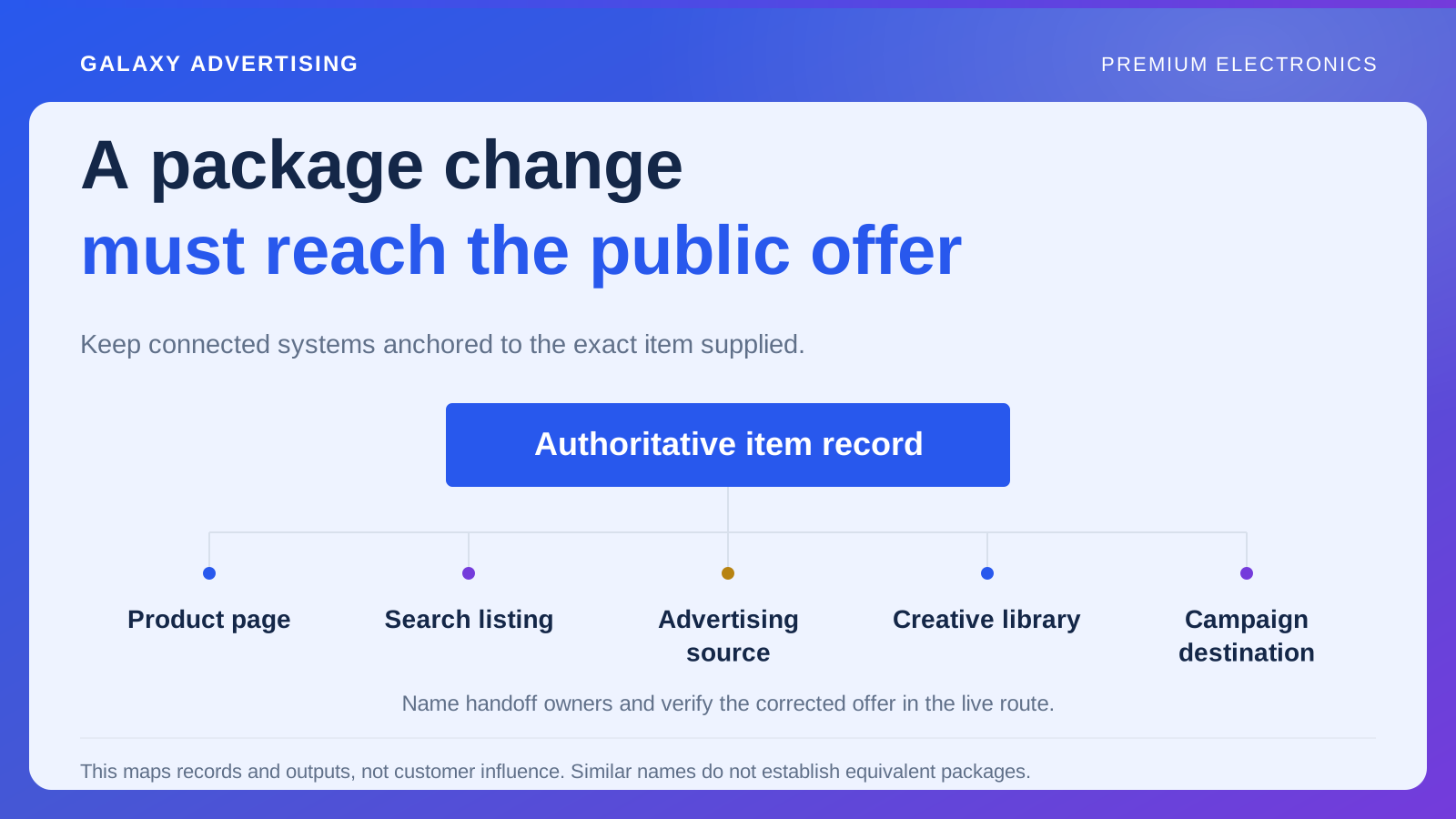
Use exact item references and explain what the exception changes. Saying a range is complicated leaves the agency guessing. Saying that a particular package includes a component maintained separately gives them something they can check before promoting it.
Give each type of exception an internal owner. Before changing a destination or commissioning creative, the agency needs somewhere reliable to verify the facts. Conflicting supplier descriptions need resolving by somebody with authority. Choosing whichever description sounds most persuasive isn't a sensible substitute.
Agree what a worthwhile order means
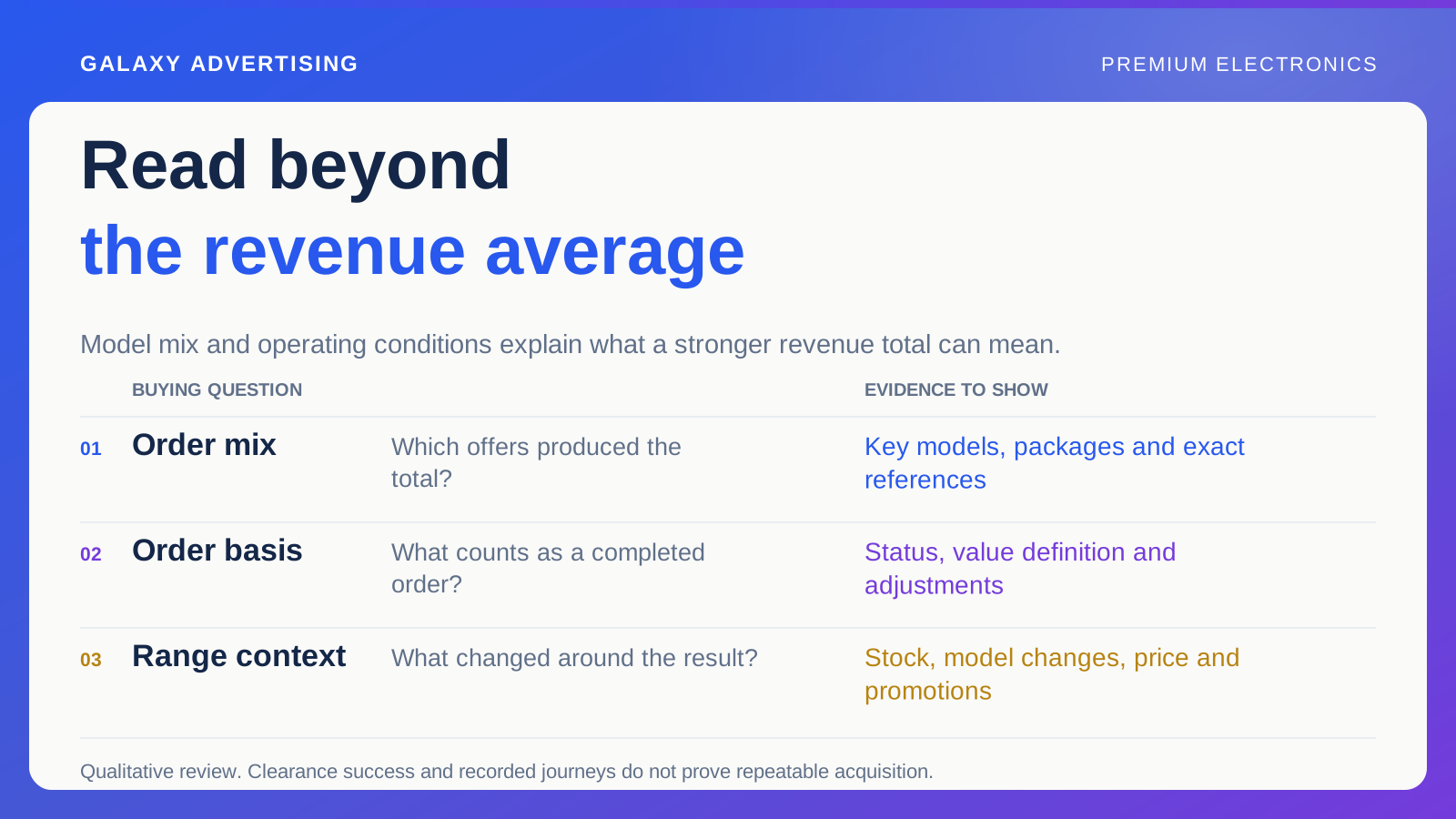
Set out your revenue basis, relevant variable costs and contribution assumptions. Explain how refunds, cancellations and changes to a package appear in your records. Otherwise, you can approve the same result while each side is looking at a different calculation.
Keep the product groups useful. A distinction earns its place when it changes a decision and your business can maintain it. Hundreds of classifications that fall apart whenever the catalogue changes can create work without helping anyone judge an order.
Label estimates and gaps plainly. Your agency can propose a limited way to learn more, but it shouldn't invent a margin policy to produce a target. Whoever owns your finances and commercial priorities needs to approve those economic assumptions. That responsibility stays a business decision.
Walk through the advice and order route
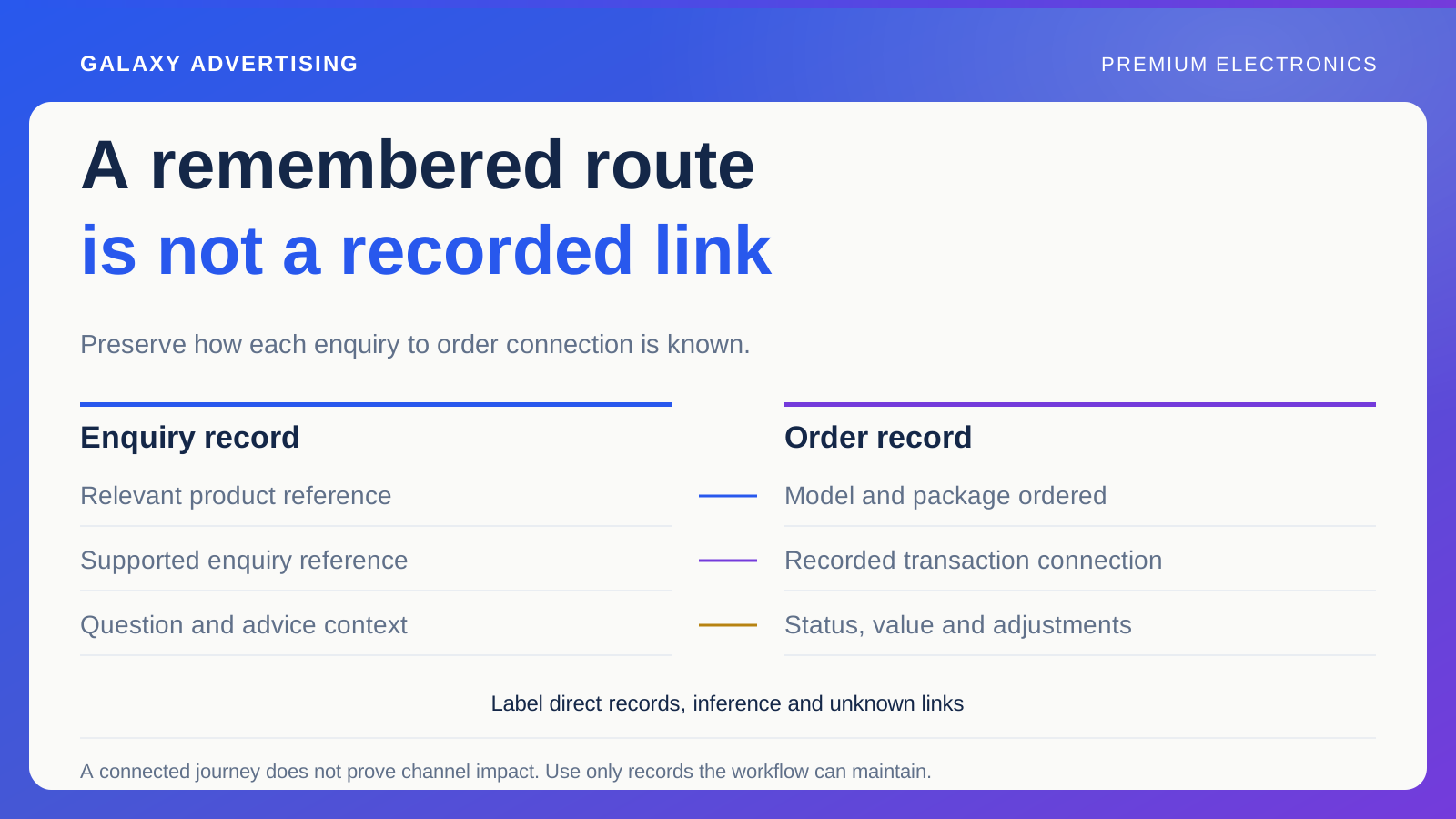
Show how someone moves from researching on your website to asking about a product and finally buying it. Where your business records the connections, identify the systems and references linking those steps.
Explain what an adviser can establish, and what needs more information from the customer. Your advertising should promise only the assessment your service actually provides. A convincing advert can still set the wrong expectation about the conversation that follows.
Describe normal response handling and the exceptions. If an answer needs manufacturer confirmation, show how that affects the customer's route. Suitable interest can arrive while the operational process fails to resolve it. Agreeing who owns each part before reporting starts makes those different problems easier to recognise.
Give creative work a factual starting point
Supply approved model images, documented facts, package contents and the relevant usage permissions. Label the files so a producer can distinguish similar versions without remembering which image somebody mentioned in a conversation.
Identify claims needing further review and name their approver. An agency's ability to make persuasive creative doesn't give it authority to verify every model's technical promises. Make the checking route clear before production needs an answer.
Keep the destination in the asset brief too. A truthful film beside a different package or price can still mislead. Agree approval for the complete communication, including material changes to the surrounding copy. Approving the video file alone doesn't cover everything the customer encounters.
Make it clear who can change what
Confirm business ownership of the relevant accounts and assets. Give access appropriate to the agreed work, and establish how you'll review it when staff or suppliers change.
Assign website, data and creative implementation responsibilities explicitly. A recommendation can sit untouched while the agency assumes the developer owns it and the developer assumes the account manager can do it. Nobody meant to delay the work. The handoff was missing.
Agree how urgent faults are handled and which changes the agency can make within its authority. A broken destination or unavailable offer needs a usable route to action, without every routine decision reopening the question of who can approve it.
Before work begins, ask the agency to explain the most consequential assumptions back in its own words. For a hypothetical projector package, that could mean the exact components, permitted service promise and approved contribution basis.
A disagreement here is useful. It exposes a missing handoff before the campaign publishes the assumption. Keep the resolved interpretation beside the brief. You're checking that both sides will promote and evaluate the same offer, rather than testing whether someone memorised a document.
Ask for a decision in return
Your report should distinguish delivered work, observations, commercial interpretation and the recommended next action. A polished dashboard still needs to explain why a model deserves more or less attention.
Specify what information you must supply to keep that review credible. Missing stock or cost updates are dependencies to make visible, rather than gaps that silently weaken a recommendation.
A useful brief leaves room for the agency's judgement while making its boundaries clear. You don't have to prescribe every tactic. You do need the team making decisions about your actual catalogue, service and economics, rather than a tidier imaginary business living inside the advertising account.