Does a projector campaign that produces suitable orders mean you are ready to advertise cameras, speakers and more projector models? It is a reasonable growth question. The existing result is encouraging, but the next range brings more than extra products.
Buying questions, margins, package structures and support needs can all change. Start by understanding what made the first offer work, then ask which conditions exist for the next one. Copying the campaign structure cannot fill missing information or give your team extra capacity to handle complicated orders.
Understand the offer that worked
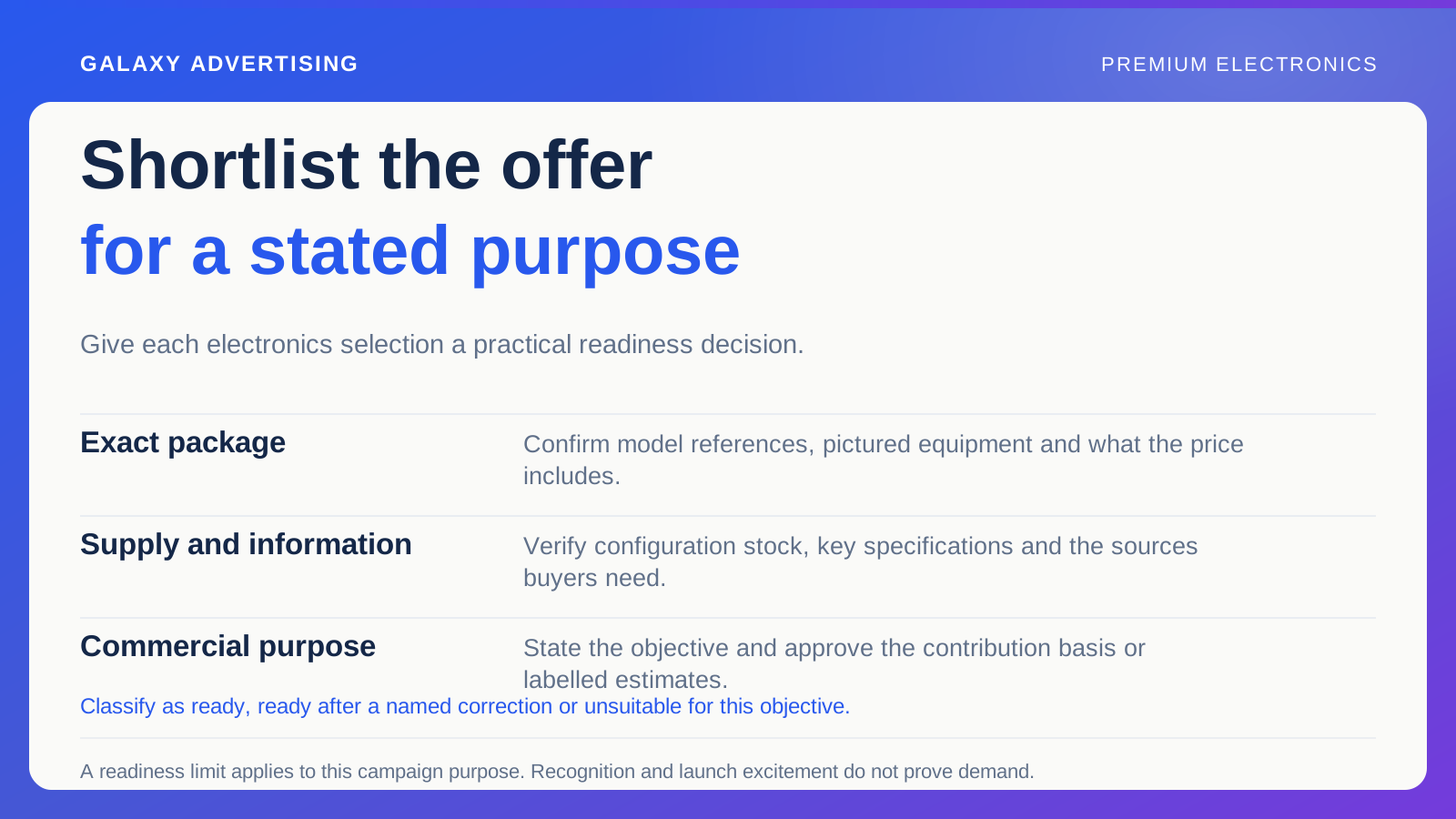
Describe the model, configuration, price, availability, destination and relevant service arrangement behind the result. Record the period, material promotions and any important range condition.
Connect the advertising figures with fulfilled orders and your agreed contribution basis, the money left after the costs included in that calculation. A strong reported ratio is useful context. It should not carry a wider commitment on its own.
Look for unusual conditions. Perhaps the model benefited from established demand, especially clear information or a favourable stock position. That does not invalidate the success. It helps you see what you are trying to reproduce, and what you cannot safely assume another product family shares.
Let the next range pass its own checks
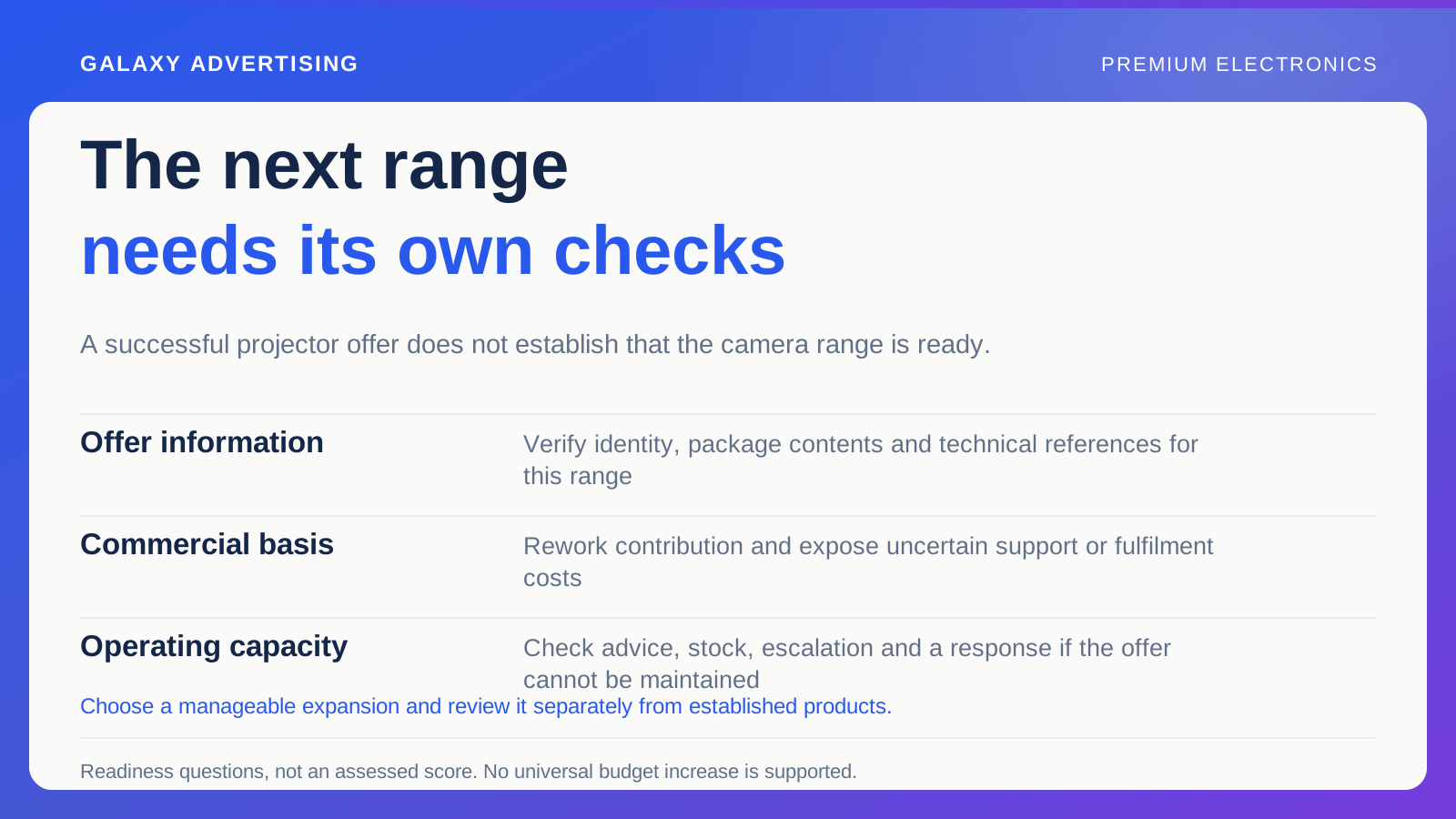
Choose a manageable proposed expansion and inspect its readiness. Verify item identity, package contents, important technical references and the route from the creative to an offer someone can buy.
A complete projector range does not prove your camera information is complete. Camera kits can introduce variant choices, meaning selected configurations, and accessory questions a standalone projector page never had to answer. Preparation should reflect the difference.
Before increasing attention, make a short exception list. Some items may be ready. Others need a factual correction or a commercial decision about the package. That lets you expand selectively, rather than declare the whole range either ready or blocked because its products share a category.
Rework the economics for this offer
Keep the definitions used in your existing review, while allowing the actual costs and requirements to differ. Another family may need a different delivery arrangement or more adviser involvement.
State the assumptions behind what you can afford for acquisition. If you do not know support demand, show the uncertainty. Copying the established model's cost estimate merely hides the question. A visible estimate lets the owner decide how much learning risk the business can afford.
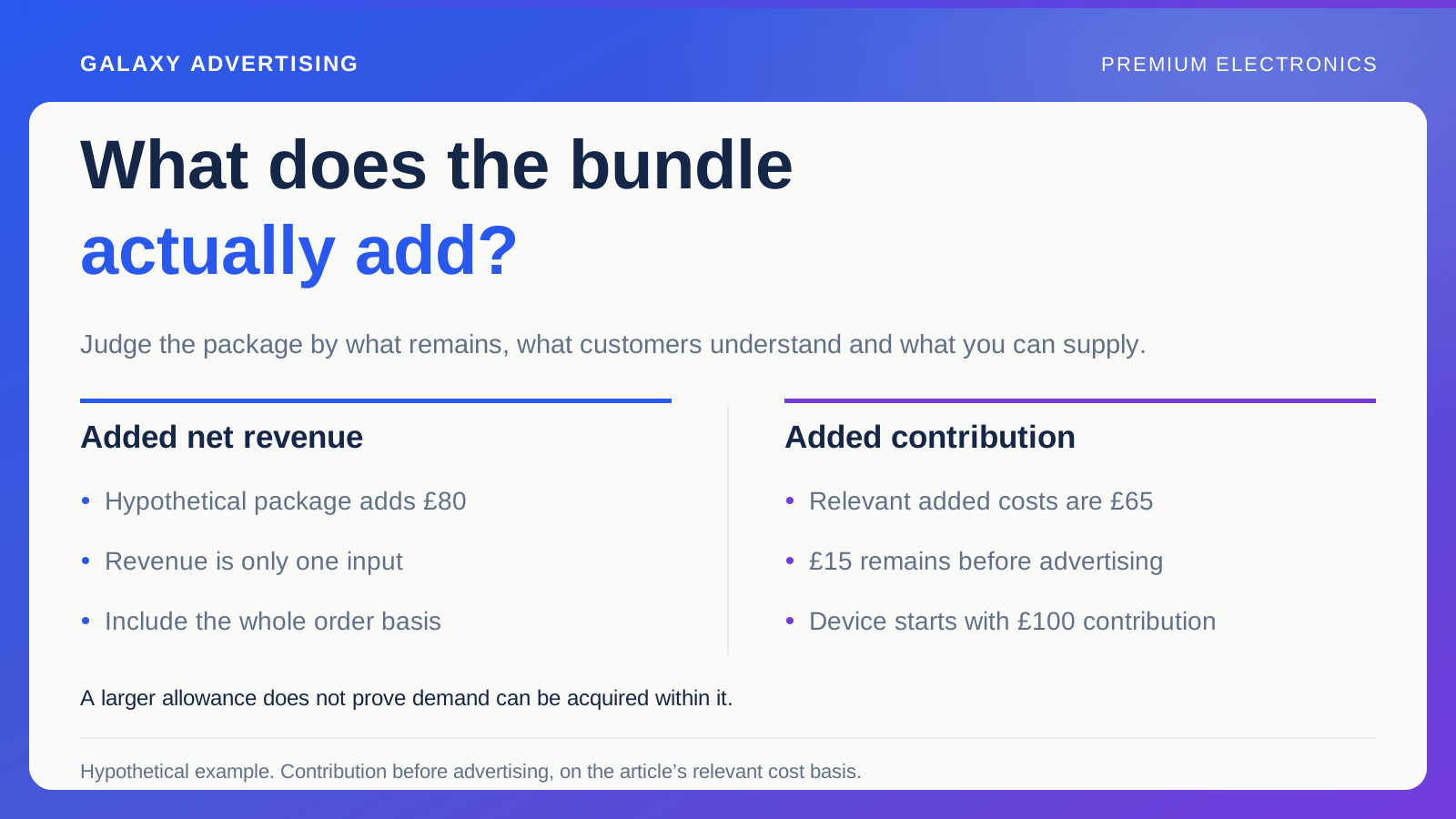
A larger order value does not automatically provide proportionately more room for advertising. That depends on the contribution from the particular order, rather than its headline price. Broader promotion can alter the order mix in ways a blended revenue figure conceals.
Check who will answer the new questions
Ask advisers what enquiries the range is likely to create and whether they have the references to answer accurately. Expertise in one category does not establish knowledge of every technical relationship in another.
Prepare useful explanations before expanding demand. They can reduce repetitive factual questions and leave personal assistance for choices that depend on an individual's circumstances.
Agree how unresolved questions get escalated. More interested shoppers can create delay rather than growth if reliable answers cannot keep up. Capacity concerns both the quality of the response and the number of conversations the team can handle. Counting enquiries alone misses the harder part of serving them.
Protect the promise about stock and fulfilment
Review the units and package components supporting the investment. A constraint that barely mattered at a smaller volume, or with a simpler offer, can become important when demand increases.
Name who tells the account team about availability or service changes. You need a practical response route. The website cannot be assumed to absorb every operating exception quietly.
Consider returns and exchanges as well. Another category might create more work. Use your records where possible and label necessary estimates. Not every fulfilled order is equally straightforward if the service burden differs materially.
Prepare a brief failure response before launch. If advisers cannot answer the new enquiries, who can narrow the promoted selection or pause an inaccurate promise while facts are checked? That pause is not a declaration that the range has failed commercially. Record the operating gap so a later review does not mistake an interrupted test for evidence of weak demand.
Choose an expansion with a clear learning job
Define the question narrowly enough to assess. Testing one new model family with a prepared destination may tell you more than opening the whole catalogue at once.
Document material changes. If selection, price and creative all change, your evidence concerns the combined offer. Do not later credit whichever individual change happens to suit the story.
Agree how the owner will review the outcome and authorise more commitment. No universal budget increase makes every electronics account safe to expand. The decision needs to reflect your evidence, the cost of learning more and your ability to supply the resulting demand.
Keep the new activity visible in its own right
Review the expansion separately enough that established products cannot conceal its weaknesses. Retain consistent definitions and enough detail to understand model mix, actual orders and material operating exceptions.
A healthy account can still contain a new range that needs more preparation. Equally, a promising new result deserves interpretation on its own conditions, rather than dismissal because something elsewhere in the catalogue changed at the same time.
Being ready to scale means being able to explain and maintain the next offer. Enthusiasm for the last result is a useful starting feeling, but the next range still has to establish its own commercial role. Giving it that chance, with the right preparation and limits, puts growth on firmer ground than attaching a larger budget to assumptions nobody has checked.