What if sales, purchasing and marketing each get their preferred electronics model promoted? The familiar seller, the stock position and the new release can all have merit. You can still end up without a clear reason for the next commitment, especially when packages and preparation needs differ.
Historical campaign revenue cannot settle this alone. A useful shortlist separates general appeal from readiness for this campaign and names the commercial purpose behind each selection. A smaller promoted range can be a more intelligible one to explain, supply and evaluate.
Give the shortlist a job
Decide what the activity should achieve. Worthwhile first orders, investigation of a new range, remaining stock clearance or another explicit business objective each gives you a different basis for choosing products. Put that purpose into words.
Do not combine objectives without saying so. Clearance can produce a valuable bounded result without demonstrating a sustainable acquisition route. Testing a new release can deserve funding before you have an established efficiency claim. Make those distinctions visible.
Write the objective beside the shortlist. When someone proposes another model, ask how it advances that purpose and which work it displaces. Otherwise the list becomes a catalogue of departmental preferences, with no ranked decision left for the account team to implement.
Identify the offer someone will actually buy
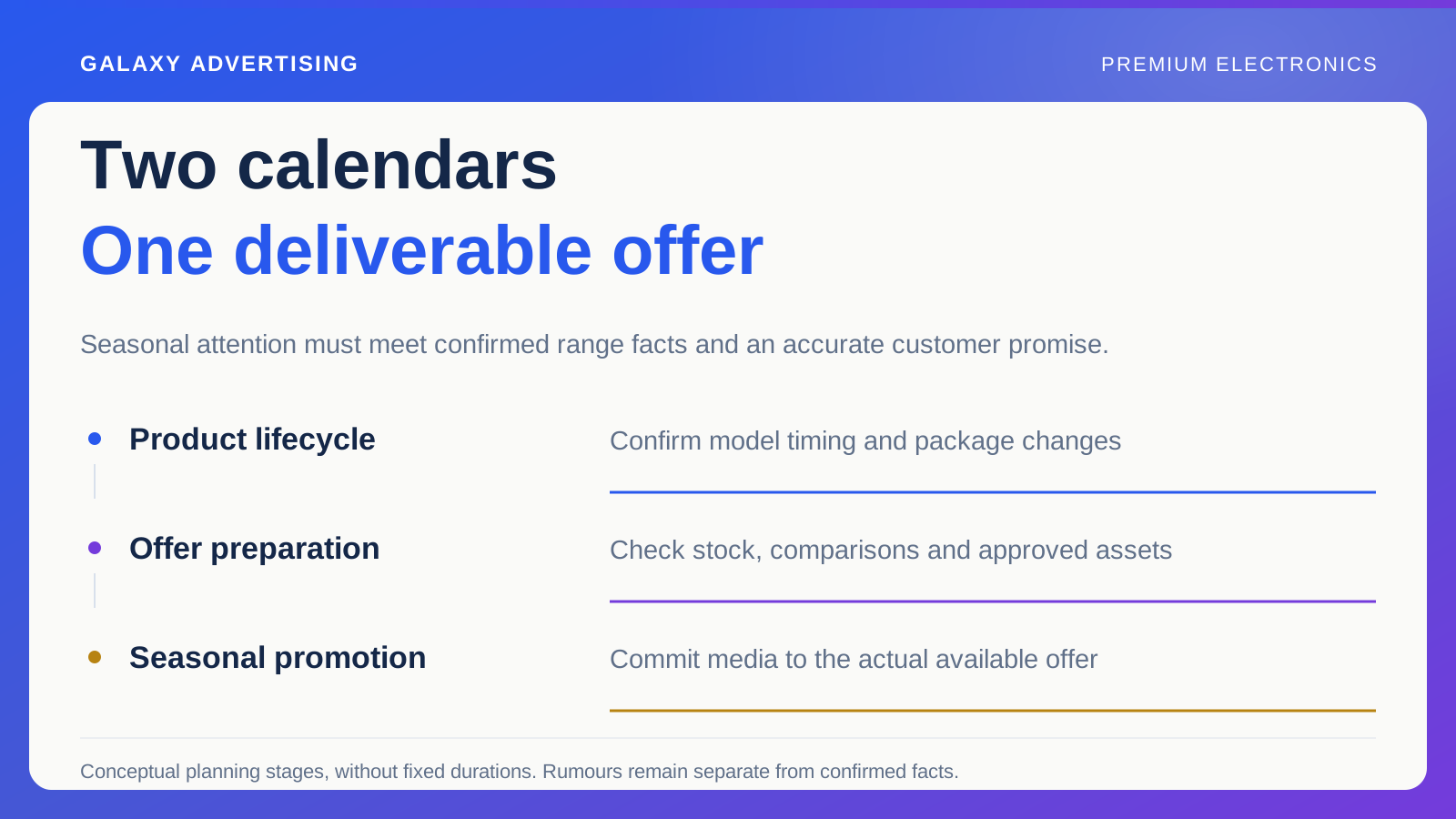
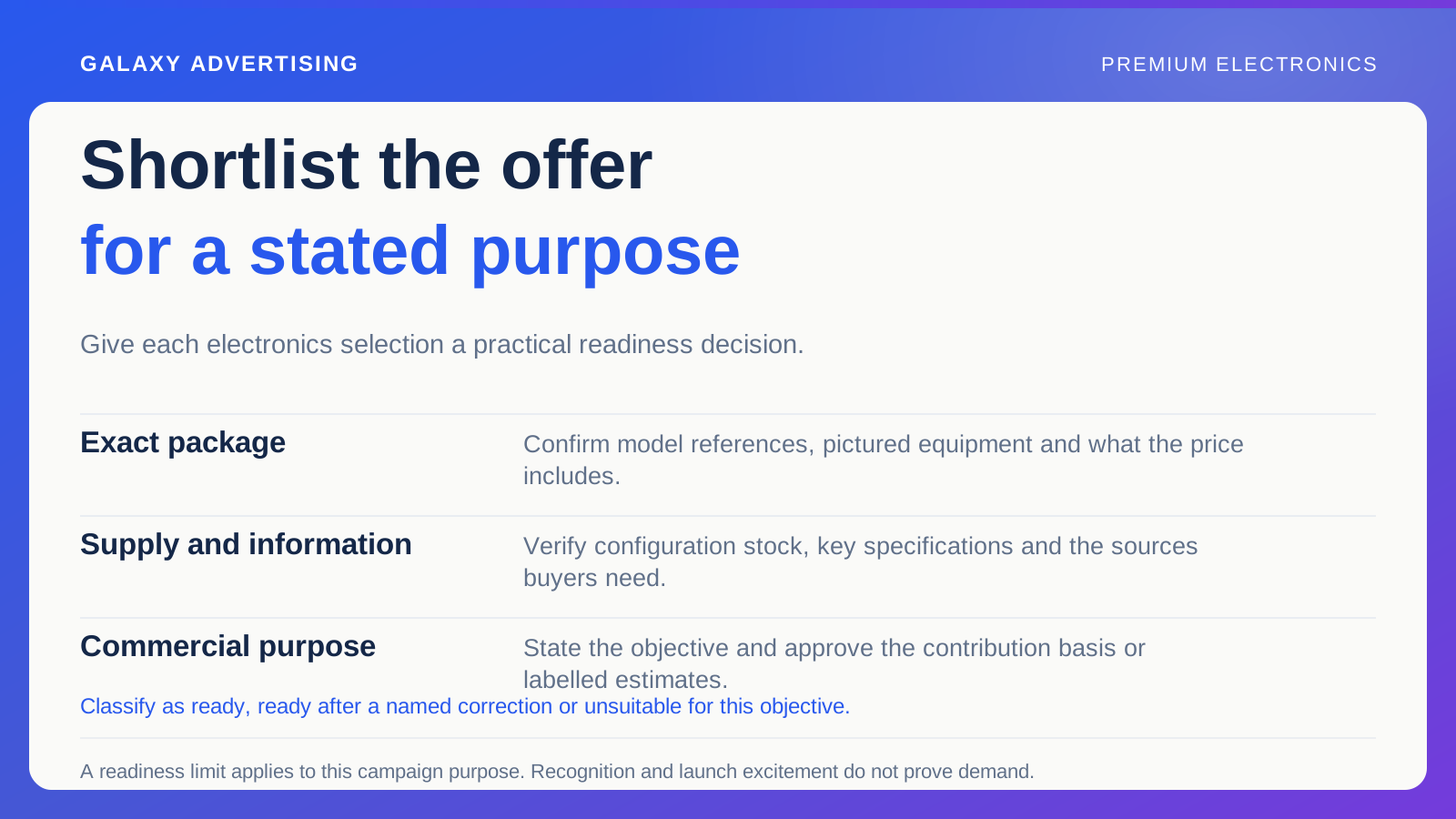
Use exact model and package references rather than relying on a familiar family name. Check included equipment and any distinction that changes the price or purchase decision. The recognisable name can conceal different commercial offers.
Consider a hypothetical camera body and a retailer assembled kit. They may share much of their public description, but they are not the same offer. Establish which one the campaign is supposed to explain before developing the message.
Check imagery against that package. An attractive reference can show equipment absent from the quoted price. Resolve the mismatch before approving production and media. Leaving customer service to explain it after the advert generates interest makes a preventable problem somebody else's workload.
Check stock for that exact configuration
Inspect the availability supporting the advertised package. A category can contain plenty of available products while the specific offer you want to promote cannot be supplied as intended. Category level reassurance is not enough.
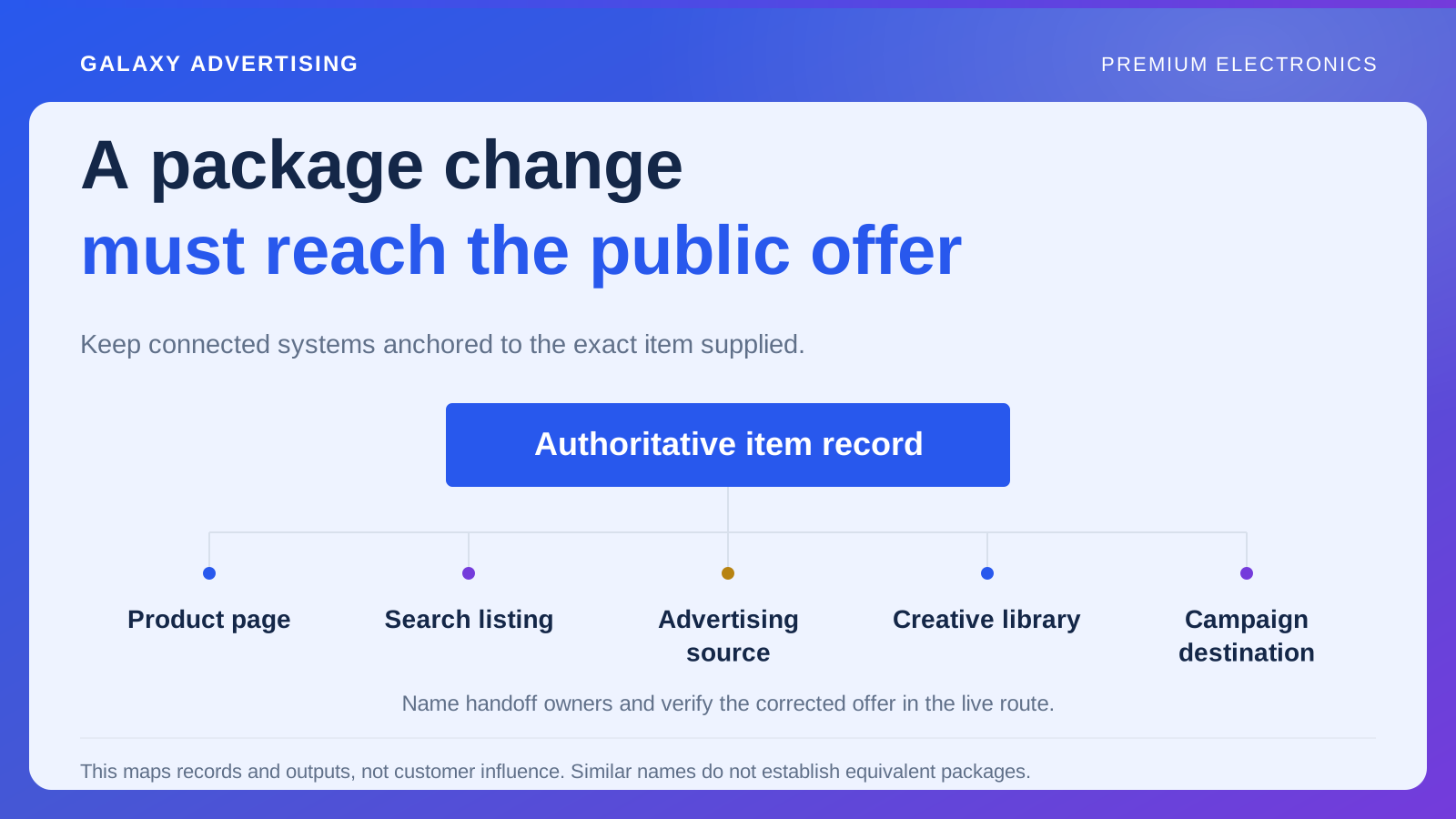
Establish who owns the authoritative availability information and how changes reach marketing. A general website banner may not tell the account manager about every model exception. Make the information route as specific as the offer itself.
Plan what happens when the selection narrows. An alternative can help, but it must be recognisable as a different offer with its own conditions. Silent substitution weakens the buying route and later analysis: nobody can confidently say which proposition the customer encountered.
Find the information gaps that matter
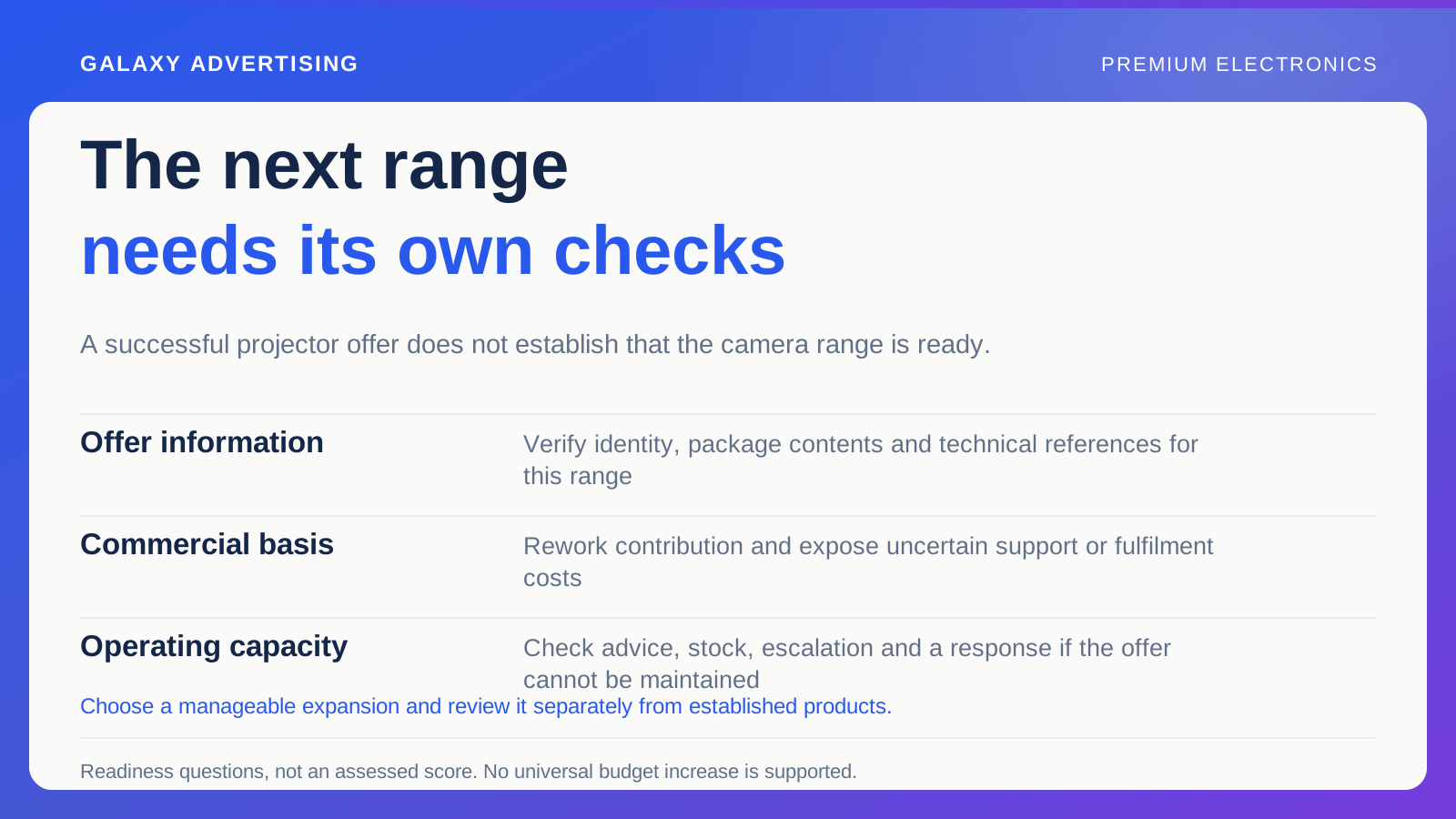
Check identifying details, supplied components, important specifications and access to relevant manufacturer references. A functioning purchase button does not establish that a technically considered offer is ready for promotion. Someone still needs enough information to assess it.
Prioritise uncertainty that materially affects the decision. You do not need a perfect website before every campaign. You do need to address gaps that could make this promoted package misleading or difficult to judge. Keep preparation tied to that practical threshold.
Turn the gap into a specific task. Asking for the supplied lens to be labelled beside the selected kit price gives the page owner something concrete to complete. It also gives the campaign team a release condition to verify. A request to improve the product leaves both teams guessing.
Compare what the orders can afford
Use your approved revenue and contribution basis. Contribution is the money remaining after the costs included in your calculation. A high ticket price does not automatically leave a generous acquisition allowance when product cost or service requirements are higher too.
Separate meaningful differences instead of squeezing every model into one average. A package needing additional support can have a different commercial role from a straightforward repeat purchase. The investment judgement should acknowledge that distinction.
Label estimates honestly when records are incomplete. Your commercial owner can approve a bounded investigation, but the shortlist should not hide uncertainty by copying a familiar product's economics. A well explained assumption is more useful than a precise looking margin nobody can substantiate or maintain.
Look for demand without mistaking recognition for proof
Review available enquiries, search observations and actual orders for the proposed model. Keep the period and offer conditions beside that evidence. Interest has a context, and it should not disappear once the item reaches the shortlist.
Established demand can make a familiar product easier to promote without proving that another model has no useful role. Equally, excitement around a launch does not establish suitable demand at an acceptable acquisition cost. Enthusiasm is a reason to ask, not an answer.
For a less established offer, state why you want to investigate and how you will judge the result. Demonstrated opportunities and bounded learning proposals can sit on the same shortlist, provided the person approving the commitment can see their different evidential positions.
Give every item a practical readiness decision
Say whether the offer is ready for the stated purpose, ready after a named correction or unsuitable for this particular objective. Attach the reason and an owner when further work is required. The outcome should make the next action clear.
A readiness limitation is not a permanent verdict on product quality. A model may need preparation or another campaign role rather than exclusion from your wider plans. Keep the judgement attached to its current purpose.
Keep the list short enough to maintain as conditions change. It should reduce ambiguity for production and account management, rather than become another document whose broad approvals outlive the offer, stock and commercial assumptions behind them.
Keep the reasoning available for next time
Record why offers entered or left the selection and which facts would justify reconsideration. Future colleagues should not have to repeat the same proposal without access to the earlier evidence.
Review material supplier, price and package changes before performance becomes uncomfortable. The offer is an operating reality, not a static campaign asset.
A defensible shortlist gives each model a reason to receive attention and a credible route to a suitable purchase. When those reasons are visible, the loudest internal advocate no longer has to become the default product selection method.