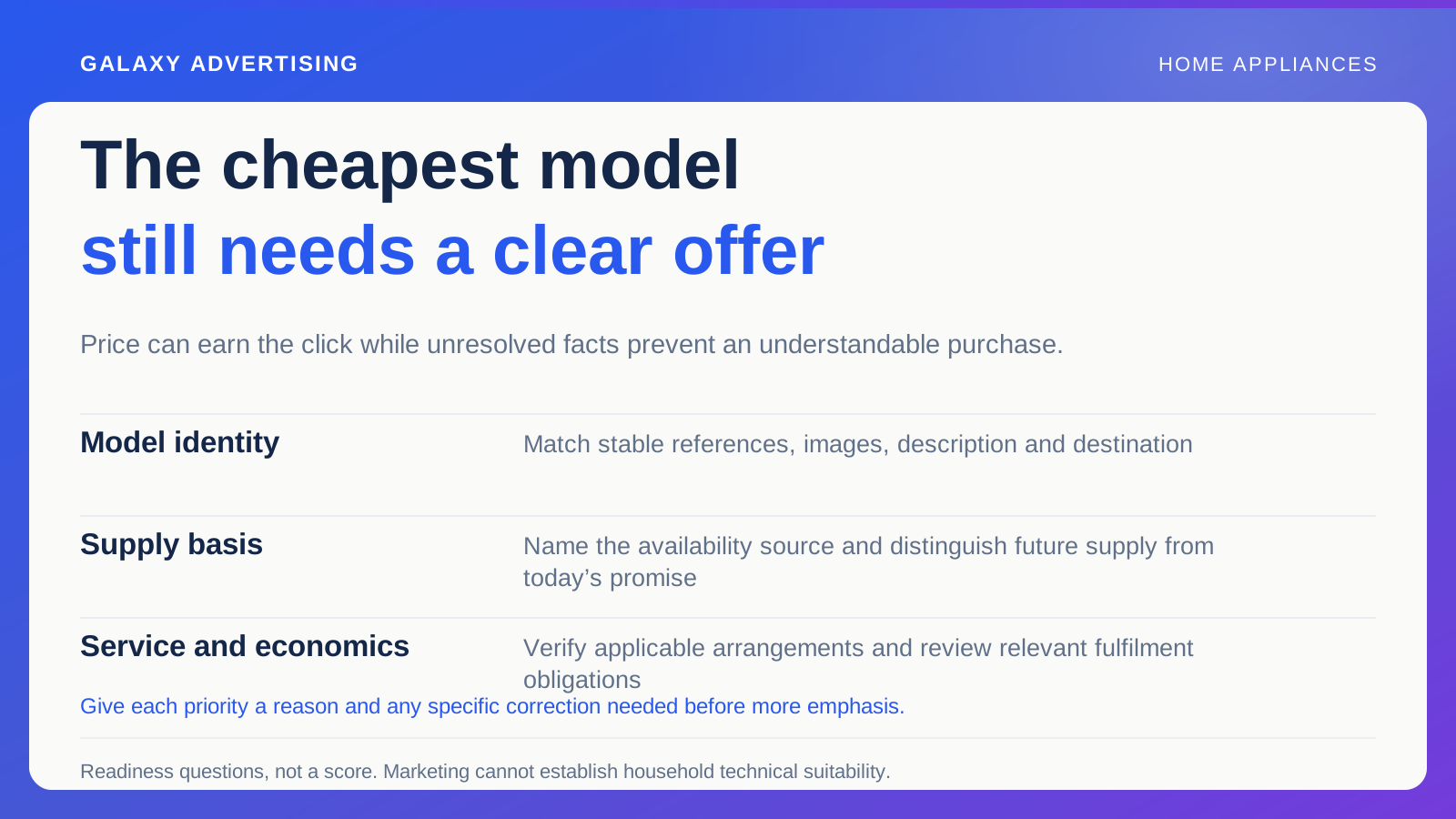
The cheapest washing machine in your feed can have uncertain availability and photographs shared with a similar model. That low price still attracts attention, while a higher priced appliance with dependable information gets less emphasis.
You can see how that happens. Price is visible, easy to compare and easy to report. But the useful question is whether the customer can understand and obtain the whole offer behind it. Product priority starts with the buying route you can support, not simply the number that earns the click.
Be sure which model you are promoting
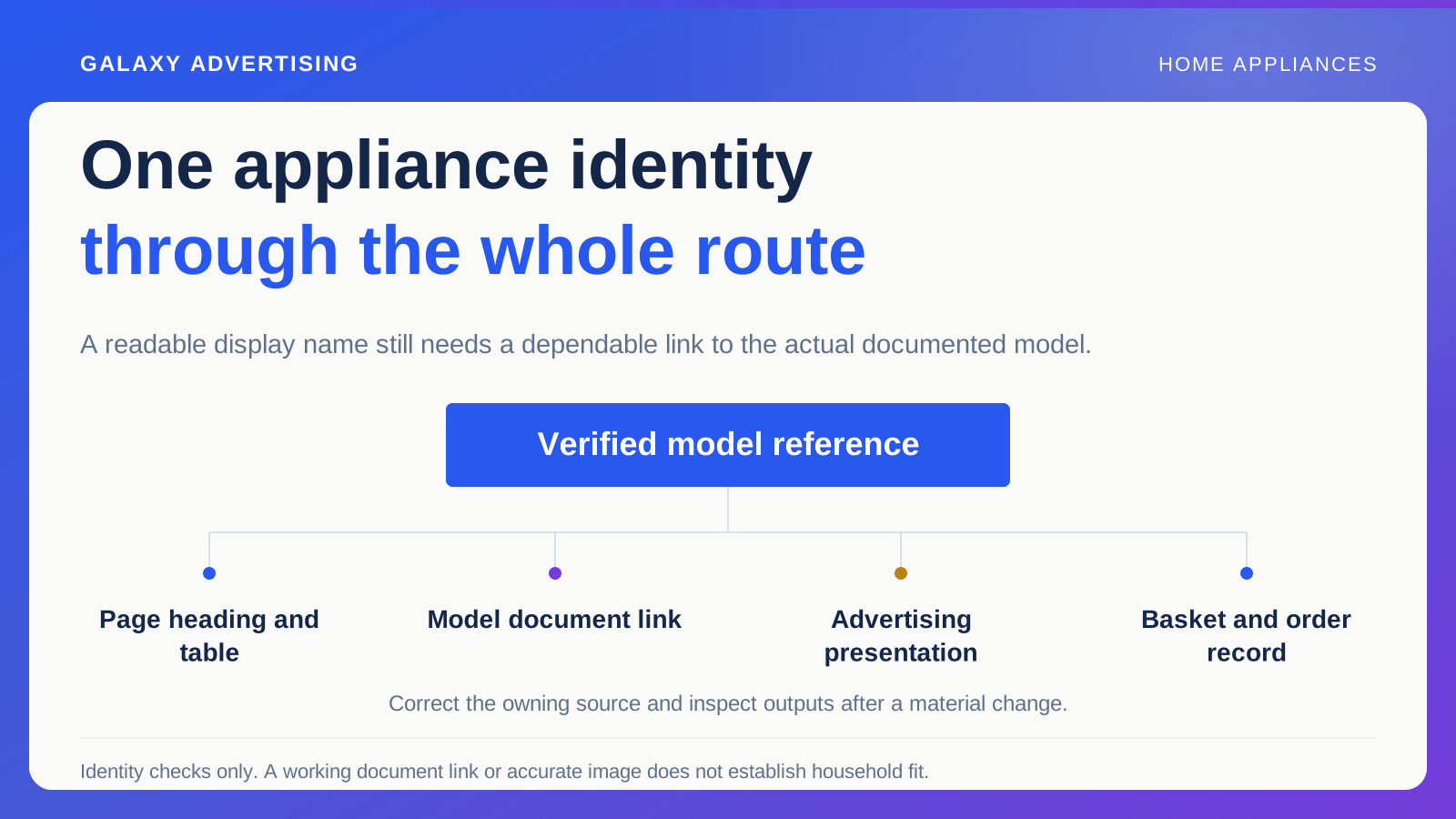
Start with stable product references. Check that the image, description and destination all belong to the same appliance. Similar names within a manufacturer's range do not establish that the models are interchangeable, however familiar the range looks to your team.
Keep that reference with the creative brief and reporting view. When enquiries or orders arrive, your account team needs to know which item the campaign actually represented.
If something disagrees, inspect the source. Tidying a label in a downstream tool can leave the underlying model mapping wrong elsewhere. Follow the fact through its source, destination and advertising presentation. Otherwise you have fixed the screenshot that revealed the problem while leaving the problem itself in place.
Check what available means for this order
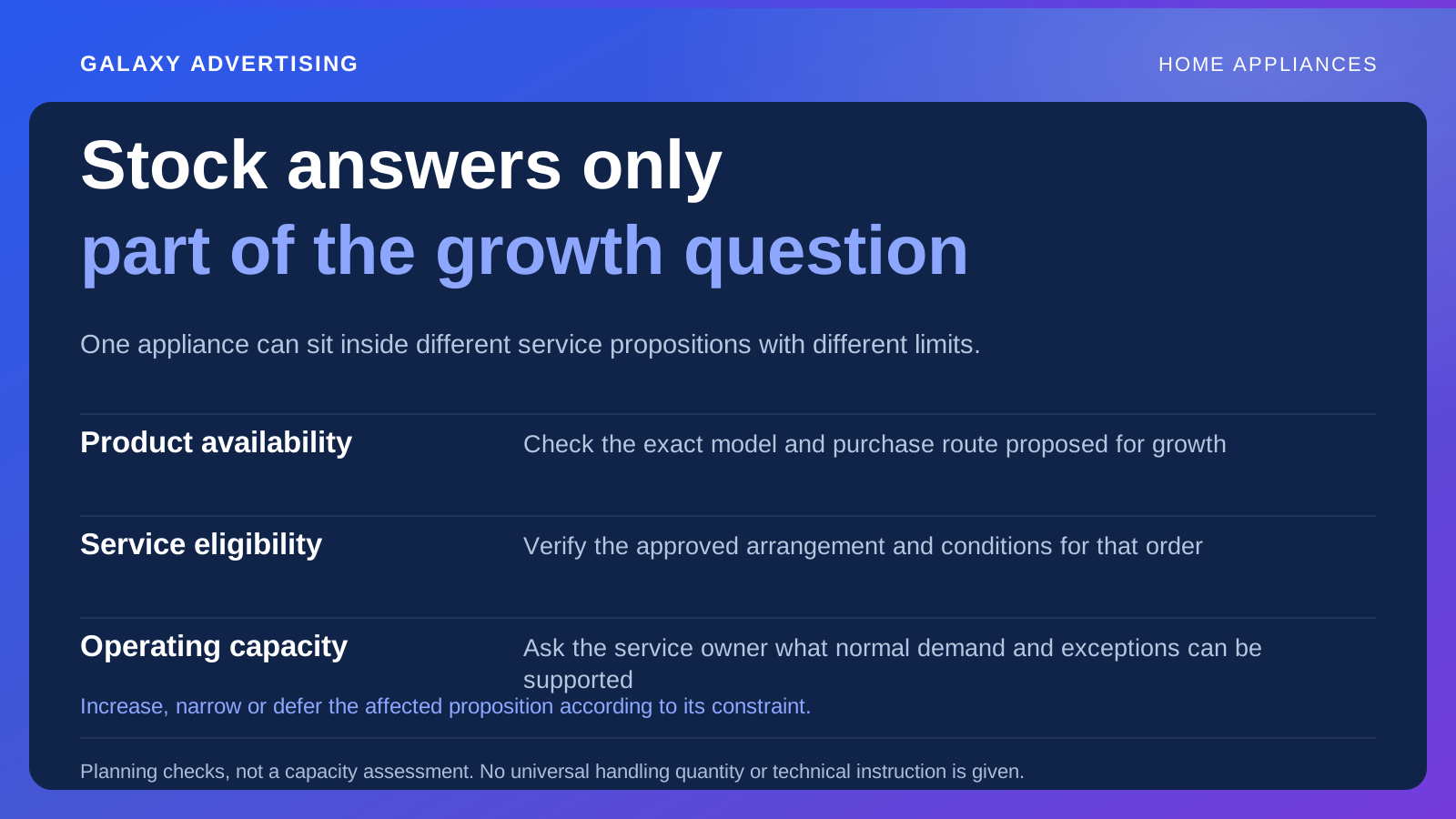
Ask which record establishes availability and who can confirm an exception. A general catalogue status might not describe the arrangement under which an individual order can actually be supplied.
Keep expected future supply separate from a promise you make today. If timing needs confirming for a particular order, give the customer a clear way to obtain that confirmation. Campaign wording should stay within what the business knows.
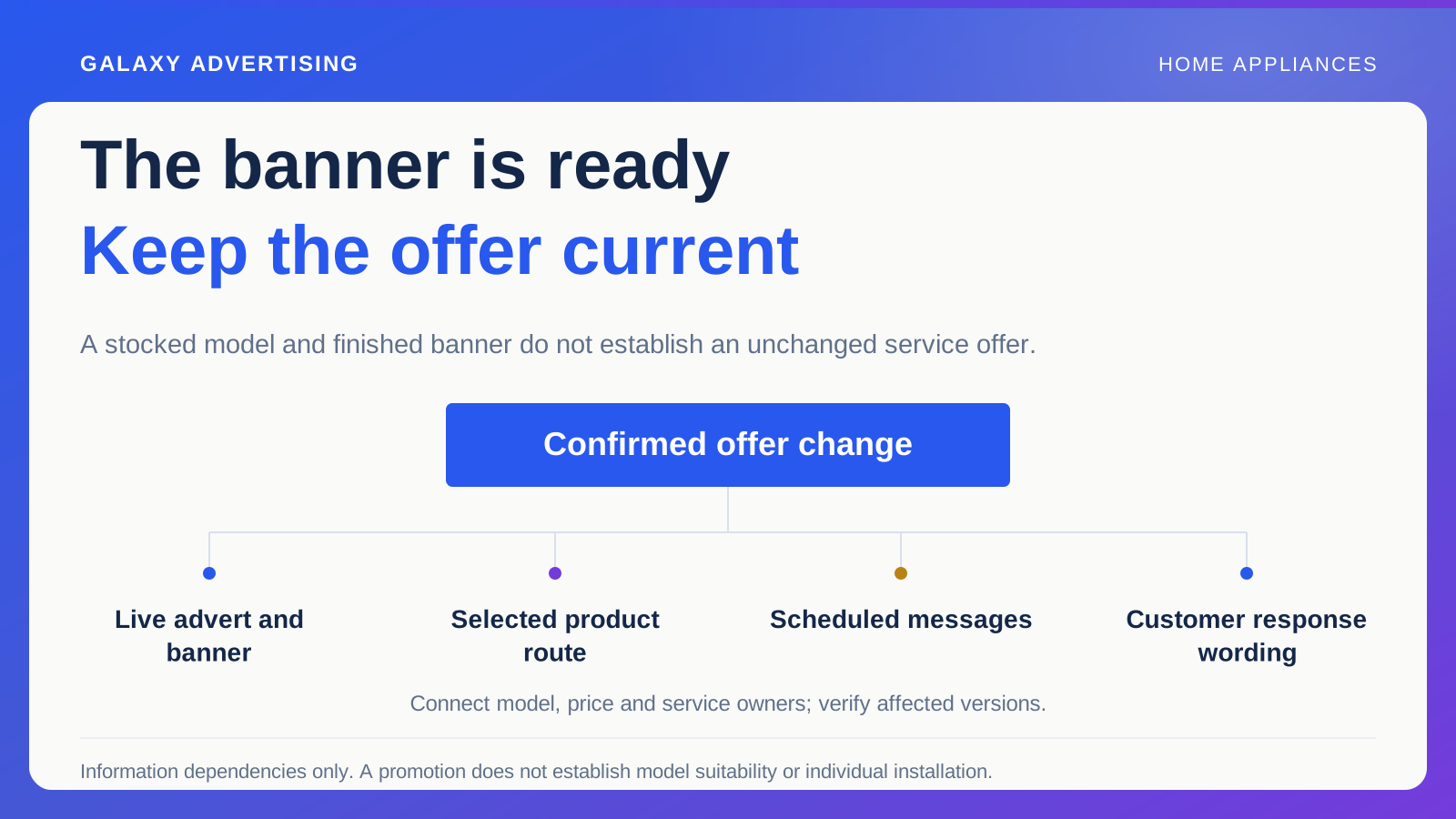
Record meaningful availability changes alongside campaign results. If a model becomes difficult to supply, the proposition has changed even though the advert looks exactly as it did before. You might need to change product selection or the destination. That is a different diagnosis from deciding that the creative argument has worn out.
Help people inspect the product facts
The page should identify the model and provide an obvious route to current manufacturer specifications and relevant documentation. Check that your retail summary agrees with those records rather than becoming a competing version of the facts.
Marketing judgement cannot establish technical suitability or supply installation instructions. Where a question needs an assessment specific to the model, or a qualified assessment, make the relevant information and responsible route easy to find.
Nor does a helpful page mean collecting every technical abbreviation in one place. Label the distinctions that matter and explain why a shopper might need to inspect them. Keep access to authoritative detail. An unsupported reassurance may sound friendlier, but it gives the customer less to work with when their circumstances need checking.
Include the service in the readiness check
Find out which delivery and optional service arrangements apply to the offer you are promoting. A general website banner should not suggest that every appliance and destination comes with identical conditions.
Can the shopper see what is included, what is optional and what needs confirmation? Those answers affect whether the advertised price describes an understandable proposition, so they belong in your product readiness decision.
Ask operations how exceptions reach merchandising and the account team. A correct page can become outdated while a service change sits in somebody else's inbox. You need a way to maintain the offer, as well as a correct first version. That practical ownership matters when advertising keeps sending people towards it.
Compare what the models leave behind
Review contribution, meaning the money remaining after the costs included in your calculation, for meaningful product or service groups. Strong reported revenue can look less attractive once relevant fulfilment obligations are included.
Then ask what your next investment is for. Maintaining an established range, investigating another model and repairing an information gap before promotion are different decisions. A single historical ratio should not settle all of them.
Resist a universal readiness score that gives every factor the same significance for every retailer. A short judgement with reasons is often more useful. One model is available, clearly identified and supported by a coherent service route. Another needs a particular correction before you give it more emphasis. That tells the team what to do.
Know what happens when the range changes
Agree how you will retire or replace a promoted model when its offer becomes unsuitable. A replacement needs assessing on its own facts. It should not inherit the previous appliance's picture, promise or expected result by default.
Explain material differences in an alternative. A superficially similar product can interrupt the decision the advert started if the customer is left to discover the change alone.
Keep historical pages honest where they remain accessible. The right treatment depends on your website and the customer's task, but a page should not invite an order the business cannot support. Marketing and merchandising need an agreed process before complaints force an improvised answer.
Walk one selected model through with merchandising and customer service together. Ask each person to identify it, explain its current supply basis and describe the offer the customer can obtain. Compare their answers with the advertised route.
Disagreement exposes an ownership or information gap before more demand arrives. Correct it, then decide how you will detect the same exception across other priority models. You want a process that can follow the range, rather than an approval nobody can keep current.
Leave a record someone can maintain
For priority items, retain the model reference, source owner, availability basis, relevant service conditions and unresolved issues. Add the reason the model deserves its current advertising emphasis.
Review this after material product or operational changes, and when campaigns reveal recurring questions. The purpose is to improve the source and buying route so you need fewer repeated manual explanations. It should not become a daily audit of every field.
Interest is only part of a product priority decision. The other part is your ability to keep the offer clear and supply it on the described terms. A model whose facts and service conditions stay connected gives the customer a next step they can understand, and gives you results you can interpret.