Can a customer tell whether your fast appliance replacement offer actually works for their home? A washing machine has failed, your advert recognises the urgency, and the destination still leaves relevant dimensions and delivery scope unclear. You've addressed the pressure without resolving the practical choice.
Urgent and planned purchases can need different communication. Both need an accurate offer. Make the next useful decision easier instead of assuming a household short of time benefits from fewer facts or a stronger promise you can't support. Their urgency makes clarity more valuable.
Find out which replacement question needs answering
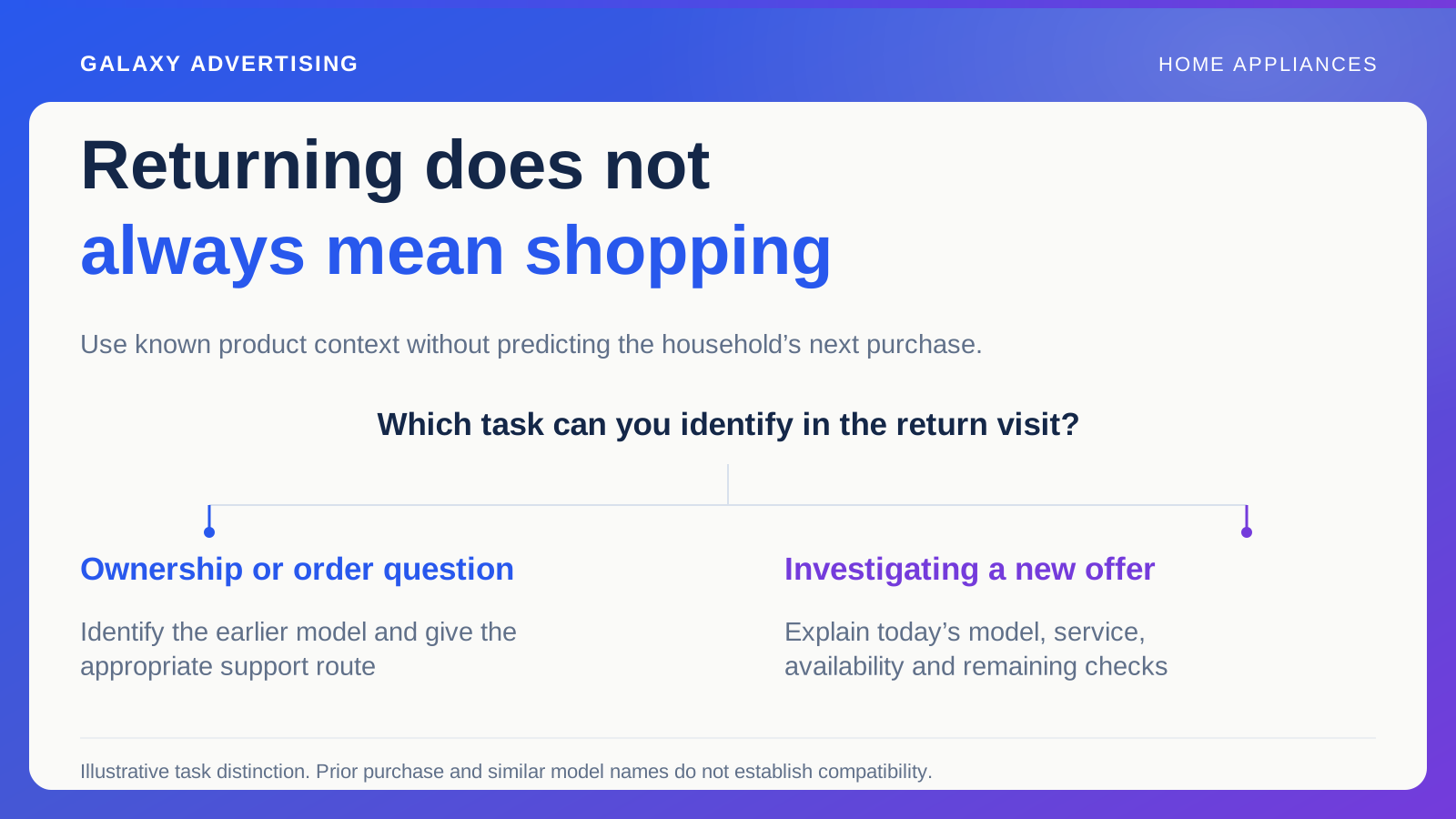
Ask customer service what people want to establish when replacing appliances. Some know the model they want. Others compare alternatives, check a space or ask what the delivery arrangement includes. Those are different tasks for your advertising route to support.
Keep product and service context with the observations. A question about a freestanding appliance doesn't necessarily describe the needs of someone considering an integrated model. A general audience label can hide a practical distinction that changes the information required.
A few urgent enquiries don't describe the whole market. Use them to identify a communication task and inspect the route supporting it. You're choosing a useful action, rather than building an elaborate persona from limited evidence. The observation can guide a specific improvement without becoming a claim about every household.
Separate a quick decision from quick fulfilment
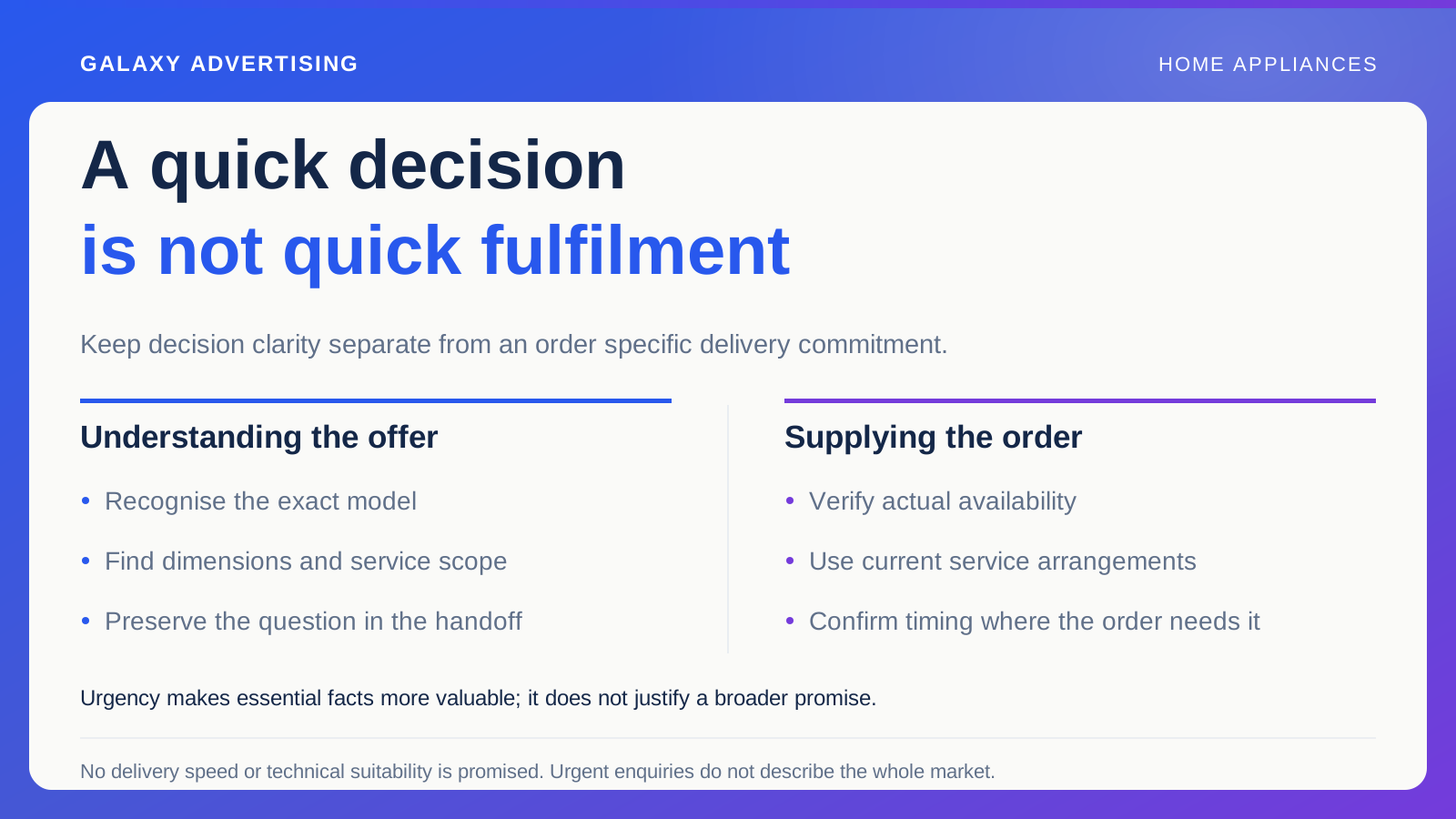
Someone can decide quickly while your team still needs to verify availability and service conditions. Distinguish the convenience of understanding an offer from a commitment about when a particular order will arrive. Those promises concern different parts of the experience.
Base timing statements on actual records and current service arrangements. An internal expectation about usual delivery shouldn't become an unconditional claim covering every model and destination. Keep the statement aligned with what your business can establish.
Where a specific order requires confirmation, show the route to obtaining it. A clear conditional explanation is more useful than an attractive headline customer service has to qualify later. The customer needs to know what can be relied on and what still needs checking while deciding how to proceed.
Make the model easy to recognise
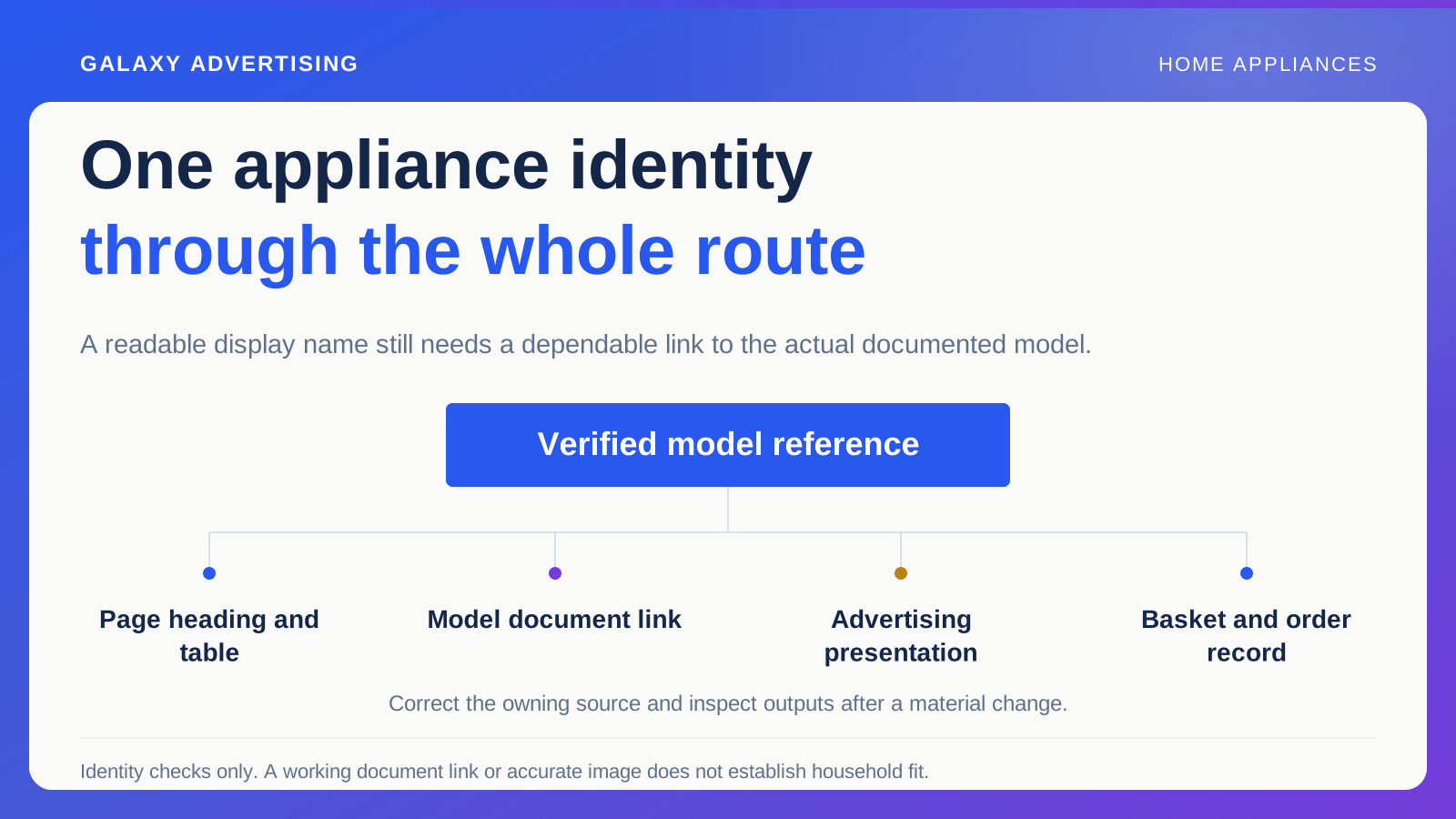
Use an exact model reference and an image of the actual offered item. Similar looking appliances can differ in details important to the household. A broad family name shouldn't carry the entire identification task.
Keep references consistent through advert, page and enquiry route. Customers shouldn't have to copy information across several screens merely to ask about what you showed them. Preserve the selection work already done when they seek the next answer.
Check what happens when another option is selected. An accurate opening image doesn't establish that the route remains coherent after a change. The selected item, its information and its availability should keep a clear relationship. Your customer is investigating a changing choice, rather than viewing only the first screen your team approved.
Put useful facts beside the choice
Identify the documented product and service information needed to assess the model. Distinguish the appliance itself, optional services and relevant manufacturer guidance. Each contributes something different to understanding the purchase.
Avoid improvised installation or compatibility advice in general promotional copy. Direct technical questions to current authoritative information and an appropriately qualified person where required. Marketing can make that route easier to locate without pretending to replace the assessment.
The page can remain concise. A labelled route to dimensions or the service description may help more than a long assurance about understanding busy family life. Practical information earns its space by helping the household decide. Don't make them read reassurance while the fact they need remains difficult to find.
Give different buying tasks different messages
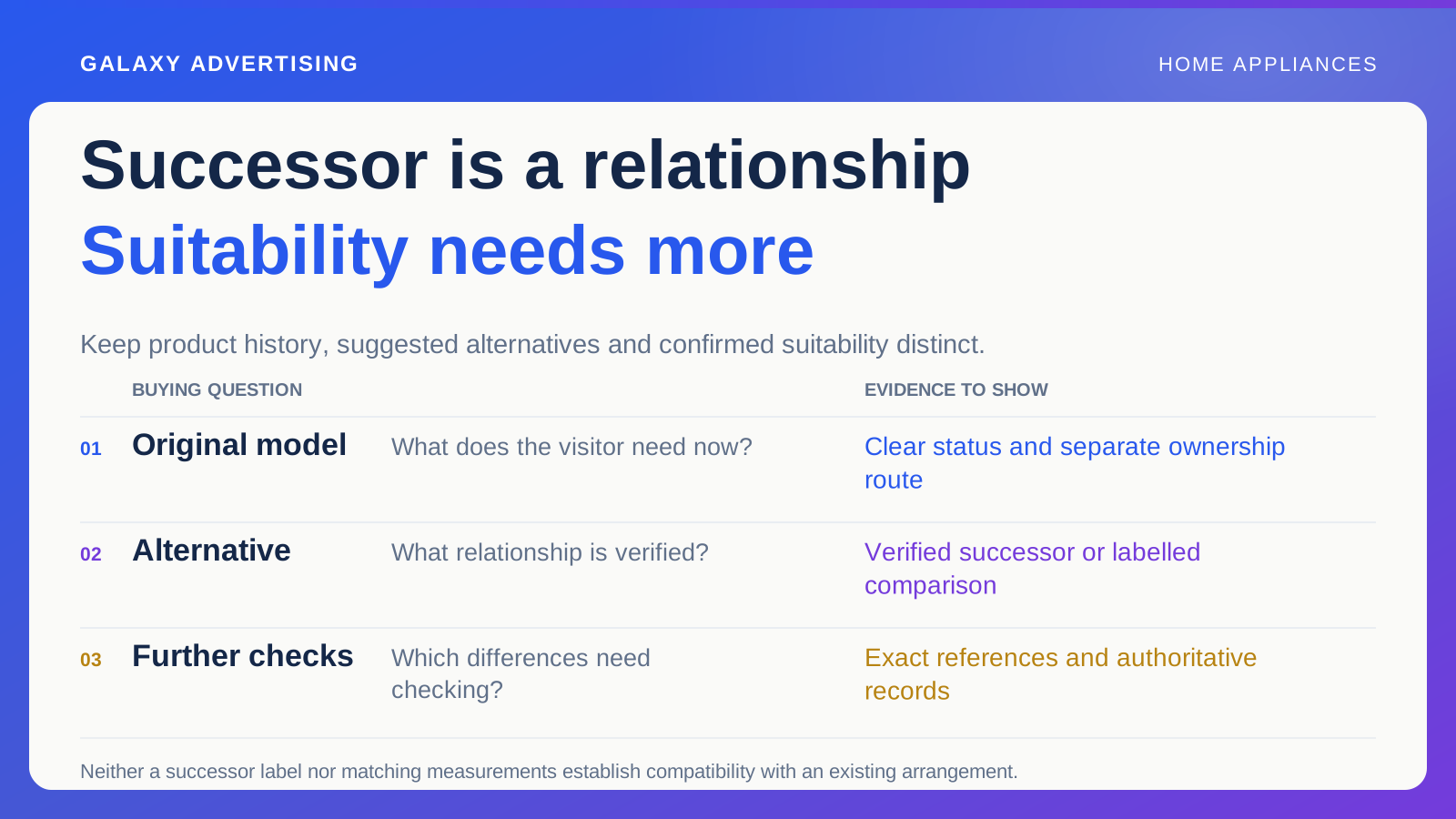
An advert identifying a known replacement can use a direct product route with current offer information. A comparison asset may need a focused explanation of documented differences and suitable next pages. Start with what the customer is trying to do.
Don't send everyone to the entire catalogue. It adds work for somebody responding to a particular model or service promise. Equally, don't force an open comparison into a single item because that destination is easier to measure. The useful route should serve the task rather than your reporting preference.
State the intended next action in the brief. It could be inspecting the model, checking available service or asking an identifiable question. A helpful call to action describes that job, rather than simply demanding an immediate commitment from every visitor.
Check the ordinary mobile route and handoff
Follow the advert on a phone. Identify the offer, important facts and service options. Notice where familiarity with appliance terminology lets your team fill a gap the page ought to explain for someone arriving without that knowledge.
Ask an unfamiliar reviewer what they think is included and what needs confirmation. They don't represent every household. Their reading can still expose ambiguity before you fund more traffic to the same route.
Inspect the enquiry handoff too. A product specific form that loses the model and question makes the customer repeat useful work. A quicker marketing response is less valuable when the receiving team cannot identify the intended offer. Keep the practical context attached to the conversation.
Include a planned purchase in this review. Someone preparing a future kitchen change may value a different next step from an immediate replacement buyer. That comparison can reveal whether information and availability are clear without forcing everyone into an urgency message. Choose relevant communication for each task while preserving one consistent set of product facts.
Judge demand by what your business can usefully serve
Review relevant enquiries, order suitability and commercial outcomes alongside advertising reports. Many urgent contacts aren't automatically attractive when they concern models or services you cannot supply. Their subject matters alongside the total.
Use repeated questions to improve the offer. If a service keeps being misunderstood, inspect its label and position before blaming audience quality. Your own communication may be creating the misunderstanding.
Respecting a household's time means making essential facts easier to establish. Connect urgency with the actual model and service route, and the promise of speed has a purchase behind it that the customer can sensibly assess.