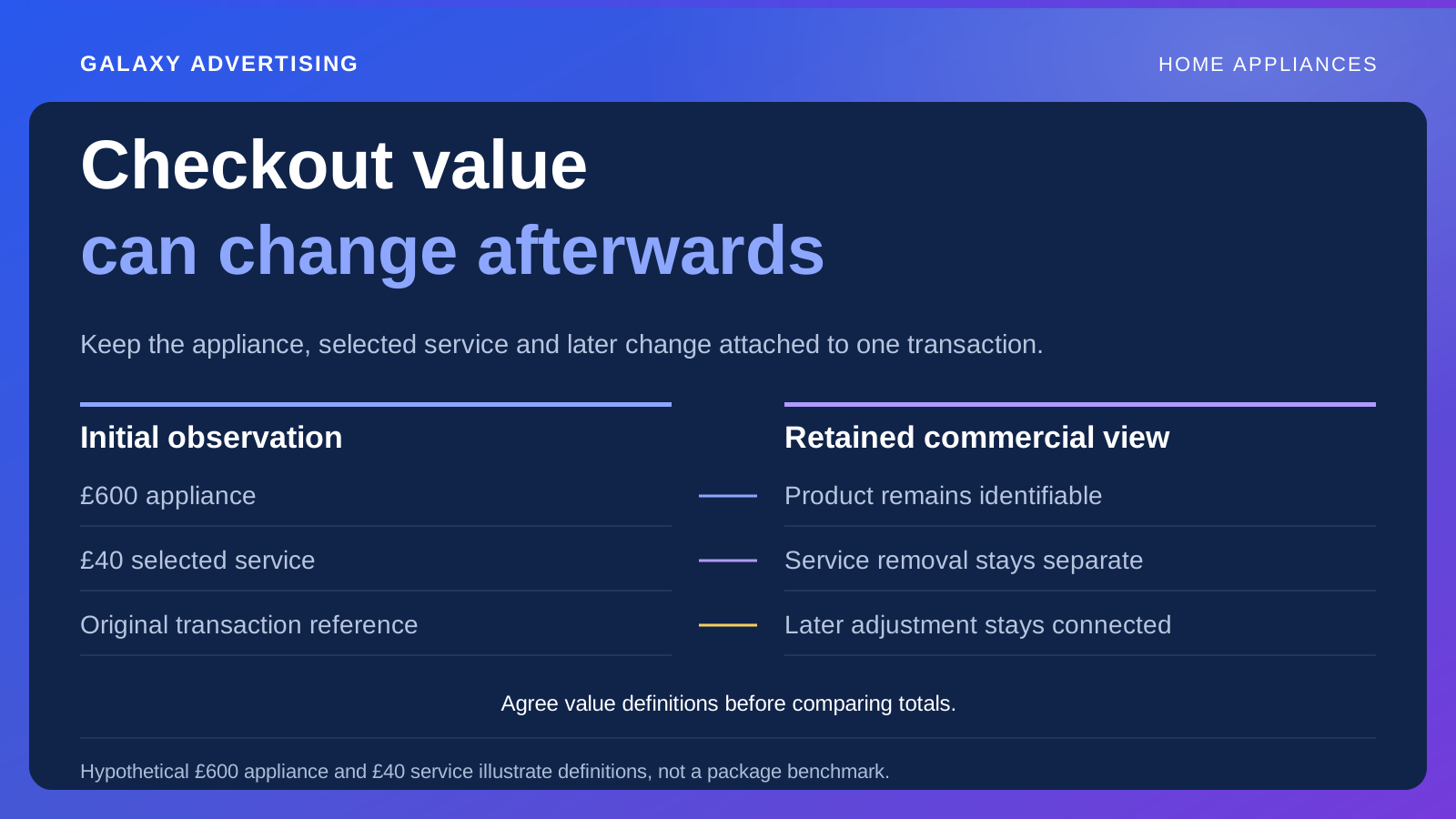
A £600 appliance with a separately selected £40 service is not the same amount as the appliance alone. Remove the service later and the commercial record changes again. These are hypothetical figures illustrating value definitions, rather than a recommended package or benchmark.
That small distinction sits behind a larger reporting problem. Checkout purchases, later service changes and cancellations can leave campaign totals describing something different from completed orders. Your measurement plan needs to explain those views through stable references and clear definitions. Identical numbers everywhere are less useful than numbers whose commercial meaning you understand.
Trace the transaction and its services
Identify the records covering the appliance, selected services, payment and later changes. Ask the system owner how they connect and which identifier anchors your commercial review. Start with the actual route rather than assumptions about how it ought to work.
Keep product and service scope understandable. One appliance order may contain several relevant line items. Treating them as unrelated records can make the acquired transaction difficult to assess as a whole.
Use representative examples before designing an abstract report. A normally fulfilled order, a service adjustment and a cancellation expose different assumptions. Make those routes clear before automating a summary or using it to set a campaign target. Otherwise the automation simply repeats a definition nobody has checked closely enough.
Say what the purchase event records
Ask your measurement owner which checkout action is recorded and how its value is supplied. Where technical interpretation is needed, use the current configuration and relevant official documentation. An assumption carried over from another setup will not establish what yours does.
An initial paid order, a fulfilled order and a retained transaction after adjustments are related observations. They are not interchangeable. State which one the report describes instead of relying on the word sale to explain itself.
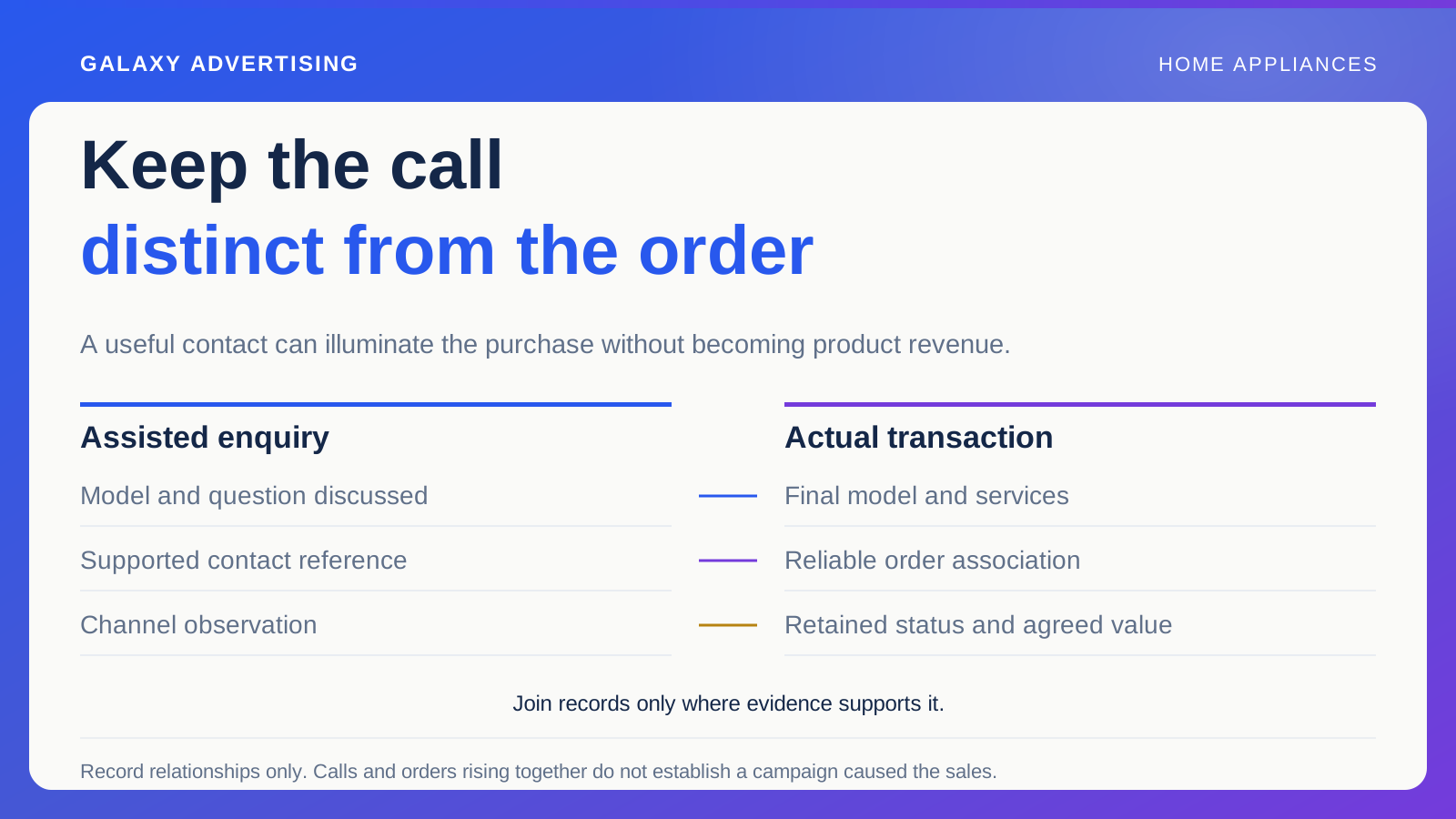
Can the observation be connected to a store reference? A large campaign total has limited usefulness if nobody can trace a sample back to actual transactions. Your definition should hold up when somebody inspects an identifiable order, not only when the figures are added together.
Agree what goes into the value
Specify how you treat tax, delivery income, optional services, discounts and refunds. Several plausible values can describe one order. Calling two fields revenue does not establish that they are comparable.
Return to the hypothetical appliance and service. The product price alone differs from the total with the selected service, and removing that service later changes the record. Use the example to agree your convention, rather than allowing each reviewer to choose their own silently.
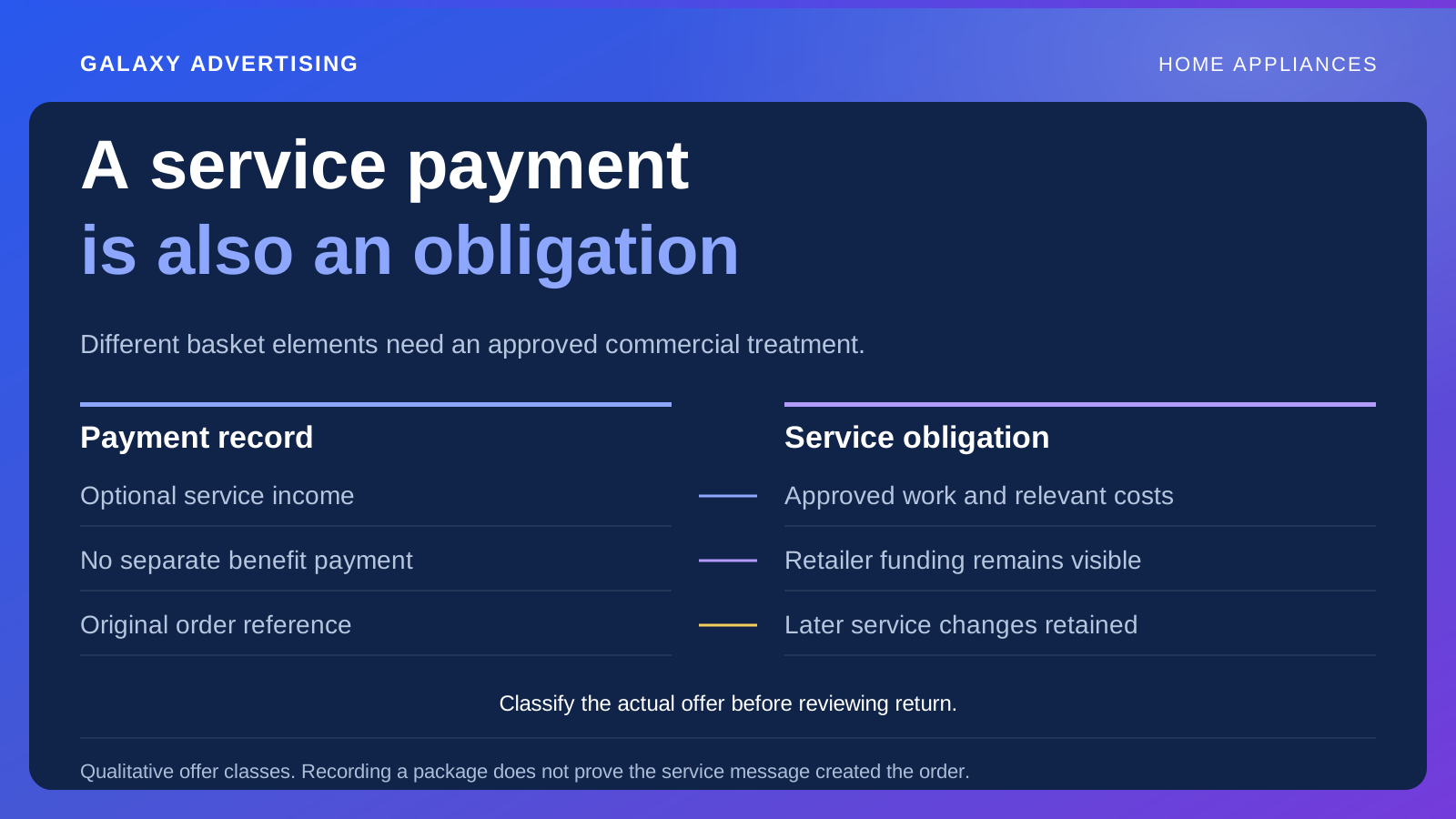
Apply the same clarity to relevant costs when reviewing contribution, the money remaining after the costs included in your calculation. A service payment is not automatically equivalent to product contribution. Have the responsible business owner approve the treatment behind affordability decisions. The calculation needs an agreed commercial meaning, as well as correct arithmetic.
Preserve what happens after checkout
Connect cancellations, refunds and service amendments to their original transactions. Establish how the commercial view shows them and what your actual marketing configuration can represent. Those are questions to check, rather than features to assume.
A timing or scope difference is not immediately a technical fault. One report might retain the original attributed purchase while another shows the later retained order. Understand that distinction before assigning blame or changing a target.
Note the different histories of recent and mature orders too. Newer orders may not yet have had the same opportunity for adjustments to appear. Comparing them without that context gives apparent precision to evidence at different stages. Keep the state of the evidence visible when drawing the comparison.
Check recording faults as their own issue
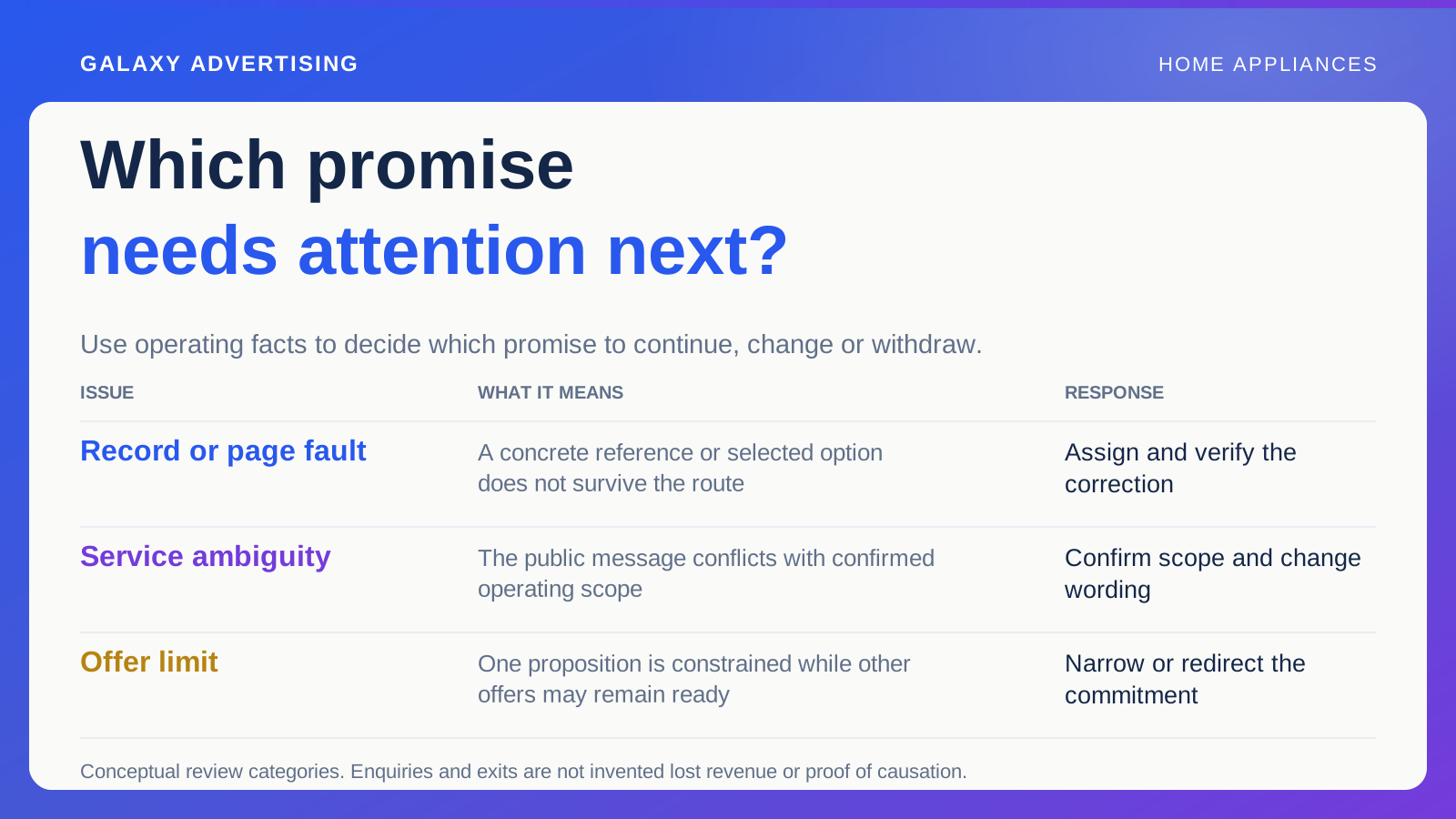
Inspect a sample for duplicated purchase observations, wrong amounts and product references that disagree with store records. Give the responsible owner reproducible examples with enough context to trace what happened. A general complaint that the figures look wrong is harder to resolve.
Separate a repair from its commercial implication. Fixing a duplicate improves recording accuracy. It does not establish how many additional orders the advertising created. That requires a different comparison and proportionate interpretation.
Repeat a narrow reconciliation after material checkout or integration changes. A successful earlier test cannot establish that a revised route preserves references and value definitions. Maintenance belongs in the plan, rather than appearing only when an implausible monthly result prompts an emergency investigation.
Review the offer you actually fulfilled
Bring actual order status and relevant variable costs into the business review alongside channel attribution. Product and service mix can change affordability even when the headline campaign ratio looks stable.
Record material availability and service constraints in the period. These affect what you could fulfil and which customers found a workable offer. Treating every recorded purchase as if it faced identical operating conditions hides information you need for an investment decision.
Do not force totals to agree through arbitrary allocation. A transparent explanation of the initial and later views serves the business better than an artificially reconciled chart. You need a decision basis you can defend, rather than matching totals at any cost.
Test one order where the appliance is still supplied but an optional service is removed. Ask the commercial owner which payment changes and which relevant costs remain, then compare that explanation with the campaign review's current value.
Does the report cancel the whole transaction, retain an obsolete amount or preserve the revised offer correctly? This exercise does not imply a typical adjustment rate. It checks whether definitions handle a material exception before a larger investment rests on their apparent precision.
Leave definitions the next reviewer can use
Write a short dictionary for the order reference, purchase action, value basis and adjustment process. Assign source owners and record unresolved questions so the next team can see where certainty ends.
Include one checked service amendment example. It makes differences between product total, checkout observation and retained commercial value concrete, without replacing an appropriate ongoing review sample.
The order your business serves continues beyond checkout. Keeping the appliance, services and later changes connected makes the report explainable. Keeping technical accuracy separate from claims about additional sales makes it more useful still, because the commercial meaning beneath your next investment decision can survive a closer look.