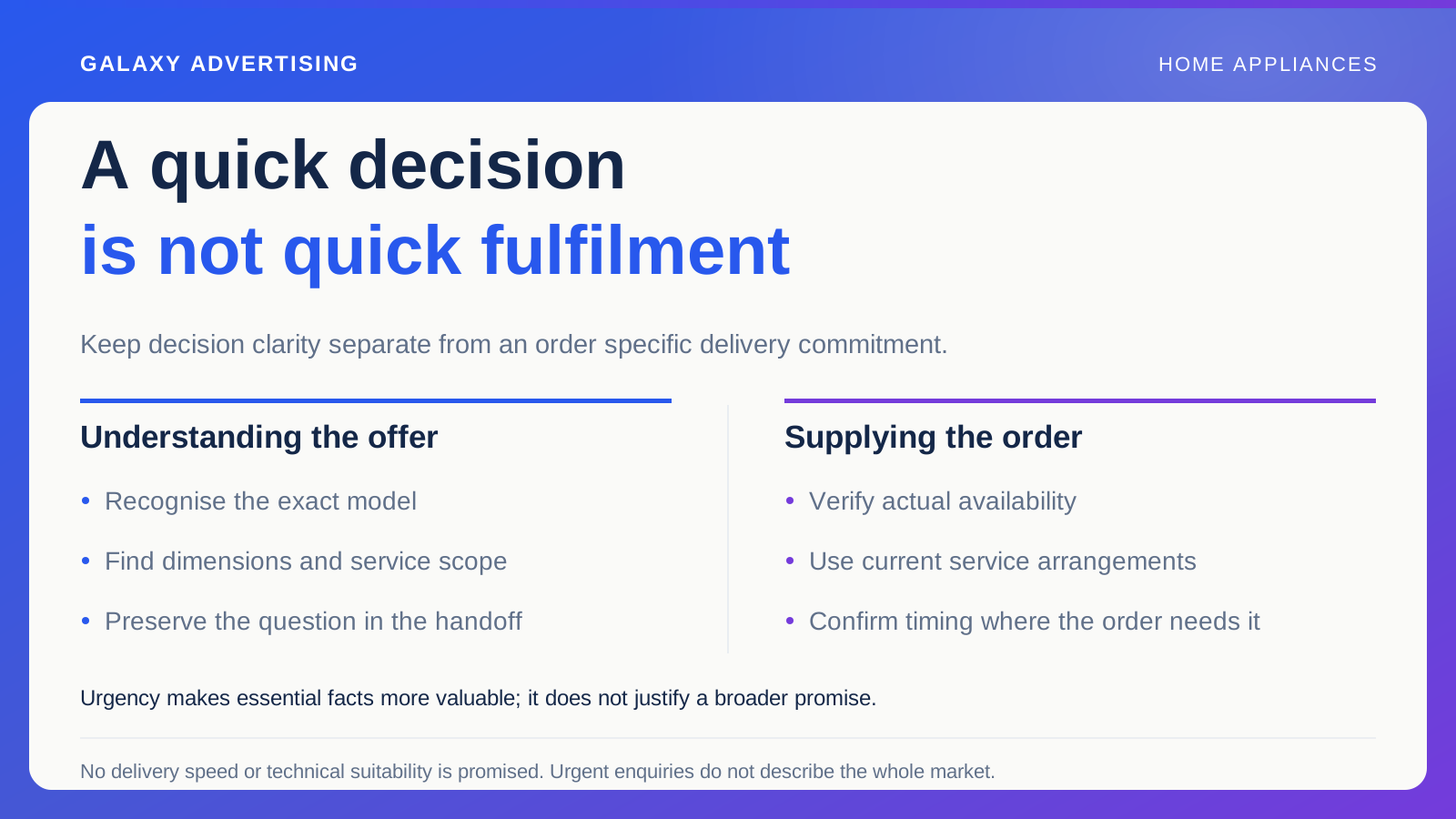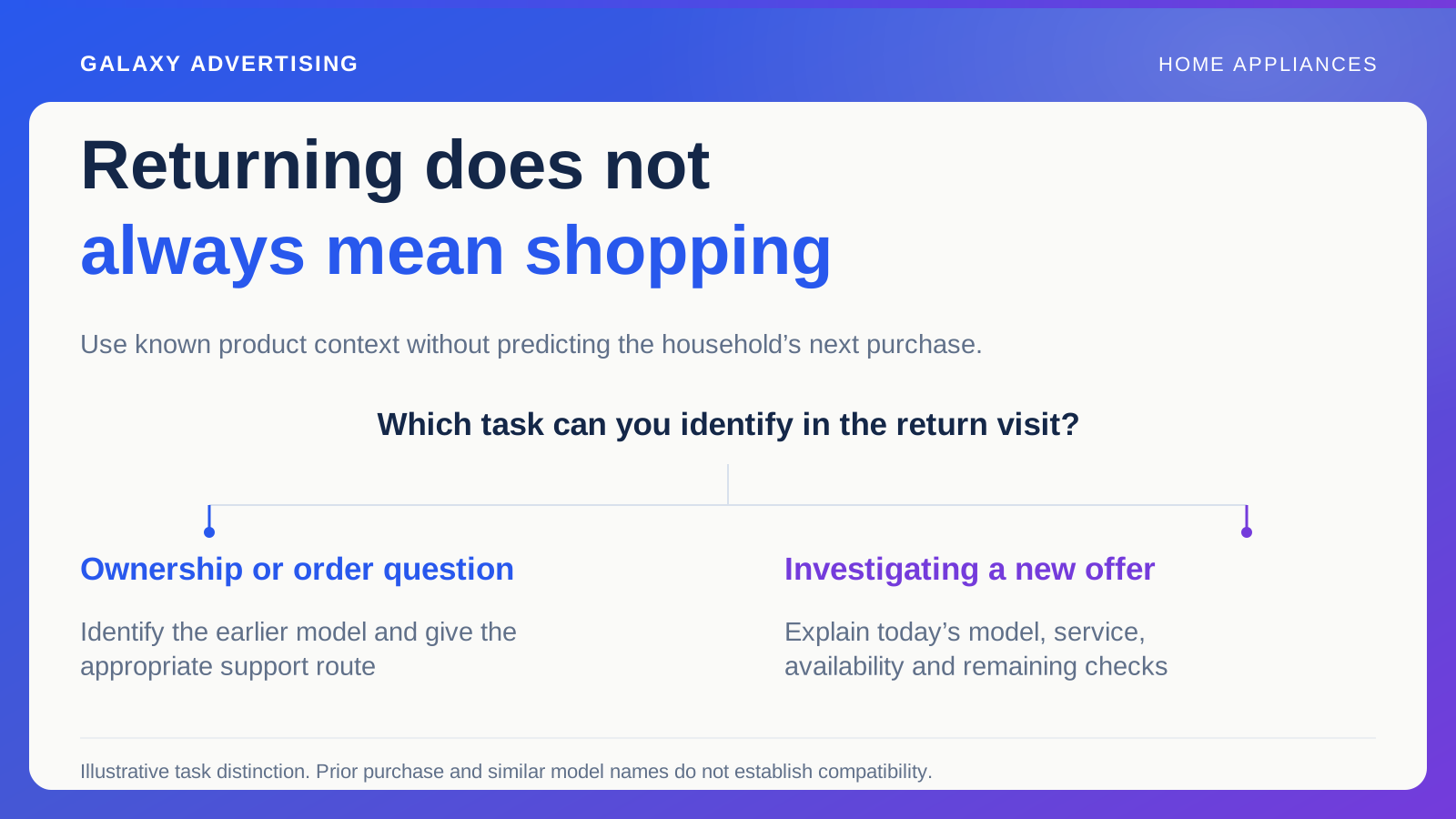
A return visit is not proof that an appliance customer wants another appliance. The household that bought a washing machine may have come back for a model document, an order update or your stated support route. Another sales message could be answering a question nobody asked.
Recognition should make the right next step easier. A previous order gives you product context, but it cannot tell you when the household needs another appliance or which product is suitable. Start with the task you can identify, rather than treating familiarity as permission to promote more often.
Separate ownership questions from shopping
Look at what people ask after buying. Documents, service information and order enquiries serve different purposes from comparisons between new models. Keep those routes distinguishable in navigation and customer communication so the person can follow their actual task.
An identifiable order or model can help you provide a useful next step. It still leaves the customer's wider circumstances uncertain. Do not interpret every visit through the same new purchase assumption.
Send unresolved technical questions towards relevant manufacturer records or an appropriately qualified person. Recognising a product does not equip a marketing sequence to improvise operating, installation or repair instructions. Knowing which source can responsibly answer is part of being helpful, rather than a gap to fill with confident promotional language.
Keep the earlier model recognisable
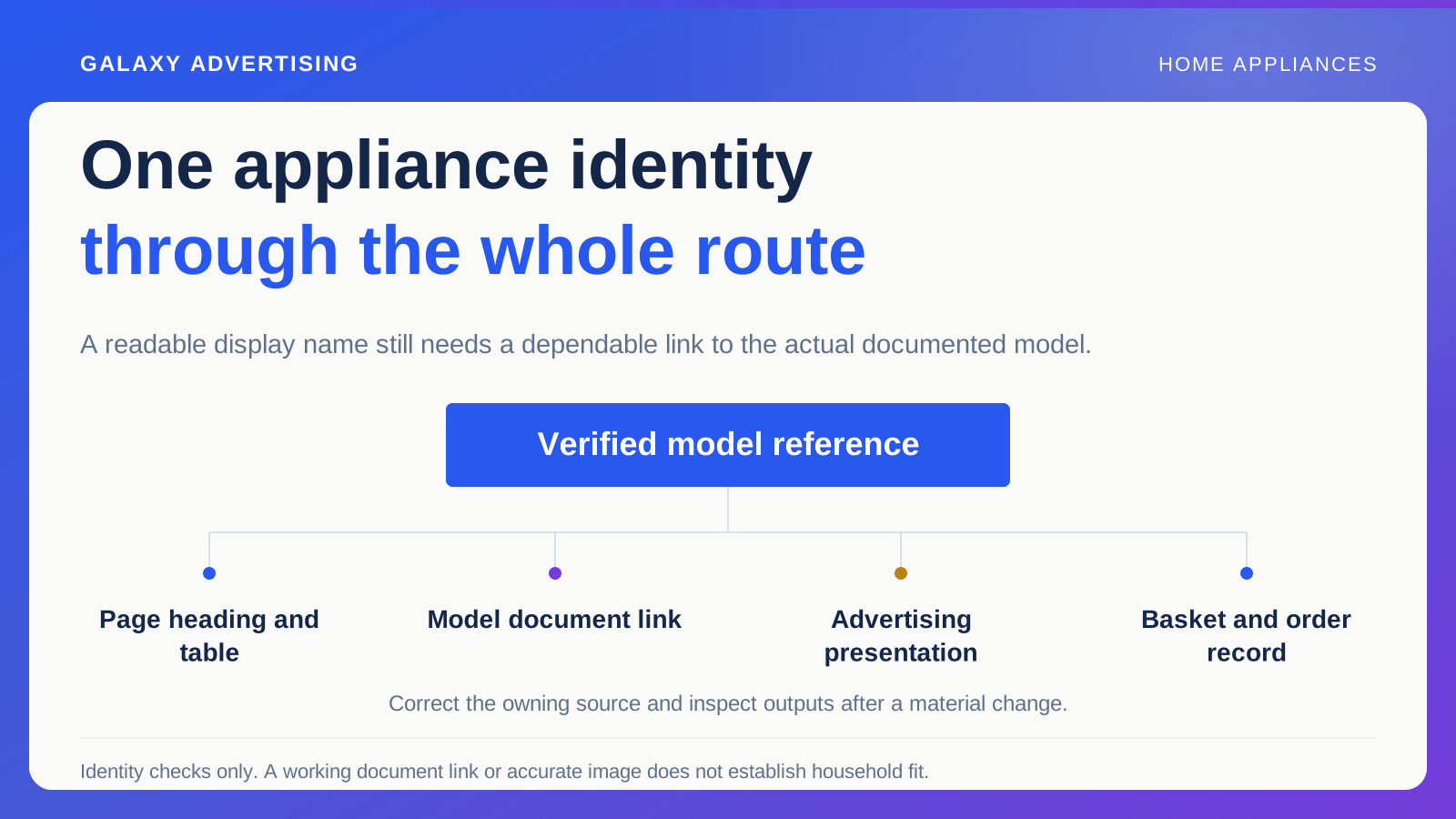
Use the exact product reference where somebody needs to reconnect with documents or order information. Similar family names can make a link ambiguous, especially when later versions share photographs. Familiar looking does not mean identical.
If an earlier model page changes, keep a clear route to relevant records where your business can support it. Redirecting every previous purchase to the newest appliance silently assumes a sameness that the customer may not recognise or need.
Check the links in customer communications too. A familiar picture is of limited help if it opens an unrelated collection. Recognition should carry their context forward. It should not make them reconstruct the product and purchase from memory because your message forgot where it was sending them.
Let support look and work like support
Someone seeking an order response needs the appropriate route without first navigating a fresh sales proposition. Give that task a direct answer from the person responsible for it.
Avoid making a promotional message look like necessary product guidance. Know the purpose of each communication and the approved permissions governing its use. Mixing the two can obscure what the customer is being asked to do.
Keep service wording current. A saved response can outlive a change of provider or process. Returning customer communications need operational information ownership just as the original purchase route does, particularly where they describe available assistance. A technically functioning message can still carry a service description your business no longer supplies.
Give related products a factual connection
Buying one appliance does not establish that another product or accessory is suitable. A compatibility claim needs the relevant authoritative reference. A category label and a marketing assumption are not enough.
Explain the new offer and any checks that remain necessary. A clearly described separate appliance can be worth investigating without being presented as an obvious addition the household must need. Let the offer stand on what is known.
Keep commercial relevance separate from personal prediction. You might introduce a documented range update to an appropriate audience. That does not justify claiming knowledge of a replacement date or individual household requirement absent from the order record. The distinction gives you room to communicate without pretending to know somebody's home better than they do.
Treat replacement as a new offer
When somebody asks about replacing an earlier model, identify their question before suggesting an alternative. It might concern current availability, documented differences or your service package. Those require different answers.
Do not imply that a newer appliance fits an existing arrangement because the name sounds similar. Provide relevant source information and a dependable route for questions needing further verification. Familiarity between models is not evidence of fit.
Make the new price, services and availability clear. Knowing your retailer does not remove the need to understand the current transaction. If the model or household requirement has changed, a returning buyer can reasonably need as much practical information as somebody purchasing from you for the first time.
Judge each message against its purpose
Review support communication for useful resolution and accurate routing, as well as considering anything else it is intended to serve. Attributed sales alone cannot tell you whether it helped. Review a new offer through its own commercial purpose and retained order evidence. Blending these roles makes both harder to judge.
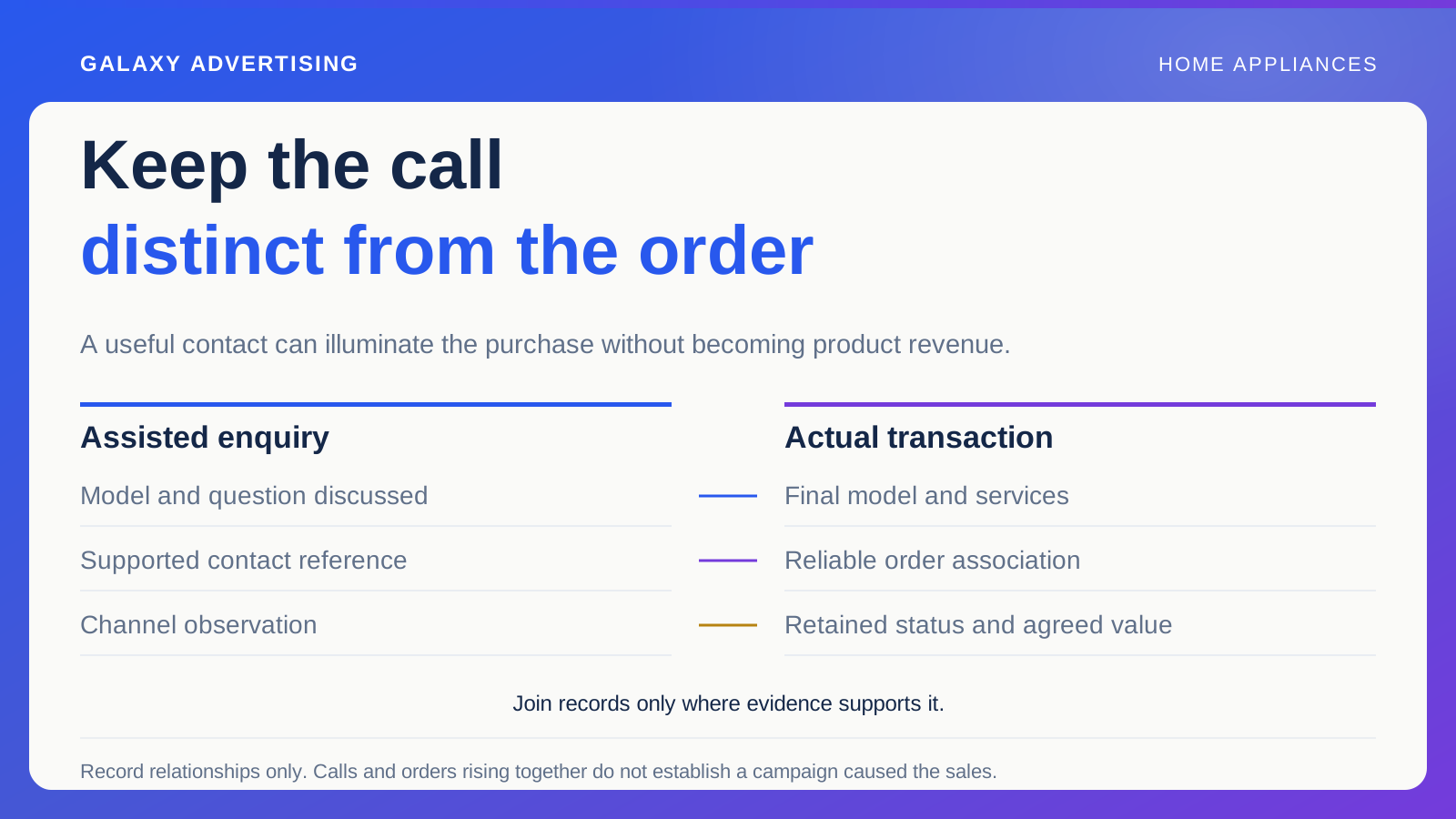
Keep observed repeat purchases separate from claims that a reminder caused them. The household may already have planned to return. Where a suitable comparison can be arranged, agree its purpose and limitations before drawing stronger conclusions about additional sales.
Use recurring questions to improve product and service routes. Repeated requests for the same document may call for clearer access, rather than another message announcing how helpful the retailer is.
Trace a discontinued model through the returning customer's route. Unavailability today does not remove an ownership question. Identify which reliable records you can still provide and who can resolve unclear links. Replacing the old destination with a bestseller may preserve a working URL while removing precisely the subject somebody needed.
Give the old records an owner
Assign responsibility for earlier model links, support references and automated communications. Review them after material product or operational changes. A programme can keep working technically while leading people towards obsolete information.
Imagine a customer returning for a manual. They should be able to identify the earlier model and the document's scope without being redirected into a new purchase funnel. If the route no longer exists, record the gap for its source owner. This narrow check asks whether recognition is useful, rather than merely visible.
A sound relationship respects both what the order tells you and what it cannot. Direct support, independently explained offers and honest uncertainty about the household's next need give future business a better foundation than treating every recognised person as ready for the next appliance advert.