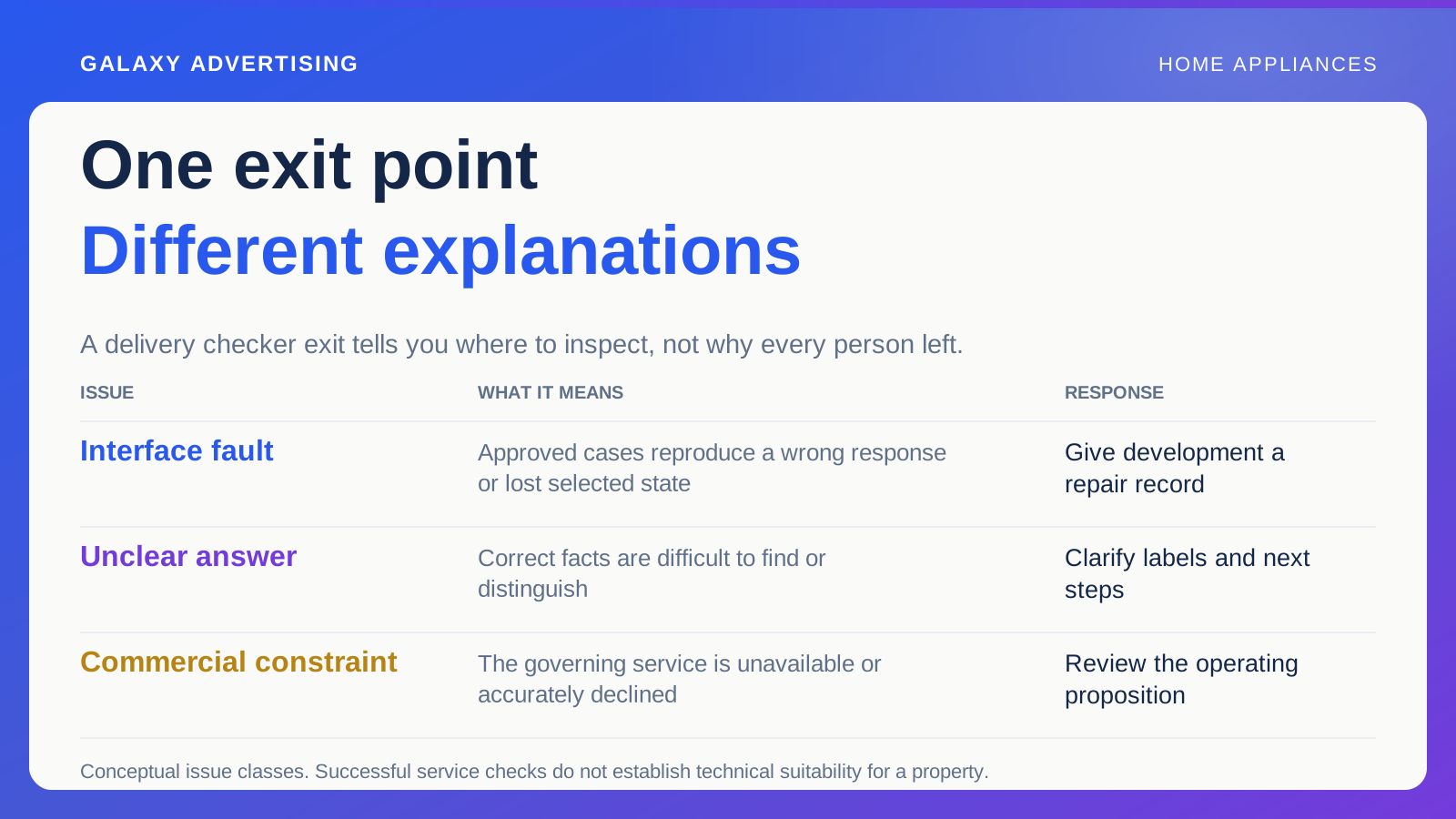
We can mistake a basket exit for an objection to the delivery charge, then offer free delivery before checking what the customer understood. Perhaps they were using the basket to find out the cost or what the service includes. The same exit can leave you with very different questions.
Changing the charge and its presentation together tests a combined offer. It does not isolate an information problem. A useful test starts narrower: what are you changing, what observation would help, and what would still remain uncertain? You do not need to assume another incentive can remove every hesitation.
Name the uncertainty you actually have
Describe what the current route shows. An exit when service options appear can coincide with that information without establishing every shopper's motive. Customer questions add context, but they do not represent the whole audience.
Choose a hypothesis somebody could challenge. Earlier access to a clear service explanation might help suitable customers understand the complete offer before selecting. That gives you something more specific to investigate than a general need for greater confidence.
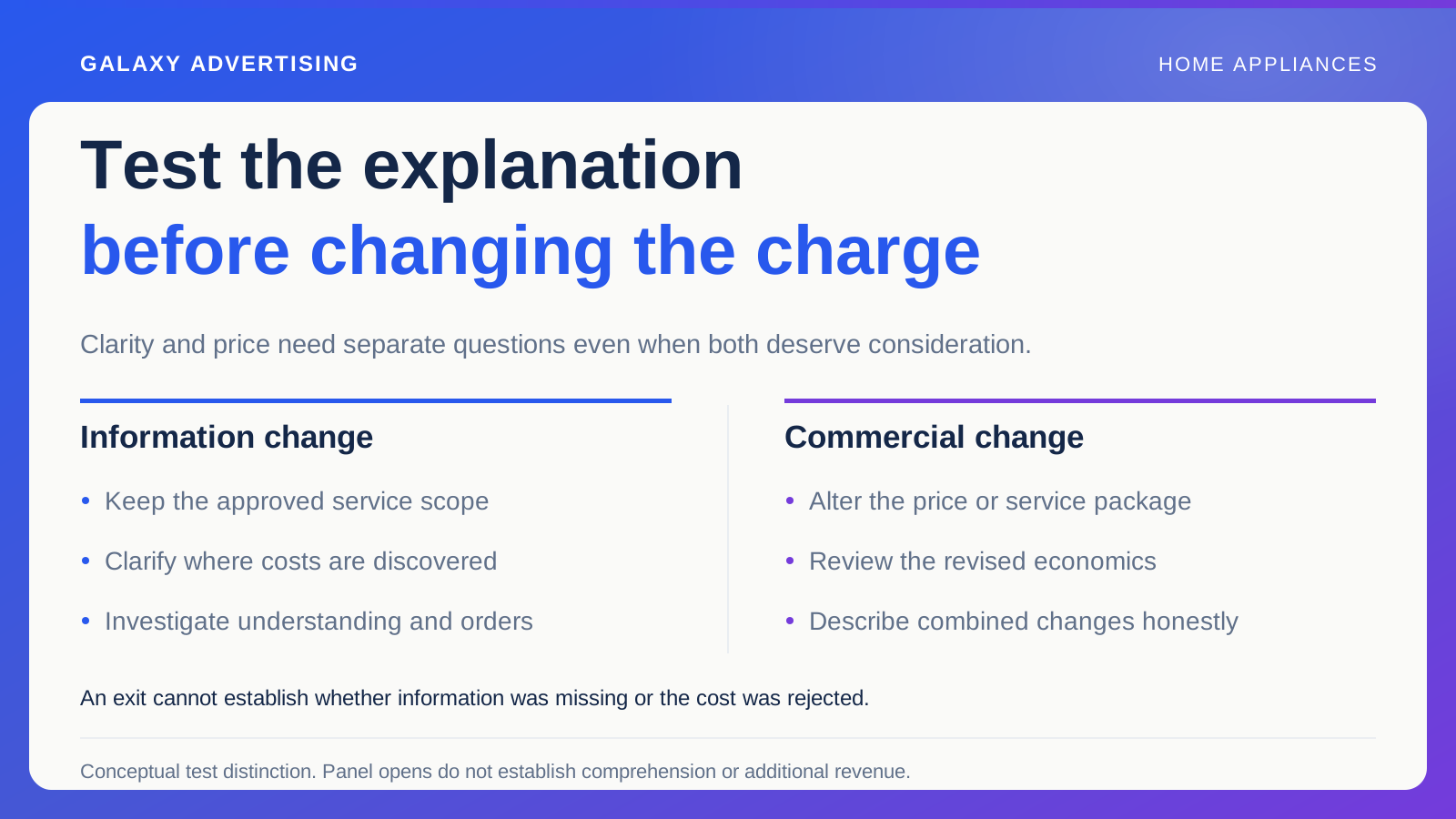
Keep clarity distinct from price. Someone can understand a charge perfectly and still reject it. That may require a commercial decision, rather than prove that the presentation needs repairing. Your question should leave room for both possibilities.
Decide which information to change
Use the approved service description and relevant conditions. A new panel should not introduce a stronger promise because persuasive wording looks better in the design. Ask operations to verify the underlying facts.
Decide where the explanation belongs for the observed task. A product page reference, a clearly labelled service choice and an earlier route to costs answer different needs. Choose for the ambiguity you have identified, rather than borrowing a fashionable interface.
Preserve the actual offer unless you deliberately intend to test another package. If charge, scope and presentation change together, describe the work as a combined change. It may still be a worthwhile commercial decision. Your learning claim simply needs to reflect what you actually changed.
Choose a comparison you can interpret
Record the product range, destination and relevant operating conditions. Keep stock, campaign mix and service capacity changes visible. Each can affect the outcome independently of a clearer explanation.
Where available, use an appropriate supported testing method and have the responsible specialist check the actual setup. Comparing two ordinary periods does not become a controlled experiment because the chart is clear.
Agree practical limits before launch. Unequal traffic, small order groups and a changing offer can prevent a strong conclusion. Describe the method honestly so the review rests on what happened, rather than on a confident label the work cannot support. The limits are part of interpreting the evidence, not inconvenient details to add afterwards.
Watch understanding as well as orders
Choose supporting observations that relate to the question. Relevant enquiries may indicate whether customers understand a service distinction. Available product and basket interactions provide context, while completed orders supply commercial evidence. Orders alone may not explain how the change worked.
Avoid making whichever measure moves quickest your only success condition. Opening a panel does not establish comprehension. A purchase total may not show whether earlier information influenced the decision either.
Agree the next action in advance. You might retain the explanation, revise its position or conclude that the observations leave the question unresolved. Inconclusive needs to remain a possible outcome. Otherwise the brief has decided the answer before anybody sees the evidence.
Walk the route before funding the comparison
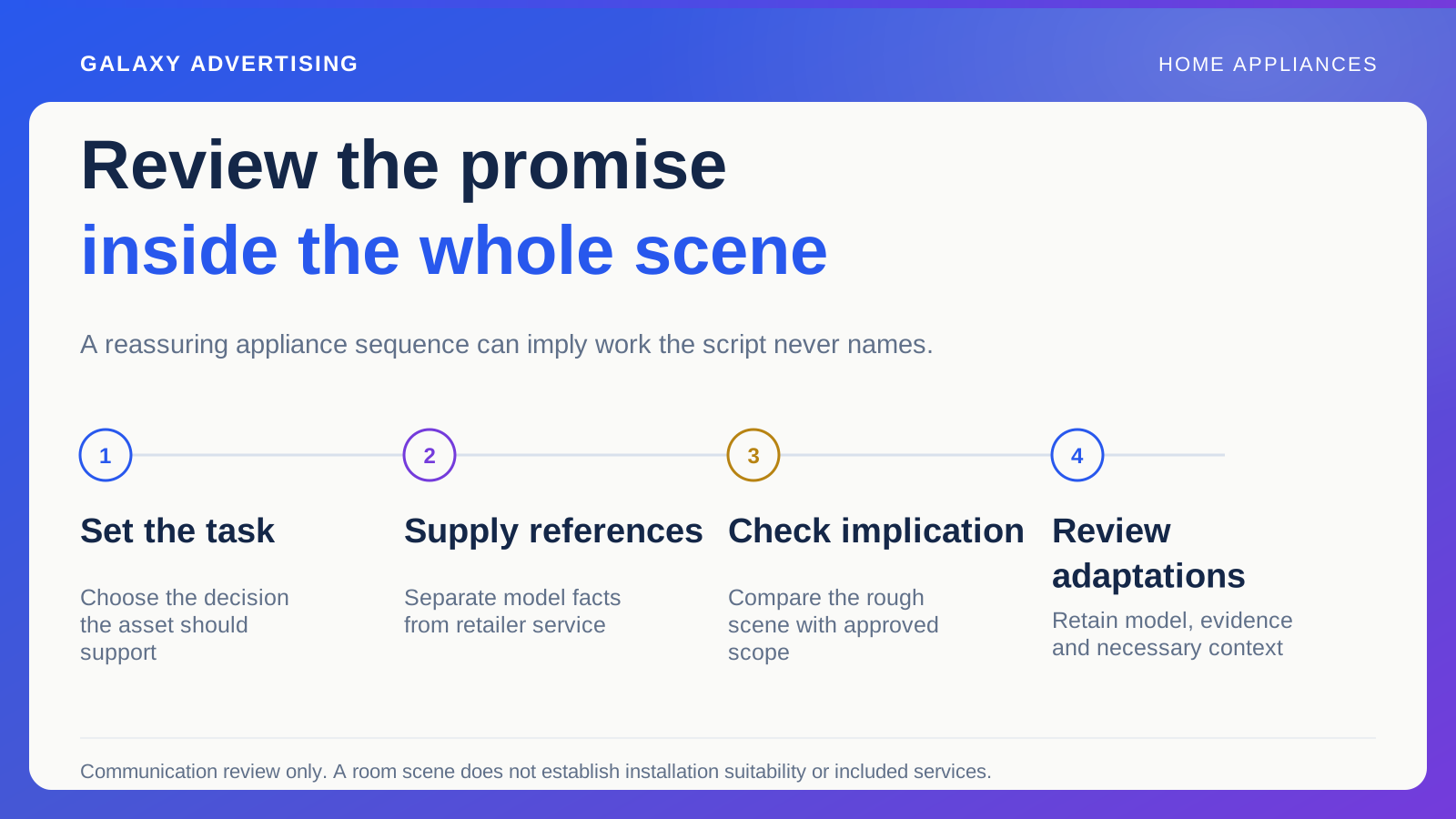
Follow the customer's actual sequence on a phone. Check that the approved information is present, readable and linked to the right model or order conditions. A panel can be technically deployed and still explain the wrong service.
Ask an unfamiliar reviewer what the retailer supplies and what remains conditional. This checks communication, rather than technical suitability for a household or a likely commercial result. Keep the interpretation within that scope.
Correct demonstrated faults first. A broken option or contradictory price can contaminate the comparison. There is little sense knowingly funding an information test when the control route contains an avoidable operational error your team can already reproduce. Fix the established problem, then investigate the uncertainty.
Let the evidence challenge the original story
At review, consider alternative explanations and supporting observations. Better purchase results alongside unchanged service questions may warrant a narrower conclusion than the team had hoped for.
Separate technical completion from impact. Publishing a clearer explanation establishes that the change reached the route. It does not establish a precise amount of additional revenue. The comparison determines how far that commercial claim can go.
If people understand the offer and still reject the cost, discuss another package's economics separately. A price change may be justified. It is not the inevitable answer to every information test that leaves uncertainty.
Save a plain description of the old and revised tasks. Perhaps customers previously needed a basket visit to discover which service was optional, while the revision explains that on the model page. This makes the intended learning inspectable without assuming the layout must outperform.
At review, ask whether the evidence concerns comprehension, the charge or another simultaneous change. That simple description helps stop a limited but accurate result being retold as proof that every delivery charge should disappear.
Keep enough detail for the next decision
Retain the wording, placement, offer version and main limitations with the review. A later editor should be able to identify the comparison without reconstructing it from memory.
For example, a hypothetical removal service explanation could reduce confusion about whether it is optional while leaving orders unchanged. That may justify a factual communication improvement. It does not prove sales growth. Another commercial experiment would need its own question.
The useful outcome is a clearer distinction between information, price and operational scope. Each commitment should make the next decision more informed while keeping the customer promise accurate. That is worthwhile learning even when the result does not supply a triumphant headline.