 Meta Ads
It's tempting to call a familiar advert tired as soon as its results weaken. The replacement brief feels like progress. But if nobody has checked stock, price or purchase recording, you've chosen a diagnosis before investigating the patient.
An advert that once produced useful orders might genuinely need refreshing. It might also be promoting a configuration people can no longer buy, or sending them through a changed purchase route.
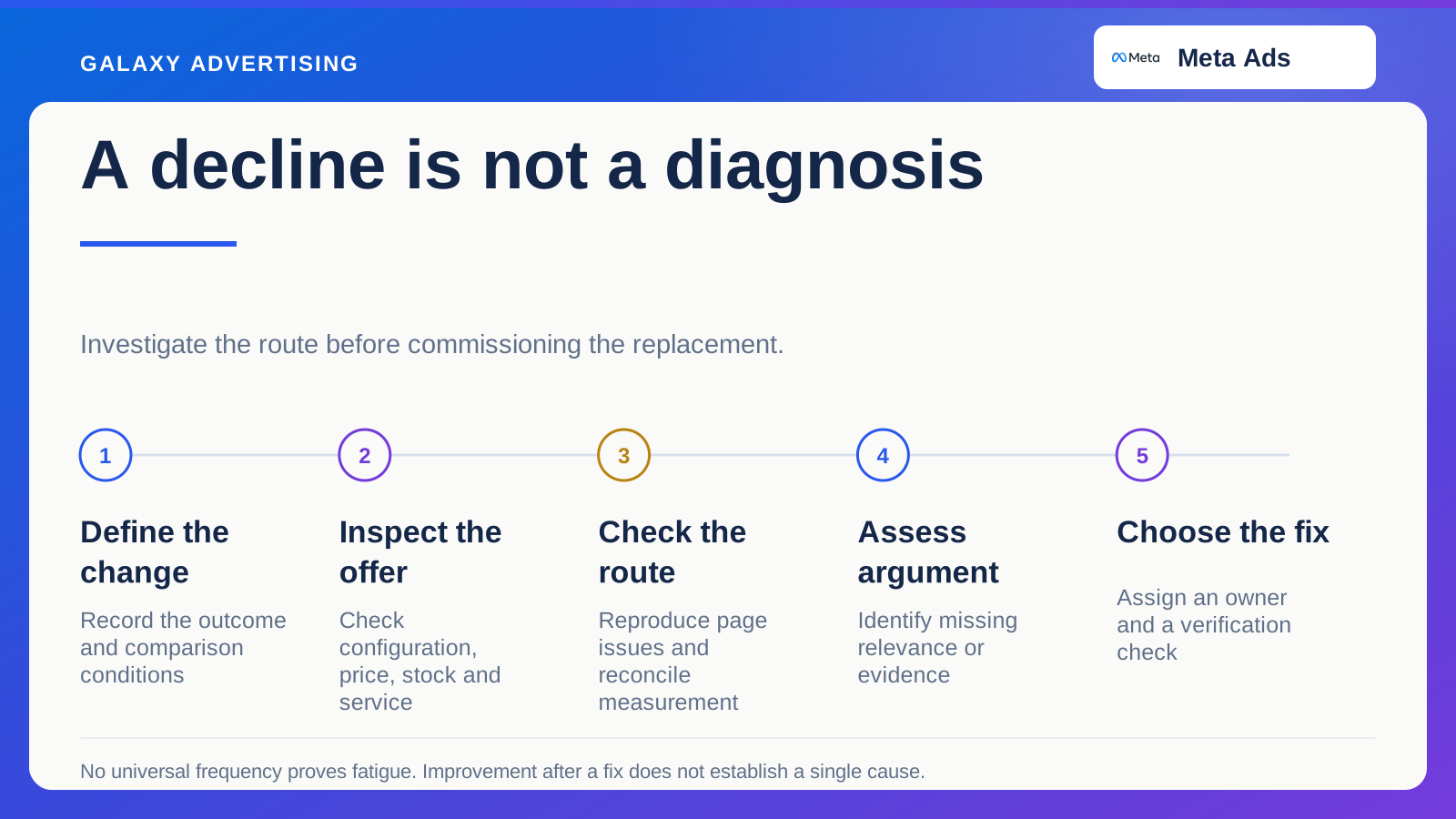
Treat creative fatigue as one hypothesis about the asset and its delivery conditions. Start with the observed change, follow the customer's route and then decide which production or account adjustment deserves investment.
Describe the change before naming the cause
Record the outcome that changed and the basis for comparison. Fewer attributed purchases, higher acquisition cost and weaker engagement are different observations. They shouldn't automatically receive the same diagnosis because they all feel disappointing.
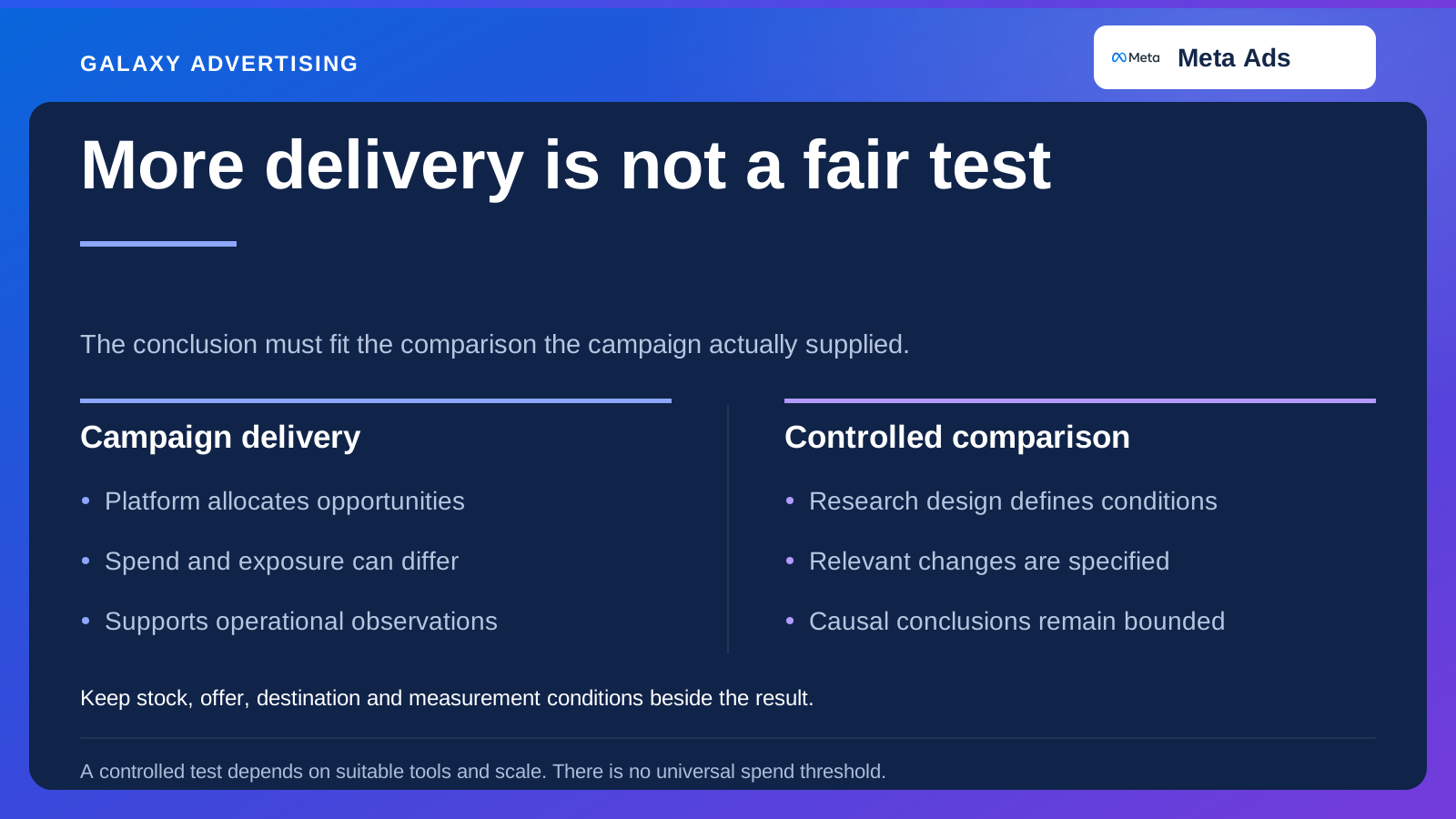
Include spend and the opportunity to appear. A lower total after lower investment differs from a lower rate under broadly comparable conditions. Your evidence may be noisy, so say how confident the comparison is rather than letting the label imply certainty.
There's no universal frequency or duration threshold that proves an advert is exhausted. The same numerical pattern can appear across different buying journeys and account conditions. You need an explanation of this change in your business, rather than a benchmark that happens to give it a convenient name.
See what the customer can buy now
Follow the destination and inspect the actual configuration, price, availability and essential service information. Compare those facts both with the asset and with the conditions behind the earlier result. The advert may be unchanged while the offer has moved underneath it.
Take a hypothetical shoe advert. The same attractive style still appears, but popular sizes have sold out. The creative hasn't necessarily stopped communicating. The purchasable range has changed, making the response it attracts less useful.
Record meaningful exceptions instead of relying on a broad stock label. A technically available product family might contain very few suitable options. That's a different commercial problem, with a different response needed from merchandising or the account team.
Check the page changes behind the click
Ask what has changed on the relevant product and purchase route. A new selector, promotional overlay or delivery message can alter the experience without appearing in the advertising report. The media team may not know it happened.
Review the route on a phone and reproduce suspected problems. Separate demonstrated faults from design preferences. A selector failing to identify the chosen variant, meaning the selected size, colour or configuration, is a specific issue. A suggestion to make the page feel more premium remains a hypothesis.
Check whether important product information is still findable. A visually cleaner page may have hidden detail that helped people decide. Assess the buying task rather than assuming a redesign must have improved conversion.
Make sure you're measuring the same thing
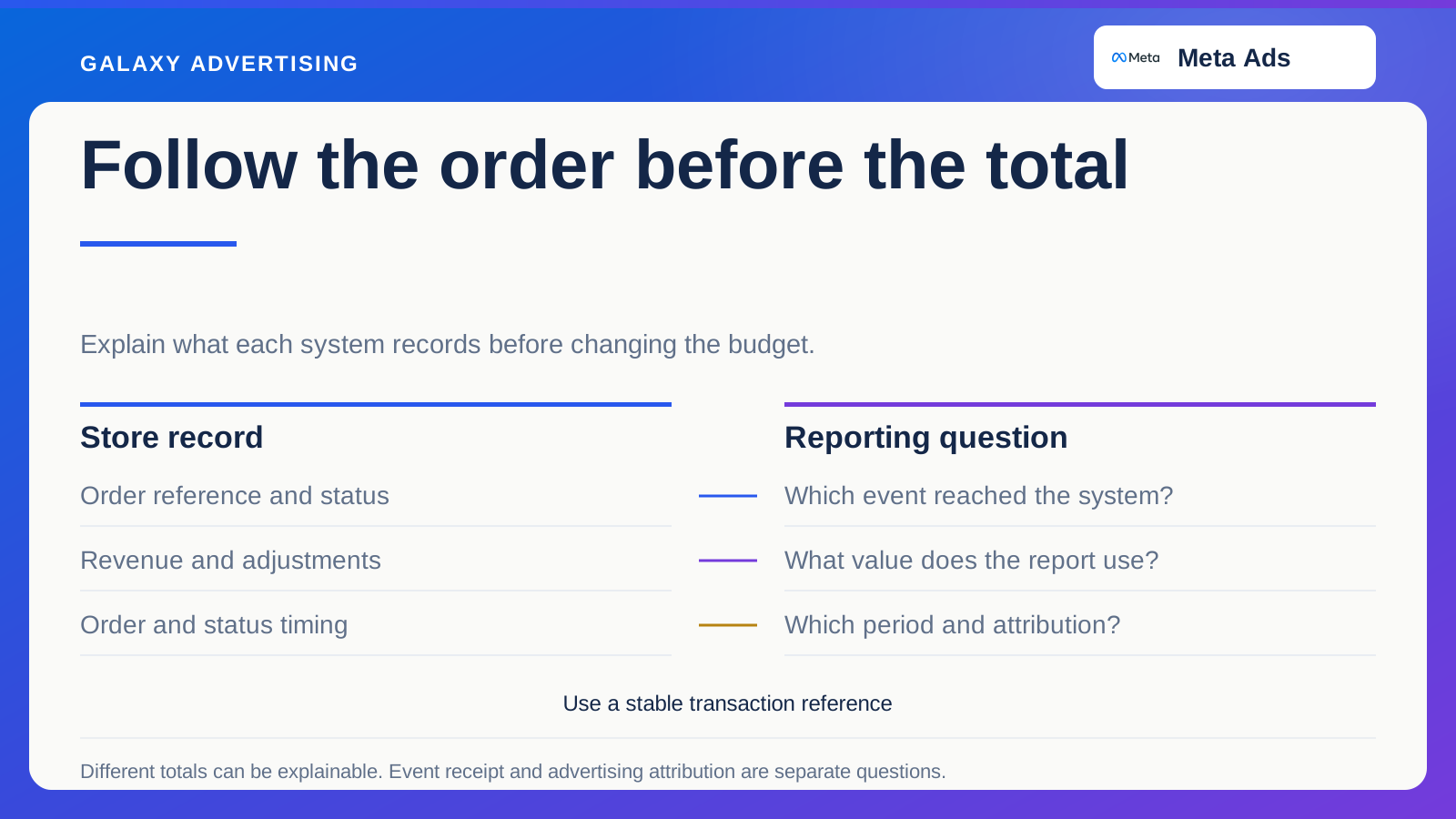
Confirm that purchase and value definitions remain consistent. Ask the implementation owner about changes to the store, integrations or reporting basis that could affect the movement you're seeing.
A discrepancy isn't automatically a fault. Classify it: timing, value definition, event receipt and attribution can explain different patterns. Use an order sample and the relevant records to establish what changed. That gives the diagnosis something firmer than a disagreement between totals.
If material uncertainty remains, explain what it means for the investigation. You may still need to replace an obviously obsolete asset. You shouldn't use an unresolved measurement change as evidence that a buying argument has stopped working.
Now look at the argument in the advert
Once you understand the route, ask whether the asset still gives a relevant reason to investigate the offer. Has the promoted difference become less useful? Is the opening clear? Does the footage provide the evidence the claim requires?
A weak argument and a weak execution need different briefs. A promising demonstration might be obscured by a confusing edit. A beautifully made video might explain a feature that doesn't matter to the intended buyer. More production won't help unless the brief identifies which problem you're solving.
Treat comments and enquiries as qualitative observations with limits. They can expose misunderstanding or recurring objections without representing the whole audience. Use them to develop a specific explanation, rather than collecting only comments that support the creative diagnosis you already prefer.
Choose a fix somebody can verify
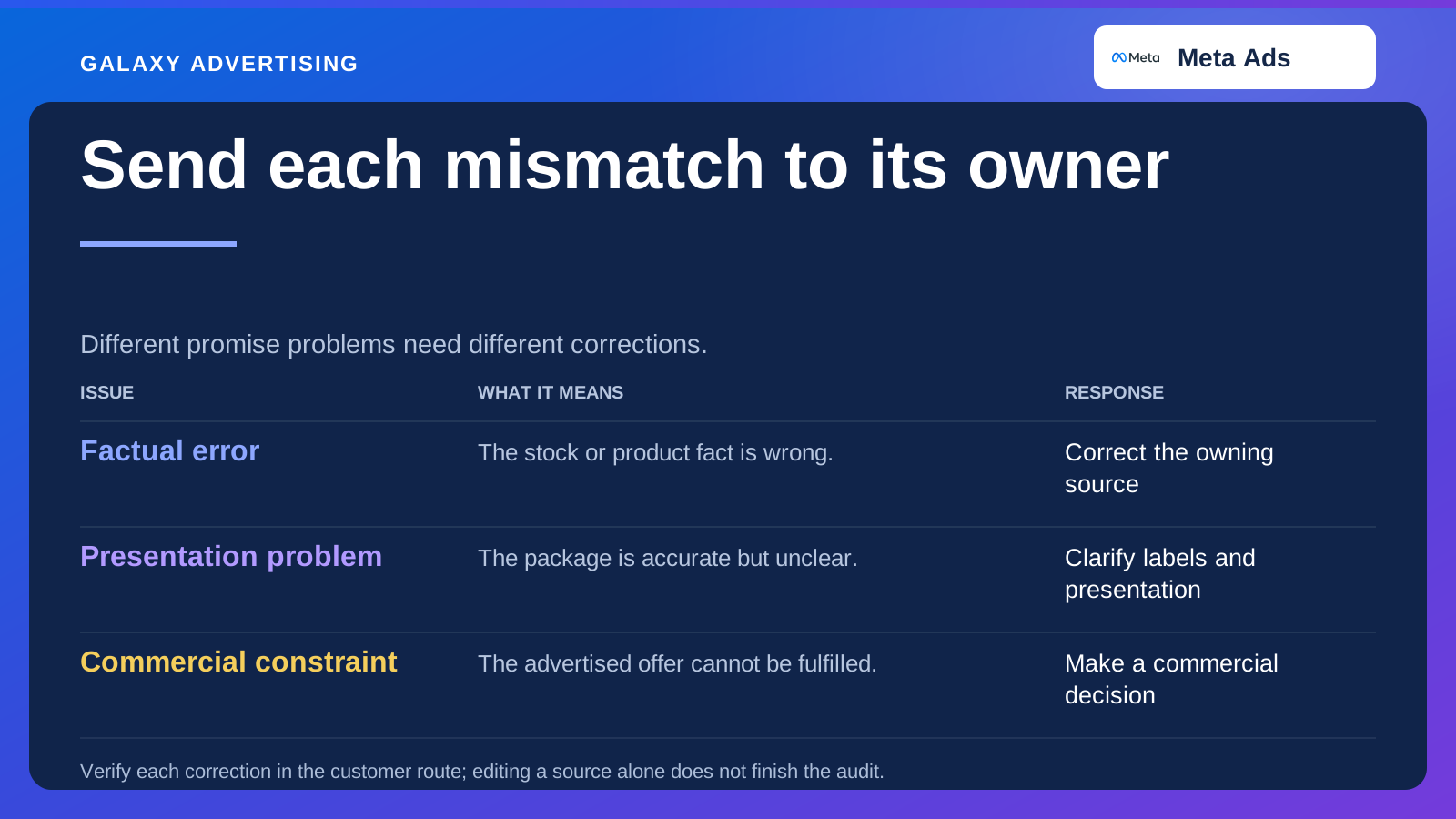
Unavailable variants call for corrected product selection or representation. A verified destination fault calls for a repair and a checked route. An argument missing evidence calls for a brief to produce the missing demonstration. Match the action to the problem you've found.
Don't change everything simultaneously if you want to learn which explanation mattered. Some urgent faults need immediate correction. Record those changes and narrow the later conclusion accordingly, rather than presenting the result as a clean comparison.
Give each action an owner and an observation that confirms proper completion. Check new production against approved product references. After a page repair reaches the relevant environment, reproduce the customer's route.
Choose the investigation sample before settling on an explanation. Include a formerly useful product, an affected configuration and, where available, a more stable route. If all three share a new checkout fault, new creative is unlikely to be the complete remedy. If only one depleted configuration changed, product selection may be the answer. The comparison helps narrow the question without pretending to isolate every influence.
Keep the diagnosis as honest as the checks
At review, compare the expected explanation with what the evidence supports. An improvement after a correction doesn't prove it was the only cause. Several conditions can change together, and that limit belongs in the report.
Keep the observed change, competing explanations, completed checks and reason for the chosen action in the investigation record. It can stop the next incident becoming another replacement brief for the same recurring operational problem.
A creative refresh earns its investment when it brings a better argument or clearer evidence. Calling every decline fatigue can keep you commissioning work while the business problem behind the advert remains untouched.