 TikTok Ads
Why does TikTok show one purchase total, analytics another and your shop a third? Choosing which dashboard you trust won't explain the difference. The systems may answer different questions, and one of the measurement routes may also have a fault.
That debate can go round in circles while the next budget decision waits. Start with a transaction instead.
Establish what was recorded, where it was sent and which reporting rules were applied. That gives the figures a dependable foundation without pretending a correct event will answer every question about advertising's commercial effect.
Agree what counts as a purchase
Write down the transaction your commercial review recognises. A completed order differs from an initiated checkout, a payment attempt and a later fulfilled sale. Decide how cancellations and refunds enter your judgement of the eventual outcome. Those aren't details to resolve after interpreting the return.
Choose a consistent value basis. Tax, delivery income and discounts can produce differences that resemble technical errors but actually reflect different definitions. Make sure finance and the account manager understand the same calculation before drawing conclusions from it.
Use the store transaction reference as an anchor where appropriate. A stable reference connects observations without adding unrelated personal information to a routine review. Limit access to underlying records to people who need them for the task. The investigation needs useful evidence, rather than unnecessary customer detail.
Map the routes sending your events now
Ask the implementer to document active browser, server and commerce integration routes sending relevant events. Don't assume today's installation matches the original plan or the labels visible in an account. The review needs the setup actually operating.
Identify each event's source, trigger and attached values. Be specific enough to discover an action firing too early, repeating unexpectedly or sending the wrong commercial information. Knowing that a connection exists doesn't establish what it communicates.
TikTok's official documentation explains that duplicate copies of an event sent through Pixel and Events API need deduplication, meaning recognition as the same underlying event. Have the implementer verify current requirements against your actual integration. This is a commercial review sequence, rather than a replacement for technical implementation instructions. The configuration needs its own specialist check.
Follow a controlled order all the way through
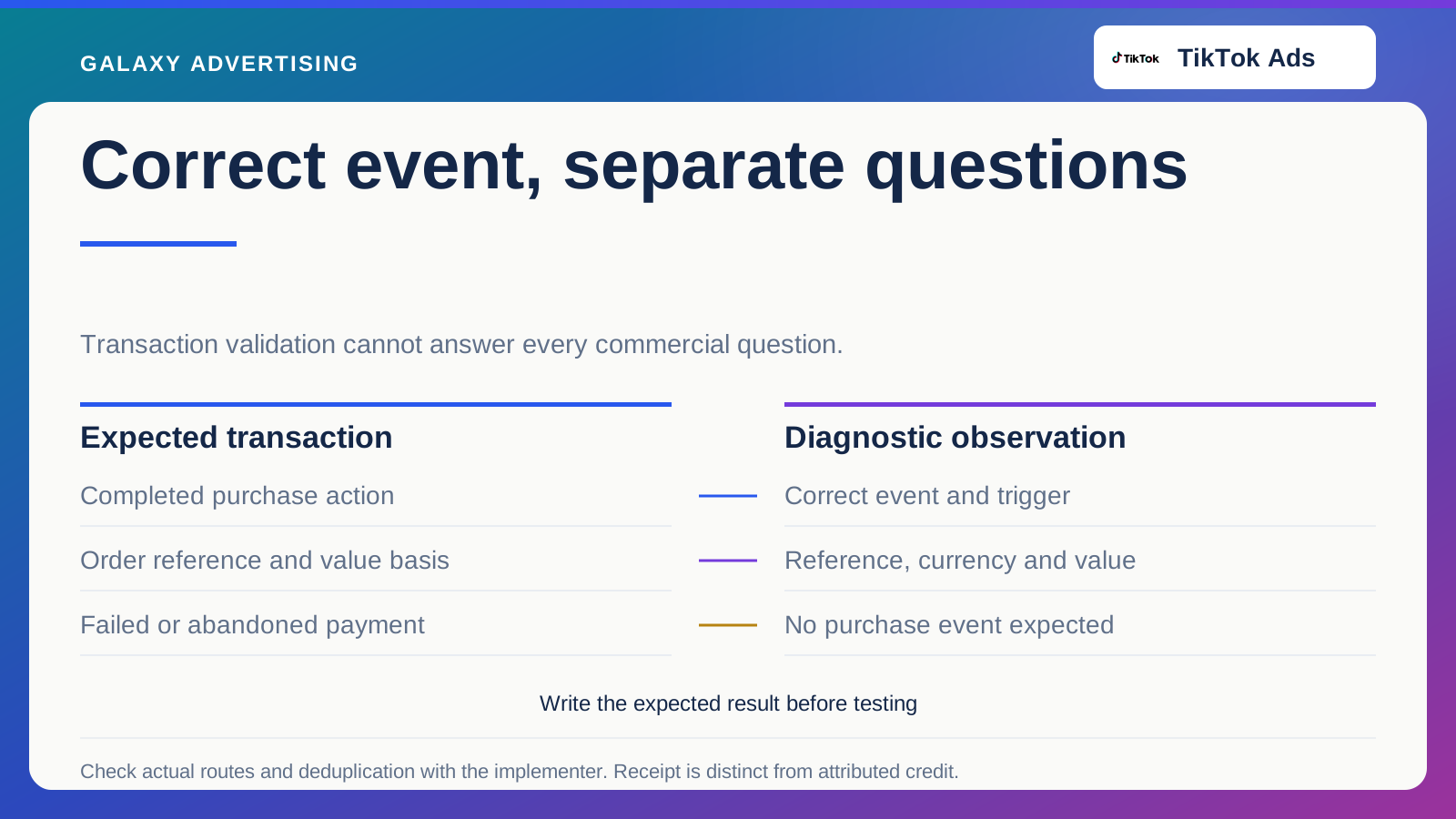
Agree a suitable test with the website team using supported diagnostic tools in the current setup. Before performing the action, record the event and value you expect. That gives the observation something specific to confirm or challenge.
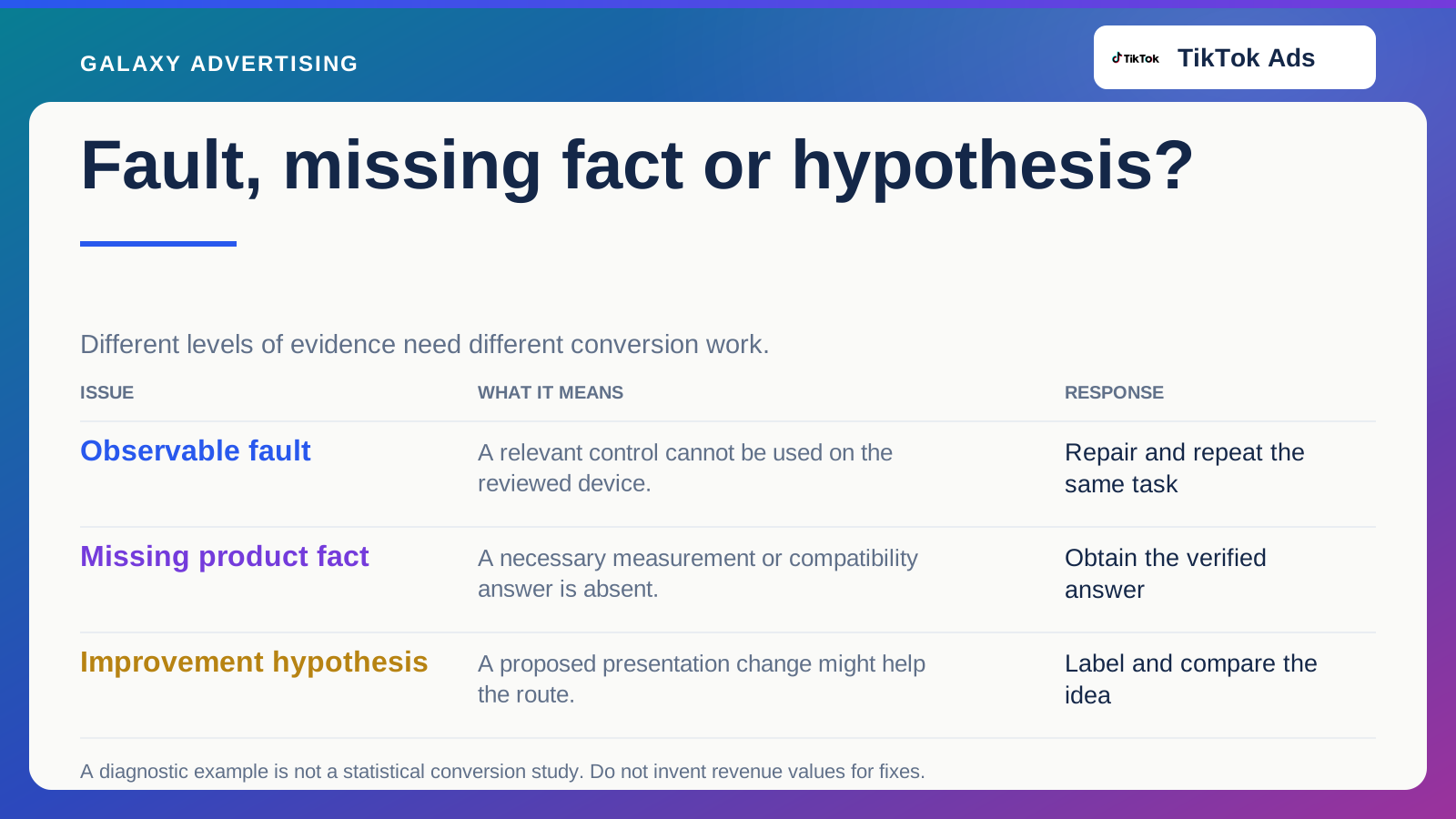
Inspect what the system receives. A general success message isn't enough. Check the event's meaning, transaction reference where applicable, currency and value. A connection can be active while transmitting information that misleads the commercial review.
Test an action that shouldn't create a purchase too. Failed payment or abandoned checkout can reveal an event placed at the wrong stage. That expected negative result helps establish the measurement's boundary. It's useful evidence about what the system doesn't count, as well as what it does.
Investigate suspected duplication through examples
More events don't automatically mean duplicates. Reporting scope, time boundaries and attribution can also explain different totals. Examine individual examples before rewriting an integration that may be doing the right thing.
Where duplication is suspected, ask the technical owner to demonstrate how repeated transmissions are recognised as one event. Compare their explanation with current official documentation and actual diagnostic observations. The mechanism needs to be understood, rather than inferred from a reassuring total.
Keep correction and verification together. A code change doesn't prove duplicates stopped or legitimate purchases remain recorded. Repeat relevant controlled checks and retain enough evidence for another implementer to understand the repair. The technical action and its demonstrated result are separate parts of finishing the work.
Separate a received event from attributed credit
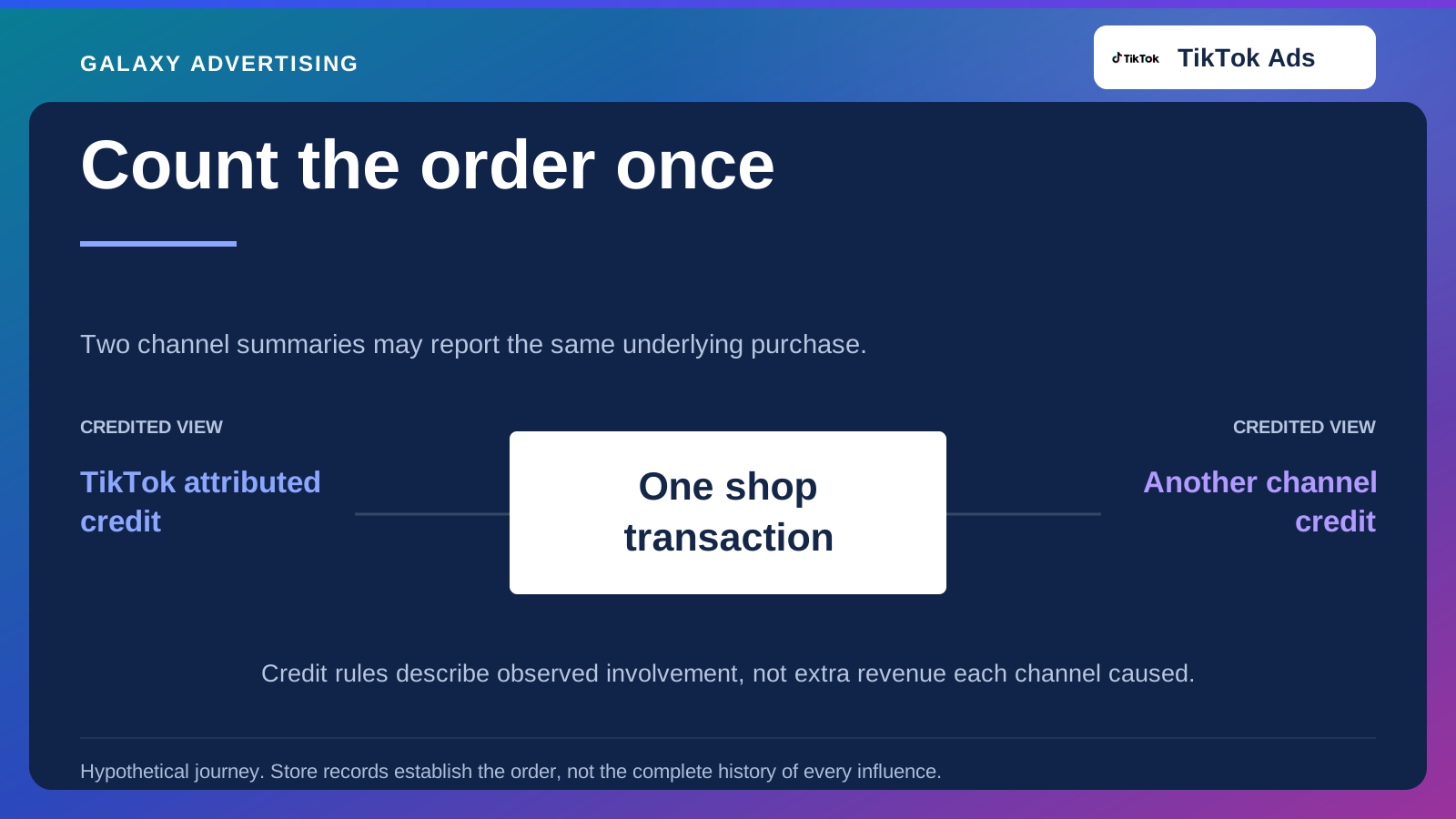
An accurately received purchase doesn't mean every report will assign it to the same channel. Attribution concerns how credit is allocated. Event validation concerns whether the underlying observation is correct. You can verify one without settling the other.
Record the reporting basis used in the campaign review, including actual settings and definitions. Have the account team verify what's available and selected now. Don't import assumed windows or controls from an old document and treat them as facts about this account.
Explain differences plainly. One system may include an observed advertising interaction that another excludes from its channel report. Compare definitions before assuming either has fabricated a transaction. A different account of credit isn't automatically a different underlying order.
Connect a useful sample to final order outcomes
Select orders that materially affect the reported result alongside relevant exceptions. Connect advertising observations to shop records and review eventual commercial status where available. The final outcome matters alongside what was originally recorded.
Look for patterns you can explain rather than requiring every daily total to agree exactly. A value definition, late refund and attribution difference need different responses. Combining them into one unexplained tracking discrepancy makes the next technical request less useful.
Keep the sample proportionate and clearly labelled. It can identify a fault or challenge an assumption without becoming a manual audit of every customer. State what it supports and what remains unresolved.
For a material repair, ask the technical owner to retain a concise before and after record: event, observed defect, change and controlled verification actions. Another implementer should understand why the repair was needed without searching old conversations. That helps distinguish an earlier fault from a new one if a later website release changes checkout again.
Use the verified evidence for the next bounded decision
Once the main routes and definitions are understood, decide which evidence can support the next commercial review. It might justify continued testing, a specific repair or a narrower reading of current results. The decision should match what you've verified.
Don't turn event validation into proof of additional sales caused by TikTok. Causal impact is separate and may require another comparison design. A clean transaction record supports many decisions without settling every question about influence.
Assign ongoing responsibility for material website and integration changes. Checkout revisions or another tool adding a route can weaken measurement later. A clear technical owner and a commercial team that understands the numbers give your next spending discussion a firmer foundation.