 TikTok Ads
Adding up the sales claimed by your advertising channels can count the same order more than once. If you use that total to judge what the business has earned, the explanation is already on shaky ground.
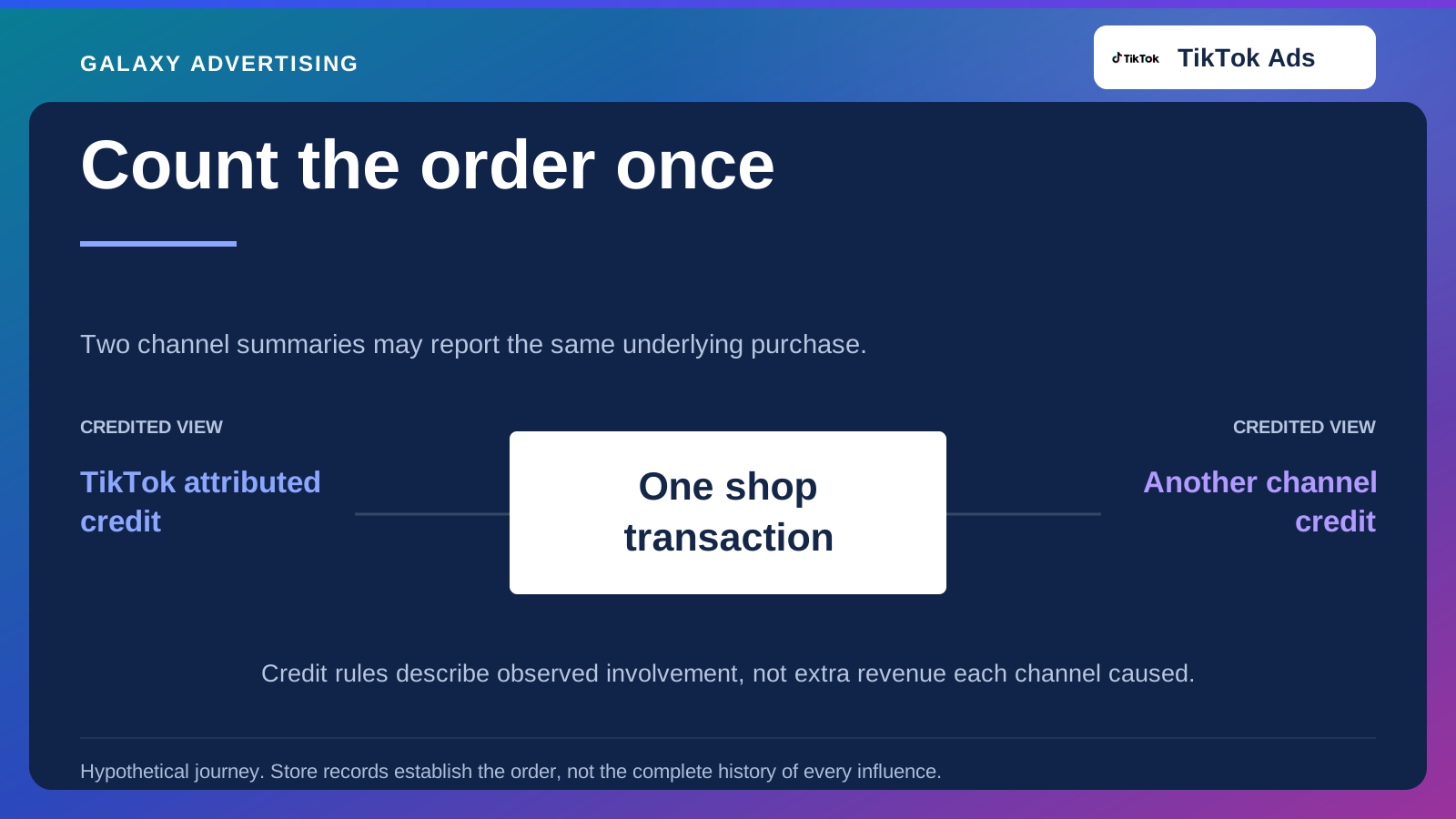
Picture a shopper watching a desk demonstration, searching for your shop later and eventually ordering. TikTok may report the purchase under its configured rules. Another channel may report involvement too. You have sold one desk, however busy the reporting meeting sounds.
Attribution means assigning credit to observed interactions. It helps you interpret the journey, but it is not another order book or, on its own, proof of additional purchases caused by a channel.
Find the order before debating the credit
Start with the transaction in your shop’s records and establish its eventual status. Use the revenue basis you have agreed, taking relevant cancellations and refunds into account before treating channel figures as business income.
Do not sum the revenue attributed by separate systems and call it total sales. They can give credit for the same underlying transaction. Establish the order first, then explain how each report relates to it.
Your store records do not reveal the whole marketing journey either. They tell you what was ordered and on what commercial basis. What earlier interactions contributed is a further question, requiring other observations and some care in how you interpret them.
Ask which rules these reports actually use
Have your account team verify the attribution settings and definitions in the current account. A window or control remembered from another platform, or borrowed from an old presentation, is not a reliable substitute.
Record which interactions each report recognises and the relevant time basis. Then explain how those definitions differ from the analytics report you are comparing. Two numbers can disagree because they follow different rules, without anything being wrong in the event implementation.
Keep that explanation useful to the owner making the decision. You need to understand what “reported purchase” means here, rather than memorise every technical field. A short definitions note can spare you repeated discussions in which figures look comparable but describe different things.
Leave the gaps in the story visible
Your systems may show an advertising interaction and a subsequently observed order. That does not mean they reveal every reason the shopper considered the product, or every influence along the way.
Be careful with a convincing story. “The customer needed TikTok to discover us” could be an interpretation, rather than something directly observed. Say which it is. A plausible sequence is still a sequence with missing information.
For a hypothetical retailer, enquiries and voluntary customer feedback could add context to a sample of journeys. Those accounts remain partial. They illustrate possibilities without measuring every customer’s exposure, memory or motivation completely.
A fault needs a repair; a difference needs an explanation
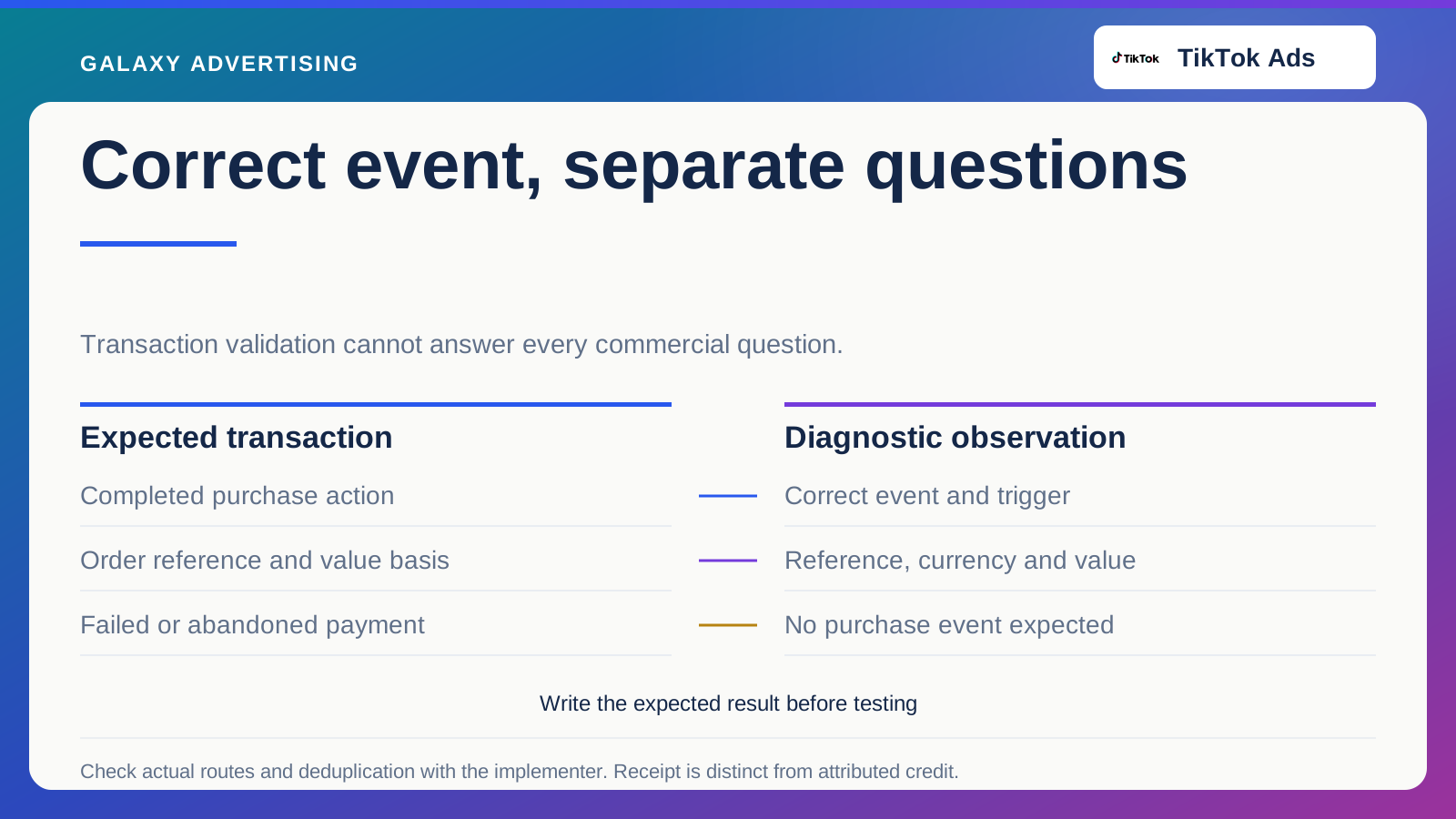
A purchase event that fires incorrectly or carries the wrong value needs a measurement correction. Two valid ways of assigning credit need their definitions and consequences explained. Treating both as the same problem makes the next action less clear.
Investigate specific examples before drawing conclusions from headline totals. A repeated event, a later refund and a different revenue basis can each change the comparison in different ways. A generic verdict of “tracking problem” can prompt changes you did not need.
When a fault is repaired, record when it happened and what was corrected. Your commercial review needs to know when observation conditions changed. Clean implementation will not make every reporting method identical. Equally, a remaining attribution difference does not necessarily mean the repair failed.
Decide whether you need to know what would have happened anyway
Before substantially increasing investment, you may need an answer to a stronger question: what sales would probably have happened without this activity? Attribution alone does not directly supply that comparison with the alternative reality.
Discuss an appropriate comparison design with a qualified measurement specialist. It needs to address your actual uncertainty at a practical scale for the retailer. No universal test duration or minimum budget settles every question about every channel.
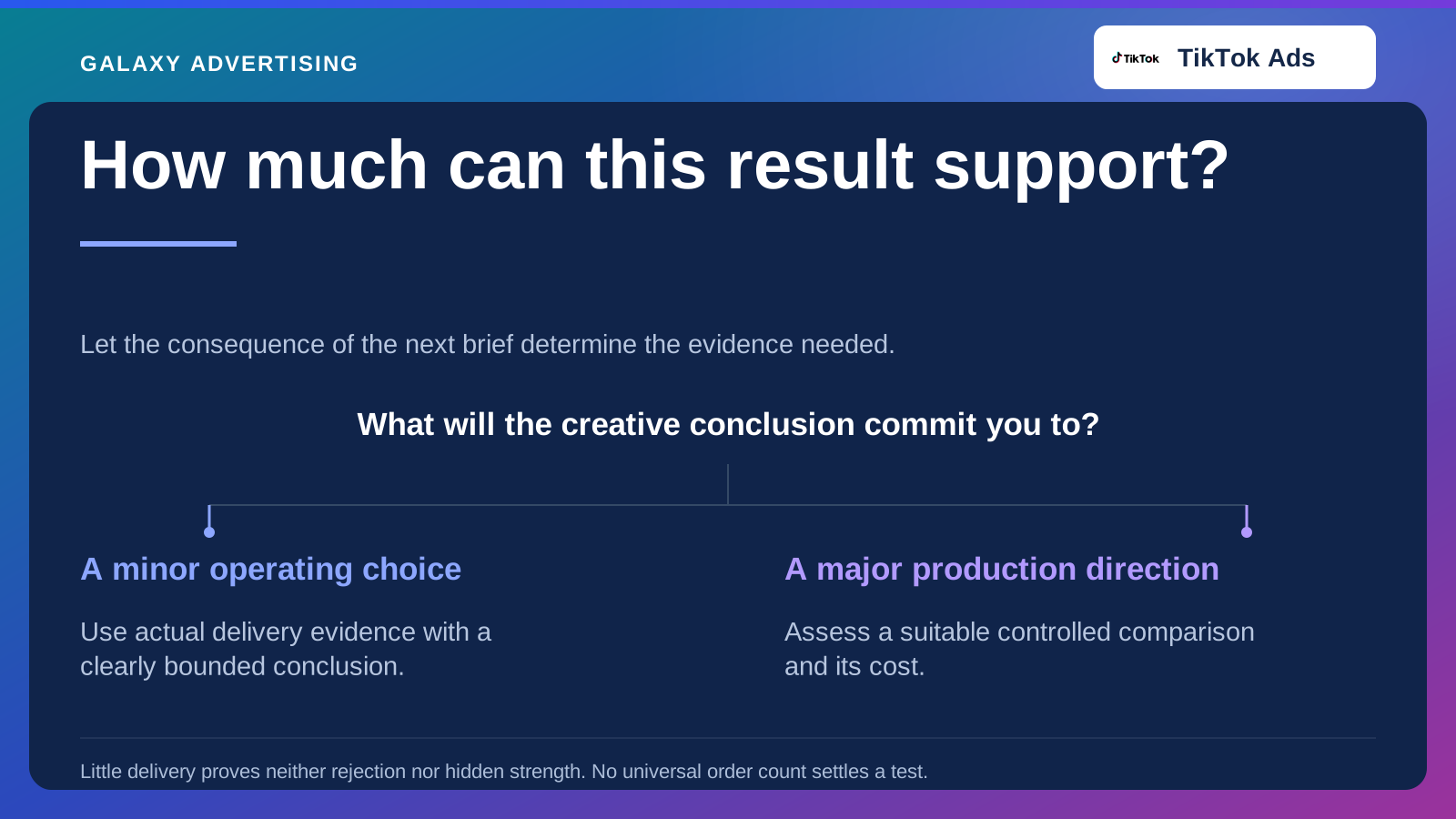
Make the cost of a stronger answer proportionate to the decision. A modest operational adjustment may reasonably proceed with uncertainty acknowledged. A major claim about additional revenue needs stronger support. Either approach can make sense when you understand what evidence you have and what you are asking it to carry.
Put the views alongside each other without choosing a favourite
Show attributed campaign activity beside store outcomes and relevant operational context. Look for agreement or tension worth investigating. Picking whichever source flatters the latest decision gives you convenience rather than understanding.
Record meaningful changes in product mix, stock, promotion and other media. A change in total revenue can matter, but you cannot automatically assign it to TikTok when several things changed together.
Agree a principal reporting basis for everyday operation and identify the supplementary views. Consistency helps you discuss trends. It should still leave room to investigate material discrepancies and revise a definition transparently as the business’s needs change.
Try a simple example in the meeting. One hypothetical order appears in two attributed channel summaries and remains one shop transaction. Ask each specialist which rule includes it in their system. This can expose a definitions assumption before the channel debate begins. It does not assign a definitive fraction of the order to each influence.
Make the next recommendation fit what you know
End with a bounded action. Your evidence might support continuing a coherent test, correcting a value definition or arranging a stronger comparison before expansion. Explain the uncertainty that still matters to that action.
You do not need to claim complete proof, or put every decision on hold until every influence is known. Businesses act on incomplete information all the time. They need its limits explained clearly enough to make a sensible choice.
Count the order once and take TikTok’s observed role seriously. Understanding the rules lets you discuss that role without quietly turning a credible customer journey into a guaranteed explanation of additional value.